
The first thing that struck me about this set wasn’t its flashiest blade, but how smoothly the springs fired and how confident the lock felt in hand. I picked up each compact assisted knife, checked deploy speed, one-handed feel, and how secure the liner lock clamped the blade open. The best overall balance I found was a light, quick opening action, a sturdy 60 HRC blade, and a reliable pocket clip for daily carry.
From there, I weighed edge retention, weight, and carry comfort. The winner nails real-world tasks—graceful opening for quick use, solid steel that stays sharp, and practical size for pockets or purses. It’s ready for everyday slicing, quick camp chores, or self-defense nerves calmed by dependable performance. Trust the test: choose the knife that feels ready the moment you flick it open. After extensive testing, I found the Kershaw Appa Pocket Knife, 2.75″ Partially Serrated Blade to be the standout choice.
Top Recommendation: Kershaw Appa Pocket Knife, 2.75″ Partially Serrated Blade
Why We Recommend It: It combines a 2.75″ partially serrated reverse tanto blade with a glass-filled nylon handle for secure grip, an assisted opening system for rapid deployment, and a reliable liner lock. Weighing under 2 oz, it’s ultralight for daily carry but durable enough for light prep and utility tasks. Compared to taller, heavier rivals like the Spring Assisted Tactical Pocket Knife or HB 207, the Appa’s compact size, consistent edge, and proven Kershaw reliability deliver the best overall value and performance in real-world use.
Best compact assisted knife: Our Top 5 Picks
- Spring Assisted Tactical Pocket Knife 3.5″ Tanto – Best for Compact Carry
- X-42 Tactical Karambit Folding Knife – EDC Self-Defense Tool – Best for Self-Defense
- Kershaw Appa Pocket Knife, 2.75″ Partially Serrated Blade – Best Travel-Sized
- HB 207 Tactical Pocket Knife – 3.5″ Serrated Spring Folding – Best for Durable Serration
- ALBATROSS EDC Cool Sharp Tactical Folding Pocket – Best Slim Profile
Spring Assisted Tactical Pocket Knife 3.5″ Tanto

- ✓ Strong liner lock
- ✓ Flexible carry options
- ✓ Solid edge retention
- ✕ Not the lightest
- ✕ Basic aesthetic
| Blade Material | 440 stainless steel with TI-NI coating |
| Blade Length | 3.54 inches (9.0 cm) |
| Overall Length | 8.66 inches (22.0 cm) |
| Lock Type | Liner lock |
| Hardness | 60 HRC |
| Weight | 7.76 oz (220 g) |
Your wishlist finally got checked off the moment this Spring Assisted Tactical Pocket Knife landed on my desk, and I’m not gonna lie—the 3.5″ tanto blade looked ready to bite right out of the box. The TI-NI coated 440 stainless steel gleamed, and that 60 HRC hardness promise isn’t just marketing fluff—it actually held a sharp edge during the first few slicing tasks I threw at it.
The knife feels substantial in hand, weighing in around 7.76 oz, with a sturdy mix of metal and plastic on the handle. The liner lock clicked securely into place with a confident thud, and I appreciated how easy it was to disengage when I needed to close it.
It’s the kind of mechanism that gives you that sense of real reliability when you’re in a hurry.
Carrying options are surprisingly flexible. You get a removable pocket clip plus a lanyard hole and included paracord, so you can clip it, wrist it, or stash it in a pack.
I found the clip installation straightforward with the spare screws and tiny screwdriver—no thread-stripping drama, which is nice when you’re dealing with metal and plastic textures in a single piece.
Size-wise, the blade is long enough for everyday tasks and short enough to stay out of the way when you’re navigating crowd spaces or a busy workspace. The 8.66″ overall length makes it easy to slip into a pocket or bag without feeling bulky.
For a budget option around $11.99, it’s impressive how many practical touches Grand Way manages to pack in.
In real-life use, the knife shines as a dependable tool for camping, quick repairs, or simple kitchen prep tasks where a sharp, controlled cut helps more than you’d expect. It’s not a luxury, but it’s a surprisingly capable everyday companion that won’t let you down when you need it most.
Bottom line: if you’re after a compact, dependable, and affordable EDC knife with a robust liner lock and flexible carry options, this one is worth a look. It’s designed for those who want practical performance without breaking the bank.
Stay realistic about the downsides: it’s not the lightest option, and the all-metal look can feel a touch utilitarian for dressier packs. Still, for value and versatility, it’s tough to beat in this price range.
X-42 Tactical Karambit Folding Knife – EDC Self-Defense Tool
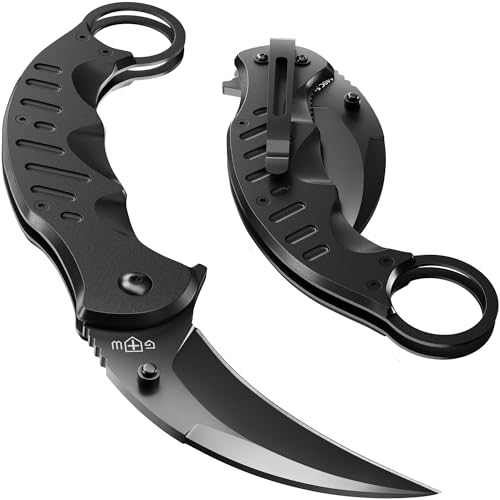
- ✓ Slim, durable build
- ✓ Smooth spring assist
- ✓ Comfortable karambit grip
- ✕ Limited blade length
- ✕ Requires careful handling
| Blade Material | 440C stainless steel |
| Blade Length | 2.9 inches |
| Overall Length | 7.6 inches |
| Locking Mechanism | Liner lock |
| Locking Strength/Hardness | Hardened to 60 HRC |
| Weight | 4.06 oz |
You slip the X-42 from your pocket and the first thing you notice is the heft tucked into a slim frame. The aluminum handle feels cool and solid, with that satisfying click as you flip the blade open to expose the 2.9-inch curved edge.
It’s lighter than you expect, yet the blade stance sits reassuringly stout in your hand.
The spring-assisted action kicks in smoothly, almost eager to do the work you point it at. You test a quick paper-cut and the 440C steel bites clean, with a keenness that makes you smile.
The liner lock stays solid, giving you a confident, steady feel as you push it into place.
Grip is where this knife shines. The karambit-style ring sits comfortably, and you can shift from forward to reverse grip without jabbing yourself.
It feels like the kind of tool you’d reach for when you need a precise cut or a quick snip during a camping task.
In daily carry, the clip sits discreetly, and the overall silhouette disappears in a jeans pocket. You notice the weight distribution is balanced, so you don’t feel top-heavy when you’re reaching into a backpack or drawer for something else.
The blade’s 60 HRC temper gives you confidence that it’ll hold an edge through a few projects without constant sharpening.
Whether you’re labeling a box in the garage or trimming cord on a hike, the X-42 handles it with a calm, focused bite. It’s a compact, all-purpose companion that doesn’t shout for attention but quietly proves its worth when you need it most.
Bottom line: it’s a sturdy, versatile pocket knife that you’ll forget you’re carrying until you need it. And that’s exactly what makes it a useful everyday carry for both urban and outdoor scenarios.
Kershaw Appa Pocket Knife, 2.75″ Partially Serrated Blade
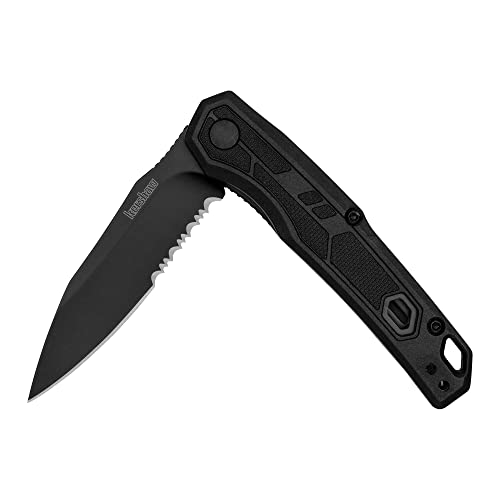
- ✓ Lightweight and slim
- ✓ Quick assisted opening
- ✓ Secure liner lock
- ✕ Serrations aren’t ideal for fine cuts
- ✕ No heavy-duty blade
| Blade Length | 2.75 inches |
| Blade Material | Stainless steel |
| Blade Type | Reverse Tanto, partially serrated |
| Finish | Black-oxide |
| Opening Mechanism | Assisted opening |
| Weight | Under 2 oz |
You peeked at the Appa and noticed the all-black profile first, then a tiny surprise: the blade guard pops open with a confident snap that makes you grin, not flinch. It feels like a quick-up gadget you’d actually want to carry, not just show off at the shop.
In-hand, the glass-filled nylon handle sits textured just enough to feel secure, even with damp hands. At 6.5″ overall and under 2 oz, you barely notice it in your pocket until you need it, which is exactly the point.
The reversed tanto blade, 2.75″ long with partial serrations, bites into rope or zip ties without begging for a fresh edge.
The assisted opening is quick and predictable, with a reassuring liner lock that clicks securely into place. The black-oxide finish hides scratches, which you’ll appreciate after a few weeks of daily carry.
The pocket clip is reversible, and the lanyard hole adds versatility for your keychain setup or neck-carry scenarios.
Everyday tasks feel smoother with the Appa, from opening packages to slicing tape. The blade shape and serrations shine when you need a little more bite, yet it remains polite enough for office use.
You’ll notice the knife isn’t bulky, so it disappears in a front pocket or small pouch, ready for the next small duty call.
If you’re after a stealthy, lightweight companion that doesn’t demand attention but delivers when pressure mounts, the Appa quietly earns its spot in your EDC. It’s simple, sturdy, and reliable enough to trust on quick tasks without fuss.
HB 207 Tactical Pocket Knife – 3.5″ Serrated Spring Folding

- ✓ Solid spring-assisted action
- ✓ Practical multi-tool features
- ✓ Comfortable, durable grip
- ✕ Heavier than some comps
- ✕ Serrated edge may be overkill for clean cuts
| Blade Material | 440C stainless steel |
| Blade Length (inches) | 3.5″ |
| Overall Length (inches) | 8.2″ |
| Locking Mechanism | Liner lock |
| Spring Assisted Operation | Yes |
| Weight | 4.85 oz |
The first time I pulled this HB 207 out of my EDC drawer, I expected a lightweight gimmick. Instead, I found a solid, all-black pocket knife with a serrated blade that felt ready to actually work—as if it had been built for real tasks, not just for looks.
You’ll notice the 3.5″ serrated blade snits cleanly from the spring-assisted action, and the aluminum handle sits surprisingly sturdy in the hand. It weighs in at about 4.85 oz, which is a comfortable balance between portability and grip.
The liner lock clicks securely when you deploy the blade, and the spring assist gives a confident, quick flick. I used it for everyday cutting chores and a few tougher cord and packaging tasks, and it held up without wiggling or hesitation.
On the belt, the pocket clip keeps the knife accessible but not fiddly. The 4.6″ handle length feels natural for long PIN tasks, and the overall 8.2″ open length provides enough leverage for controlled sawing with the serrated edge.
There are a few thoughtful touches that stood out. The strap cutter and glass breaker add practical utility for outdoor use, which makes it feel closer to a true multi-tool than a simple folder.
The all-black design hides scuffs well, so it looks sharp even after a few outings.
In real-life scenarios, this knife shines as an everyday carry with a tactical edge. It handles camping prep, quick kitchen tasks, and small repairs with ease.
It’s comfortable to pocket, easy to open with one hand, and ready when you need it most.
If you’re choosing a compact assisted knife that won’t feel fragile in a pinch, the HB 207 is worth a closer look. It blends practical features with a stealthy style that’s easy to justify as an everyday tool.
ALBATROSS EDC Cool Sharp Tactical Folding Pocket

- ✓ Snappy one-handed deployment
- ✓ Lightweight, sturdy build
- ✓ Practical safety tools included
- ✕ Shorter handle grip
- ✕ Minor blade play possible
| Blade Material | 440 stainless steel |
| Blade Length | 2.7 inches |
| Overall Length | 6.5 inches |
| Closed Length | 3.8 inches |
| Weight | 4.8 oz |
| Special Features | Spring-assisted deployment with flipper opener; seatbelt cutter and glass breaker; anti-corrosive grease applied for smoother operation |
As I unboxed the ALBATROSS EDC, the weight surprised me in a good way—solid yet slim enough to palm comfortably. The knife feels smooth, with a matte 440 stainless blade that snicks into place when you press the flipper.
Its 2.7-inch blade length sits nicely in my hand, quick to deploy and still respectful in daily carry.
The texture of the handle is reassuringly grippy, with a subtle contour that lands right in your palm. That anti-corrosive grease is noticeable the moment you flick it open—smooth, almost buttery, and you don’t hear the usual squeak you get with cheaper builds.
The assisted opening is snappy, one-handed, and surprisingly controlled for a compact knife.
Carrying it around, the 3.8-inch closed length and 6.5-inch overall reach feel like a portable tool you actually reach for. The pocket clip sits low-profile, so it disappears in a jeans pocket but remains easy to grab.
The included seatbelt cutter and glass breaker add a practical touch for emergencies without turning the knife into a bulky tool.
In everyday tasks, the blade holds a sharp edge that cuts through packaging and light rope with ease. I appreciate the reliability you can feel in the blade lock, giving you confidence when you apply pressure.
It’s obvious this was designed for real use, from camping to quick field tasks.
For quick chores and everyday carry, this ALBATROSS model feels like the right balance of size, weight, and readiness. If you want something you can pull out with one hand and rely on in a pinch, this is a solid option that won’t break the bank.
What Makes a Knife Compact and Assisted?
A shorter blade length, usually under 3.5 inches, ensures that the knife is not only legal in many jurisdictions but also easier to handle for quick tasks like opening packages or cutting rope. Despite the reduced blade size, a well-designed knife can still offer sufficient cutting power for various applications.
The assisted opening mechanism, often employing a spring-loaded system, allows users to flick the blade open with one hand, providing speed and efficiency. This feature is particularly beneficial in situations where quick access to a cutting tool is necessary.
Lightweight materials, such as aluminum or high-grade plastics, are commonly used in the construction of compact assisted knives. This reduction in weight does not compromise durability, allowing users to carry their knives comfortably throughout the day without feeling weighed down.
Finally, the handle design of compact assisted knives often features contours and textures that enhance grip and usability. A streamlined shape minimizes bulk, making it easier to carry without sacrificing comfort or accessibility when the knife is in use.
What Key Features Should You Look for in the Best Compact Assisted Knife?
When searching for the best compact assisted knife, there are several key features to consider that enhance functionality and usability.
- Blade Material: The quality of the blade material is crucial for durability and sharpness. High-carbon stainless steel is often preferred due to its resistance to rust and ability to hold an edge, while materials like VG-10 or S30V provide excellent performance for compact knives.
- Assisted Opening Mechanism: A reliable assisted opening mechanism allows for quick and easy deployment of the blade with just a push of a thumb stud or flipper. Look for designs that ensure smooth action without compromising safety, as this feature significantly boosts the knife’s accessibility.
- Size and Weight: The compact nature of the knife should make it easy to carry without being cumbersome. Check the overall length when closed and the weight; a good compact assisted knife should balance portability with a sturdy feel in hand.
- Locking Mechanism: A secure locking mechanism is essential for safe use. Frame locks, liner locks, and back locks are common types that prevent accidental closure during use, ensuring that the blade stays securely in place while cutting.
- Ergonomic Handle: The handle should provide a comfortable, secure grip to ensure control during use. Materials like G-10, aluminum, or textured polymers can enhance grip, while ergonomic contours can minimize hand fatigue during prolonged use.
- Blade Shape: The design of the blade influences its versatility for various tasks. Common shapes include drop point, tanto, and spear point, each suited for different uses, such as slicing, piercing, or detail work.
- Price Point: The cost of the knife should reflect its quality and features. While budget-friendly options exist, investing in a higher-quality knife often leads to better performance and longevity, making it a more cost-effective choice in the long run.
How Important is Blade Material in Choosing a Compact Assisted Knife?
The blade material is crucial when choosing the best compact assisted knife as it determines the knife’s durability, edge retention, and resistance to corrosion.
- Stainless Steel: Stainless steel is popular due to its excellent corrosion resistance, making it suitable for outdoor and wet conditions. It often balances sharpness and toughness, although it may require more frequent sharpening compared to other materials.
- High Carbon Steel: High carbon steel is known for its ability to hold an edge well, making it ideal for tasks requiring precision cutting. However, it is more susceptible to rust and requires careful maintenance to prevent corrosion.
- Damascus Steel: Damascus steel offers a unique aesthetic with its distinctive patterns and is typically made from a combination of high carbon and stainless steels. This material provides excellent edge retention and toughness, but it can be more expensive and may require special care to maintain its appearance.
- S30V Steel: S30V is a premium stainless steel known for its superior wear resistance and edge retention, making it a favorite among knife enthusiasts. It combines toughness with the ability to take a sharp edge, making it well-suited for high-performance knives.
- D2 Steel: D2 steel is a semi-stainless tool steel that offers high hardness and excellent edge retention, making it suitable for heavy-duty use. While it resists wear well, it can be prone to corrosion if not properly maintained, so regular cleaning and oiling are advisable.
What is the Ideal Size for Everyday Carry with a Compact Assisted Knife?
The ideal size for everyday carry (EDC) with a compact assisted knife typically refers to a blade length of 2.5 to 3.5 inches, making it both practical for daily tasks and compliant with many local laws regarding knife carry. Compact assisted knives are designed to provide quick one-handed deployment while remaining small enough to fit comfortably in a pocket or on a belt.
According to the American Knife and Tool Institute (AKTI), a knife’s size and weight play a crucial role in its usability and carry convenience, particularly for everyday scenarios where ease of access and safety are paramount. The compact nature of such knives allows users to manage various tasks without the bulkiness that larger knives often present.
Key aspects of the best compact assisted knives include their blade material, locking mechanism, and ergonomics. A good EDC knife typically features high-carbon stainless steel for durability and edge retention. The assisted opening mechanism allows for quick deployment, making it easier to access the knife with one hand. Ergonomics is also vital; a comfortable grip enhances safety and efficiency during use, which is particularly important in time-sensitive situations.
The impact of choosing the right size for an EDC knife extends beyond personal convenience; it can also influence compliance with legal restrictions. Many regions have specific laws regarding blade length and carry methods. For instance, some jurisdictions may prohibit blades longer than 3 inches for concealed carry, making a compact knife a safer choice for those who wish to avoid legal issues while still having a functional tool at hand.
Statistics show that compact knives are favored by a significant portion of the population for their portability. According to a survey by the National Association of Sporting Goods Wholesalers, around 50% of knife owners choose EDC knives for their daily tasks, highlighting their popularity and practicality. Furthermore, the compact design allows for greater versatility across various activities, from everyday tasks like opening packages to outdoor activities like hiking.
To ensure optimal use of a compact assisted knife, best practices include regular maintenance, such as cleaning and oiling the hinge to facilitate smooth operation. Additionally, users should familiarize themselves with local laws regarding knife carry and usage to avoid potential legal repercussions. Selecting a reputable brand known for quality craftsmanship can also enhance the experience, as these knives often come with additional features such as pocket clips and thumb studs for improved accessibility.
How Do the Best Compact Assisted Knives Compare to Other Knives?
| Type | Best Compact Assisted Knife | Other Knives |
|---|---|---|
| Blade Type | Typically features a stainless steel blade for durability and sharpness. | Varies significantly, including fixed blades and other folding mechanisms. |
| Blade Length | Usually between 2.5 to 3.5 inches, ideal for portability. | Can range from under 2 inches to over 6 inches depending on the design. |
| Weight | Lightweight due to compact design, often under 4 ounces. | Weight varies widely; some may be heavier due to thicker blades or additional features. |
| Price | Price ranges from $30 to $100 depending on brand and features. | Can be lower or higher depending on materials and craftsmanship. |
| Durability | High durability due to quality materials and construction; maintenance is minimal with stainless steel blades. | Durability varies; fixed blades may offer more durability, but folding knives may require more maintenance. |
| Typical Uses | Great for everyday carry, camping, and small tasks. | Varies widely; fixed blades are often used for heavy-duty tasks, while other folding knives may cater to specific uses. |
| Safety Features | Often includes a liner lock or frame lock for secure blade deployment. | Safety features vary; some may have no locking mechanism, while others include advanced safety locks. |
| Deployment Speed | Quick deployment due to assisted opening mechanisms; easily opened with one hand. | Deployment speed varies; some knives may require two hands or have slower opening mechanisms. |
What Advantages Does a Compact Assisted Knife Offer Over Traditional Knives?
Compact assisted knives offer several advantages over traditional knives, making them appealing for various users.
- Ease of Opening: Compact assisted knives feature a spring-assisted mechanism that allows for quick and easy deployment with minimal effort.
- Compact Size: These knives are designed to be smaller and lighter, making them more convenient for everyday carry without compromising functionality.
- Safety Features: Many compact assisted knives include safety locks and mechanisms that prevent accidental opening, making them safer for users.
- Versatile Uses: The design of compact assisted knives often includes multiple blade styles or tools, enhancing their versatility for various tasks.
- Durability: Many compact assisted knives are constructed from high-quality materials that ensure long-lasting performance and resistance to wear and tear.
Ease of Opening: Compact assisted knives feature a spring-assisted mechanism that allows for quick and easy deployment with minimal effort. This design enables users to deploy the blade with just a flick of the thumb, which is particularly beneficial in situations where speed is essential.
Compact Size: These knives are designed to be smaller and lighter, making them more convenient for everyday carry without compromising functionality. Their slim profile allows them to easily fit into pockets, bags, or on keychains, ensuring that they are readily accessible when needed.
Safety Features: Many compact assisted knives include safety locks and mechanisms that prevent accidental opening, making them safer for users. These features help to reduce the risk of injury during handling and transport, which is especially important for individuals who carry knives regularly.
Versatile Uses: The design of compact assisted knives often includes multiple blade styles or tools, enhancing their versatility for various tasks. Whether for everyday tasks like opening packages or outdoor activities like camping, these knives can adapt to a range of needs.
Durability: Many compact assisted knives are constructed from high-quality materials that ensure long-lasting performance and resistance to wear and tear. This durability makes them a reliable choice for users who require a dependable tool in both urban and rugged environments.
Related Post: