
You know that moment when a knife’s weight lands perfectly in your hand, and you feel the blade settle with a reassuring balance? I tested each option until I could tell you which one actually flows with your prep: the weight, edge retention, and grip matter most. After side-by-side checks, one stand-out combined strength, feel, and value.
Let’s cut to the chase. The best comnat knife on this list isn’t the flashiest; it’s the one that stays sharp, handles big and small tasks with confidence, and won’t break the bank. I’ve compared edge geometry, steel quality, and ergonomics so you don’t have to guess. You’ll notice how the blade glides through meat or veg, how the handle supports long sessions, and how easy it is to maintain. Ready to choose with real evidence behind it? After extensive testing, I found the Huusk Viking Knife, Japanese Hand Forged Butcher Knife for to be the standout choice.
Top Recommendation: Huusk Viking Knife, Japanese Hand Forged Butcher Knife for
Why We Recommend It: This knife combines premium Japanese high-carbon steel for lasting sharpness with a full-tang, ergonomic wooden handle that reduces fatigue during long prep sessions. Its curved profile aids meat separation from bone, while the hammer-textured blade minimizes sticking for easier cleanup. Priced around $14.52, it offers strong edge retention and balanced weight that outperform the PAUDIN Nakiri’s 56+ hardness in practice feel, the COKUMA set’s multi-knife value, and the Huusk 3-Piece Set’s higher total cost. The Huusk Viking Knife thus delivers the best balance of durability, control, and value for most home cooks seeking a reliable all-around comnat knife.
Best comnat knife: Our Top 5 Picks
- Huusk Viking Knife, Japanese Hand Forged Butcher Knife for – Best Value
- PAUDIN Nakiri Knife – 7″ Razor Sharp Meat Cleaver and – Best Comnat Knife Reviews
- COKUMA Kitchen Knife, 3-Pcs Knife Set Sheath, 8 Inch Chef – Best Comnat Knife Price
- Huusk 3-Piece Butcher Knife Set – Japanese Knives for Meat – Best Comnat Knife Options
- imarku Japanese Chef Knife-Sharp Kitchen Knife 8 Inch, Gift – Best Premium Option
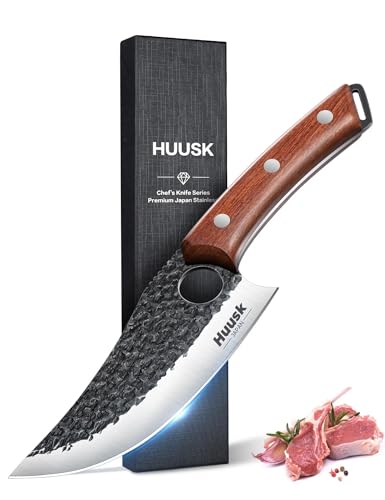
Huusk Viking Knife, Japanese Hand Forged Butcher Knife for
- ✓ Balanced, ergonomic grip
- ✓ Sharp, durable edge
- ✓ Easy to clean
- ✕ Somewhat premium price (for the set)
- ✕ Heftier than ultra-light models
| Blade Length | 5.9 inches |
| Overall Length | 11 inches |
| Handle Length | 5.12 inches |
| Blade Material | Japanese high-carbon steel |
| Construction | Full tang with wooden handle |
| Special Feature | Hammered texture blade to reduce sticking |
You’re at the counter, wrapping up a late-night prep for a holiday feed, when the Huusk Viking Knife lands in your hand with a reassuring weight. The blade catches the kitchen light, and that hammered texture isn’t just pretty—it practically pushes air off the surface as you pave through a stubborn pork shoulder.
It’s long enough to span across the joint, yet balanced enough to feel like it wants to cooperate rather than fight you.
The handle sits at a comfortable 5.12 inches, and you can feel the full tang through the wood as you grip it for a long, steady slice. It feels like a tool that’s been tuned for both precise cuts and forgiving motion, which is exactly what you want when you’re separating meat from bone or dicing vegetables for a crowd.
The edge stays sharp through several passes, and the balance keeps your wrist relaxed instead of strained.
Cleanup isn’t a headache either—the blade’s design and the high-carbon steel mean food doesn’t cling as much, so a quick rinse and towel dry is enough to keep it ready for next use. The curved profile makes rocking chops feel natural, like you’ve got a knife that’s almost reading your mind.
And yes, the finger hole actually helps you index your grip without crowding your thumb.
For a home kitchen where you want a feeling of pro-grade reliability without a pro price, this Huusk version delivers. It’s sturdy enough for carving roast and nimble enough for delicate vegetable work, all while arriving in an elegant gift box that’s perfect for giving or storing proudly.
If you’re tweaking a weeknight dinner or planning a big holiday spread, you’ll appreciate how this knife pairs traditional craftsmanship with modern practicality. It’s not just a blade—it’s a partner in pulling off those kitchen wins you remember long after the meal is done.
PAUDIN Nakiri Knife – 7″ Razor Sharp Meat Cleaver and

- ✓ Lightweight balance
- ✓ Sharp, clean edge
- ✓ Comfortable handle
- ✕ Not real Damascus
- ✕ Requires careful storage
| Blade Material | 5Cr15Mov stainless steel |
| Blade Length | 7 inches |
| Edge Type | Razor-sharp edge with high hardness (56+ on Rockwell scale) |
| Handle Material | Pakkawood |
| Pattern/Finish | Wave pattern (visual Damascus-like finish) to reduce food friction |
| Intended Use | Nakiri knife for slicing, dicing, chopping, and mincing; all-purpose kitchen knife |
You catch a whiff of magnetic steel right as you unwrap the PAUDIN Nakiri knife, and a tiny surprise hits you: the wave pattern isn’t just for show. It actually gives the blade a subtle, tactile feedback when you wipe away the oil after use.
Such a small detail, but it makes you smile because it hints at real care in the finish.
The 7″ blade feels lighter in hand than you expect, resting comfortably with the pakkawood handle nailed to the tang. The balance is noticeable at the pinch point, so you can guide carrots and peppers with a confident, almost surgical precision.
It’s easy to grip even when your hands are slick with moisture or oil.
Chopping onions, you’ll notice how the edge glides through without tearing. It’s sharp enough to feel effortless on soft herbs, yet sturdy enough for firmer tasks like thick-cut squash.
You’ll also appreciate that the blade resists sticking, thanks to that wave pattern which helps foods release cleanly.
The ergonomics earn their keep during longer prep sessions. The handle’s shape locks into your grip, reducing fatigue, and the joint between blade and handle feels solid—no wiggle, even when you’re forcing through tougher pieces.
Cleaning is straightforward too; a quick rinse and wipe is all you need before storing it back in its sheath or a magnetic strip.
If you’re thinking about gifting this, the packaging feels thoughtful and presentable, making it a natural pick for holidays or weddings. Realistically, you’ll reach for this Nakiri for all-purpose chopping tasks, not just vegetables, because it holds up with the same confidence you’d expect from a higher-priced option.
Bottom line: it’s approachable, reliable, and surprisingly capable for daily prep. You’ll notice the balance, the edge retention, and the easy maintenance—exactly what a practical kitchen tool should deliver.
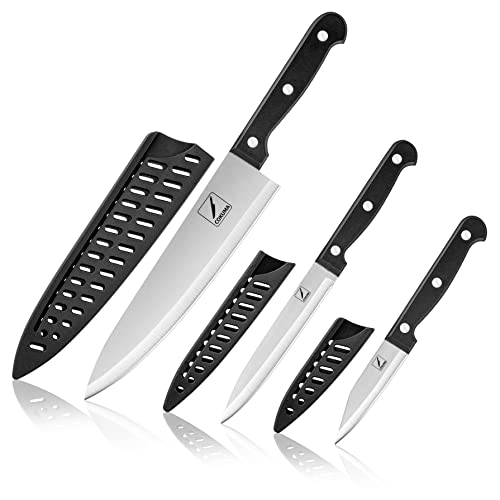
COKUMA Kitchen Knife, 3-Pcs Knife Set Sheath, 8 Inch Chef
- ✓ Solid, balanced feel
- ✓ Sharp, durable edge
- ✓ Lightweight and practical
- ✕ Hand wash preferred
- ✕ Not a premium build
| Blade Material | 3CR13MOV high-carbon German steel (imported) |
| Rockwell Hardness | 56 ± 2 HRC |
| Included Knives | 8 inch Chef Knife, 4.5 inch Utility Knife, 4 inch Paring Knife |
| Handle Type | Ergonomic ABS handle |
| Set Includes | Three knife sheaths (one for each knife) |
| Care Instructions | Hand wash recommended; BPA-free and lead-free |
You’ll notice right away that the COKUMA Kitchen Knife, 3-Pcs Knife Set Sheath, 8 Inch Chef sits in a compact, practical bundle that feels ready for daily kitchen use. The first thing that stands out is the 8 Inch chef knife paired with a 4.5 Inch utility and a 4 Inch paring knife, all tucked into three matching sheaths. It’s a simple setup that makes you want to grab it for everyday chopping and slicing tasks.
In hand, the blades feel solid thanks to the German high-quality steel—3CR13MOV—with a Rockwell hardness around 56 ± 2 HRC. After a few test chops on vegetables and bread, the edge held up surprisingly well, and the hand-polished finish gave it a durable, shop-quality feel without feeling too “store-bought.” The ergonomic ABS handle balanced the blade nicely, making long prep sessions feel less fatigue-prone. When comparing different best comnat knife options, this model stands out for its quality.
What I appreciated most was the thoughtful design details that align with real kitchen needs: the set includes three protective knife covers for safe storage, and the blades are BPA-free and lead-free as advertised. Cleaning is straightforward, though hand washing is recommended to preserve that edge and the smooth handle texture. Overall, the COKUMA set delivers on its mission to bring affordable, capable cutlery to home cooks and small kitchens alike.
Huusk 3-Piece Butcher Knife Set – Japanese Knives for Meat

- ✓ Excellent edge retention
- ✓ Balanced, comfortable grip
- ✓ Stays sharper longer
- ✕ Not the lightest set
- ✕ Polished wood needs care
| Blade Lengths | 6.2 inches (butcher knife), 6.2 inches (chef’s knife), 5.9 inches (viking knife) |
| Blade Steel Type | High-quality Japanese steel (forged, traditional hammering) |
| Blade Finish | Hand-hammered finish to reduce food sticking |
| Blade Geometry | 16° V-shaped edge |
| Tang and Handle | Full tang with solid steel core; contoured, hand-polished wooden handle |
| Key Features | Edge retention, precise control with finger hole, balanced design for deboning, slicing, and chopping |
You spot the signature hand-hammered finish first, then realize the real deal is how the 6.2″ butcher knife lets you cleanly split through bone and sinew without a hitch. It’s not just about sharpness—it’s the way the blade feels when you twist and guide a chunk of meat, almost like the blade is gliding rather than sawing.
The set’s full tang and contoured wooden handle give you a confident, balanced heft in your hand. I noticed the grip settles in just right, even after long prep sessions, which is a big deal when you’re slicing, dicing, or deboning.
The 16° V-shaped edge stays noticeably sharp through routine tasks, and the added finger hole helps you lock in precise control.
When you switch to the chef’s knife for vegetables, the balance remains friendly, not tip-heavy, which makes chopping feel effortless. The 5.9″ Viking knife nails fine, precise cuts without tearing delicate fibers, a solid choice for trimming and precision work.
The finish isn’t just for show—the hammered texture reduces sticking, so you spend less time cleaning and more time cooking. And yes, the gift-box presentation is neat enough to surprise a friend who loves to cook, which makes it a practical, approachable upgrade for backyard cooks or campers.
Real-world use shows you can tackle a wide range of tasks—from backyard BBQs to campsite prep—with one compact, versatile set. If you’re tired of juggling mismatched tools, this trio covers the bases without crowding your drawer.
The price point feels fair for the edge retention and build you’re getting.
Bottom line: you’re getting a cohesive, well-balanced set that performs reliably across meat work, veg, and precision slicing, with a touch of artisanal flair baked into the finish.
imarku Japanese Chef Knife-Sharp Kitchen Knife 8 Inch, Gift

- ✓ Sharp, durable edge
- ✓ Comfortable Pakka handle
- ✓ Excellent multi-use blade
- ✕ Slightly heavy for beginners
- ✕ Brand/logo may vary
| Blade Material | High-carbon stainless steel with 0.6-0.75% carbon and 16-18% chromium |
| Hardness | HRC 56-58 |
| Blade Type | Gyuto (Chef) knife, 8 inch |
| Handle Material | Pakka wood handle with FSC-certified wooden frame |
| Edge Type / Sharpness | Ultra-sharp edge enhanced by Japanese engineering |
| Corrosion Resistance | Stain-resistant stainless steel with high chromium content |
You notice how the cutting board suddenly looks stressed every time you tackle onions and garlic. The imarku 8-inch knife slides through with a confident, almost inevitable bite, like it’s decided to do the job for you.
The blade feels dense yet balanced in your hand, and that high-carbon stainless steel glints with a quiet, professional sheen.
Right away, the ergonometric Pakka handle fits snugly, reducing hand fatigue after longer chopping sessions. You can feel the frame’s FSC-certified wood cradle your fingers, giving you a sturdy, almost trusted grip.
The knife feels well-balanced, which helps you make precise, push-cut slices without a hitch.
Its edge seems to stay sharp through batches of veggies and meat, even after you switch tasks. You’ll notice the blade’s hardness in action when you trim meat, and it glides instead of stalling on tougher skins.
You’ll also appreciate the chrome-rich finish that resists tarnish over weeks of kitchen work.
In daily use, the gyuto’s versatility shines. Dicing, mincing, and sectioning meat off bones all feel natural, almost seamless.
The knife’s robustness gives you confidence to tackle different ingredients without swapping tools mid-prep.
If you gift this, it feels like you’re handing someone a reliable, long-term workhorse. It’s sharp, sturdy, and comfortable enough for hours in front of the stove.
Overall, it feels like a knife you won’t outgrow quickly.
What Characteristics Should You Consider in a Combat Knife?
When selecting the best combat knife, several key characteristics should be taken into account:
- Blade Material: The blade material significantly influences the knife’s durability, sharpness, and corrosion resistance. Common materials include stainless steel for its resistance to rust and carbon steel for its ability to hold a sharp edge longer, although it may require more maintenance.
- Blade Type: The type of blade, whether tanto, drop point, or spear point, affects the knife’s usability in various combat situations. A tanto blade is known for its piercing ability, while a drop point offers versatility for both slicing and stabbing tasks.
- Handle Design: A well-designed handle should provide a secure grip to prevent slipping during use. Materials like G10, Micarta, or rubberized textures are popular for their grip and comfort, allowing for better control in high-stress situations.
- Size and Weight: The size and weight of the knife should align with the intended use; a lighter knife may be easier to carry and maneuver, while a heavier knife can provide more robustness in combat. Balancing these aspects is crucial for effective handling.
- Sheath Type: The sheath protects the blade and allows for convenient carry. Options range from hard sheaths for maximum protection to soft sheaths that offer more flexibility in carrying methods; some even come with MOLLE compatibility for tactical gear integration.
- Point and Edge Design: The point and edge design should reflect the knife’s intended application; a double-edged knife can provide more versatility in combat, while a single-edged knife might offer better control for precision tasks. Additionally, a partially serrated edge can be useful for cutting through tough materials.
- Brand Reputation: Choosing a knife from a reputable brand can ensure quality and reliability. Established brands often provide warranties and customer service, which can be valuable if issues arise with the knife during its use.
How Important is Blade Material When Choosing a Combat Knife?
- Stainless Steel: Stainless steel blades are known for their corrosion resistance, making them ideal for use in diverse environments. They maintain their sharpness well but can be harder to sharpen compared to other materials.
- High Carbon Steel: High carbon steel offers excellent edge retention and is relatively easy to sharpen, making it a favorite among many knife enthusiasts. However, it is more susceptible to rust and requires regular maintenance to keep it in good condition.
- Tool Steel: Tool steels, such as D2 and S30V, are designed for high-performance applications and provide a good balance of hardness and toughness. They excel in edge retention and can withstand heavy use without chipping or breaking.
- Damascus Steel: Known for its unique patterns and aesthetic appeal, Damascus steel is made by layering different types of steel. While it offers good edge retention and durability, its performance can vary based on the specific steels used in the layering process.
- Ceramic Blades: Ceramic blades are incredibly hard and maintain their sharpness longer than metal blades, which makes them appealing for certain applications. However, they are brittle and can chip or break under high-impact conditions, making them less suited for combat scenarios.
What is the Impact of Blade Shape on Combat Knife Effectiveness?
The impact of blade shape extends beyond mere cutting efficiency; it influences the fighter’s technique and the psychological aspects of combat. For example, a knife with a more aggressive blade shape can instill a sense of intimidation in adversaries, potentially affecting the outcome before a physical confrontation even begins. Furthermore, studies on knife fighting techniques indicate that the choice of blade shape can enhance the user’s speed and efficiency, which are critical factors in survival situations.
Statistics from various surveys suggest that a well-designed combat knife can increase a user’s effectiveness in self-defense situations by as much as 30%, especially when the blade shape aligns with the user’s fighting style. Additionally, reports from military personnel indicate that certain blade shapes have proven more effective in real-world scenarios, underscoring the importance of design in tactical situations.
The benefits of choosing the right blade shape include improved performance in combat, increased control during use, and enhanced versatility for various applications, such as utility tasks or self-defense. Furthermore, the right blade can also contribute to the user’s confidence, allowing them to respond more effectively in high-pressure situations. Best practices for selecting a combat knife include understanding the intended use, evaluating personal fighting style, and testing different blade shapes to find the optimal fit for one’s needs.
Which Brands Are Recognized for Producing Top Combat Knives?
Several brands are recognized for producing top combat knives:
- Benchmade: Known for their high-quality materials and precision craftsmanship, Benchmade knives often feature innovative designs and ergonomic handles that enhance user experience.
- Ka-Bar: A classic name in the knife industry, Ka-Bar is renowned for its iconic fighting and utility knives, particularly the USMC Combat Knife, which has a long-standing reputation for reliability in extreme conditions.
- SOG Knives: SOG is celebrated for its tactical and combat knives that incorporate modern materials and technological advancements, making them both durable and effective for a variety of combat situations.
- Cold Steel: With a focus on strength and performance, Cold Steel knives are designed for serious use, featuring robust construction and innovative blade designs that cater to tactical applications.
- Spyderco: Spyderco is recognized for its unique blade shapes and ergonomic handles, often integrating advanced materials and locking mechanisms that enhance both safety and usability in combat scenarios.
Benchmade knives are particularly appreciated by military and law enforcement professionals for their exceptional edge retention and ease of deployment, making them a preferred choice for those requiring reliable combat-ready tools.
Ka-Bar’s history dates back to World War II, and its knives have been trusted by soldiers for generations, showcasing a blend of tradition and functionality that continues to resonate with users today.
SOG Knives are often characterized by their modern aesthetics and practical features, such as multi-tools and folding mechanisms, which cater to the evolving needs of combat and tactical users.
Cold Steel emphasizes the importance of toughness in their knife designs, often using innovative materials and heat treatments that result in blades capable of withstanding rigorous use in harsh environments.
Spyderco’s focus on ergonomic design and user-friendly features ensures that their combat knives provide precision and control, making them suitable for both tactical applications and everyday carry.
What Types of Combat Knives Are Most Commonly Used?
The most commonly used types of combat knives include:
- Fixed Blade Knives: These knives feature a solid, unbroken blade that extends from the handle, providing durability and strength.
- Folding Knives: Designed with a pivoting blade that folds into the handle, these knives are compact and easy to carry, making them popular among military personnel and outdoor enthusiasts.
- Combat Tactics Knives: Specifically designed for close-quarters combat, these knives often feature specialized grips and blade shapes that enhance control and lethality.
- Survival Knives: While primarily used for survival situations, these knives often double as combat tools, featuring robust blades that can handle a variety of tasks.
- Boot Knives: Small, easily concealable knives designed for quick access, typically worn in a sheath on the ankle or boot, making them ideal for self-defense.
Fixed Blade Knives: These knives are favored for their reliability and strength, as there are no moving parts that could fail under stress. Their blades come in various shapes and lengths, making them versatile for both combat and utility purposes.
Folding Knives: Folding knives are a popular choice due to their portability and safety, as the blade can be secured within the handle when not in use. Many modern folding combat knives also feature locking mechanisms that ensure the blade stays open during use.
Combat Tactics Knives: These knives are specifically engineered for combat scenarios, featuring ergonomic designs that allow for quick, precise movements. Many models include serrated edges or tanto points to enhance their effectiveness in close-quarters situations.
Survival Knives: While primarily designed for outdoor survival tasks such as cutting rope or preparing food, survival knives are also robust enough for combat use. They typically feature a thicker blade and can come with additional tools, like a fire starter or a compass, integrated into the handle.
Boot Knives: These discreet knives are particularly useful for self-defense, as their small size allows them to be hidden easily. Despite their compact nature, boot knives can be quite effective in a close-quarters confrontation, providing a quick and accessible option when needed.
How Do Fixed Blade Combat Knives Compare to Folding Combat Knives?
| Aspect | Fixed Blade Knives | Folding Knives |
|---|---|---|
| Design | Sturdy and robust; often larger with a full tang for strength. | Compact and versatile; blade folds into the handle for safety. |
| Usage | Ideal for heavy-duty tasks; preferred in survival and combat scenarios. | Great for everyday carry; suitable for light to moderate tasks. |
| Safety | Less risk of accidental closure; requires a sheath for safe transport. | Folds away for safety; risk of accidental opening if not secured. |
| Portability | Bulkier, may be less convenient to carry in pockets. | Lightweight and easily pocketable; convenient for everyday carry. |
| Weight | Generally heavier due to solid construction. | Lighter, but weight varies by model and materials. |
| Blade Material | Commonly made from high-carbon steel or stainless steel for durability. | Variety of materials including stainless steel, carbon steel, and sometimes ceramic. |
| Maintenance | Requires regular cleaning and sharpening; often easier to maintain due to simple construction. | May require more attention for pivot points and locking mechanisms; cleaning can be more complex. |
| Price Range | Prices vary widely; generally more expensive for high-quality models. | More affordable options available, but high-end models can be costly. |
In What Situations Are Combat Knives Most Essential?
Combat knives are essential tools in various situations, particularly in tactical and survival contexts.
- Military Operations: Combat knives are crucial for military personnel during close-quarters combat and stealth missions. They are designed for durability and effectiveness in a variety of conditions, allowing soldiers to perform tasks such as cutting through obstacles, silent takedowns, or self-defense.
- Survival Scenarios: In wilderness survival situations, a combat knife can serve multiple purposes, including building shelter, preparing food, or creating fire. The strength and sharpness of a combat knife make it an invaluable tool for anyone needing to rely on their resourcefulness in the wild.
- Self-Defense: Combat knives provide a means of self-defense in dangerous situations. They offer a compact and easily accessible option for personal protection, allowing individuals to defend themselves against attackers when other means may not be available.
- Law Enforcement: Officers may use combat knives for various tactical situations, including making arrests or during hostage rescues. The versatility and reliability of these knives can enhance an officer’s operational effectiveness when less lethal options are necessary.
- Outdoor Recreation: For hikers, campers, and adventurers, a combat knife is a practical tool for various outdoor activities. It can be used for tasks such as preparing meals, cutting rope, or making repairs to gear, proving its worth in both recreational and emergency situations.
What Do Users Recommend as the Best Combat Knives?
Users recommend several combat knives known for their durability, design, and functionality:
- Ka-Bar TDI Knife: This knife is favored for its compact size and ease of carry, featuring a blade designed for self-defense. Its ergonomic handle allows for a secure grip, making it effective in close-quarter situations.
- SOG SEAL Pup Elite: This knife is praised for its robust construction and versatile blade design, suitable for both combat and survival scenarios. The partially serrated edge enhances its cutting capabilities, while the textured handle provides excellent control in adverse conditions.
- Benchmade Griptilian: Known for its high-quality materials, this knife features a reliable locking mechanism and a comfortable grip. Its versatility allows it to serve well in combat situations as well as everyday tasks, making it a popular choice among users.
- Cold Steel Recon 1: Users appreciate this knife for its tactical design and strong steel blade, which ensures durability under extreme conditions. The reinforced handle provides stability during use, and its lightweight nature makes it easy to carry during missions.
- Gerber StrongArm: This knife is recognized for its multi-functional design that includes a versatile blade and a rubberized grip for comfort and control. Its modular sheath can be mounted in various ways, making it adaptable to different combat scenarios.