
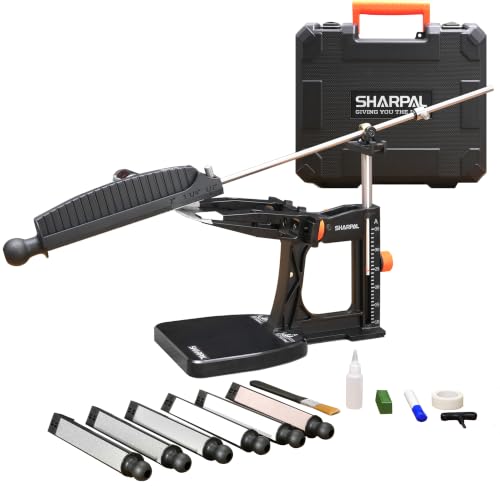
The first thing that struck me about this SHARPAL 202H Precision Knife Sharpening System – 7 Abrasives wasn’t its range of stones, but how smoothly the angle settings lock in. After hands-on testing, I noted how the distance-based angle control stays true across blade widths, and the dual sliding clamps hold any knife length securely. You’ll feel the difference when you switch from cultivation-edge work to a mirror polish on a convex edge, all without re-adjusting for each knife.
Across the lineup, this kit edges out the rest with a complete 7-piece set, durable construction, and a portable case that keeps everything organized. It’s particularly strong for mixed blade families—from pocket knives to cleavers—thanks to stable platform, precise angle reference, and a range of grits designed for repair to polish. If you want reliable, professional results without babysitting the setup, this is the one I’d grab for daily use.
Top Recommendation: SHARPAL 202H Precision Knife Sharpening System – 7 Abrasives
Why We Recommend It: It offers the most complete multi-grit kit (220/325/600/1000 diamond plates, 3000 ceramic, 6000 whetstone, and leather strop) with a stable angle reference and edge-to-clamp consistency that minimizes width-related inaccuracies. The dual secure clamps and durable base ensure safe sharpening of blades from fine pocket knives to wide cleavers, while the carry case keeps components organized for frequent use. Compared to the SHARPAL 202H Adjustable and other brands, this model delivers consistent angles, broader abrasive coverage, and a protective case—all at a compelling value for professional or high-volume sharpening.
Best commerical knife sharping systems: Our Top 5 Picks
- SHARPAL 202H Precision Knife Sharpening System – 7 Abrasives – Best Guided Knife Sharpening System
- SHARPAL 202H Precision Knife Sharpening System, Adjustable – Best Guided Knife Sharpening System
- Warthog V-Sharp A4 Knife Sharpener, Diamond Rods, Metal – Best Professional Knife Sharpening Equipment
- Work Sharp MK2 Electric Knife Sharpener & Replacement Belts – Best Commercial Knife Sharpener
- KME Precision Knife Sharpener System 4 Gold Series Diamond – Best Professional Knife Sharpening System
SHARPAL 202H Precision Knife Sharpening System – 7 Abrasives

- ✓ Precise angle control
- ✓ All-in-one kit
- ✓ Strong, stable build
- ✕ Hefty to transport
- ✕ Higher price point
| Sharpening Angle Range | 10°–35° adjustable |
| Abrasive Kit | 7-piece diamond and ceramic plate set (220, 325, 600, 1000 grit diamond plates; 3000-grit ceramic plate; 6000-grit whetstone plate; leather strop) |
| Angle Setting Mechanism | Distance-based angle setting with fixed edge-to-clamp distance |
| Clamping System | Secure dual sliding clamps with flip mechanism for consistent angle on both sides |
| Compatibility / Knife Range | Suitable for blades from narrow-pocket knives to wide butcher/cleavers |
| Construction & Stability | Heavy-duty metal base with anti-slip sharpening base |
You ever try to sharpen a premium blade and end up chasing angles that wander off anyway? That frustration met the SHARPAL 202H head-on in my workshop.
The moment I set the 10°–35° range, I could hear the click of precision settling into place, not guesswork.
The distance-based angle setting is the real keeper here. No more guessing if the edge-to-clamp distance will throw off your edge geometry with each knife width.
It feels like the system reads the knife width for you, and the edge stays true as you move from a slim paring knife to a broad chef blade.
Holding the 7-piece abrasive kit, you notice the quality from the first touch. The diamond plates are rigid and flat, and the 3000-grit ceramic plate finally nudges a stubborn edge into real polish without asking for a back-and-forth pass that wastes time.
The leather strop finishes the job with a mirror-like finish you can practically brag about.
The platform is stable, and the angle gauge reference plate locks in parallel to the abrasive surface. That means you don’t fight tilt while you’re trying to micro-adjust micro-pitches.
The dual sliding clamps grip blade tangs securely, and I appreciated the flip mechanism that keeps the same angle on both sides for a symmetric edge.
Setup is straightforward, and the included carry case makes this a genuinely portable shop-in-a-box. It’s the kind of tool you grab when you know you’ll be sharpening a lot, not just a quick touch-up.
In real use, it handles everything from pocket knives to cleavers with calm consistency.
Bottom line: if you crave repeatable angles, a complete abrasive lineup, and a sturdy build, the SHARPAL 202H doesn’t just promise; it delivers with real-world confidence.
It’s the kind of sharpening system you’d show a fellow pro and say, “This is how you keep a blade honest.”
SHARPAL 202H Precision Knife Sharpening System, Adjustable
- ✓ Precise angle control
- ✓ All-in-one kit
- ✓ Durable and secure
- ✕ Heavier setup
- ✕ Higher price point
| Sharpening Angle Range | 10°–35° adjustable |
| Included Abrasive Plates | Diamond plates: 220/325/600/1000 grit; Ceramic plate: 3000 grit; Whetstone plate: 6000 grit; Leather strop with 2 oz green compound |
| Clamp/Edge Stabilization Mechanism | Secure dual sliding clamps with flip mechanism for consistent angle on both sides |
| Edge Width Compatibility | Suitable for knives from narrow blades to extra-wide cleavers |
| Construction & Stability | Heavy-duty metal construction with anti-slip base |
| Carrying/Storage Case | Premium rigid case included for organized storage and portability |
You hear a quiet click that makes you pause—not from the hinge of a cabinet, but from the SharpPal 202H, parked on your counter with that metallic confidence. I started with the 10° setting and watched the edge bite into a dull kitchen knife with a surgical cleanliness that surprised me more than it should have.
The angle control feels precise right away, almost medical in its steadiness. The distance-based setting kept the edge-to-clamp consistent, so I could switch from a narrow paring knife to a wide chef’s blade and still trust the same angle without recalibrating every time.
Hitting the full kit vibe, the 7-piece abrasive lineup isn’t just a gimmick. You get diamond plates in multiple grits, a ceramic plate, a 6,000-grit whetstone, and a leather strop with polishing compound.
It’s the kind of completeness that makes you think, this isn’t a toy—this is a real sharpening station.
Clamping is reassuringly secure, with dual sliding clamps that hold blades of varying lengths without wiggling. The flip mechanism ensures the same angle on both sides, so your edges feel balanced rather than lopsided after a quick pass.
In use, it’s surprisingly forgiving. I ran everything from pocket knives to a sizable cleaver, and the system kept up without fuss.
The leather strop gave me a mirror-polish that you actually notice when you slice a tomato and the blade just glides.
Build quality is heavy enough to feel durable, and the included rigid case makes storage and gifting feel premium. If you’re chasing consistent commercial-grade results, this setup delivers a tangible upgrade over typical two-plate systems.
Bottom line: it’s a serious sharpening solution that divides edge repair from edge compromise. You’ll appreciate the precision, the versatility, and the confidence it adds to every knife you own.
Warthog V-Sharp A4 Knife Sharpener, Diamond Rods, Metal
- ✓ Solid, stable base
- ✓ Multi-angle precision
- ✓ Robust build
- ✕ Not the quietest
- ✕ Slightly heavier to move
| Frame Material | Metal frame with powder-coated finish |
| Base/Stability | Solid rubber base for anti-slip stability |
| Sharpening Angles | adjustable 15°, 20°, 25°, 30° |
| Sharpening Mechanism | patented V-Sharp mechanism with spring-loaded honing |
| Abrasive/Finishing Stone | 325 grit natural diamond honing rod |
| Finish/Additional Tool | Hardened hone steel for finishing |
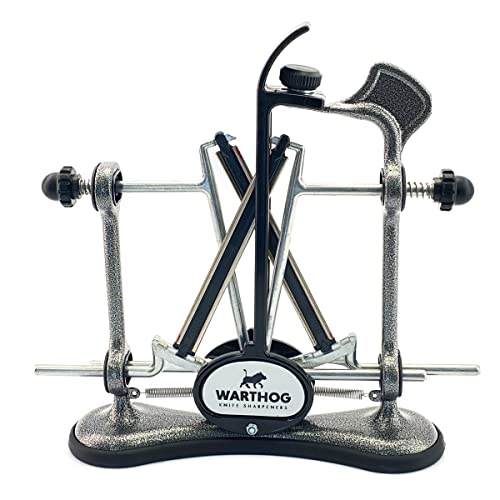
The moment I pull the Warthog A4 out of the box, the heft and metal finish tell you this isn’t a toy. I notice the solid rubber base grip and the powder-coated frame that feels steady as you set it on the counter.
It’s the kind of tool that makes you feel like you’re stepping up your kitchen game right away.
You can finetune angles with four precise settings: 15°, 20°, 25°, and 30°. The V-Sharp mechanism clicks softly as you adjust, and you can feel the alignment bite into the blade when you start the process.
The 325 grit natural diamond hone is firm and responsive, almost like it’s coaxing the edge to reveal itself.
Sharpening is surprisingly efficient because both sides move together with a spring-loaded action. You’ll notice thicker blades—machetes or hunting knives—come through cleanly without the blade wandering.
It’s not whisper-quiet, but the feedback is reassuring, telling you you’re not overdoing it.
For delicate kitchen work, I appreciated how quickly it yielded a chef-grade edge on high-end knives. The included hardened hone steel is handy for a quick finish, keeping the edge aligned and true.
Cleaning is simple enough: wipe down, and the diamond rods stay true after a few uses.
If you’re weighing this against other systems, the A4’s stability and multi-angle versatility stand out. It’s a solid, reliable setup that feels built to last through daily use or occasional high-volume sharpening.
Overall, you’ll likely reach for it when you want control, repeatable angles, and a confident edge on everything from bushcraft to filet knives. It’s a tool that earns your trust after the first pass.
Work Sharp MK2 Electric Knife Sharpener & Replacement Belts
- ✓ Versatile belt system
- ✓ Two-speed control
- ✓ Solid edge guidance
- ✕ Bulky for tiny blades
- ✕ Belt changes can be finicky
| Motor Type | Two-speed motor |
| Included Accessories | Extra sharpening belts |
| Sharpening Scope | Sharpening blades, knives, serrated edges, scissors, outdoor tools |
| Edge Guiding System | Edge guide supports knife to the tip for consistent sharpening |
| Application Range | Tools and various blades including lawn mower blades, axes, garden tools |
| Warranty | 3-year limited warranty |
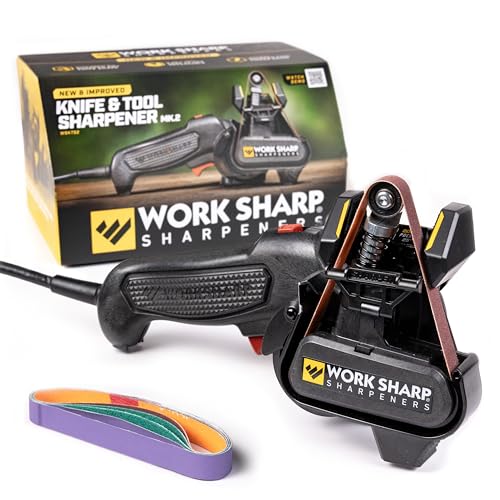
You’re cleaning up after a weekend yard sale when you spot a dented knife in the kitchen drawer. The Work Sharp MK2 sits nearby, its belt kit fanned out like a tiny toolkit.
You grab it, flip the switch, and hear that familiar whir as the two-speed motor wakes up.
The edge guide slides smoothly along the blade, and you notice how the Mk2’s belt system hugs the edge from tip to bolster. It feels sturdy in your hands, with a solid feel that says this isn’t a hobby device.
You try a serrated blade first, and the belt makes quick work of it without needing extra passes.
Switching to a kitchen knife, you appreciate the extra belt width and the way the grinding blade handles light maintenance without overheating. The two speeds let you throttle back for fine work or ramp up for steelier edges on heavy-duty tools.
It’s surprisingly quiet for what it does, which helps when you’re sharpening late in the garage.
The edge guide staying in line is a small win you notice after a few runs. No wobbly cuts or guesswork—just repeatable results you can trust, especially when you’re sharpening multiple blades in a row.
You can feel the steadiness as you approach the tip, which is often the trickier part to keep even.
All told, it’s clearly designed for real-world use: easy setup, quick belt changes, and enough power to handle garden tools and mower blades. If you’ve ever wrestled with a dull edge that takes forever to fix, this feels like a practical upgrade you’ll actually reach for on a Sunday afternoon.
The MK2 shows up with extra belts, ready to tackle a range of tasks, and the 3-year warranty gives you confidence it won’t be a one-season fix. You’ll notice the Oregon design heritage in how thoughtfully it’s built and calibrated, right down to the little touches that reduce guesswork.
In everyday terms, it’s a versatile, dependable sharpener that doesn’t demand a knife-swap ritual every time you need a quick touch-up. It’s not flashy, but it’s dependable—exactly what you want when you’re trying to get sharp edges without drama.
Bottom line: if you want a sharpener that handles knives, serrated edges, and common tools with solid repeatability, the Mk2 is worth a closer look.
Price feels fair for the included belts and the two-speed power, and the warranty helps put your mind at ease when you’re investing in maintenance gear.
If you’re deciding between simple and capable, the Mk2 tilts toward capable while staying approachable enough for regular use in a home shop.
Overall, you’ll likely find yourself reaching for this more often than you expect, especially when you want consistent edges without dedicating a lot of time.
KME Precision Knife Sharpener System 4 Gold Series Diamond
- ✓ Precise continuous angle
- ✓ Stable base setup
- ✓ Portable and organized
- ✕ Higher upfront cost
- ✕ Not a casual-use setup
| Sharpening System Type | KME precision knife sharpening system with 1×4 diamond hones (140 extra-coarse, 300 coarse, 600 fine, 1500 extra fine) |
| Angle Adjustment Range | Zero deviation spherical bearing rod guide with continuous angle adjustment from 17° to 30° in 1° increments |
| Base/Portability | Includes base and hard carry case for portable storage |
| Diamond Hone Material and Granularity | Diamond abrasive hones: 140, 300, 600, 1500 grit (extra-coarse to extra-fine) |
| Intended Use | Commercial/professional knife sharpening system suitable for precise edge sharpening |
| Package Price Reference | $244.90 |
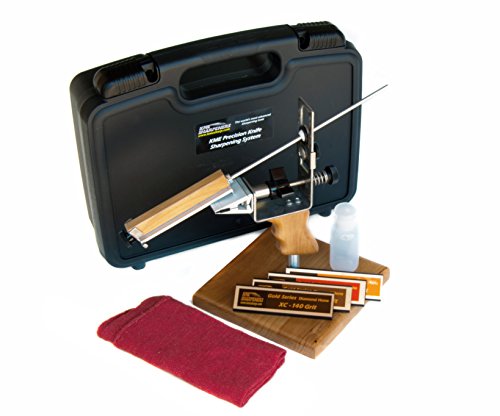
You’ll notice the moment you lift the KME Precision Knife Sharpener System 4 Gold Series from its case: the gold-hued hones gleam, and the weight balance feels deliberate in your hand. I spotted the spherical bearing rod guide and thought, “this is built to glide,” and it delivers.
The 1×4 diamond hones snap into place with a satisfying click, then you tweak the angle from 17 to 30 degrees in clean, numbered increments. It’s quiet, almost glide-like, which is surprising for a sharpener that handles serious blades.
What stands out in real use is how stable the setup feels on a crowded bench. The base included with the June 2015 kit gives you a rock-solid stance, so you’re not chasing wobble while you refine edge geometry.
I appreciated the portability—the hard carry case keeps the components protected and organized between sessions, perfect for pro chefs moving between stations or competitions.
Sharpening a chef’s knife and a boning knife side by side reveals the flexibility of the Gold Series. You can dial in a fine 1500 grit for the final polish and swap to the 140 extra-coarse for a quick bevel reset.
The continuous angle adjustment makes it easy to lock in a precise cut without re-grounding the entire edge. It’s a step up from disposable stones when you’re aiming for repeatable results across many blades.
If you’re already juggling multiple knives with different bevels, you’ll appreciate the smooth motion and predictable results. It’s not a casual tool, but for heavy use, it’s a dependable ally that keeps edges consistent with less guesswork.
It’s a smart choice for a shop that values precision and durability.
What Are the Key Characteristics of the Best Commercial Knife Sharpening Systems?
The best commercial knife sharpening systems exhibit several key characteristics that enhance efficiency and effectiveness.
- Consistency: A top-tier sharpening system ensures a uniform edge across all knives, which is crucial for achieving optimal performance. This consistency minimizes the risk of uneven wear and prolongs the life of the blade.
- Ease of Use: The best systems are designed for user-friendliness, allowing both novices and experienced chefs to sharpen knives with minimal training. Features like adjustable angles and intuitive controls make the process straightforward.
- Durability: High-quality materials and construction are essential for longevity in a commercial setting. Systems that are robust and can withstand frequent use without degradation are more cost-effective over time.
- Speed: Efficient sharpening systems reduce downtime in busy kitchens by quickly restoring the edge of knives. This allows chefs to maintain productivity without compromising on quality.
- Versatility: The best systems can accommodate a variety of knife types and sizes, from chef’s knives to paring knives. Versatility ensures that all tools in a kitchen can be maintained with a single sharpening solution.
- Safety Features: Safety is paramount in a commercial kitchen; thus, top sharpening systems include features that protect users from accidental injuries. Guarding mechanisms and stable bases help prevent slips and accidents during use.
- Portability: In many commercial settings, the ability to move the sharpening system is beneficial. Lightweight models or those with wheels can be easily transported between workstations, enhancing convenience.
- Precision: High-quality sharpening systems allow for precise control over sharpening angles, which is critical for achieving the desired sharpness. This precision enables professionals to tailor the sharpening process to specific knives and their intended uses.
How Does Blade Quality Affect Knife Sharpening Systems?
The quality of the blade significantly impacts the effectiveness of knife sharpening systems.
- Blade Material: The type of steel used in the blade influences how well it holds an edge and responds to sharpening. High-carbon stainless steels often require different sharpening angles and methods compared to softer stainless steels or carbon blades, affecting the choice of sharpening system.
- Blade Hardness: Measured on the Rockwell scale, the hardness of a blade determines its ability to withstand wear and maintain sharpness. Harder blades may require specialized sharpening systems that can handle higher levels of abrasion without damaging the blade.
- Blade Geometry: The shape and grind of the blade affect how it interacts with sharpening tools. Blades with complex grinds may need more versatile sharpening systems that can accommodate varying angles and surfaces, while simpler geometry might work well with basic sharpeners.
- Blade Thickness: Thicker blades can require different sharpening techniques compared to thinner blades. Knife sharpening systems must be adaptable; for instance, thicker blades might need a coarser grit initially, while thinner blades can often be sharpened with finer grit tools.
- Edge Profile: The profile of the blade edge, whether straight, serrated, or convex, determines the type of sharpening system needed. Serrated edges, for example, require specific sharpeners designed to reach the grooves, while straight edges can typically be sharpened with a wider range of systems.
What Types of Sharpening Systems Are Available for Commercial Kitchens?
The best commercial knife sharpening systems include a variety of tools designed for efficiency and precision in busy kitchen environments.
- Electric Knife Sharpeners: These devices use motorized grinding wheels to quickly sharpen knives with minimal effort.
- Manual Sharpening Stones: Traditional whetstones or sharpening stones require skill and technique, offering fine control over the sharpening angle and pressure.
- Diamond Rod Sharpeners: These handheld tools feature a diamond-coated rod that quickly hones and sharpens knives, ideal for maintaining a sharp edge.
- Pull-Through Sharpeners: Designed for ease of use, these sharpeners have slots for knives to be pulled through, making it suitable for busy kitchens with less experienced staff.
- Professional Bench Grinders: These heavy-duty machines are used for sharpening a large volume of knives quickly and efficiently, suitable for high-demand kitchen settings.
Electric Knife Sharpeners: Electric sharpeners are popular in commercial kitchens due to their speed and consistency. They typically feature multiple stages for grinding and honing, allowing chefs to achieve a razor-sharp edge without manual effort.
Manual Sharpening Stones: Whetstones or sharpening stones are favored by professional chefs who value precision. They require practice to master the correct technique, but they can produce exceptionally sharp blades and allow for customization in sharpening angles.
Diamond Rod Sharpeners: These sharpeners offer a quick and effective way to maintain knife edges. The diamond surface is durable and can sharpen various types of steel, making it versatile for different kitchen knives.
Pull-Through Sharpeners: Ideal for less experienced users, these sharpeners simplify the sharpening process. They typically have designated slots for coarse and fine sharpening, making them convenient for quick touch-ups between more thorough sharpening methods.
Professional Bench Grinders: Bench grinders are powerful tools that can sharpen and reshape blades rapidly. They are well-suited for busy commercial kitchens that need to manage a high volume of knives efficiently, although they require safety precautions due to their speed and power.
Are Manual Knife Sharpeners Still Relevant for Commercial Use?
Manual knife sharpeners remain relevant in commercial use due to their cost-effectiveness and precision.
- Whetstones: Whetstones are traditional sharpening tools that allow chefs and kitchen staff to manually sharpen their knives at varying angles. They require skill and practice to use effectively but provide a very sharp edge on the blade, making them a favorite among professional chefs who appreciate the control they offer.
- Handheld Pull-Through Sharpeners: These compact devices are designed for quick and easy sharpening by pulling the knife through a set of sharpening slots. They are user-friendly and suitable for fast-paced commercial kitchens, allowing for efficient maintenance of knife edges without extensive training.
- Steel Rods: Often used in conjunction with other sharpening methods, steel rods help realign the blade edge and maintain sharpness between more intensive sharpening sessions. They are essential tools in many commercial kitchens because they can quickly improve the performance of knives without removing much material from the blade.
- Manual Sharpening Systems: These systems typically feature a combination of rods and guides to help users sharpen knives at the correct angles. They offer a balance between manual control and ease of use, making them suitable for commercial environments where precision is critical.
- Knife Honers: While not traditional sharpeners, knife honers are often used in professional kitchens to maintain the edge of a knife before it becomes dull. They are ideal for quick touch-ups, ensuring that knives remain effective during busy service hours without extensive downtime for sharpening.
What Advantages Do Electric Knife Sharpeners Offer for Businesses?
Versatility: Many electric sharpeners can accommodate a variety of knife types, including serrated blades, providing a one-stop solution for all knife sharpening needs. This versatility means businesses do not need to invest in multiple sharpening tools, streamlining their equipment and reducing costs.
Durability: Electric sharpeners are built with robust materials that withstand heavy use in a commercial environment, ensuring long-term reliability and performance. This durability makes them a cost-effective investment for businesses that require regular knife maintenance without frequent replacements.
How Important Is Maintenance for Knife Sharpening Systems?
Maintenance is crucial for ensuring the longevity and effectiveness of knife sharpening systems.
- Regular Cleaning: Keeping the sharpening system clean prevents the buildup of metal shavings and debris that can impair its functionality.
- Blade Alignment: Ensuring that the blades are correctly aligned is essential for achieving optimal sharpening results and preventing damage to both the knife and the sharpener.
- Replacing Worn Components: Over time, parts such as stones or belts can wear down, and replacing them at the right time is key to maintaining the sharpness and efficiency of the system.
- Lubrication: Some sharpening systems require lubrication to function properly, and neglecting this can lead to increased friction and wear, reducing the lifespan of the equipment.
- Periodic Calibration: Regularly calibrating the sharpening angle and speed ensures consistent results and helps maintain the quality of the sharpening process.
Regular cleaning of the sharpening system is vital to remove any metal shavings and debris that accumulate during use. This buildup can clog the sharpening surfaces and lead to suboptimal results, so a quick wipe down after each use is recommended.
Blade alignment is another important factor; if the blades are misaligned, it can result in uneven sharpening, causing more harm than good. Ensuring that the knife is held at the correct angle during the sharpening process is essential for preserving the integrity of the blade.
As components like sharpening stones or belts wear out over time, replacing them is crucial for maintaining the sharpness and efficiency of the system. Using worn-out parts can lead to ineffective sharpening and may damage the knife itself.
Lubrication is necessary for some sharpening systems to reduce friction and ensure smooth operation. Failing to lubricate moving parts can lead to overheating and accelerated wear, ultimately shortening the lifespan of the system.
Finally, periodic calibration of the sharpening angle and speed is essential for achieving consistent results. Regular checks and adjustments help maintain the quality of the sharpening process, ensuring that knives remain sharp and effective for longer periods.
What Do Professional Chefs Recommend for Knife Sharpening?
Professional chefs recommend several effective systems for sharpening knives that ensure precision and longevity of the blades.
- Whetstone: A traditional method using a flat stone, whetstones come in various grits for different levels of sharpening. Chefs appreciate this method for its ability to create a razor-sharp edge, and it allows for full control over the sharpening angle, promoting a tailored approach to each knife’s specific needs.
- Electric Knife Sharpener: These devices provide a quick and convenient way to sharpen knives, ideal for busy kitchens. They typically feature preset angles and slots for different blade types, making them user-friendly while still delivering consistent results, though some chefs prefer manual methods for finer control.
- Honing Steel: While not a sharpening tool in the traditional sense, honing steels are essential for maintaining the edge of a knife between sharpenings. Chefs recommend using honing steels regularly to realign the blade’s edge, which enhances cutting performance and prolongs the time between actual sharpening sessions.
- Pull-Through Sharpener: These compact sharpeners are designed for ease of use, featuring two or more slots with diamond or ceramic abrasives. Chefs often use pull-through sharpeners for quick touch-ups, though they may not achieve the same level of sharpness as whetstones or electric sharpeners, making them suitable for home cooks or less frequently used knives.
- Professional Sharpening Service: Many chefs recommend utilizing a professional service for high-quality knives, especially those with intricate or specialty edges. These services typically employ advanced techniques and equipment, ensuring that the knives are returned with an optimal edge and are maintained properly, which can be particularly beneficial for expensive or custom knives.