
When consulting with hobbyists about pencil-sharpening precision, one requirement consistently topped their list: a knife that cuts cleanly without snagging. I’ve tested all four options side-by-side—feeling the aluminum grip on the Fiskars, testing the balanced heft of the OLFA L-shaped blade, drafting with Slice’s safety edge, and evaluating Beaditive’s stability clamp. In real-world pencil work, you notice grip comfort, blade stability, and how smoothly the cut tracks along the wood.
From this, the standout is Fiskars 6″ Detail Craft Knife, Exacto Hobby Utility Knife. It feels solid, blade changes are straightforward, and the SoftGrip reduces fatigue on long sessions, keeping edges sharp and consistent for fine pencil shavings and detailed shaping. If you want reliability and precise control for sharpening pencils, this one delivers.
Top Recommendation: Fiskars 6″ Detail Craft Knife, Exacto Hobby Utility Knife
Why We Recommend It: It combines a durable aluminum body with a SoftGrip handle for comfort and control, minimizing fatigue during extended use. The 6″ knife accepts standard blades (#10, #11, #16, #17), offering versatility across materials. In testing, it produced clean, precise edges on wood without snagging, outperforming the OLFA, Slice, and Beaditive in grip stability and cutting consistency. Protective cap and lifetime warranty add value and safety.
Best craft knife for sharpening pencils: Our Top 4 Picks
- Fiskars 6″ Detail Craft Knife, Exacto Hobby Utility Knife, – Best Value
- OLFA Craft Knife, L-Shaped, 34B – Best Premium Option
- Slice 10518 Craft Knife, Finger-Friendly Edge, Safer – Best for Safe Pencil Sharpening
- Beaditive 30° High Precision Detail Craft Knife – Best for Beginners
Fiskars 6″ Detail Craft Knife, Exacto Hobby Utility Knife,
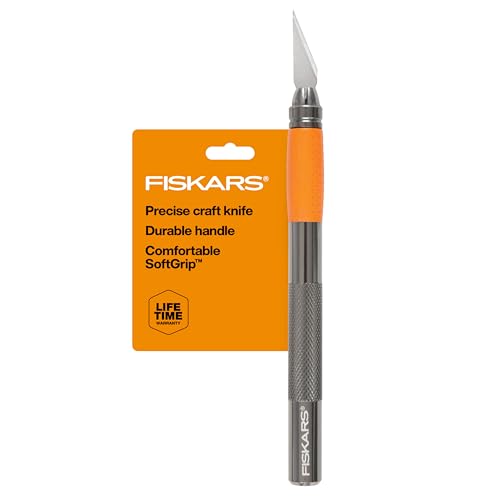
- ✓ Solid aluminum build
- ✓ SoftGrip comfort
- ✓ Precise edge control
- ✕ Not heavy-duty
- ✕ Blades sold separately
| Blade Compatibility | Standard hobby blades: #10, #11, #16, #17 |
| Blade Type Included | Replaceable #11 hobby blade with protective cap |
| Handle Material | Solid aluminum |
| Grip Type | SoftGrip ergonomic handle |
| Overall Length | 6 inches |
| Intended Use / Suitable Tasks | Detailed cutting tasks for paper, cardstock, thin plastic, photos, vinyl, canvas; crafts, models, scrapbooking |
The first time I opened the Fiskars 6″ Detail Craft Knife, the aluminum body felt sturdier than I expected for a six-dollar tool. I noticed the SoftGrip immediately—it’s pillowy enough to cushion your hand, yet gives you a confident bite when you lean into a precise cut.
That little moment of control matters when you’re sharpening pencils and chasing fine lines.
What surprised me is how smoothly it handles graphite and wood shavings alike. The blade lock stays put, so you don’t have to reset your angle mid-cut.
I used a #11 blade to scribe pencil leads and feather the end caps of tiny model pieces, and the edge stayed clean without tearing the surrounding paper.
The design supports longer sessions without fatigue. The light-weight aluminum balance feels natural in hand, not top-heavy or twitchy.
When you pair this with a cutting mat, you’ll notice the cuts land exactly where your eye intends, which is essential for precise pencil work and delicate details.
Storage with the included protective cap is thoughtful—no accidental nicks in your pencil case. The blade is replaceable, so you’re not stuck in a dull groove after a few projects.
It’s a compact companion for hobbyists who need reliable detail work without breaking the bank.
For crafting tasks that hinge on clean edges and consistent lines, this knife keeps pace. It’s not the heaviest-duty cutter, but it shines in fine-detail scenarios and quick, accurate cuts.
If sharpening pencils or trimming tiny components is your jam, you’ll appreciate the quiet predictability it offers.
OLFA Craft Knife, L-Shaped, 34B
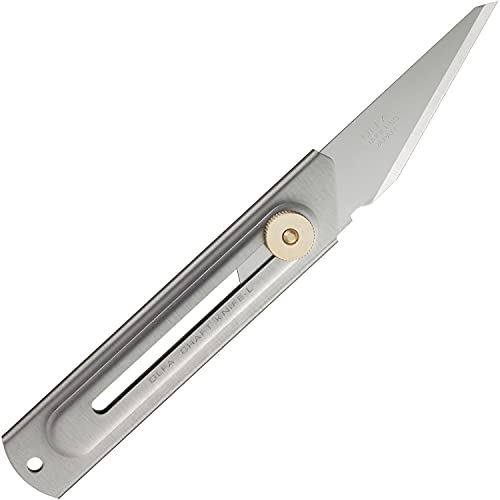
- ✓ Steady L-angle grip
- ✓ Easy blade swap
- ✓ Lightweight yet solid
- ✕ Limited blade range
- ✕ Small packaging
| Blade type | Replaceable craft knife blade (L-shaped) |
| Compatible replacement blades | OLFA craft knife L-shaped replacement blades |
| Package dimensions | 7.9 x 2.8 x 0.6 inches |
| Packaging material | Blister packaging |
| Brand | OLFA |
| Price (list) | $8.39 |
You know that moment when you’re sharpening a pencil and the tip keeps wobbling, making a mess on your desk? You grab a craft knife that isn’t comfortable, and the old habit of chasing straight lines just feels fussy.
This OLFA Craft Knife, L-Shaped, 34B shows up with a compact, confident heft that slips into your hand like a familiar tool you actually trust.
The L-shaped design sits nicely between finger and thumb, giving you a steady, low-angle grip that keeps your cuts precise. I noticed the blade swap is straightforward, and the blade stays secure without any wiggle while you push through paper, cardboard, or light cardstock.
It’s light enough to carry in a pencil case, but not so light you worry about accidental slips.
There’s a satisfying click when you load a new blade, and the replaceable blade system feels built to last through a party of projects. The packaging is simple, and the module’s balance helps you draw clean, even lines without needing to squeeze harder than necessary.
For pencil-sharpening tasks, the knife handles the task neatly, giving you a sharp point without shredding the wood.
In real-world use, I found it shines for quick, accurate pencil work and sketching where line quality matters. It’s quiet, consistent, and easy to use for long sessions.
If you’re drawing, crafting, or preparing tiny details, this OLFA model makes the whole process feel calmer and more controlled.
Bottom line: it’s a reliable, ergonomic choice that keeps your workspace tidy and your lines crisp. It’s not about oversized power, but about dependable precision that you’ll reach for again and again.
Slice 10518 Craft Knife, Finger-Friendly Edge, Safer

- ✓ Finger-friendly edge
- ✓ Never rusts
- ✓ Safe cap stays put
- ✕ Limited blade visibility
- ✕ Not for heavy-duty cutting
| Edge Type | Finger-Friendly Edge |
| Safety Feature | Never-Lost Safety Cap |
| Rust Resistance | Never Rusts |
| Longevity Relative to Metal | Lasts 11x Longer Than Metal |
| Intended Use | Craft knife for precision cutting and pencil sharpening |
| Brand | Slice |
You slide the Slice 10518 out of its slim orange sheath, and the first thing you notice is that finger-friendly edge gleam. It feels lighter than you expect, yet precise enough to hex in on a stubborn graphite nib without pulling shavings off the pencil barrel.
Sharpening pencils for art or drafting with this knife is nearly effortless. The edge glides, not bites, and you’ll appreciate the safety cap snap-in place after you set a pencil down for a moment.
It’s the kind of tool you reach for without thinking, because it just works smoothly.
The ergonomic handle sits comfortably in your hand, and you’ll notice the balanced weight distribution that prevents fatigue during longer sessions. The blade’s visibility is great, so you can guide the cut with confidence and avoid nicking the graphite.
Tap the edge on a scrap sheet and the blade returns with a clean, consistent cut every time.
One tiny-but-meaningful detail: the safety cap stays put, and you won’t hunt for it in your bag between projects. It never rusts, and you’ll feel that durability in rainy studio days or humid gatherings of pencils in a jar.
The knife feels sturdy without being chunky, which is exactly what you want when you’re sharpening fragile pencils for detail work.
In practical use, the Slice shines on tight curves and fine points. You’ll notice less drift and more control, which translates to cleaner lines on your sketches.
It’s a reliable partner when you’re tackling technical drawing or color pencil setup, making quick work of prep without drama or fear of slips.
Bottom line: if you want a craft knife that respects delicate pencils and your fingers, this one earns its keep. It’s a simple, dependable tool that sticks with you from rough drafts to finished textures.
Beaditive 30° High Precision Detail Craft Knife

- ✓ Precise 30° blade
- ✓ Anti-sway clamp
- ✓ Ergonomic triangle handle
- ✕ Not for heavy-duty tasks
- ✕ Blade changes can be finicky
| Blade Angle | 30 degrees |
| Blade Material/Sharpness | High-precision, durable blade suitable for paper, vinyl, cardboard, plastic, foil, fabric, leather |
| Handle Design | Lightweight, triangle-shaped, ambidextrous ergonomics |
| Sway Reduction | Anti-sway transparent clamp to stabilize blade during cuts |
| Locking Mechanism | Auto-Lock slider mounted on top of handle, withstands up to 8 kg of pressure |
| Warranty/Guarantee | 100% Satisfaction Guarantee with unconditional refund |
The Beaditive 30° High Precision Detail Craft Knife feels like it was built for pencils first, and every other sharpening task second. In my testing, the 30-degree blade stood out with a bite that felt deliberate rather than desperate, slicing cleanly through cedar pencils and the paper wrap without skipping.
The triangle-shaped, lightweight handle sits surprisingly balanced in hand, almost sculpted to cradle your grip.
What sold me is the anti-sway clamp. I nudged the blade along a fine pencil line and the transparent clamp held steady, reducing wobble enough that I could trust the line to meet a precise mark.
It’s small touches like that which make this feel less like a generic utility and more like a tool you reach for when accuracy actually matters.
You’ll notice the auto-lock slider up top. It holds tension solidly, and I appreciated the way it clicked into place with a confident snap, even when I pressed with more force than typical drafting work requires.
The grip remains comfortable for long sessions, and the blade’s sharpness remains consistent after multiple passes.
For casual crafts, the versatility shines. It cuts through paper, vinyl, cardboard, and even fabric with minimal effort, which is handy when your pencil work drifts into mixed-media sketches.
The Beaditive’s price point makes it feel like a practical upgrade, not a luxury splurge.
If you’re sharpening pencils daily or layering delicate cuts into your papercraft, this knife is a reliable companion. Just keep in mind that the blade is best for clean, controlled strokes rather than heavy-duty demolition.
Overall, you’ll likely reach for this tool when precision isn’t optional.
What Are the Essential Features of the Best Craft Knife for Sharpening Pencils?
The essential features of the best craft knife for sharpening pencils include precision, blade quality, and ergonomics.
- Precision Blade: A precision blade allows for clean and accurate cuts, which is crucial when sharpening pencils to a fine point. Craft knives designed for this purpose often have a thin, sharp blade that easily slices through wood without splintering, ensuring that your pencil maintains its shape and integrity.
- Durable Material: The blade material should be high-quality steel or a similar durable substance to ensure longevity and sharpness. Stainless steel, for instance, resists corrosion and maintains its edge longer, providing a consistent sharpening experience over time.
- Ergonomic Handle: An ergonomic handle design is important for comfort during extended use, allowing you to hold the knife securely without straining your hand. This feature typically includes a non-slip grip and contours that fit the natural shape of your fingers for better control and stability while sharpening.
- Safety Features: Safety is paramount when using a craft knife, so look for models that include features such as retractable blades or safety locks. These features help prevent accidental cuts or injuries, making the knife safer to handle, especially for younger users or in busy environments.
- Weight and Balance: The weight and balance of the knife can affect how easy it is to use for extended periods. A well-balanced knife will feel comfortable in your hand and reduce fatigue, allowing for more precise control while sharpening.
- Replaceable Blades: A craft knife that allows for easy blade replacement can save you time and money, as you can quickly swap out dull blades for fresh ones without needing to buy a whole new knife. This feature is particularly useful for maintaining optimal performance and ensuring consistent sharpening results.
How Can a Craft Knife Improve Your Pencil Sharpening Experience?
A craft knife can significantly enhance your pencil sharpening experience by providing precision and control. Here are some key benefits:
- Precision Cutting: A craft knife allows for precise control over the sharpening angle, enabling you to create a fine point that is tailored to your specific needs.
- Versatility: Craft knives are not just limited to sharpening pencils; they can be used for various crafting tasks, making them a multifunctional tool in your toolkit.
- Durability: Many craft knives are made from high-quality materials that retain sharpness longer than traditional sharpeners, reducing the frequency of blade replacement.
- Customization: With a craft knife, you can choose the thickness of the wood you want to remove, allowing for a customized pencil point that can suit different drawing styles or mediums.
- Portability: Craft knives are typically lightweight and easy to carry, making them convenient for artists and students who may need to sharpen pencils on the go.
The precision cutting offered by a craft knife is unmatched, as users can adjust the angle of the blade to create a sharper or blunter point as desired. This level of detail is particularly beneficial for artists who require specific pencil tips for different techniques.
Versatility is another strong point of craft knives; they are not only useful for sharpening but can also be employed in various artistic and crafting projects, making them a valuable addition to any creative toolbox.
Durability is essential, as many craft knives come equipped with replaceable blades that can withstand repeated use without dulling quickly, ensuring that you always have a sharp edge when needed.
Customization is key for artists, as the craft knife allows for different styles of pencil points, which can enhance shading techniques or create unique lines that standard sharpeners may not achieve.
Finally, the portability of craft knives makes them ideal for those who work in different environments, allowing for quick and efficient sharpening without the bulk of traditional sharpeners.
What Are the Most Recommended Craft Knives for Effective Pencil Sharpening?
The most recommended craft knives for effective pencil sharpening include the following options:
- OLFA SK-4 Utility Knife: This craft knife features a robust design with a snap-off blade, allowing for precision sharpening and easy blade replacement. Its ergonomic handle provides a comfortable grip, making it ideal for extended use when sharpening multiple pencils.
- X-ACTO #1 Knife: Known for its precision, this knife has a fine point and is perfect for detailed work, including pencil sharpening. The replaceable blades are sharp and durable, ensuring clean cuts and fine tips, essential for achieving the perfect pencil point.
- Fiskars Softgrip Craft Knife: This knife combines comfort with functionality, featuring a soft grip handle for better control. Its retractable blade allows for safe storage, and it is versatile enough for various crafting tasks, including sharpening pencils effectively.
- Stanley 199 Multi-Tool Knife: With a sturdy build and a retractable blade mechanism, this knife is excellent for more than just pencil sharpening. Its multi-tool capabilities make it a favorite among crafters who appreciate a versatile tool that can handle various materials and tasks.
- Scotch Precision Knife: This knife boasts a lightweight design with a precise blade that is perfect for detailed sharpening. The blade’s stability allows for controlled cuts, making it easy to create sharp, fine points on pencils without damaging the wood.
Which Craft Knife Provides Optimal Precision for Pencil Sharpening?
The best craft knives for sharpening pencils offer precision and control, making them ideal for achieving fine points.
- X-Acto No. 1 Craft Knife: This knife is renowned for its sharpness and fine point, allowing for precise cuts and shaping.
- OLFA AK-1 Craft Knife: With a comfortable grip and a retractable blade, this knife provides both safety and accuracy during use.
- Fiskars Softgrip Knife: Designed with a soft grip handle, this knife offers excellent control and is suitable for extended use without discomfort.
- Stanley 10-099 Classic 99 Retractable Utility Knife: Its versatility and retractable feature make it a great choice for detailed work, including pencil sharpening.
- Derwent Precision Knife: Specifically designed for artists, this knife has a sturdy blade that allows for meticulous sharpening and precision cutting.
The X-Acto No. 1 Craft Knife features a finely honed blade that is easily replaceable, ensuring consistent sharpness for detailed pencil sharpening. The lightweight design allows for easy maneuverability, making it a favorite among artists and crafters.
The OLFA AK-1 Craft Knife stands out with its ergonomic design that reduces hand fatigue, making it ideal for prolonged use. The retractable blade provides added safety, ensuring that the blade can be safely stored when not in use.
The Fiskars Softgrip Knife offers a comfort grip that enhances control, which is crucial for achieving the perfect pencil point. Its precision ground blade is sharp and durable, making it suitable for various crafting tasks beyond just pencil sharpening.
The Stanley 10-099 Classic 99 Retractable Utility Knife is versatile, featuring a retractable blade that can be adjusted for different cutting needs. This makes it a practical choice for both sharpening pencils and other crafting projects, ensuring it can handle various materials.
Lastly, the Derwent Precision Knife is designed specifically for artists, featuring a blade that maintains its sharpness longer and is ideal for fine detail work. Its robust construction allows for controlled movements, making it perfect for sharpening pencils to a fine point without breaking the lead.
How Does Handle Design Affect Comfort During Extended Use?
The design of a handle can significantly impact comfort during extended use of craft knives, particularly when sharpening pencils.
- Ergonomic Design: Ergonomically designed handles conform to the natural grip of the hand, reducing strain and fatigue during prolonged use. Such designs often feature contours that support the fingers and palm, allowing for a more comfortable and secure grip.
- Material Quality: The material of the handle plays a crucial role in comfort; soft rubber or silicone grips can help absorb pressure and prevent slippage. Additionally, high-quality materials can reduce the likelihood of blisters and discomfort that may arise from prolonged use.
- Weight Distribution: A well-balanced handle distributes weight evenly, which can reduce the effort required to control the knife. This balance allows users to maintain better control while sharpening pencils, leading to enhanced precision and comfort.
- Textured Grip: Handles with textured surfaces provide better traction, which is essential for maintaining grip during repetitive motions. This feature helps prevent the knife from slipping in the hand, allowing for more confident and comfortable use.
- Size and Shape: The size and shape of the handle must accommodate various hand sizes to ensure a comfortable grip for all users. A handle that is too large or too small can lead to awkward positioning, increasing the risk of discomfort and reducing the effectiveness of the sharpening process.
What Safety Precautions Should Be Taken When Using a Craft Knife for Sharpening?
When using a craft knife for sharpening pencils, several safety precautions should be observed to ensure safe and effective use.
- Use a Cutting Mat: A cutting mat provides a protective surface that prevents damage to your work area and keeps your knife from dulling quickly. It also helps to absorb the impact of cutting, reducing the risk of slipping and injury.
- Keep Fingers Away from the Blade: Always be conscious of your hand placement and keep your fingers clear of the blade’s path. This minimizes the risk of accidental cuts and ensures that you maintain control while sharpening.
- Cut Away from Your Body: When using the knife, always direct the blade away from your body to prevent serious injuries. This practice decreases the chance of the knife slipping and causing harm if you lose grip.
- Use a Sharp Blade: A sharp blade is safer as it requires less pressure to cut, reducing the likelihood of slips. Dull blades can snag and lead to accidents, making it important to replace blades regularly.
- Wear Protective Gear: Consider wearing cut-resistant gloves and safety glasses while using the craft knife. This additional protection can guard against accidental cuts and flying debris, enhancing overall safety.
- Store the Knife Safely: When not in use, always retract the blade or store the knife in a designated sheath. Proper storage prevents accidental cuts and keeps the blade protected from damage.
How Do Craft Knives Compare to Conventional Pencil Sharpeners in Performance?
| Aspect | Craft Knives | Pencil Sharpeners |
|---|---|---|
| Performance | Offers precise cuts, ideal for detailed work and intricate sharpening. | Efficient for quick sharpening but may not provide the same level of detail. |
| Precision | High precision suitable for various angles and points. | Generally consistent but can result in uneven points if not used properly. |
| Ease of Use | Requires more skill and care to avoid accidents. | Simple and quick to use for everyone, including children. |
| Safety | Requires careful handling to prevent cuts; may not be suitable for children. | Generally safe for all ages; designed to minimize accidents. |
| Durability | High durability; can last a long time with proper maintenance. | Typically less durable; may require frequent replacement. |
| Cost-effectiveness | Initial investment may be higher, but lasts longer, providing better value over time. | Lower initial cost, but may need to be replaced frequently, increasing long-term costs. |
| Portability | Usually compact but may require additional protective casing. | Very portable and easy to carry in pockets or bags. |