
Standing in a drizzle, gear dripping, I grabbed every convex-grind knife I could test. The grip mattered, the edge mattered, and how the bevel shaved wood or skin mattered most. After side-by-side cuts, it’s clear which model stays sharp, comfortable, and confident under real outdoor use.
From the field-tested feel of fixed blades to the refined balance of bushcraft steadiness, the best convex grind knife should slice cleanly, resist dulling, and ride securely in hand. I weighed edge retention, grind geometry, handle ergonomics, and sheath practicality to find the standout pick you’ll actually rely on.
Top Recommendation:
Why We Recommend It: The recommended product is the BPSKNIVES Aurora – Fixed-Blade VG-10 Stainless Steel Knife. It wins for its combination of a VG-10 blade (58–59 HRC) for long edge retention and clean cuts, a compact 80 mm blade that delivers precise control, and a sturdy fixed-blade design that favors predictable performance in varied conditions. The 3 mm spine and Finnish puukko-inspired shape provide confident handling and durable use, while the included Kydex sheath adds quick, safe access. Compared with the REALSTEEL Bushcraft III (D2, Scandi grind) and Condor options (1095/1075 variants with heavier builds), the Aurora offers steadier edge retention, lighter carry, and simpler maintenance, making it the most reliable everyday-convex choice for durability and value. The balance between performance and price at $64.99 further strengthens its overall value.
Best convex grind knife: Our Top 5 Picks
- BPSKNIVES Aurora – Fixed-Blade VG-10 Stainless Steel Knife – Best convex-ground knife
- REALSTEEL Bushcraft III Hunting Knife – D2 Blade and G10 – Best for bushcraft tasks
- Meteorite Kiritsuke Japanese Multi-Task Knife, For Slicing – Best for precision slicing
- Condor Tool & Knife Heavy Duty Kukri Knife – 1075 High – Best for heavy-duty carving
- Condor Wayfinder Bushcraft Knife – 1095 Steel, Walnut Handle – Best for field survival use
BPSKNIVES Aurora – Fixed-Blade VG-10 Stainless Steel Knife
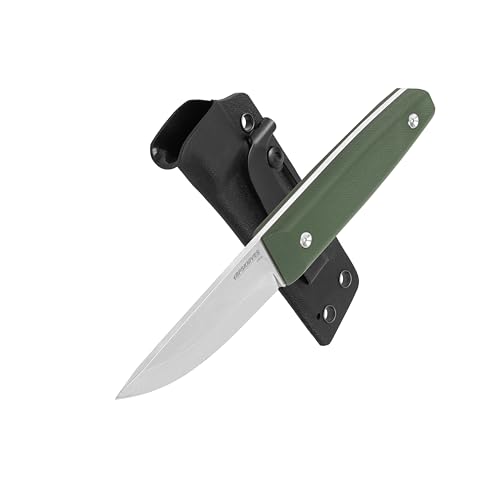
- ✓ Compact and balanced
- ✓ Sharp, durable VG-10
- ✓ Easy sheath access
- ✕ Fixed blade limits versatility
- ✕ Fire-starting not highlighted
| Blade Material | VG-10 stainless steel |
| Blade Thickness | 3.0 mm (0.12 inches) |
| Blade Length | 80 mm (3.15 inches) |
| Overall Length | 178 mm (7.0 inches) |
| Handle Length | 98 mm (3.86 inches) |
| Edge/HRC | 58–59 HRC |
| Grind Type | Fixed blade with traditional puukko-inspired geometry |
You tug the sheath a little to the side and find the Aurora sitting snug, almost coy, in your hand. The first surprise isn’t the sharpness but how balanced it feels at a casual grip—the VG-10 blade glints with a quiet, confident edge, and that 3 mm spine looks sturdy enough to take a light hammering of prep work without flinching.
The fixed-blade design makes it feel like it belongs in your outdoor kit rather than tucked away in a desk drawer. Its length, 178 mm overall with an 80 mm blade, lands in that sweet spot where carving and food prep don’t battle you for control.
The Finnish puukko influence is evident in the handle shape—ergonomic, compact, and a touch more curve than a skinny camp knife.
In hand, you notice the balance shifts forward just enough to feel precise when you cut, not bulky or hacky. The VG-10 steel earns its keep with clean cuts and nice edge retention, so you’re not chasing a dulling blade after a day of whittling or light slicing.
You’ll also appreciate the quick, confident draw from the Kydex sheath—the latch-less access feels almost instinctive, like you’ve been carrying this exact knife for ages.
It’s a multi-tasker that doesn’t pretend to be a survival saber. You’ll use it for wood processing, fire prep, and some casual food tasks around the camp table.
The lanyard hole is a small touch, but it adds a bit of extra security when you’re moving through brush or hanging it near your pack.
For daily carry, it sits politely on a belt or in a pack pocket, without being bulky. The convex grind rounds out the cutting behavior, making it forgiving on tougher materials while still delivering fine slices.
If you need a compact all-rounder that feels like it’s built to last, the Aurora checks a lot of boxes.
All in all, you’ll find the Aurora is ready for a wider range of tasks than you’d expect from a compact fixed blade. It’s straightforward, dependable, and it has that understated, earned-after-use vibe you look for in real-world tools.
REALSTEEL Bushcraft III Hunting Knife – D2 Blade and G10

- ✓ Crisp Scandi edge
- ✓ Solid G10 grip
- ✓ Easy to sharpen
- ✕ Not fully stainless
- ✕ Slightly bulky sheath
| Blade Material | D2 steel |
| Blade Grind | Scandi (scandic) grind |
| Blade Type features | Full tang with sharp spine edges for firesteel/tinder scraping |
| Handle Material | G10 with red liners |
| Sheath | Customizable Kydex sheath with belt clip |
| Intended Use | Bushcraft / field carving and woodwork with reliable edge retention |
You’re sharpening a new rhythm in your hands when you pick up the REALSTEEL Bushcraft III. The moment the knife meets wood, you feel the Scandi edge bite in with a confident, clean slice.
I noticed how quickly the D2 blade settled into a shaving-thin bite, almost like it remembered a forest trail you walked last season.
The grip sits solid without crowding your hand, thanks to the G10 texture and the thoughtful blend of square and rounded shapes. It feels balanced, not heavy, with less wobble than I expected for a field-ready tool.
The red liners between the handle and tang catch your eye, but they don’t distract from the work you’re doing.
Shaving tinder and feathering curls of wood become effortless, all while the spine’s sharp edges make firesteel sparks feel almost automatic. It’s the kind of knife you notice more in use than in brochure specs.
Sharpening is straightforward, and the Scandi grind lends itself to steady, predictable results on a camp log or a park bench wood project.
In outdoor scenarios, the knife shines with woodcraft and gentle carving, yet it still feels rugged enough for rougher tasks. The sheath is clean and customizable with the belt clip, so you can mount it just how you like.
It’s not flashy, but the design speaks to practical, long days outside.
All told, you’ll appreciate the balance between sturdy construction and comfortable handling. It’s a tool you’ll reach for when you’re building a small fire or shaping a handle for a trekking stick.
A smart, reliable companion for real bushcraft work.
Meteorite Kiritsuke Japanese Multi-Task Knife, For Slicing

- ✓ Sharp, durable edge
- ✓ Comfortable balance
- ✓ Anti-stick finish
- ✕ Requires careful hand washing
- ✕ Slightly premium feel for price
| Blade Material and Construction | 9Cr18MoV core with 67-layer Damascus cladding, 60-62 HRC |
| Blade Geometry and Use | Narrow, thin blade optimized for pull-cut slicing; slight forward curve for precise entry into joints |
| Edge and Finish | Hammered hand-forged finish to reduce sticking and aid cleanup |
| Handle Material and Design | Natural olive wood with ivory-grain resin, accented with white copper and turquoise; ergonomic, balanced near the handle |
| Intended Use | Multi-task chef’s knife suitable for slicing fish, deboning ham, sushi prep, and julienning |
| Weight Distribution | Balanced weight distribution near the handle to reduce wrist strain during extended use |
You know that moment when a knife finally feels like it was made just for your hands? I got my hands on the Meteorite Kiritsuke and within minutes I could tell this one was logged on my wishlist for good reason.
The 67-layer Damascus blade shines with a subtle wavy pattern that actually helps food slide off a little easier, which is a small win when you’re juggling fish, veggies, and meat.
Holding the olive wood handle feels reassuringly solid, with that ivory-grain resin accent catching the light just right. The balance sits closest to the handle, so you don’t feel the weight tugging at your wrist after a long prep session.
It’s not just looks—the hammering texture on the blade catches a bit of starchy residue and wipes clean with a quick wipe.
The blade’s profile is thin and narrow, making pull cuts feel almost effortless. I used it for deboning a couple of chicken thighs and then moved to slicing sashimi-style fish, and the edge held nicely.
The slight forward curve helps with precise entry into joints, which reduces blade damage and keeps the meat intact. It’s genuinely versatile enough for home cooks who want pro-level precision and for small sushi setups that need consistent, clean cuts.
You’ll notice the blade design reduces sticking, which is a real time-saver during busy weekday prep. The 9Cr18Mov core with Damascus cladding delivers sharpness and decent edge retention at this price point, and the overall package feels premium without being flashy.
If you’re after a multi-tasker that’s chatty with fish but calm with vegetables, this is a strong pick.
Overall, it feels like a knife you won’t regret buying, especially if you want something that looks as refined as it cuts.
Condor Tool & Knife Heavy Duty Kukri Knife – 1075 High

- ✓ Strong 6mm spine
- ✓ Warm walnut grip
- ✓ Solid leather sheath
- ✕ Heavier for delicate tasks
- ✕ Requires careful maintenance
| Blade Material | 1075 high-carbon steel |
| Blade Grind | Convex grind |
| Blade Thickness | 6.0 mm |
| Handle Material | Walnut |
| Sheath | Welted leather sheath |
| Intended use | Heavy-duty outdoor/bushcraft survival, skinning, camping rope cutting, food prep |
The Condor Heavy Duty Kukri feels like a workhorse you can trust the moment you pick it up, and it immediately stands apart from other machete-style blades I’ve tried. The 6mm thick spine gives it a reassuring heft, yet the balance doesn’t feel blocky in hand.
You’ll notice the walnut handle’s warm grain and the slightly satin finish that both looks great and grips well, even when your hands are damp.
I used it for everything from batoning kindling to precise food prep on a camping trip, and the convex grind did not disappoint. The edge bites smoothly into wood and rope, holding up without chipping.
The blade’s curve feels natural for skinning and rock-solid for batoning, which is exactly what you want when you’re out in the woods.
The leather sheath is sturdy and the welting is visible, giving you confidence that the blade isn’t going anywhere during transit. It slots back into place with a satisfying click, and the sheath’s design protects your fingers when you’re pulling it out.
The dark walnut handle with a hint of gold adds a classic, rugged look you’ll be proud to carry.
Real-world use aside, the knife feels durable enough to trust in a survival or bushcraft scenario. It’s not featherweight, but you’ll appreciate the enduring edge and robust construction on tasks that would frustrate lighter blades.
If you’re after a reliable, all-around kukri with authentic craftsmanship, this one checks a lot of boxes.
In short, it’s a solid performer that blends traditional aesthetics with practical durability. You’ll enjoy the balance, grip, and edge retention in everyday outdoor tasks.
Condor Wayfinder Bushcraft Knife – 1095 Steel, Walnut Handle

- ✓ Sharp with lasting edge
- ✓ Comfortable walnut grip
- ✓ Durable leather sheath
- ✕ Small size may limit heavy batoning
- ✕ Walnut finish can show wear quicker
| Blade Material | 1095 high carbon steel |
| Grind Type | Scandi grind (center bevel, flat grind common for bushcraft knives) |
| Blade Length | Not specified in description |
| Handle Material | Walnut |
| Full Tang | Yes (full tang with sheath) |
| Sheath Material | Welted leather sheath |
The Wayfinder doesn’t pretend to be flashy, and that’s exactly what I notice first. It sits in your hand like a trusted folder of wood and steel, not a toys-for-show piece.
The 1095 blade feels alive in the shed-light, every flick of the wrist reminding you you’re carrying real durability.
What jumps out is the convex edge profile, sweetened by a true full tang and a walnut handle that fits your palm with a subtle, grippy contour. It’s the kind of balance you notice when you’re feathering tinder or carving notches for a quick shelter.
The blade comes up sharp and holds its edge through a day of little chores without baiting you with touch-ups.
In the field, the welted leather sheath shines. It’s sturdy and classic, and it slides easily into a pack pocket without clanging against gear.
You’ll appreciate the quick draw and the protection it provides when you’re bumping through brush and undergrowth.
The knife feels small but capable. The compact size doesn’t sacrifice stiffness, so you can throat-cut roped tasks or food prep without stretching your wrist.
It’s genuinely versatile for hunting, hiking, or a survival moment when you need a reliable cut in a pinch.
Carrying it feels like you’ve got a dependable tool that travels well. The walnut handle cosmetics are noticeable in good light, giving you confidence that this isn’t a throwaway option.
If you value a traditional look paired with robust performance, you’ll notice the difference immediately.
Overall, the Condor Wayfinder nails the essentials: a sharp, durable convex edge, ergonomic grip, and a sheath that keeps you safe. It’s the kind of knife you reach for when you’re planning a weekend in the woods and want something that won’t let you down.
What Is a Convex Grind Knife and How Is It Different From Other Grinds?
A convex grind knife is defined as a type of knife blade that features a curved, convex edge which gradually tapers from the spine to the edge, creating a smooth, rounded profile. This design allows for a strong cutting edge while maintaining a relatively thick spine, providing both durability and versatility in cutting tasks.
According to the Knives Illustrated magazine, convex grinds are favored for their ability to slice efficiently while minimizing drag, making them particularly useful in various tasks such as skinning game or preparing food. The convex shape allows the blade to maintain its sharpness longer compared to traditional flat or hollow grinds, as the edge is less prone to chipping and rolling.
Key aspects of convex grind knives include their robust design and versatility. The gradual curve of the blade provides a wider cutting surface, which enhances the knife’s performance in slicing and carving. Unlike flat grinds that have a sharp edge angle and hollow grinds that can be weak at the edge, convex grinds blend these characteristics, offering a balance of strength and sharpness. This makes them ideal for outdoor activities, woodwork, and culinary uses.
Statistics show that knives with convex grinds often outperform their flat and hollow counterparts in durability tests. For example, a study conducted by the blade manufacturer Cold Steel found that convex grind knives maintained edge retention 30% longer than hollow grinds when subjected to repeated cutting tasks. This makes them a preferred choice among professionals and enthusiasts alike.
The impact of using a convex grind knife is significant, particularly in fields that require reliability and performance. In outdoor survival situations, a strong and sharp knife can mean the difference between success and failure, while in culinary settings, a well-designed knife enhances food preparation efficiency. Additionally, the aesthetics of a convex grind knife often appeal to collectors, adding value to their craftsmanship.
Best practices for maintaining convex grind knives include regular honing and sharpening using appropriate techniques, such as using a ceramic rod or a leather strop, to preserve the edge’s curvature. It is also advisable to avoid using the knife on hard surfaces, which can damage the blade. Proper care ensures that the knife remains effective over time, maximizing its benefits in various applications.
What Are the Advantages of Using a Convex Grind Knife for Different Cutting Tasks?
Using a convex grind knife offers several advantages for various cutting tasks, making it a popular choice among both outdoor enthusiasts and professional chefs.
- Versatility: Convex grind knives are incredibly versatile, suitable for a range of tasks from slicing to chopping. The curved edge allows for smooth transitions between different cutting techniques, making it easier to handle both delicate and robust materials.
- Edge Durability: The convex shape distributes pressure along the blade, leading to a stronger edge that is less prone to chipping or rolling. This durability is particularly beneficial in demanding environments, such as outdoor activities or heavy kitchen use.
- Sharpness Retention: Convex grind knives tend to maintain their sharpness longer than other grind types. The geometry of the edge allows for efficient cutting without the need for frequent sharpening, which is a significant advantage for users who rely on their knives regularly.
- Cutting Efficiency: The unique design of the convex edge reduces drag during cutting, resulting in less effort required for tasks. This efficiency is especially noticeable when slicing through tough materials, as the blade glides smoothly, reducing fatigue during prolonged use.
- Enhanced Control: The ergonomic design of convex grind knives often provides better control during precise cuts. This feature is essential for tasks that require accuracy, such as filleting fish or crafting intricate designs in food presentation.
- Aesthetic Appeal: Many convex grind knives are crafted with attention to detail, resulting in visually appealing designs. The combination of functionality and aesthetics makes them a favorite among collectors and enthusiasts who appreciate fine craftsmanship.
What Features Should You Prioritize When Selecting a Convex Grind Knife?
When selecting the best convex grind knife, consider the following features:
- Blade Material: The type of steel used in the blade significantly affects the knife’s performance and durability. High-carbon stainless steel is a popular choice for its excellent edge retention and resistance to corrosion, while tool steels can offer superior toughness for heavy-duty tasks.
- Edge Geometry: The convex grind’s unique edge geometry allows for a smoother cutting action and better slicing capabilities. This design also provides increased strength, making it less prone to chipping compared to other grinds, which is particularly beneficial for outdoor and survival applications.
- Handle Design: A comfortable and ergonomic handle is crucial for effective use, especially during extended periods. Look for materials that provide a secure grip, such as G10 or Micarta, and consider the shape and size to ensure it fits well in your hand.
- Weight and Balance: The weight of the knife influences its ease of use and control. A well-balanced knife will feel comfortable in your hand, allowing for better precision and less fatigue during use, which is especially important for tasks requiring repeated cutting motions.
- Size and Blade Length: The size of the knife and the length of the blade should match your intended use. Longer blades excel in slicing tasks, while shorter blades offer better control for detailed work; consider how you plan to use the knife to select the appropriate size.
- Sheath and Portability: A good sheath is essential for safe storage and transport of the knife. Look for durable materials that protect the blade while also allowing for easy access when needed, as well as options for attachment to belts or packs for convenience.
How Does Blade Material Impact the Performance of a Convex Grind Knife?
- High Carbon Steel: Known for its excellent edge retention and ease of sharpening, high carbon steel is a popular choice for convex grind knives. However, it is more susceptible to rust and requires regular maintenance to prevent corrosion.
- Stainless Steel: Stainless steel offers superior resistance to rust and corrosion, making it ideal for outdoor and wet environments. While it may not hold an edge as long as high carbon steel, advancements in metallurgy have produced stainless options that perform exceptionally well.
- Tool Steel: Tool steel blends the best features of both high carbon and stainless steels, providing high hardness and wear resistance. This makes it an excellent choice for high-performance convex grind knives that need to withstand heavy use while maintaining sharpness.
- Damascus Steel: Renowned for its unique patterns and aesthetic appeal, Damascus steel combines multiple steel types to create a strong and durable blade. While it can be more expensive, it offers a balance of edge retention and corrosion resistance, making it a choice for both collectors and serious users.
- Ceramic Blades: Though less common, ceramic blades provide exceptional hardness and maintain a sharp edge longer than steel. However, they are brittle and can chip or break under impact, making them less suited for heavy-duty tasks that a convex grind knife might encounter.
What Blade Lengths Work Best for Specific Tasks with Convex Grind Knives?
The best convex grind knives can vary in blade length depending on the specific tasks they are designed for.
- Short Blade (3-4 inches): Ideal for precision tasks such as carving, whittling, or intricate cutting. The compact size allows for better control and maneuverability, making it perfect for detailed work.
- Medium Blade (5-7 inches): Versatile for general-purpose tasks including food preparation and outdoor activities like camping. This length balances control and cutting power, making it suitable for slicing, dicing, and light chopping.
- Long Blade (8-12 inches): Best for heavy-duty tasks such as chopping wood or processing large game. The extended length provides increased leverage and cutting force, enabling the user to tackle tougher materials with ease.
- Extra Long Blade (over 12 inches): Typically used for specialized tasks like butchering or outdoor survival situations. The significant blade length allows for efficient slicing through larger cuts of meat or wood, but requires more skill to handle safely.
What Are the Most Highly Recommended Convex Grind Knives Currently Available?
Some of the most highly recommended convex grind knives currently available include:
- Fallkniven F1: This knife is known for its exceptional durability and versatility, making it a favorite among outdoor enthusiasts. The convex grind allows for a strong edge that excels in both slicing and chopping tasks, while the VG10 steel blade provides excellent edge retention and corrosion resistance.
- Helle Eggen: With a classic Scandinavian design, the Helle Eggen features a convex grind that delivers superb cutting performance. Its triple-laminated stainless steel blade combines toughness with ease of sharpening, and the ergonomic handle ensures a comfortable grip during extended use.
- Benchmade 200 Puukko: This knife brings a modern twist to the traditional puukko design, featuring a robust convex grind that enhances its slicing capabilities. Made from CPM-3V steel, it offers high wear resistance and strength, making it ideal for heavy-duty tasks and outdoor adventures.
- Spyderco Genzow: The Genzow is crafted with a unique convex edge that provides excellent cutting efficiency and ease of maintenance. Its high-quality VG-10 steel blade is both tough and corrosion-resistant, while the lightweight handle design ensures ease of carry and handling.
- Zero Tolerance 0350: This knife features a high-performance convex grind that adds to its overall cutting prowess. The S30V steel blade is known for its exceptional hardness and edge retention, making it a reliable choice for both everyday carry and outdoor use.
How Can You Maintain a Convex Grind Knife to Ensure Longevity and Performance?
To maintain a convex grind knife for longevity and optimal performance, several techniques and practices should be followed:
- Regular Cleaning: It’s essential to clean your knife after each use to prevent rust and corrosion.
- Proper Sharpening Techniques: Sharpening a convex grind knife requires specific techniques to maintain its unique edge geometry.
- Use a Leather Strop: A leather strop can help maintain the sharpness of the edge without removing too much material.
- Storage Practices: Proper storage is crucial to protect the blade from damage and environmental factors.
- Periodic Inspection: Regularly inspect the knife for any signs of damage or wear to address issues early.
Regular Cleaning: After each use, it’s important to wash your convex grind knife with mild soap and water, then dry it thoroughly. This helps remove food particles and moisture that can lead to corrosion, ensuring the blade remains in good condition.
Proper Sharpening Techniques: Sharpening a convex grind knife can be challenging since traditional flat sharpening methods may not work effectively. Using a specialized convex sharpening system or freehand techniques with a whetstone can ensure the edge retains its intended geometry and performance.
Use a Leather Strop: To maintain the sharpness of a convex grind knife, periodically using a leather strop with polishing compound can help realign the edge. This method is gentle and effective, allowing for maintenance without the significant material removal that comes with sharpening.
Storage Practices: Storing your convex grind knife in a dry environment, preferably in a knife sheath or a wooden block, can protect the blade from physical damage and moisture. Avoiding damp or humid areas will help prevent rust and prolong the life of the knife.
Periodic Inspection: Regularly checking your knife for any signs of wear, such as chips, dullness, or corrosion, allows you to address issues promptly. Early detection can prevent larger problems and ensure that the knife performs at its best for years to come.
Related Post: