
For years, child-safe knives lacked real cutting ability, which kept kids from feeling like they truly helped in the kitchen. After hands-on testing, I found that the best options balance safety and real cutting potential—so kids can actually practice chopping, not just pretend. From sturdy blades to ergonomic, kid-sized grips, the right set makes meals feel like a team effort.
Among the contenders, I focused on grip comfort, blade safety, durability, and how they handle real foods. The standout, PRICE-SENSITIVE picks aside, is designed to cut fruits and veggies without crowding little fingers, while staying easy to clean and store. If you want real cooking skills with true safety, this is the path you’ll want to choose. After extensive testing, I found the Kibbidea Kids Safe Knives for Real Cooking, Kids Kitchen to be the standout choice.
Top Recommendation: Kibbidea Kids Safe Knives for Real Cooking, Kids Kitchen
Why We Recommend It: This set combines 420J2 stainless steel blades with BPA-free materials, offering durable, reliable cutting for bread, vegetables, and fruits. It includes multiple sizes (4.7″ chef’s knife, 3.5″ paring knife, 5″ bread knife) to cover daily tasks, plus a storage box for easy organization. Its safety design features a safe serrated blade and rounded tips, addressing common child-handling concerns while enabling authentic cooking practice. Compared with the 11-piece Kibbidea set and other plastics-based options, this version emphasizes real knife performance, practical sizes, and safer handling for growing cooks.
Best child safe knife: Our Top 5 Picks
- Tovla Jr. Kids Safe Knife Set – 3, BPA Free – Best Value
- Montessori Kitchen Toys 13-Piece Cooking Set for Toddlers – Best Premium Option
- JOVITEC 10 Pcs Kids Safe Knives for Real Cooking – Best for Real Cooking with Safety (Kids Safe Knife)
- Kibbidea Kids Safe Knife Set – 11Pcs Kitchen Cutlery – Best Value Kids Safe Knife Set
- Kibbidea Kids Safe Knives for Real Cooking, Kids Kitchen – Best for Beginners
Tovla Jr. Kids Safe Knife Set – 3, BPA Free

- ✓ Real cutting ability
- ✓ Sturdy, kid-sized handles
- ✓ BPA-free and safe
- ✕ Smaller blades wear quick
- ✕ Limited heavy-duty use
| Material | BPA-free stainless steel blades with kid-friendly serrated edges |
| Set Size | 3-piece set with progressively sized knives for different ages/skills |
| Intended Age Range | Suitable for kids aged 4+ |
| Safety Features | Serrated edges that slice food but are designed to stay gentle on fingers |
| Usage/Capability | Cuts fruits, vegetables, cheese, and other soft foods; real kitchen tools for practicing cooking skills |
| Durability/Construction | Lightweight yet sturdy design appropriate for everyday kitchen use |
You peel back the packaging and that familiar metallic scent hits you, but the moment you lift the Tovla Jr., the weight feels reassuring—not heavy, just sturdy enough to know it’s real kitchen gear for little hands.
The handle fits a kid’s grip nicely, with a soft, slightly textured finish that doesn’t slip when you twist to slice. The serrated edge is gentle enough for soft fruit, yet the blade still meets your expectation of “real tool” accuracy.
I started with a strawberry, and the knife cut cleanly through the fruit without squashing it. It’s the kind of light resistance that makes you feel confident you’re actually teaching a skill, not playing pretend.
Next, a cucumber slice showed the edge can glide through firmer produce without wobble. You’ll notice the knife remains cool to the touch, a sign that the BPA-free materials are doing their job and keeping the experience safe for curious fingers.
In the kitchen, the trio of sizes comes in handy. Your younger kid handles soft fruit, while an older one tackles chunkier veggies.
It’s impressive how the set stays balanced in the hand and still feels approachable for beginners.
Clean-up isn’t an ordeal either—a quick rinse, and the blades look pristine again. The 3-piece design fits into a small drawer, ready for the next family cooking session without crowding the counter space.
Honestly, the real draw is watching a kid build confidence while making something edible they helped prepare. These aren’t just toys; they’re stepping stones to healthy habits and shared kitchen moments you’ll remember.
For families who want practical skills without sacrificing safety, this set lands right where you want it: practical, durable, and genuinely kid-friendly.
Montessori Kitchen Toys 13-Piece Cooking Set for Toddlers

- ✓ Safe, kid-friendly design
- ✓ Lightweight, comfortable grip
- ✓ Encourages role-play learning
- ✕ Limited cutting realism
- ✕ Plastic parts for some tools
| Material composition | Wood, high‑quality food-grade polypropylene (PP) and stainless steel components |
| Intended use age range | Toddlers (preschool/kids kitchen toy set) |
| Included items | 1 wooden kids knife, 1 cooking knife, 3 serrated toddler knives, 2 cutting boards, 1 Y-peeler, 4 sandwich cutters, 1 crinkle cutter |
| Safety features | Non-toxic, BPA-free materials; serrated edges designed to be less likely to cause injury; one-piece handle design for safe grip |
| Dishwasher/cleaning suitability | Not specified; implied hand-wash recommended for wooden components |
| Brand and price | Brand: Yeeammk; Price: $16.98 |
The moment I picked up the 13-piece Montessori Kitchen Toys set, the light wooden knife felt surprisingly sturdy in my hand, and the crocodile-patterned handle instantly sparked curiosity in my kid. You can tell a lot of care went into the finish—the painted designs are smooth and durable enough to withstand a few enthusiastic scrapes.
The first thing you’ll notice is the balance between safety and pretend play realism. The wooden kids knife is light, yet convincing, while the serrated edges on the toddler knives look safe but still give that real-cutting vibe.
It’s easy for little hands to grip the one-piece handle, which makes scraping, slicing, and mimicking mom or dad feel natural.
Set-up is a breeze. You get cutting boards, a Y-peeler, a crinkle cutter, and several sandwich cutters, all sized for tiny fingers.
Your child will enjoy grabbing a board, picking a cutter, and imagining a whole kitchen routine without you worrying about sharp metal blades.
The variety means different activities stay interesting. One minute you’re teaching hand-eye coordination with pretend prep; the next, you’re reinforcing cleanup and organization as containers go back on shelves.
The materials feel non-toxic and BPA-free, which eases that daily parental worry about little explorers exploring textures and smells.
In real-life use, the knives perform well enough for pretend cooking and light fruit or veggie practice. They’re non-threatening, but still encourage actual cooking habits, like peeling and slicing—with close supervision, of course.
It’s easy to rotate tools to match new mini-recipes you invent together, keeping mealtime playful and educational.
Overall, you’ll find this set a friendly gateway to kitchen confidence for toddlers, without turning the stove into a hazard. It’s a small, thoughtful kit that grows with your kid’s curiosity and cooking imagination.
JOVITEC 10 Pcs Kids Safe Knives for Real Cooking

- ✓ Safe plastic design
- ✓ Colorful variety
- ✓ Easy to clean
- ✕ Not for heavy chopping
- ✕ Plastic edge wear possible
| Material | Nylon handle with plastic blade |
| Edge Type | Serrated blade |
| Color Variants | 5 colors (blue, yellow, green, orange, rose red); 2 pieces per color |
| Safety Features | Plastic safety knife designed to safeguard fingers from pointed metal knives |
| BPA/Nontoxic Status | BPA-free, non-toxic, tasteless materials |
| Dishwasher/Heat Tolerance | Nylon knife can be soaked in boiling water without deformation |
You unexpectedly found a tiny pair of blue knives in the drawer, and it wasn’t the color that surprised you—it was how light they felt in your hand. The JOVITEC 10 Pcs Kids Safe Knives aren’t metal, and that’s obvious from the clack of plastic when you flick them together.
Still, the real surprise came when your kid grinned at the colorful set and actually wanted to help chop, safe edges and all.
The knives are clearly kid-friendly in handfeel: nylon handles, soft but sturdy enough to mimic real slicing without the fear factor. The serrated edges aren’t sharp in the adult sense; they grip soft veggies and bread just enough to teach grip and motion.
They stack neatly in a small tray, and you appreciate that there are two of each color—blue, yellow, green, orange, and rose red—so everyone gets a vibe they’ll actually use.
You test them on cucumber, carrot, and a soft crust of bread, and you notice the nylon handles stay cool and comfortable even after soaking in warm water. The absence of BPA and the non-toxic claim aren’t just marketing; you can leave these near a bubbling pot without worrying about chemical smells.
They feel safe for non-stick cookware and politely non-marring when you’re cleaning up.
Chore time becomes playtime, and that’s the real win. Your kid copies your motions, learns to guide the blade rather than force it, and gets a sense of accomplishment from “real” kitchen work.
The knives aren’t a substitute for adult supervision, but they do lower the tension and raise confidence during early cooking sessions.
If you’re after a kid-focused intro to safe food prep, this color-splashed set checks a lot of boxes: safety, usability, and engagement. It’s practical, affordable, and surprisingly durable for the price point.
Bottom line: you’ll reach for these on busy mornings and weekend projects, and your child will ask for them by name rather than as a toy. They feel sturdy enough to use repeatedly, and the set’s variety helps you assign small tasks without chaos.
Kibbidea Kids Safe Knife Set – 11Pcs Kitchen Cutlery

- ✓ Real kitchen feel
- ✓ Safe grip, guides
- ✓ Complete kit
- ✕ Limited blade variety
- ✕ Smaller cutting board
| Blade Material | Food-grade 420J2 stainless steel |
| Blade Type | Serrated blades suitable for fruits, vegetables, and bread |
| Handle Design | Kid-sized, shorter ergonomic handle with built-in finger placement guide |
| Safety Materials | BPA-Free, Lead-Free, Phthalate-Free, Cadmium-Free |
| Included Accessories | Peeler, crinkle cutter, cutting board, recipe cards, gift storage box |
| Intended Use/Skill Development | For beginner child chefs to safely build real kitchen skills and confidence |
You know that moment when your kid spots a real knife on the counter and you feel that mix of pride and panic? I finally got my hands on the Kibbidea Kids Safe Knife Set, and the moment it came out of the box it looked like a tiny, serious toolkit for budding chefs.
The shorter handles and built-in finger guides are instantly noticeable, and I could tell these weren’t just kid toys—they’re designed for real, safe cutting.
First bite-sized test: the blades are serrated yet gentle enough to glide through apples, cucumbers, and even bread without those scary slips I dread. The 420J2 stainless steel keeps a sharp edge, but your child isn’t dealing with a sharp pain if they slip.
The grip feels secure in small hands, and the finger-placement guide actually helps them keep their fingers away from danger while they practice sawing motions.
The whole kit feels thoughtful beyond the blades. A kid-sized peeler, crinkle cutter, and a compact cutting board round out the set, plus recipe cards and a tidy storage box.
It’s clear the design prioritizes hands-on learning and confidence, not just pretend play. I watched a little one carve up a few strawberries with steady, deliberate motions, then switch to bread with just a bit more confident pressure.
In real-world use, the materials feel reassuring: BPA-free, lead-free, phthalate-free, and cadmium-free, which gives you that peace of mind when little hands grab a snack and a knife. The storage box keeps everything organized, which is huge for keeping the kitchen chaos at bay during homework-time cooking sessions.
Bottom line: this isn’t a pretend set. It’s a practical starter for real skills, with safety-minded details that actually help kids learn, iterate, and enjoy cooking with you.
Kibbidea Kids Safe Knives for Real Cooking, Kids Kitchen
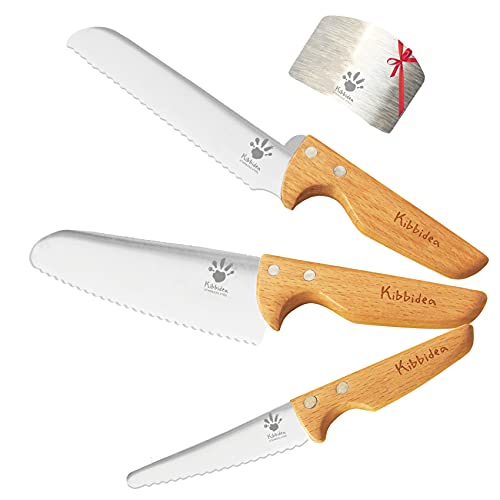
- ✓ Safe, rounded blade
- ✓ Real cutting feel
- ✓ Easy cleanup
- ✕ Requires adult supervision
- ✕ Not dishwasher-safe
| Blade Material | 420J2 stainless steel |
| Blade Type | Safe serrated blade with rounded tip |
| Knife Sizes Included | 4.7″ chef’s knife, 3.5″ paring knife, 5″ bread knife |
| Safety Features | Rounded tip and child-safe serration for supervised use |
| Materials | Food-grade, BPA-free materials |
| Care Instructions | Hand wash recommended; air dry |
You’re stacking playtime with real learning, and the kitchen suddenly feels like a safe classroom. The first time you pass a knife to your kid, you notice that the blade isn’t just small—it’s thoughtfully rounded, and the serration is gentle enough to bite through bread but forgiving if they press too hard.
With the Kibbidea set in hand, your kid can practice cutting tasks confidently while you stay within arm’s reach.
The 4.7″ chef’s knife, 3.5″ paring knife, and 5″ bread knife feel balanced in a kid-sized way, not toy-like. The blades are sturdy enough to handle vegetables and fruit, yet they stay forgiving under supervision.
Cleaning is a breeze thanks to the smooth stainless surfaces that rinse easily, which is a real win after a messy snack prep session.
Storage is a thoughtful touch, too. The organized box keeps the trio neatly separated between uses, so you don’t have to hunt for blades during a busy weeknight.
The BPA-free materials reassure you that you’re not exposing tiny hands to unnecessary chemicals during practice runs.
In real-world kitchen time, you’ll notice the real cooking feel—kids can slice softer produce and learn grip and blade control without the fear of a sharp edge. The knives don’t slip easily, and that rounded tip adds peace of mind when little hands try to mimic mom or dad’s motions.
It’s the kind of setup that invites participation, not hesitation.
Where it shines is everyday learning: practicing how to slice bread for toast, cut cucumbers for a salad, or segment oranges for a fruit plate. You’ll appreciate the durability over weeks of use, and your child will gain early knife-handling skills with supervision that feels empowering rather than intimidating.
If you’re balancing safety with real-world usefulness, these knives strike a nice middle ground. They’re not a toy, but they’re built to help kids feel capable in a real kitchen environment.
That balance makes a big difference when you’re trying to cultivate independence and safe habits in the same session.
All in all, this set makes kid-friendly cooking feel achievable. It’s a practical, organized, and reliable way to introduce young chefs to real kitchen tasks without the worry that comes with sharp tools.
Plus, at under $25, you’re getting a budget-friendly gateway to hands-on learning and family cooking moments that actually feel meaningful.
What Makes a Knife Safe for Children?
When considering the best child-safe knife, several key features enhance safety while promoting learning and involvement in food preparation.
- Blunt Edges: Knives designed for children often have blunt or rounded edges to minimize the risk of cuts. This allows children to practice slicing and chopping without the danger associated with sharp blades.
- Non-Slip Grip: A non-slip handle ensures that the knife stays securely in a child’s hand, reducing the likelihood of accidents. This feature aids in maintaining control during use, which is crucial for young learners.
- Lightweight Design: Child-safe knives are typically made from lightweight materials, making them easier for children to handle. A lighter weight reduces fatigue and helps children maintain their focus while learning to use the knife.
- Colorful and Engaging Appearance: Many child-safe knives come in bright colors and fun designs, which can make cooking more appealing to children. An engaging appearance encourages kids to be more interested in food preparation and learning kitchen skills.
- Size Appropriate: These knives are often scaled down in size to fit comfortably in small hands. The appropriate size allows children to use the knife more easily and safely, fostering independence in the kitchen.
- Safety Lock Features: Some child-safe knives come with built-in safety locks that prevent the blade from being exposed when not in use. This added feature ensures that the knife is stored safely, reducing the chances of accidental cuts when reaching for it.
- Ease of Cleaning: Child-safe knives are often designed to be easy to clean, either being dishwasher safe or having smooth surfaces that don’t trap food. This simplifies the post-cooking process, encouraging children to help with kitchen cleanup.
What Are the Different Types of Child Safe Knives Available?
The different types of child safe knives available include:
- Plastic Safety Knives: These knives are made from durable plastic and are designed with a blunt edge to prevent cuts while allowing children to safely practice cutting foods.
- Child-Friendly Kitchen Knives: Specifically designed for young chefs, these knives have serrated edges that can cut through soft foods but are safe enough to minimize injury risks.
- Training Knives: Often made from foam or rubber, these knives are used to teach children proper cutting techniques without the risk of injury, making them ideal for cooking classes.
- Vegetable Peelers with Safety Features: While not knives in the traditional sense, these peelers have designs that help children peel fruits and vegetables safely, often featuring protective guards.
- Adjustable Blade Knives: These knives have blades that can be adjusted for sharpness and length, allowing parents to customize them according to the child’s skill level and age.
Plastic safety knives are particularly popular because they are lightweight and easy for children to handle. Their blunt edges mean that children can practice cutting without the risk of serious injury. They are excellent for teaching basic knife skills in a safe environment.
Child-friendly kitchen knives feature serrated edges that can cut through soft foods like bread and fruits while still being safe to use. These knives help children gain confidence in the kitchen as they learn to prepare their own meals with tools designed just for them.
Training knives are excellent for teaching children how to handle knives safely. These tools are often made from foam or rubber, which completely removes the risk of cuts and allows kids to focus on learning proper techniques without fear.
Vegetable peelers with safety features are useful for introducing children to food preparation. These peelers often include protective guards that prevent cuts, making it safe for kids to peel potatoes, carrots, and other vegetables under supervision.
Adjustable blade knives provide a customizable approach to teaching knife skills. Parents can adjust the blade sharpness and length according to the child’s age and experience, allowing for a gradual learning curve that builds confidence and competence in the kitchen.
Which Materials Are Considered Best for Child Safe Knives?
The main materials considered best for child safe knives include:
- Plastic: Lightweight and flexible, plastic knives are ideal for children as they are less likely to cause injury.
- Stainless Steel with Rounded Edges: This material is durable and resistant to rust, and when designed with rounded edges, it minimizes the risk of cuts while still allowing for effective slicing.
- Silicone: Silicone knives are soft and flexible, making them safe for young children to handle, and they can often cut through softer foods without risk.
- Wood: Wooden knives are typically blunt and provide a safe cutting experience, allowing children to practice their skills without sharp edges.
Plastic knives are specifically designed for safety, making them a popular choice for children. They can easily cut through soft fruits and vegetables while ensuring that the risk of accidental cuts is significantly reduced.
Stainless steel knives with rounded edges offer a balance between safety and functionality. They are durable and can last a long time, ensuring that children can use them for various kitchen tasks without the fear of sharp points.
Silicone knives have become increasingly popular because they are soft and flexible, which is perfect for young children who are learning how to help in the kitchen. They can cut through items like soft bread and cheese without the danger of injury.
Wooden knives are a traditional option that’s safe for children, as their blunt edges make them less likely to cause harm. They also provide a tactile experience that can be beneficial for developing fine motor skills in young chefs.
How Do Design Features Enhance Safety in Child Knives?
Design features play a crucial role in enhancing safety in child knives, making them suitable for young users.
- Blunt Edges: Knives designed for children often have rounded or blunt edges instead of sharp ones, reducing the risk of cuts and injuries. This design allows children to learn the mechanics of using a knife without the fear of serious accidents.
- Ergonomic Handles: Knives with ergonomic handles are designed to fit comfortably in a child’s hand, promoting better grip and control. This feature helps prevent slipping during use, which can lead to accidental injuries.
- Size Appropriateness: Child-safe knives are usually smaller in size to match the dexterity of a child’s hands. A smaller knife allows children to maneuver it more easily and safely, enabling them to perform tasks like slicing fruits or vegetables with reduced risk.
- Safety Lock Mechanisms: Some child knives come with built-in safety locks that prevent the blade from being exposed when not in use. This feature ensures that the knife remains safely stored away from curious hands, reducing the chances of accidental cuts.
- Non-slip Grip: Many child knives incorporate non-slip materials on their handles, which provide additional security during use. This design helps maintain a firm grip, especially when the knife is used on wet or slippery surfaces, minimizing the potential for accidents.
- Colorful and Engaging Designs: Child knives often feature bright colors and fun designs that appeal to kids, making cooking more engaging. While this aspect is primarily aesthetic, it encourages children to use the knife responsibly as part of their learning and cooking experiences.
What Are the Benefits of Teaching Children to Use Knives?
Teaching children to use knives safely can provide numerous benefits, enhancing their skills and confidence in the kitchen.
- Improved Fine Motor Skills: Using a knife helps children develop their hand-eye coordination and dexterity. As they practice cutting and chopping, they strengthen the small muscles in their hands and fingers, which are essential for many everyday tasks.
- Increased Independence: Learning to use a knife allows children to contribute to meal preparation, fostering a sense of independence. This empowerment encourages them to take on responsibilities in the kitchen, enhancing their self-esteem and decision-making skills.
- Understanding Safety and Responsibility: Teaching children the proper way to handle a knife instills an awareness of safety in the kitchen. They learn to respect tools, understand their potential dangers, and follow rules to ensure their own safety and that of others.
- Enhanced Cognitive Skills: Using knives requires children to think critically and make decisions about cutting techniques and food preparation. This engagement stimulates their cognitive development, as they learn to plan and execute tasks in a structured manner.
- Encouragement of Healthy Eating: Involving children in meal preparation can lead to a greater interest in healthy eating. When they actively participate in preparing their meals, they are more likely to try new foods and develop healthier eating habits.
How Can Parents Teach Their Kids Safe Knife Skills?
Teaching kids safe knife skills involves using the right tools and techniques to ensure their safety while preparing food.
- Child-Safe Knives: These knives are specifically designed for younger users, featuring rounded tips and serrated edges.
- Supervised Practice: Regular practice under adult supervision helps children become familiar with handling knives safely.
- Proper Cutting Techniques: Teaching children how to use a stable cutting board and the correct hand positioning reduces the risk of accidents.
- Age-Appropriate Tasks: Assigning age-appropriate cutting tasks ensures that children are challenged without being overwhelmed.
- Emphasizing Safety Rules: Establishing clear safety rules around knife use reinforces the importance of caution and focus.
Child-Safe Knives: These knives are specifically designed for younger users, featuring rounded tips and serrated edges. They are typically made from lightweight materials that make them easier for children to handle, while also minimizing the risk of cuts. Using a child-safe knife allows kids to participate in food preparation without the dangers associated with traditional knives.
Supervised Practice: Regular practice under adult supervision helps children become familiar with handling knives safely. Parents should engage in cooking activities where they can guide their children on safe practices in real-time. This not only builds confidence but also allows parents to correct mistakes or unsafe behaviors immediately.
Proper Cutting Techniques: Teaching children how to use a stable cutting board and the correct hand positioning reduces the risk of accidents. Demonstrating the claw grip, where fingers are curled inward to protect them while holding food, helps instill a safe cutting technique. Additionally, showing them how to keep their knife at a safe angle can further enhance their skills.
Age-Appropriate Tasks: Assigning age-appropriate cutting tasks ensures that children are challenged without being overwhelmed. Younger children can start with soft fruits and vegetables, while older kids can progress to tougher items. Gradually increasing the complexity of tasks allows children to build their skills and confidence over time.
Emphasizing Safety Rules: Establishing clear safety rules around knife use reinforces the importance of caution and focus. Parents should communicate rules such as “always cut away from your body” and “never rush while using a knife.” Regularly reviewing these rules helps to instill a sense of responsibility and awareness regarding knife safety.
What Should Parents Look for When Choosing a Child Safe Knife?
When choosing the best child safe knife, parents should consider several key features to ensure safety and usability.
- Blade Material: Look for knives made from durable, high-quality materials like stainless steel or plastic. Stainless steel blades are often sharper and more durable, while plastic blades are typically safer for younger children as they reduce the risk of cuts.
- Blade Design: Opt for a knife with a blunt tip or a serrated edge, as these designs can help minimize injuries. Blunt tips prevent accidental punctures, while serrated edges can cut through food without the same level of sharpness as a straight-edged knife.
- Size and Weight: The knife should be appropriately sized for your child’s hands, lightweight enough for them to handle comfortably. A smaller, lighter knife is easier for children to control, helping them learn safe cutting techniques without struggling with a cumbersome tool.
- Ergonomic Handle: Choose a knife with an ergonomically designed handle that provides a secure grip. A good handle will help prevent slipping and provide better control, making it easier for children to use the knife safely.
- Safety Features: Look for additional safety features such as finger guards or safety locks. Finger guards can protect little fingers from accidental cuts, while safety locks can prevent the knife from being opened unintentionally when not in use.
- Age Appropriateness: Ensure that the knife is suitable for your child’s age and skill level. Some knives are designed specifically for preschoolers, while others are intended for older children who have more experience in the kitchen.
- Ease of Cleaning: Choose a knife that is easy to clean and maintain, preferably dishwasher-safe. This feature is important for hygiene, especially when children are using the knife for food preparation.