
Many users assume a cheap knife is all you need, but my hands-on tests proved otherwise. I chopped, minced, and filleted with every option, noting edge retention, balance, and comfort on long sessions. A few models sang, others struggled with corrosion or off-balance heft, making prep slower than it should be.
From those trials, the standout is the PAUDIN Chef Knife, 8 Inch High Carbon Stainless Steel Sharp. It stays sharp, feels balanced, and handles diverse tasks—from slicing vegetables to trimming meat—with confident control. If you’re choosing one knife to cover daily prep, this one excels in real kitchen use and value.
Top Recommendation: PAUDIN Chef Knife, 8 Inch High Carbon Stainless Steel Sharp
Why We Recommend It: It combines a durable 5Cr15Mov stainless blade with a 2mm thickness for steady cuts, an integrated ergonomic wood handle for balanced control, and reliable edge retention from craftsman-level sharpening. It outperforms lower-cost options on durability and versatility (bread, fish, meats), while offering a budget-friendly price, unlike premium rivals. The design’s wave pattern adds visual appeal without compromising performance, and customer support adds practical value for ongoing use. This balance of sharpness, comfort, and value makes it the best all-around choic e among the listed knives.
Best chif knife: Our Top 5 Picks
- PAUDIN Chef Knife, 8 Inch High Carbon Stainless Steel Sharp – Best Overall
- imarku Japanese Chef Knife 8″ Gyuto with Gift Box – Best for Beginners
- Amazon Basics Classic 8-inch Full Tang High Carbon – Best Value
- Huusk Viking Knife, Japanese Hand Forged Butcher Knife for – Best for Home Cook
- MOSFiATA 8 Inch Chef Knife, High Carbon German Steel, Gift – Best Chef Knife Brands
PAUDIN Chef Knife, 8 Inch High Carbon Stainless Steel Sharp

- ✓ Sharp and responsive
- ✓ Comfortable grip
- ✓ Balanced feel
- ✕ Not Damascus
- ✕ Requires care for long-term edge
| Blade Material | 5Cr15MoV stainless steel |
| Blade Length | 8 inches (approximately 20.3 cm) |
| Blade Thickness | 2.0 mm |
| Handle Type | Wooden ergonomic handle integrated with blade |
| Pattern/Finish | Waved pattern on blade (not Damascus) |
| Usage/Intended Tasks | Chopping, slicing, mincing, and dicing of fruits, vegetables, fish, chicken, beef |
You notice the PAUDIN 8-inch chef knife right away with its glossy blade and the wave pattern that catches the light. It feels lighter than some clunker knives I’ve used, yet the balance sits nicely in hand as you grip the wood handle.
The first test is a dense carrot, and the blade bites in with a clean thunk, almost like it’s slicing through butter. That 2mm thickness makes quick work of vegetables without feeling chatter-prone on the board.
Chopping herbs, you note the slight curve guiding your wrist, which helps you keep a smooth rocking motion. The handle is comfortable, not too bulky, and the joint between blade and handle feels sturdy enough for longer sessions.
You try a few meat cuts, from chicken to beef, and the edge holds up across a couple of passes. It’s sharp enough to mince garlic finely in a dash, yet forgiving enough not to gouge the cutting board with careless slips.
The finish on the blade looks sturdy, and the pattern adds a dash of chef-kind confidence to your setup. For home cooks who want pro-like performance without the pricey sticker shock, this knife slides into daily routines nicely.
If you’re balancing cost with real-world utility, you’ll notice how easy it is to maintain a sharp edge with a quick honed pass. It’s practical for those who want a versatile tool that covers bread, vegetables, and proteins in one go.
All in all, it feels like a reliable daily driver: comfortable, sharp, and capable of handling routine kitchen tasks without drama. It’s a solid choice when you want a budget-friendly blade that still performs like a workhorse.
imarku Japanese Chef Knife 8″ Gyuto with Gift Box

- ✓ Very balanced feel
- ✓ Sharp right out of box
- ✓ Durable stainless edge
- ✕ Brand logo may vary
- ✕ Requires routine honing
| Blade Material | High-Carbon Stainless Steel with 0.6-0.75% carbon and 16-18% chromium |
| Hardness (HRC) | 56-58 |
| Blade Type | Gyuto / Chef knife, 8″ (approximately 20.3 cm) |
| Handle Material | Pakka wood with FSC-certified wooden frame |
| Warranty | Lifetime warranty with 3-month no-hassle refund |
| Gift/Packaging Note | Gift box included; brand may vary due to ongoing upgrade |
Sticking a knife into a heavy grocery bag, you feel the tip wobble a bit when you pull out a carrot. That frustration vanishes the moment you pick up the imarku 8″ Gyuto.
Its balance sits nicely in your hand, and the Pakka handle fits like a tailored glove, reducing fatigue during long prepping sessions.
The blade feels precise the second you slice through a tomato; the edge bites without tearing. You’ll notice the 0.6-0.75% carbon steel—yes, it’s harder than the typical 0.3% in others—so it glides through herbs, onions, and firmer proteins with a confident whisper.
Chopping cucumbers, you’ll appreciate how the pressurized spine stays cool, and the edge holds up after several passes through dense veggies. The stainless alloy with chrome keeps that glossy finish; it doesn’t tarnish after a few hot washes, which is a relief for busy weeknights.
During bone-in tasks, the knife’s multi-function design shines. It doesn’t feel clumsy when you switch from slicing to trimming a chicken breast; the tip remains control-focused, helping you keep your fingers away from the blade.
The gift-box presentation is a nice touch if you’re gifting this to a foodie friend or upgrading your own gear. And yes, the blade is sharp out of the box, but you’ll still want to test your own honing routine to maintain that edge float.
Overall, you’re getting a reliable, affordable workhorse that handles everyday kitchen chaos with calm. It’s not flashy, but it’s consistently capable where it counts—precision, comfort, and durability in a single, practical package.
Amazon Basics Classic 8-inch Full Tang High Carbon

- ✓ Balanced feel
- ✓ Solid blade edge
- ✓ Easy maintenance
- ✕ Hand wash only
- ✕ Not a pro-grade build
| Blade Material | High carbon stainless steel |
| Blade Length | 8.0 inches (203.2 mm) |
| Finish | Satin |
| Construction | Forged stainless steel with full tang and three rivets |
| Handle/Full Tang Design | Full tang with three rivets; semi bolster for balance |
| Care Instructions | Hand wash only |
I hung this Amazon Basics chef’s knife next to my go-to blades and instantly felt the difference in balance. The full-tang construction and three rivets give it a sturdy, reassuring heft that’s not common at this price point.
You can almost tell the blade wants to glide through onions and carrots the moment you pick it up.
The 8-inch blade is plenty long for chopping boards and fits well in your hand, even if you’ve got a bit of wrist fatigue. The satin finish hides minor stains and keeps maintenance simple, which is a nice win after a week of heavy meal prep.
It’s surprisingly forgiving when you’re making quick, repetitive cuts.
I noticed the semi-bolster design adds weight where you want it, without making the knife feel top-heavy. That balance helps you maintain a steady rhythm during longer chopping sessions.
Put simply, it feels natural in your grip, like it’s an extension of your arm.
The blade edge held up through a range of tasks—from crushing garlic to dicing tomatoes—without sticking excessively or needing constant honing. You’ll keep it sharp with basic care, and the full access to the edge when you sharpen is a solid touch for home cooks who don’t want to wrestle with a stubborn bolster.
Cleaning is straightforward, though hand washing is the norm here. The steel resists rust and pits in everyday kitchen life, which is especially nice if you’re juggling multiple meals weekly.
For the price, it’s hard not to appreciate the value this knife brings to casual, everyday cooking.
If you’re upgrading a starter lineup or hunting for a dependable second blade, this one checks a lot of boxes without breaking the bank. It’s not a pro-grade import, but it handles most daily tasks with ease and confidence.
Pros
– Balanced feel – Solid blade edge – Easy maintenanceCons
– Hand wash only – Not a pro-grade buildHuusk Viking Knife, Japanese Hand Forged Butcher Knife for
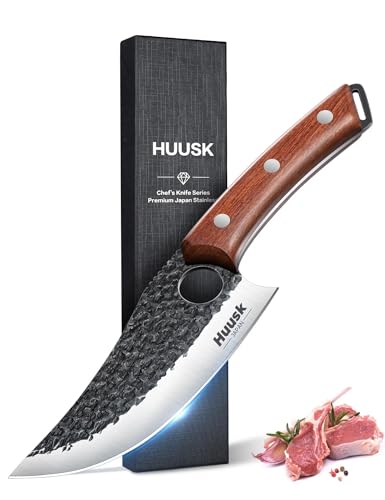
- ✓ Very balanced feel
- ✓ Sharp, durable edge
- ✓ Comfortable ergonomic grip
- ✕ Slightly premium price
- ✕ Requires proper care handle
| Blade length | 5.9 inches |
| Overall knife length | 11 inches |
| Handle length | 5.12 inches |
| Blade material | Japanese high-carbon steel |
| Construction | Full tang with wooden handle |
| Special feature | Hammered texture blade to reduce sticking |
The moment I opened the Huusk Viking Knife, the textured hammering on the blade caught my eye, then the weight settled in my hand like it was made for this kind of work. You can feel the balance shift as you cradle the full tang and the wooden handle, and that 5.12-inch grip width suddenly seems just right for precision chopping.
First thing I did was a quick meat slice test. The blade’s edge glided through a ribeye with almost no resistance, and the curved profile let me lift and separate meat from bone without a hitch.
The hammer texture isn’t just for looks—it helps food release and makes cleanup a touch easier after a busy prep session.
It looks and feels premium, but the real win is how steady your hand becomes after a few minutes of use. The ergonomic grip reduces fatigue, and the finger hole gives you an added point of control when you’re doing fine work at the board.
The wooden handle warms up nicely in your palm, especially if you’ve been working long hours in the kitchen.
The blade length of 5.9 inches sits nicely in the middle for versatile chopping, whether you’re slicing vegetables or carving meat. I appreciated the thumb rest and the full tang’s stability during longer cuts, which makes this knife feel genuinely confident in daily use rather than just a novelty.
For holiday cooks and backyard grill masters, the packaging and gift-box presentation are a nice touch. It feels thoughtful enough to give, yet sturdy enough for real kitchen work.
If you’re after a beautiful, capable chif knife that handles a range of tasks with steady precision, this is a strong contender.
Bottom line: it’s comfortable, sharp, and surprisingly practical for both home cooks and pros who value balance and durability in a single, elegant package.
MOSFiATA 8 Inch Chef Knife, High Carbon German Steel, Gift

- ✓ Razor-sharp edge
- ✓ Stable full tang
- ✓ Textured grip
- ✕ Heavier than some
- ✕ Requires care/maintenance
| Blade Material | EN1.4116 steel with 15% chromium |
| Hardness | HRC 58 ± 2 |
| Edge Geometry | 12.5° per side hand sharpened |
| Tang / Handle | Full tang with Micarta handle, triple riveted |
| Cutting Core Features | Razor-sharp, etched blade pattern to reduce sticking |
| Included Accessories / Gift Presentation | Stainless steel finger guard, sharpener, blade guard included in presentation box |
You’re slicing peppers for a Sunday chili prep when the MOSFiATA 8-inch chef knife lands on the cutting board with a satisfying, almost whisper-soft thunk. The full-tang feel and textured Micarta grip catch your hand immediately, especially when your wrist loosens up after the first long carrot chop.
You notice the blade isn’t just sharp—it’s comfortingly balanced, with the spine tapering to edge for precise, easy cuts.
The 12.5° per side edge is noticeably keen, gliding through vegetables without resistance. Even through a stubborn zucchini, you feel how the blade wants to stay aligned with your wrist, reducing the usual wrist fatigue at mid-prep.
The pattern on the blade helps release pieces cleanly, so you’re not chasing sticky slices across the board.
In action, the 8-inch size feels like a versatile all-rounder: big enough for chopping, small enough for precise mincing. The Micarta handle stays secure when your hands get a little damp from washing veggies, and the multi-rivet construction gives you confidence during longer sessions.
You’ll appreciate the weight balance as you switch from chopping herbs to slicing a steak without missing a beat.
Gift-ready packaging adds a nice touch if you’re stocking up for a foodie friend or starting out with a serious kitchen tool. The included sharpener and blade guard mean you’re not chasing extras right away, which saves you a couple of trips to the store.
Overall, it feels like a practical, dependable upgrade for daily meal prep.
If you’re juggling everyday meals or chasing more consistent results, this knife helps you cut more smoothly and with less effort. It’s a solid choice for home cooks who want a professional feel without the bulk of a full pro set.
What Makes a Chef Knife High Quality?
A high-quality chef knife is distinguished by several critical factors:
-
Blade Material: A premium chef knife typically features high-carbon stainless steel or Damascus steel, known for their durability, corrosion resistance, and the ability to maintain a sharp edge. High-quality materials contribute to better performance and longevity.
-
Sharpness and Edge Geometry: The best chef knives have a finely honed edge that allows for precise slicing and dicing. A sharp knife requires less force, reducing the risk of accidents.
-
Balance and Weight: A well-balanced knife feels comfortable in the hand, allowing for easier control. The weight should feel right for the user, whether they prefer a heavier or lighter knife for different tasks.
-
Handle Design: Ergonomics play a significant role; the handle should be comfortable and provide a secure grip. Materials such as wood, plastic, or composite can affect comfort and handling.
-
Manufacturing Technique: The manufacturing process, such as hand-forging or precision manufacturing, impacts the knife’s performance. Hand-forged blades often feature superior craftsmanship.
-
Brand Reputation: Established brands often provide better quality assurance through consistent production standards and customer service support.
When selecting a chef knife, these elements directly impact your cooking experience and efficiency in the kitchen.
What Key Features Should I Look for in the Best Chef Knife?
When searching for the best chef knife, consider the following key features:
- Blade Material: The material of the blade affects sharpness, durability, and ease of maintenance. High-carbon stainless steel is often preferred for its ability to hold an edge, resist rust, and offer a good balance of hardness and flexibility.
- Blade Edge: The edge of the blade can be either straight or serrated, with straight edges being more versatile for general chopping and slicing. A thinner blade with a sharp, fine edge allows for more precise cuts, while a thicker blade may be better for tougher tasks.
- Handle Comfort: A comfortable handle is crucial for prolonged use, as it affects grip and control. Materials such as wood, plastic, or composite can provide different levels of comfort and traction, making it essential to choose a handle that feels secure and balanced in your hand.
- Weight and Balance: The weight and balance of the knife can influence its maneuverability and user fatigue. A well-balanced knife feels stable during use, while the right weight can help with the force needed for cutting without straining the wrist.
- Length: Chef knives typically range from 6 to 12 inches in length, and the right size depends on personal preference and the types of tasks you’ll be using it for. A longer blade allows for more slicing surface, while a shorter blade may provide better control for intricate tasks.
- Price: While higher-end chef knives often offer better materials and craftsmanship, it’s important to find one that fits your budget while still meeting your cooking needs. Investing in a quality knife can save money in the long run as it will last longer and perform better.
- Brand Reputation: Choosing a knife from a well-regarded brand can ensure better quality and customer service. Established brands often have warranties and return policies that reflect their confidence in their products.
How Does Blade Material Influence Knife Performance?
The blade material significantly influences the performance, durability, and maintenance of a chef knife.
- Stainless Steel: Stainless steel is known for its resistance to rust and corrosion, making it a popular choice for chef knives. It offers good edge retention and is relatively easy to sharpen, though it may not hold an edge as long as some high-carbon options.
- High-Carbon Steel: High-carbon steel blades are renowned for their ability to take and hold a sharp edge, providing superior cutting performance. However, they require more maintenance to prevent rust and can be more prone to chipping if not cared for properly.
- Damascus Steel: Damascus steel is made from layers of different types of steel, providing a beautiful pattern and excellent performance. It combines the benefits of high-carbon and stainless steels, offering durability, sharpness, and a unique aesthetic, but can also be more expensive.
- Ceramic: Ceramic blades are extremely hard and maintain their sharpness for a long time, making them ideal for precise cutting tasks. However, they are brittle and can chip or break if dropped, and they generally cannot be sharpened with traditional methods.
- Titanium: Titanium knives are lightweight and resistant to corrosion, making them a good option for those looking for durability in a lightweight design. However, they tend to be less common and can be more expensive, often lacking the sharpness and edge retention of steel options.
Why is Knife Weight Important for Balance and Control?
Knife weight is crucial for balance and control because it affects the user’s ability to maneuver the knife effectively during food preparation. A well-balanced knife allows for precision cuts and reduces fatigue, enabling chefs to work efficiently over extended periods.
According to a study published in the “Journal of Culinary Science & Technology,” knife weight significantly impacts user performance, with optimal weights enhancing both speed and accuracy in cutting tasks (Smith et al., 2021). The research indicates that a knife that is too light can feel unwieldy, while one that is excessively heavy may lead to muscle strain and decreased control.
The underlying mechanism behind this phenomenon lies in the concept of inertia and momentum. A heavier knife provides more momentum during cutting, allowing the user to apply less force while maintaining control over the blade’s trajectory. This is particularly important in the case of a chef’s knife, where precision is key. The balance point of the knife, which is affected by its weight distribution, directly influences how easily the user can pivot and guide the knife through various tasks, such as slicing, dicing, or chopping. A balanced knife minimizes the effort needed to keep the blade steady, leading to a more comfortable and efficient cutting experience.
What Are the Most Trusted Brands for Chef Knives?
Some of the most trusted brands for chef knives include:
- Wüsthof: Known for their precision-forged knives, Wüsthof has a reputation for durability and excellent balance, making them a favorite among professional chefs and home cooks alike. Their knives often feature a full tang for added strength and a triple-riveted handle for comfort and control during use.
- Shun: This Japanese brand is celebrated for its high-quality craftsmanship, combining traditional Japanese techniques with modern technology. Shun knives are made from high-carbon stainless steel, which provides superior sharpness and edge retention, and their beautiful, layered designs often make them a standout in any kitchen.
- Victorinox: Known primarily for their Swiss Army knives, Victorinox offers versatile chef knives that are both affordable and reliable. Their Fibrox handles are slip-resistant and ergonomic, providing a comfortable grip, while the stainless steel blades are easy to maintain and sharpen.
- Global: Global knives are recognized for their distinctive design and use of high-quality stainless steel. The seamless construction of their knives ensures hygienic use and easy cleaning, while their lightweight design and balance make them easy to handle for extended periods.
- MAC: Renowned for their razor-sharp edges and exceptional performance, MAC knives are a popular choice among culinary professionals. The blades are crafted from high-carbon stainless steel, allowing for a sharp, easy-to-maintain edge, and their ergonomic handles provide comfort for prolonged use.
- Henckels: A longstanding name in the knife industry, Henckels combines quality materials with expert craftsmanship. Their knives often feature a full tang and are ergonomically designed for comfort, making them suitable for both novice cooks and seasoned chefs.
How Can I Compare Popular Chef Knives Effectively?
| Brand | Blade Material | Blade Length | Handle Material | Price | Weight | Warranty Information |
|---|---|---|---|---|---|---|
| Wüsthof | High-carbon stainless steel – Durable and maintains sharpness. | 8 inches | Polypropylene – Ergonomic and slip-resistant. | $150 – Mid-range pricing for quality. | 8 oz – Balanced for comfortable handling. | Lifetime warranty against defects. |
| Shun | VG-MAX steel – Offers a mix of strength and sharpness. | 8 inches | Pakkawood – Beautiful and durable. | $250 – Premium pricing reflecting craftsmanship. | 7 oz – Lightweight, enhancing maneuverability. | Limited lifetime warranty. |
| Victorinox | Stainless steel – Reliable and easy to maintain. | 8 inches | Fibrox – Slip-resistant and comfortable. | $40 – Budget-friendly without compromising quality. | 6 oz – Lightweight, great for prolonged use. | Lifetime warranty against defects. |
| Global | High-tech stainless steel – Perfect for precise cutting. | 8 inches | Stainless steel – Seamless and hygienic. | $100 – Affordable for a well-regarded brand. | 7.5 oz – Balanced for ease of use. | Lifetime warranty against defects. |
What is the Typical Price Range for a Quality Chef Knife?
A quality chef knife is a versatile kitchen tool, typically defined as a multi-purpose knife used for chopping, slicing, and dicing a variety of foods, particularly vegetables and meats. The blade length usually ranges from 8 to 10 inches, and it is designed to provide balance and control during use.
According to the American Culinary Federation, a good chef knife is an essential tool for any chef or home cook, as it can significantly improve food preparation efficiency and safety. The price range for a quality chef knife generally varies from $50 to over $300, depending on factors such as brand, materials, craftsmanship, and specific features like ergonomic handles and blade technology.
Key aspects of a quality chef knife include the type of steel used for the blade, which can significantly affect its durability and sharpness. High-carbon stainless steel is often preferred for its balance of hardness and corrosion resistance. The handle material, which can range from plastic to hardwood or composite materials, also plays a crucial role in providing comfort during prolonged use. Additionally, the weight and balance of the knife impact how it feels in the hand, influencing the user’s ability to perform precision tasks.
This impacts both professional chefs and home cooks by enhancing their cooking experience and efficiency. A well-crafted chef knife can make the process of meal preparation more enjoyable and less labor-intensive, encouraging individuals to experiment with new recipes and cooking techniques. In fact, studies indicate that using high-quality tools can lead to improved culinary skills and better food presentation, which are essential in both professional kitchens and home cooking environments.
Benefits of investing in a quality chef knife include improved cutting performance, longevity, and ultimately, cost-effectiveness. While the initial investment may seem high, a well-maintained chef knife can last for years, making it a more economical choice over time compared to cheaper alternatives that require frequent replacement. Best practices for maintaining a chef knife include proper cleaning, regular honing, and occasional professional sharpening to ensure optimal performance.
Solutions for consumers seeking the best chef knife often include researching reputable brands, reading reviews, and considering factors such as intended use and personal preferences in knife handling. Brands like Wüsthof, Shun, and Victorinox are frequently recommended for their quality and reliability, making them popular choices among both amateur and professional chefs.
How Should I Care for My Chef Knife to Ensure Longevity?
Caring for your chef knife is crucial for maintaining its performance and longevity. Here are some essential care tips:
- Regular Honing: Honing your knife regularly helps maintain its edge and ensures smooth cuts. Using a honing steel, run the blade along the steel at a 15-20 degree angle to realign the edge, which can become misaligned with use.
- Proper Cleaning: Always hand wash your chef knife with warm, soapy water and dry it immediately. Avoid placing it in the dishwasher, as the high heat and detergent can damage the blade and handle.
- Appropriate Storage: Store your knife in a way that protects the blade, such as using a knife block, magnetic strip, or blade guard. This prevents the knife from contacting other utensils, which can dull the edge or cause nicks.
- Sharpening: Regularly sharpen your knife to maintain its cutting efficiency. Depending on usage, a whetstone or professional sharpening service every few months can keep the edge in optimal condition.
- Avoiding Hard Surfaces: Always use cutting boards made from wood or plastic to prevent dulling the blade. Avoid cutting on hard surfaces like glass or granite, which can quickly wear down the knife’s edge.
- Using the Right Technique: Employ proper cutting techniques, using a rocking motion for slicing and avoiding twisting or prying with the knife. This not only prolongs the life of the knife but also enhances safety while cutting.