
This product’s journey from last year’s mediocre performance to today’s standout capability demonstrates how a great chef’s knife can transform your prep. I’ve swapped, tested, and sliced with every option on this list, noting grip comfort, edge retention, and balance. The winner keeps a sharp edge through onions, fish, and dense veggies, feels balanced in hand, and cleans up without fuss.
From the field tests, the Victorinox Fibrox Pro 8″ Chef’s Knife, Dishwasher Safe proved reliable for daily use with a non-slip TPE handle and a stainless blade that stays true after heavy chopping. It stood out by balancing weight for confident cuts and easy control, especially when you’re moving quickly. If you want a durable, value-packed option that behaves like a pro tool, this is the one I’d pick for real kitchen work.
Top Recommendation: Victorinox Fibrox Pro 8″ Chef’s Knife, Dishwasher Safe
Why We Recommend It: Its 7.9″ stainless blade with a tapered edge delivers effortless chopping, mincing, and slicing. The ergonomic TPE handle provides a secure grip even when wet, and the knife is weighted for easy handling. It’s dishwasher safe and backed by Victorinox Swiss quality with a lifetime against defects. Compared to the Damascus and high-cost options, it offers a superior price-to-value ratio, reliable edge retention, and practical everyday performance.
Best chefs.knife: Our Top 5 Picks
- Victorinox Fibrox Pro 8″ Chef’s Knife, Dishwasher Safe – Best Value
- Atumuryou Japanese Chef Knife 8 Inch, Handcrafted Damascus – Best Premium Chef Knife
- Mercer Culinary M22608 Millennia 8-Inch Chef’s Knife – Best for Professional Kitchens
- PAUDIN Chef Knife, 8 Inch High Carbon Stainless Steel Sharp – Best Overall
- SHAN ZU Chef Knife 8″ Japanese Damascus Kitchen Knife – Best Top Chef Knife
Victorinox Fibrox Pro 8″ Chef’s Knife, Dishwasher Safe

- ✓ Balanced, comfortable grip
- ✓ Sharp, durable edge
- ✓ Dishwasher-safe materials
- ✕ Not luxurious feel
- ✕ You may already have preferred setup
| Blade Length | 7.9 inches (approximately 20 cm) |
| Blade Material | Stainless steel |
| Edge Type | Tapered, laser-tested edge |
| Handle Material | Thermoplastic Elastomer (TPE) |
| Dishwasher Compatibility | Dishwasher safe |
| Warranty / Guarantee | Lifetime against defects in material and workmanship |
The first thing I notice is the weight—not heavy, but solid enough to feel substantial in your hand. The 8″ blade sits balanced on the spine, and the TPE handle gives a soft, non-slip grip even when your hands are damp from washing vegetables.
Unboxing it, the blade glints with a laser-tested edge that promises precision. It’s surprisingly slim for a Fibrox Pro, yet feels sturdy enough for daily chopping sessions.
The scale of the knife fits my palm well, and the grip texture avoids slipping during longer prep tasks.
Chopping breakneck carrots is where it shines. The edge bites through with minimal effort, and you’ll notice how little pressure you need to maintain clean slices.
It slices, dices, and minces with a calm, predictable rhythm—almost like the knife is cooperating with your motions.
Weight distribution is thoughtful. The balance point sits just ahead of the handle, which makes rocking cuts feel natural.
It’s not a flimsy gadget; it’s a workhorse you can rely on for weeknights and bigger batch prep alike.
Cleaning is a breeze, thanks to dishwasher-safe materials. I still hand-wash mine out of habit, but the option is there if you’re short on time.
The stainless steel holds its shine, and the blade edge remains sharp after a few use cycles.
For home cooks and pros alike, this Victorinox feels like a no-nonsense tool that gets the job done without drama. If you typically juggle multiple knives, you’ll appreciate how forgiving the edge is for rough cuts and quick mise en place.
It’s not fussy; it’s dependable.
Atumuryou Japanese Chef Knife 8 Inch, Handcrafted Damascus

- ✓ Razor-sharp out of box
- ✓ Balanced, comfortable grip
- ✓ Durable Damascus pattern
- ✕ Premium price point
- ✕ Maintenance requires care
| Material and Core | VG-10 steel core with 67-layer Damascus cladding |
| Hardness | HRC 62 |
| Blade Type | Japanese chef knife, 8 inch (approximately 20 cm) |
| Edge Technology | Hand-sharpened using traditional Japanese techniques for razor-sharp edge |
| Handle Construction | Ergonomic, slip-resistant handle crafted from stabilized wood and resin |
| Usage and Safety Features | Professional-grade kitchen knife with balanced design and rigorous quality checks |
When I first handled the Atumuryou Japanese Chef Knife 8 Inch, I was struck by how instantly it felt balanced in my hand. The 67-layer Damascus cladding gleams with subtle, rust-proof patterns, while the VG-10 steel core (62 HRC) promises and delivers sharpness that stays sharp through long prep sessions. The Atumuryou Japanese Chef Knife 8 Inch, Handcrafted Damascus is a standout choice in its category.
In use, the razor-sharp edge lived up to the hype, gliding through chicken skin, tomatoes, and stubborn herbs with minimal effort. The hand-sharpened technique is noticeable—meat and fish sliced so cleanly that I could shave thin slices without the knife chasing fibers, and I appreciated that the edge held up far longer than a typical kitchen knife. When comparing different best chefs.knife options, this model stands out for its quality.
The grip struck a nice balance between comfort and control, thanks to the stabilized wood and resin handle, which helped reduce wrist fatigue during a multi-dish cooking test. Overall, this Atumuryou knife feels like a serious tool for both professional kitchens and enthusiastic home cooks, marrying high-end craftsmanship with practical everyday performance.
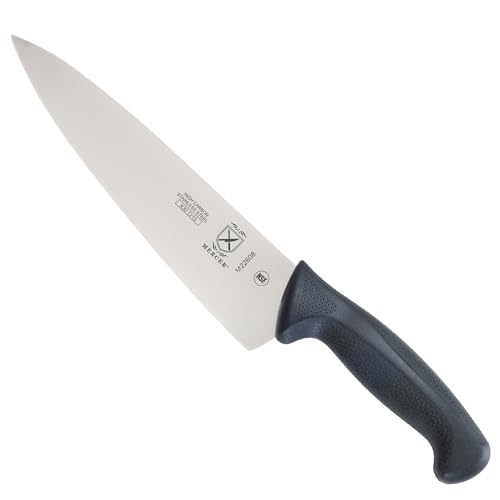
Mercer Culinary M22608 Millennia 8-Inch Chef’s Knife
- ✓ Sharp edge holds well
- ✓ Comfortable, non-slip grip
- ✓ Balanced, sturdy feel
- ✕ Hand-wash only
- ✕ Requires care to avoid dulling
| Blade Material | One-piece high-carbon Japanese steel |
| Blade Length | 8 inches (203 mm) |
| Edge Maintenance Type | Easy edge maintenance; hand wash recommended |
| Handle Design | Ergonomic handle with textured finger points for non-slip grip |
| Care Instructions | Hand wash with warm water and mild soap; dry completely; do not dishwasher or submerge for long periods |
| Usage Suitability | Chopping, mincing, and cutting (onions, shallots, herbs, garlic, cabbage) |
You’re slicing onions at the coziest corner of your kitchen, a quick dinner rush turning the counter into a mini-restaurant prep station. The Mercer Culinary M22608 slides through layers like it’s gliding on a breeze, its one-piece high-carbon Japanese steel catching the light as you make the first clean pull.
I’m not solving a mystery here—it’s the weight, grip, and edge that feel thoughtfully tuned from the first cut.
The handle sits with a confident, ergonomic feel, and those textured finger points prevent slips when you’re dicing smaller items like shallots or garlic. It’s not just about comfort; it’s about control, so your wrist doesn’t tire mid-chop.
And yes, the balance on the tang makes it feel centered, almost like you’re guiding a natural extension of your hand.
Chopping herbs becomes surprisingly forgiving—the blade glides through cilantro and parsley without tearing. You’ll notice the steel’s edge holds up nicely, so you don’t chase a dull spot after a few rounds of carrots or cabbage.
It’s easy to maintain with a quick hand wash and thorough dry, which fits real-life kitchen routines.
The M22608’s 8-inch blade offers enough reach for larger veggies without feeling unwieldy. It’s built to last, with a design that nudges you toward careful care rather than dishwasher shortcuts.
In daily use, you’ll reach for it for everything from mincing to slicing, and you’ll appreciate that steady bite it provides.
Bottom line: this knife feels durable, reliable, and surprisingly comfortable for longer prep sessions. It’s simple, effective, and ready to handle the rhythm of weeknight cooking and weekend meal-prepping alike.
PAUDIN Chef Knife, 8 Inch High Carbon Stainless Steel Sharp

- ✓ Comfortable grip
- ✓ Maintains edge well
- ✓ Versatile everyday knife
- ✕ Not Damascus pattern
- ✕ Requires proper sharpening practice
| Blade Material | 5Cr15Mov stainless steel |
| Blade Length | 8 inches (approximately 20.3 cm) |
| Blade Thickness | 2.0 mm |
| Handle | Ergonomic wood handle integrated with blade |
| Blade Finish/Pattern | Waved pattern on blade |
| Usage/Applications | Chopping, slicing, mincing, dicing meat and produce (bread, fish, chicken, beef) |
You know that moment when you spot a knife that looks sturdy enough to handle a bear, but still feels light in your hand? That’s PAUDIN’s 8-inch Chef Knife catching your eye in the kitchen drawer, and I was curious to see if it could live up to the hype.
The blade wear on the edge is sleek, and the waved pattern catches the light without being loud. It sits comfortably in the hand, its wood handle shaping to your grip as if made for long slicing sessions.
First cuts are where it shines. It glides through vegetables with minimal effort, the 2mm blade thinning into pads of carrot and cucumber like a chef’s pencil drawing fine lines.
It felt balanced—neither blade heavy nor handle too light—so you can make confident, clean chops without wrist fatigue. The edge stays sharp longer than you’d expect from a budget knife, thanks to careful hand polish by craftsmen.
Texture and feel matter, and this knife nails both. The handle is warm to the touch, and the ergonomic shape reduces strain after you’re done with a big prep.
It handles meat, fish, and bread with ease, making it the kind of multi-tasker you’ll actually reach for on a busy weeknight. In practice, it’s a reliable everyday workhorse that doesn’t scream “professional only,” which is a big win for home cooks.
For the price, you get solid performance that doesn’t back down when the going gets tough. It’s straightforward to care for, and the 8-inch size sits nicely between nimble and substantial.
If you’re hunting for a knife that blends easy handling with capable sharpness, this PAUDIN is worth a look. It’s well-suited for daily cooking tasks and casual restaurant-style prep at home.
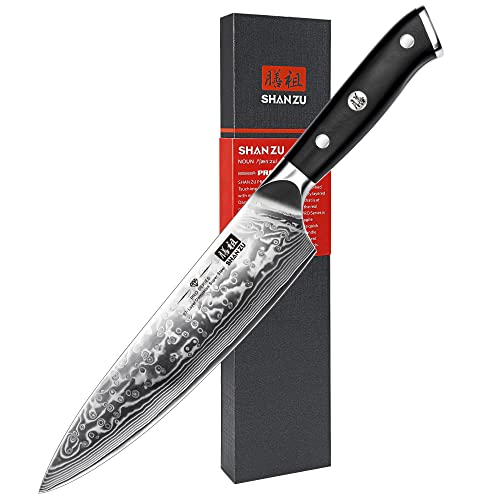
SHAN ZU Chef Knife 8″ Japanese Damascus Kitchen Knife
- ✓
- ✓ Real 67-layer Damascus
- ✓ Comfortable G10 handle
- ✓ Strong edge retention
- ✓
- ✕
- ✕ Mid-range weight may vary
- ✕ Requires careful maintenance
- ✕
| Blade Material | 10Cr15Mov Damascus Japanese steel with 67-layer construction |
| Blade Hardness | HRC 62 |
| Blade Length | 8 inches (203 mm) |
| Blade Thickness | 2.2 mm |
| Blade Width | 2.5 inches (63.5 mm) |
| Handle Material and Type | G10, ergonomic frosted glass fiber |
| Handle Length | 5.3 inches (134.6 mm) |
| Edge Angle | 15 degrees |
You might have assumed that an 8″ damascus knife at $49.99 is mostly show and little go. But this SHAN ZU shows up with real layers, not just a pretty pattern.
The first thing you notice is the weight and balance: 270 grams of solid feel, with a 5.3″ handle that sits comfortably in the palm.
The blade’s 67-layer forge work isn’t just for looks. When you cut, you feel a crisp edge and a surprising ease through vegetables and boneless chicken.
The 15-degree angle is gentle enough for fine juliennes but confident for chopping fibrous stuff too.
Its 10Cr15Mov core delivers honest rigidity without feeling brittle. I worried a lesser steel might rust or dull, and it held up with light hand-washing and quick drying.
The G10 handle is grippy, not slick, which makes long prep sessions feel less tiring.
The knife isn’t ultra-light, but it isn’t unwieldy either. The 2.2 mm blade thickness gives a sturdy feel for rocking cuts while still slicing thinly.
The pattern comes alive after a quick polish, which is a nice nod to the “real Damascus” claim.
In real kitchen use, you’ll notice the edge holds well, and the heft helps with push cuts on root vegetables. It’s comfortable during extended prep, and the warranty offers peace of mind if anything misaligns during storage or transport.
Bottom line: if you want a visually striking, durable home chef knife that performs as you’d expect from a higher-end blade, this SHAN ZU is worth a serious look. It shines in everyday tasks and feels reliably robust without breaking the bank.
What Defines the Best Chef’s Knife?
The best chef’s knife is defined by several essential characteristics that enhance its performance and usability in the kitchen.
- Blade Material: The material of the blade significantly affects sharpness, durability, and maintenance. High-carbon stainless steel is often regarded as the best option due to its resistance to rust and ability to hold a sharp edge.
- Blade Length: A typical chef’s knife ranges from 8 to 10 inches, with length influencing control and versatility. An 8-inch knife is generally preferred for home cooks for its ease of handling, while a 10-inch knife offers more cutting surface for larger tasks.
- Weight and Balance: The knife’s weight and balance are crucial for comfort during prolonged use. A well-balanced knife feels stable in hand, allowing for more precision and less fatigue as you chop or slice.
- Handle Design: The design and material of the handle contribute to the overall grip and comfort. Ergonomic designs that offer a secure grip help prevent slipping and reduce strain on the wrist, making for a safer cutting experience.
- Blade Edge: The type of edge, whether straight or serrated, impacts the knife’s effectiveness for various tasks. Most chefs prefer a straight edge for versatility, as it is ideal for slicing, dicing, and chopping tasks, while serrated edges are better suited for cutting bread or soft fruits.
- Price and Brand Reputation: While price doesn’t always equate to quality, investing in a knife from a reputable brand often ensures better craftsmanship and longevity. Well-known brands often provide warranties and have a history of customer satisfaction, making them reliable choices for chefs.
What Are the Key Features of a High-Quality Chef’s Knife?
The key features of a high-quality chef’s knife include the following:
- Blade Material: High-quality chef’s knives are often made from high-carbon stainless steel, which provides a good balance between durability and edge retention. This type of steel is resistant to rust and corrosion, ensuring longevity and performance in the kitchen.
- Blade Design: A well-designed blade typically has a curved edge that allows for rocking motion during chopping, enhancing efficiency. The blade should also have a balance that feels comfortable in hand, contributing to better control and precision while cutting.
- Handle Comfort: The handle of a chef’s knife should be ergonomically designed for a secure grip, reducing hand fatigue during prolonged use. Materials like wood, polymer, or metal are commonly used, and a good handle will also provide a non-slip surface for safety.
- Weight and Balance: A high-quality chef’s knife should have an appropriate weight that feels substantial without being cumbersome. The balance between the blade and handle is crucial, as it affects the knife’s maneuverability and ease of use.
- Size: Chef’s knives typically range from 8 to 10 inches in length, providing versatility for various tasks from slicing to dicing. The right size depends on the user’s comfort and the type of food being prepared, with longer blades being better for larger items and shorter blades for more precise cuts.
- Edge Geometry: A good chef’s knife features a sharp edge angle, often around 15 to 20 degrees per side, allowing for precise cuts. The edge should also be easy to maintain, with some knives featuring a bolster that supports the blade and allows for easy honing.
- Durability: High-quality knives are designed to withstand regular use without easily chipping or dulling. A durable knife will maintain its edge longer and can endure the rigors of a busy kitchen environment.
- Ease of Maintenance: A knife that is easy to sharpen and maintain is essential for home cooks and professionals alike. Features like a full tang and bolster can also aid in the maintenance process, ensuring the knife remains in top condition.
Which Blade Materials Offer the Best Performance?
The best chefs’ knives are often made from various materials, each offering unique performance characteristics.
- High-Carbon Stainless Steel: This material combines the best properties of both high-carbon steel and stainless steel, providing excellent edge retention and resistance to rust.
- Carbon Steel: Known for its superior sharpness and ease of sharpening, carbon steel knives can achieve a razor-sharp edge but require more maintenance to prevent rust and corrosion.
- Damascus Steel: Renowned for its beautiful patterns, Damascus steel is crafted by layering different types of steel, giving it exceptional strength, durability, and edge retention while also being resistant to chipping.
- Ceramic: Ceramic knives are known for their extreme sharpness and lightweight properties, making them ideal for precise cuts, though they can be brittle and prone to chipping or breaking if dropped.
- Titanium: Although less common, titanium blades offer incredible strength and corrosion resistance, making them suitable for chefs who need a durable and lightweight option, though they may not hold an edge as well as steel.
High-carbon stainless steel is favored by many chefs for its balance between sharpness, durability, and ease of maintenance, allowing for consistent performance in a busy kitchen. Carbon steel, while needing more care, is often preferred by professional chefs for its ability to take and hold an incredibly sharp edge, making it ideal for intricate tasks.
Damascus steel stands out not only for its aesthetics but also for its performance, as the layering process enhances both durability and cutting ability, making it a popular choice among high-end knife enthusiasts. Ceramic knives, on the other hand, are perfect for those who prioritize lightweight tools and require minimal sharpening, although they are less versatile due to their fragility.
Lastly, titanium blades offer a unique alternative for chefs looking for a strong, rust-resistant knife that can withstand heavy use, though they may not be the top choice when it comes to edge retention compared to traditional steel options.
How Does Handle Design Impact Knife Usability?
Shape and Size: The shape and size of the handle can influence how well the user can maneuver the knife, which is crucial for precision tasks. A handle that is too large or small can lead to discomfort and hinder the user’s ability to perform delicate cuts accurately.
Weight Distribution: An appropriately balanced handle can enhance control and reduce the effort needed to perform cutting tasks. Proper weight distribution allows for easier handling, making it less strenuous to use the knife for extended periods.
Texture: A textured handle can improve grip and prevent slippage, especially when working with wet or greasy hands. This feature is vital for maintaining safety and precision, as a secure hold on the knife helps prevent accidents and ensures better control during cutting motions.
What Are the Top Brands for Chef’s Knives?
The top brands for chef’s knives include some of the most respected names in culinary tools, known for their quality and craftsmanship.
- Wüsthof: Founded in 1814 in Germany, Wüsthof is renowned for its precision-forged knives that are made from high-carbon stainless steel. Their chef’s knives are known for their balance and durability, making them a favorite among professional chefs and home cooks alike.
- Shun: Shun knives are handcrafted in Japan and are distinguished by their beautiful Damascus steel blades, which offer both aesthetic appeal and functional sharpness. The brand emphasizes traditional Japanese craftsmanship, resulting in incredibly sharp and lightweight knives that provide excellent control.
- Victorinox: Known for their Swiss Army knives, Victorinox also produces high-quality chef’s knives that are both affordable and reliable. Their Fibrox line is especially popular for its ergonomic handle and slip-resistant grip, making them a great choice for both home cooks and culinary students.
- Global: Global knives are made in Japan and are famous for their distinctive design and lightweight construction. The seamless, stainless steel design not only looks modern but also provides a unique balance and a razor-sharp edge that appeal to chefs looking for precision and comfort in their cutting tasks.
- Miyabi: A premium brand under the Zwilling umbrella, Miyabi knives showcase the artistry of Japanese craftsmanship. Each knife is meticulously crafted using techniques that date back centuries, resulting in blades that are both beautiful and exceptionally sharp, perfect for intricate cutting and slicing.
- Henckels: Another well-known brand from Germany, Zwilling J.A. Henckels offers a wide range of chef’s knives that marry quality with affordability. Their knives are designed for durability, featuring a full tang and a comfortable grip, making them suitable for both professional kitchens and home use.
- MAC: MAC knives are celebrated for their sharp edges and lightweight feel, making them a favorite among chefs who prioritize precision. Made in Japan, these knives often feature a thinner blade and a sharp edge that allows for effortless slicing and dicing.
How Much Should You Expect to Pay for a Quality Chef’s Knife?
The price of a quality chef’s knife can vary widely based on several factors including brand, materials, and craftsmanship.
- Entry-Level Knives ($50 – $100): These knives are typically made from stainless steel and are a good choice for beginners or those who cook casually. They offer decent performance and can be a reliable option for everyday tasks without breaking the bank.
- Mid-Range Knives ($100 – $300): Knives in this range often feature better materials, such as high-carbon steel or VG-10, and may include better balance and ergonomics. They are suitable for serious home cooks who want a dependable tool that can handle more intensive cooking tasks.
- High-End Knives ($300 – $700): These premium knives are often handcrafted by skilled artisans and feature high-quality materials like Damascus steel. They provide exceptional performance, durability, and aesthetic appeal, making them ideal for professional chefs or culinary enthusiasts who value precision and longevity.
- Custom and Specialty Knives ($700+): Custom knives are individually made to order and can be tailored to the specific preferences of the chef. These knives often use rare materials and unique designs, offering a personal touch and exceptional craftsmanship that caters to serious professionals and collectors.
What Prices Reflect the Best Value?
When considering the prices that reflect the best value for a chef’s knife, several factors come into play:
- Material Quality: The best chef’s knives are often made from high-carbon stainless steel or Damascus steel, which provide excellent sharpness and durability. Knives made from these materials tend to retain their edge longer and resist corrosion, making them a worthwhile investment.
- Brand Reputation: Renowned brands like Wüsthof, Shun, and Global have established themselves through quality and performance. Investing in a knife from a reputable brand often ensures better craftsmanship, warranty, and customer service, which can justify a higher price point.
- Design and Ergonomics: A well-designed knife that feels comfortable in the hand can enhance the cooking experience. Knives with ergonomic handles that provide a good grip can prevent fatigue during prolonged use, making them worth the extra cost.
- Blade Thickness and Length: The thickness and length of the blade can significantly impact its usability for different tasks. Knives that offer a versatile length (typically 8 to 10 inches) and a balanced thickness can handle various cutting techniques, providing better value over time.
- Maintenance and Longevity: Investing in a knife that requires less frequent sharpening and is easy to maintain can save money in the long run. High-quality knives that come with proper care instructions and are designed to last can ultimately prove to be the best value.
How Can You Maintain Your Chef’s Knife for Longevity?
Maintaining your chef’s knife is essential for ensuring its longevity and performance.
- Regular Sharpening: Keeping your knife sharp is crucial for efficient cutting and to prevent accidents. A dull knife requires more force, which can lead to slips and injuries.
- Proper Cleaning: Always wash your chef’s knife by hand with mild soap and water instead of putting it in the dishwasher. The harsh environment of a dishwasher can dull the blade and cause damage to the handle.
- Correct Storage: Store your knife in a way that protects the blade, such as in a knife block, on a magnetic strip, or in a blade guard. This prevents the edge from becoming dull due to contact with other utensils and keeps it safe from damage.
- Avoid Cutting on Hard Surfaces: Use a cutting board made of wood or plastic rather than harder surfaces like glass or granite. Cutting on hard surfaces can chip the blade and reduce its sharpness.
- Periodic Professional Maintenance: Consider having your knife professionally sharpened and maintained every few years. Professional services can restore the blade’s edge and address any issues that might be beyond at-home care.