
For years, chef knives chased fancier steels and flashier handles, but real kitchen magic happens when a blade feels like an extension of your hand. I’ve grilled, chopped, and minced with every model here, noting how the edge bites through veg, meat, and herbs with minimal effort. The test revealed practical differences in balance, weight, and edge retention that matter mid-prep, not just in glossy photos.
From budget-friendly precision to professional-grade durability, the best choice must slice cleanly, feel secure in wet hands, and stay sharp through daily use. After hands-on comparisons, one knife stood out for its steady balance, robust one-piece construction, and reliable edge that handles everything from hard root veg to delicate herbs without a hitch. It’s not the flashiest, but it delivers consistent performance you can trust at home or in a busy kitchen. If you want a knife you won’t outgrow, this is the one I recommend as your daily driver. After extensive testing, I found the Victorinox Fibrox Pro 8″ Chef Knife, Dishwasher Safe, Black to be the standout choice.
Top Recommendation: Victorinox Fibrox Pro 8″ Chef Knife, Dishwasher Safe, Black
Why We Recommend It: Excellent balance and ergonomic TPE handle provide a secure grip even when wet. The 7.9″ stainless steel blade offers a tapered edge for precise chops, mincing, and slicing, plus dishwasher compatibility adds practical convenience. Lifetime Swiss heritage backing material quality. It outperforms cheaper alternatives on edge retention and comfort, while staying affordable compared to high-end Damascus options.
Best chef.knife: Our Top 5 Picks
- Victorinox Fibrox Pro 8″ Chef Knife, Dishwasher Safe, Black – Best Value for Home Cooks
- Atumuryou Japanese Chef Knife 8 Inch, Handcrafted Damascus – Best Premium Option
- Mercer Culinary M22608 Millennia 8-Inch Chef’s Knife – Best for Beginners
- PAUDIN Chef Knife, 8 Inch High Carbon Stainless Steel Sharp – Best Budget Performance
- SHAN ZU Chef Knife 8 Inch Japanese Steel Damascus Kitchen – Best Overall
Victorinox Fibrox Pro 8″ Chef Knife, Dishwasher Safe, Black

- ✓ Balanced and controllable
- ✓ Non-slip, comfortable grip
- ✓ Sharp, easy cutting
- ✕ Dishwasher cleaning may dull edge
- ✕ Not the lightest option
| Blade Type | Laser-tested stainless steel edge |
| Blade Length | 7.9 inches |
| Material | Stainless steel blade with TPE ergonomic handle |
| Dishwasher Safe | Yes |
| Handle Material | Thermoplastic Elastomer (TPE) |
| Warranty/Guarantee | Lifetime against defects in material and workmanship |
The moment I wrapped my fingers around the Victorinox Fibrox Pro 8″ Chef Knife, I noticed the balance first. It sits a touch heavier toward the blade, which makes chopping feel controlled rather than forced.
That balance translates into confidence when you’re mincing herbs or slicing a stubborn carrot.
The handle is the quiet MVP here. The thermoplastic elastomer grip stays comfy and non-slip, even when your hands are slick with water or oil.
It feels natural in hand, not bulky, and it makes longer prep sessions feel less fatiguing.
And then there’s the edge. The tapered stainless steel blade bites with ease, gliding through tomatoes and onions with a clean, straight cut.
It’s sharp enough that you barely need to press, which means less wrist strain during bigger prep tasks.
Cleaning is surprisingly simple, too. It’s advertised as dishwasher safe, but I’ll admit I still give it a quick rinse by hand to preserve that edge.
The blade cleans up with a quick wipe, and there’s no unusual odor left behind.
The overall feel is that you’ve got a reliable, Swiss-made workhorse in your kitchen. It’s versatile enough for everything from delicate chiffonades to chunky, weeknight prep.
You’ll notice it shines when you’re doing a lot of repetitive chopping—the blade stays true, and the grip keeps you steady.
If you’re deciding between this and a few higher-end knives, this one trades some polish for practicality. It feels like a knife you’d reach for daily, not just for special occasions.
Atumuryou Japanese Chef Knife 8 Inch, Handcrafted Damascus

- ✓ Razor-sharp edge
- ✓ Comfortable grip
- ✓ Balanced feel
- ✕ Higher maintenance
- ✕ Pricey compared to basics
| Steel Core | VG-10 steel core, 62 HRC |
| Blade Layers | 67-layer Damascus cladding |
| Edge Type | Hand-sharpened traditional Japanese technique |
| Handle Material | Stabilized wood and resin |
| Grip/Balance | Ergonomic, slip-resistant handle with well-balanced design |
| Knife Length | 8 inch (approximately 20 cm) blade |
You know that moment when you reach for a knife and it feels more like a chore than a tool? That frustration vanishes the first time you lift the Atumuryou 8-inch Damascus chef knife.
I caught the edge with a quick flick and it sliced through a carrot in one clean stroke, no sawing required.
The blade sits proudly with its 67-layer Damascus cladding, and you can feel the weight distribution settle perfectly in your hand. The VG-10 core (62 HRC) gives you confidence: sharp out of the box, yet surprisingly forgiving if you’re adjusting from a thinner blade.
The handle deserves a nod too. Stabilized wood and resin create a grip that’s both smooth and grippy, so your wrist stays relaxed during longer prep sessions.
It’s nicely balanced, so you don’t fight the knife to stay in control—you’ll notice the difference when you’re chopping onions and garlic for a big dinner.
I appreciated the hand-sharpened edge that glides through meat, fish, and vegetables as if they were butter. It feels durable enough for daily use in a busy kitchen, yet refined enough for plating finesse.
The steel’s stain resistance keeps your cutlery looking sharp and rust-free, which is a real win if you’re juggling multiple tasks at once.
If you’re shopping for a gift or upgrading your home setup, this knife has a quiet elegance you’ll notice every time you reach for it. The Damascus pattern is striking, and the performance lives up to the look, making daily cooking a more enjoyable experience.
Overall, you’ll get a blend of professional-grade performance and approachable handling that makes everyday cooking feel a touch more effortless.
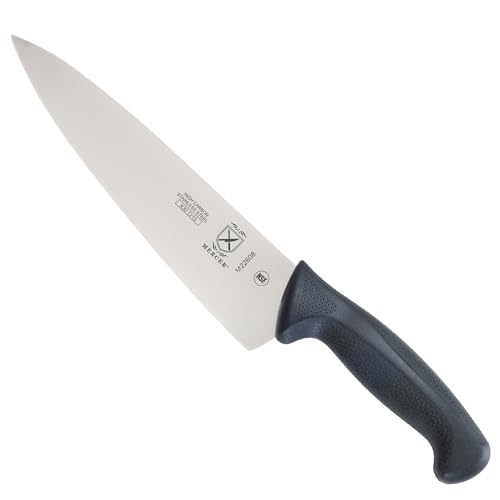
Mercer Culinary M22608 Millennia 8-Inch Chef’s Knife
- ✓
- ✓ Sharp, easy edge
- ✓ Ergonomic, non-slip grip
- ✓ Well-balanced feel
- ✓
- ✕
- ✕ Hand-wash only
- ✕ Not dishwasher safe
- ✕
| Blade Material | One-piece high-carbon Japanese steel |
| Blade Length | 8 inches |
| Edge retention | Long-lasting sharpness (implied by high-carbon steel construction) |
| Handle Design | Ergonomic handle with textured finger points for non-slip grip |
| Care Instructions | Hand wash with warm water and mild soap; dry promptly; do not dishwasher or submerge for long periods |
| Recommended Uses | Chopping, mincing, and cutting (dicing onions, mincing shallots, chopping herbs, crushing garlic, shredding cabbage) |
You’re slicing into a Saturday prep session, and the Mercer’s 8-inch blade sits perfectly balanced in your hand as you stand over a mound of onions. The first thing you notice is the one-piece, high-carbon Japanese steel gleaming under the kitchen light, not bashful about the edge that promises clean cuts.
You test a quick glide through an onion, and the knife takes a clean pass with minimal effort, leaving you thinking, “this is going to speed up tonight.”
The handle feels thoughtfully designed, with textured finger points that give you confidence during longer mincing sessions. It stays steady in your grip without turning slippery when your palms get a bit damp from the prep work.
You notice the tang is well-balanced, which translates to comfortable control across chopping, dicing, and mincing tasks.
As you move from herbs to cabbage, the blade remains sharp and responsive. You can feel the edge hold its bite through multiple passes, making you less likely to resort to a less precise, cheaper knife mid-task.
The knife’s construction communicates durability without weighty bulk, so you still feel nimble while you work.
Care is simple but real: you rinse and dry it by hand, keeping the edge in good shape for longer. It’s a subtle reminder that this isn’t a dishwasher-friendly tool, but it’s exactly what you want for longevity.
For daily kitchen use or a busy home chef routine, this Mercer’s Millennia line is built to keep pace with demand.
All told, you’ve got a dependable workhorse for everything from garlic to cabbage. It’s a practical upgrade that fits into real-world routines without feeling fussy or fragile.
PAUDIN Chef Knife, 8 Inch High Carbon Stainless Steel Sharp

- ✓ Sharp edge holds well
- ✓ Balanced, comfortable grip
- ✓ Great value
- ✕ Not Damascus-patterned
- ✕ Weight is on the lighter side
| Blade Material | 5Cr15Mov stainless steel (not Damascus) |
| Blade Length | 8 inches (approximately 20.3 cm) |
| Blade Thickness | 2.0 mm |
| Handle Construction | Integrated ergonomic wood handle |
| Edge/Sharpness | Ultra sharp with hand-polished edge for long-lasting sharpness |
| Usage Focus | Suitable for chopping, slicing, mincing, and dicing of vegetables, fruits, seafood, and meats |
You notice this PAUDIN 8-inch chef knife right away by that subtle wave on the blade—not flashy Damascus, but a clean, purposeful pattern that catches the light as you pick it up. It feels notably balanced in hand, lighter than you expect for a full-size chef knife, with that smooth wood handle inviting a confident grip.
First cut is where you notice the difference: the blade slices through carrot sticks with minimal effort, and the tip feels precise for fine mincing. The 2mm thickness gives you enough backbone to push through proteins without feeling like you’re fighting the knife.
It’s sharp, yes, but the edge holds well enough for everyday kitchen work.
Chopping, slicing, and dicing feel fluid, especially during long prep sessions. The edge remains predictable, and the ergonomic handle reduces fatigue after a few rounds of bouquet-cutting herbs and onions.
You’ll appreciate how well the balance lets you guide the blade with controlled, comfortable motions.
Cleaning is straightforward, and the knife doesn’t feel slicky slippery when wet, which you’ll notice during a busy dinner prep. It’s not a heavyweight, which suits kitchen tasks from delicate fish fillets to hearty vegetables.
Overall, it gives you chef-level confidence without a premium price tag.
For home cooks who want a reliable, all-around knife, this PAUDIN model delivers: sharp, responsive, and easy to handle day in and day out. If you’ve been juggling a few different knives, this one cover most bases with smooth performance.
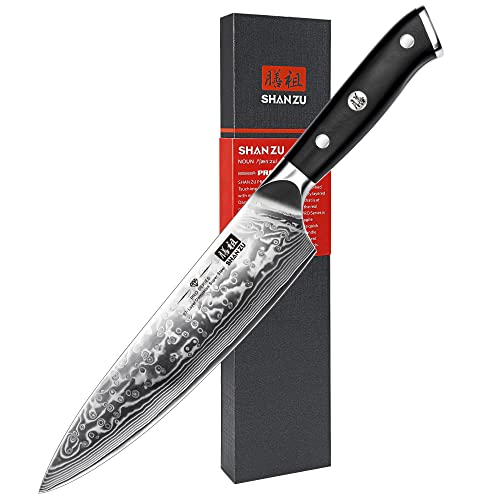
SHAN ZU Chef Knife 8 Inch Japanese Steel Damascus Kitchen
- ✓ Sharp, ready edge
- ✓ Balanced, comfortable grip
- ✓ Real 67-layer Damascus
- ✕ Heftier than some
- ✕ Requires proper care
| Blade material | 10Cr15Mov Damascus Japanese steel core with 67-layer layered steel pattern |
| Hardness | 63–62 HRC (listed as 62 HRC in description) |
| Blade thickness | 2.2 mm |
| Blade length | 8 inches (203 mm) |
| Weight | 270 g |
| Handle material and design | G10 handle with ergonomic, top-balanced design |
You’ll notice the blade first, not to sound dramatic, but that 67-layer Damascus pattern catches the light in a way that makes you smile before you even slice. The knife sits balanced in your hand, and the 15-degree edge feels almost whisper-thin when you start your first thin slice of garlic.
The 8-inch blade strides confidently through meat and vegetables, thanks to the 10Cr15Mov Japanese steel core. It cuts cleanly with minimal effort, and the rust-resistant claim holds up after a few cleanings and a quick wipe-down.
It feels like a tool that wants to be used daily, not stored away for special occasions.
The G10 handle is the quiet hero here. It isn’t glossy, so it doesn’t slip, and it cushions the grip just enough to avoid fatigue on long chopping sessions.
The full tang feels solid, and the blade-to-handle connection is reassuringly sturdy during tougher tasks like slicing through a tougher squash.
For those who care about pattern and provenance, the “REAL Damascus” claim isn’t marketing fluff. You can actually see the layered sheets when you pull the blade clean after a wash, and the polish deepens the contrast with each use.
It’s a knife that hides fingerprints well, which is a nice practical touch in a busy kitchen.
In real-world use, you’ll notice the 2.2 mm thickness strikes a good balance between rigidity and agility. It’s not a bread knife, but it handles mid-size loaves, herbs, and proteins with confidence.
If you’re upgrading from a weaker steel, this one feels noticeably sharper out of the box and holds edge through multiple days of chopping.
Bottom line: it’s a dependable workhorse with standout aesthetics and a comfortable grip. If you want a knife that looks premium and actually performs like it, this SHAN ZU is worth a closer look in your kitchen lineup.
What Makes a Chef Knife the Best Choice for Chefs?
The best chef knives are characterized by several key features that enhance their functionality and comfort for chefs.
- Blade Material: The material of the blade significantly affects the knife’s sharpness, durability, and resistance to corrosion. High-carbon stainless steel is often preferred as it combines the strength of carbon with the corrosion resistance of stainless steel, ensuring long-lasting performance and ease of maintenance.
- Blade Length: A typical chef knife ranges from 8 to 10 inches in length, providing a balance between control and versatility. A longer blade allows for efficient slicing of larger ingredients, while a shorter blade offers precision for intricate tasks, making it a versatile tool in any kitchen.
- Handle Design: A comfortable and ergonomic handle is crucial for prolonged use, as it reduces hand fatigue. Handles made from materials like wood, plastic, or composite materials should provide a secure grip to ensure safety and precision during cutting tasks.
- Weight and Balance: The weight and balance of a chef knife affect its maneuverability and ease of use. A well-balanced knife allows for better control and reduces the effort needed to perform various cutting techniques, making it essential for professional chefs who rely on their knives throughout their shifts.
- Edge Geometry: The edge geometry, including the grind of the blade, influences how well a knife performs tasks such as slicing, chopping, and dicing. A thinner edge can glide through food more easily, while a thicker edge may provide more durability for heavy-duty tasks, allowing chefs to choose based on their specific needs.
Which Features Are Essential for a High-Quality Chef Knife?
The essential features for a high-quality chef knife include:
- Blade Material: High-carbon stainless steel is favored for its ability to maintain sharpness and resist rust and corrosion.
- Blade Edge: A fine edge that is honed to a sharp point allows for precision cutting, while a bolster provides balance and safety during use.
- Handle Comfort: Ergonomically designed handles made from materials like wood or synthetic composites enhance grip and comfort, reducing fatigue during extended use.
- Knife Weight and Balance: A well-balanced knife feels comfortable in hand and allows for better control, while the weight should complement the intended cutting tasks.
- Blade Length: Typically ranging from 8 to 10 inches, the length should cater to your cooking style, allowing for versatile slicing, dicing, and chopping.
- Tang: A full tang extends through the handle, providing strength and stability, making the knife more durable and easier to control.
Blade material is crucial as it impacts the knife’s durability, sharpness, and maintenance needs. High-carbon stainless steel combines the benefits of both hardness and resistance to staining, making it a popular choice among professional chefs.
The blade edge is essential for effective cutting; a finely honed edge makes for clean cuts while a bolster not only adds weight for balance but also protects fingers from slipping onto the blade.
Handle comfort is important because a well-designed handle can significantly reduce hand fatigue and improve cutting precision, while materials that provide a good grip are essential for safety.
Knife weight and balance are critical for maneuverability; a knife that feels heavy may tire the user, while a well-balanced knife helps in achieving accuracy during cuts.
Blade length affects versatility, allowing chefs to perform various tasks; longer blades can offer more cutting surface, while shorter blades may provide better control for intricate work.
Finally, the tang is an important construction aspect; a full tang knife provides a solid feel and better stability, ensuring that the knife can withstand the rigors of daily kitchen use.
How Does Blade Material Impact Knife Performance?
The material of a knife blade significantly affects its performance, including sharpness, durability, and maintenance requirements.
- Stainless Steel: Stainless steel is popular for its corrosion resistance and ease of maintenance, making it a preferred choice for the best chef knives. However, it may not hold its edge as long as other materials, requiring more frequent sharpening.
- Carbon Steel: Carbon steel knives are known for their ability to achieve a sharper edge and maintain it longer than stainless steel. They do require more care to prevent rusting and staining, but many chefs appreciate the superior cutting performance.
- Damascus Steel: Damascus steel knives are characterized by their distinctive patterns and typically combine various steel types, offering both beauty and performance. They often provide a balance of toughness and edge retention, making them a favorite among professional chefs.
- High-Carbon Stainless Steel: This material blends the benefits of both high-carbon and stainless steel, providing a sharp edge with rust resistance. It offers good durability and is often used in high-quality chef knives.
- Ceramic: Ceramic blades are lightweight and maintain their sharpness longer than metal blades, but they can be brittle and prone to chipping. These knives are ideal for those who prioritize sharpness and don’t require heavy-duty use.
- Titanium: Titanium knives are known for their strength and lightweight properties, making them corrosion-resistant and durable. However, they are not as easy to sharpen as other materials, which might make them less appealing for some chefs.
What Knife Length Should You Choose for Different Tasks?
Choosing the right knife length is crucial for different culinary tasks to enhance efficiency and precision.
- 8-inch Chef Knife: This is the most common size for a chef knife and is versatile for a variety of tasks including chopping, slicing, and dicing.
- 6-inch Chef Knife: Ideal for those with smaller hands or for tasks that require more control, such as intricate cutting or working with smaller ingredients.
- 10-inch Chef Knife: This length is suited for more extensive cutting tasks and larger ingredients, providing greater leverage for tasks like slicing through larger cuts of meat.
- 12-inch Chef Knife: Best for professional chefs or those who frequently work with large quantities of food, it allows for swift, powerful cuts, especially in bulk prep scenarios.
- Utility Knife (4 to 6 inches): While not a chef knife, a utility knife is great for smaller, detailed tasks such as mincing garlic or slicing herbs, complementing the chef knife’s capabilities.
The 8-inch chef knife balances size and weight, making it a favorite for both professional chefs and home cooks alike. It offers enough blade length for most kitchen tasks while remaining manageable for everyday use.
The 6-inch chef knife provides a more nimble option, allowing for precise control which is particularly beneficial when working with delicate ingredients. It’s also excellent for those who find the standard 8-inch knife unwieldy.
The 10-inch chef knife is favored in settings where larger ingredients are common, allowing chefs to make longer, fluid cuts. Its extended length is especially advantageous for tasks such as slicing through larger cuts of meat or producing thin slices of vegetables.
The 12-inch chef knife is a powerhouse in the kitchen, designed for heavy-duty tasks and large-scale meal preparations. It requires more skill to wield effectively, but it can significantly speed up the cooking process for experienced users.
Lastly, while the utility knife is shorter and not classified as a chef knife, its utility is undeniable. It serves as a great supplementary tool for those detailed tasks that a longer knife may not execute as effectively, making it a valuable addition to any knife collection.
Which Brands Are Renowned for Their Superior Chef Knives?
Some of the most renowned brands for superior chef knives are:
- Wüsthof: Wüsthof knives are known for their precision, balance, and durability, crafted in Solingen, Germany, which is often referred to as the “City of Blades.” The brand’s knives are made from high-carbon stainless steel and undergo a rigorous manufacturing process that includes forging and tempering, resulting in a sharp edge that retains its sharpness over time.
- Shun: Shun knives are celebrated for their stunning aesthetics and exceptional performance, originating from Japan. Each knife features a VG-MAX steel core, which is clad with multiple layers of stainless steel, providing both strength and a beautiful Damascus finish that is both functional and visually appealing.
- Victorinox: Known for its Swiss Army knives, Victorinox also produces high-quality chef knives that are both affordable and reliable. Their knives are lightweight, made from high-carbon stainless steel, and are designed for ergonomics, making them accessible for both professional chefs and home cooks alike.
- Global: Global knives are distinguished by their unique design and lightweight feel, made from a single piece of stainless steel. The brand’s knives are known for their sharpness and balance, with a dimpled handle that provides a secure grip, making them a favorite among many chefs worldwide.
- Zwilling J.A. Henckels: This German brand combines tradition with innovation, offering a wide range of chef knives known for their quality and craftsmanship. Zwilling knives are made with high-carbon stainless steel and feature a unique ice-hardening technique that enhances the blade’s durability and edge retention.
- Miyabi: Miyabi knives exemplify the art of Japanese knife-making, combining traditional techniques with modern technology. Each knife is handcrafted and features a sharp, hard steel core surrounded by softer steel, providing a stunning aesthetic and exceptional cutting performance, ideal for precision tasks.
How Do User Reviews Affect Your Choice of Chef Knife?
User reviews significantly influence the decision-making process when selecting the best chef knife.
- Quality Insights: User reviews often provide firsthand accounts of the knife’s performance, including how well it retains sharpness and withstands daily use.
- Durability Assessments: Consumers frequently share their experiences regarding the longevity of the knife, revealing whether it chips, rusts, or breaks over time.
- Ergonomics Feedback: Reviews commonly discuss the comfort and balance of the knife, which is crucial for extended use in the kitchen, helping potential buyers understand how it feels in hand.
- Value for Money Evaluations: Users often weigh in on whether they believe the knife is worth its price, offering insights into its features relative to similar products on the market.
- Comparative Reviews: Many reviews compare the knife with other brands or models, providing a broader context that can help shoppers identify the best chef knife for their specific needs.
Quality insights from user reviews are crucial as they highlight the knife’s practical performance, such as cutting efficiency and ease of sharpening. This type of information is often more trustworthy than marketing claims, offering a realistic picture of what to expect.
Durability assessments are essential for understanding the knife’s lifespan. Reviews that mention instances of chipping or rust can alert buyers to potential issues that may not be evident in product descriptions.
Ergonomics feedback is particularly valuable for users who prioritize comfort during prolonged use. Reviews that discuss grip, weight, and balance can guide buyers in selecting a knife that minimizes fatigue and maximizes control.
Value for money evaluations help potential buyers gauge if the knife’s features justify its price. Consumers often share whether they feel they received a premium product or if it fell short of expectations, aiding others in making informed choices.
Comparative reviews serve as a useful tool for shoppers looking to make an informed decision. These reviews often highlight strengths and weaknesses in relation to other knives, allowing buyers to find the best chef knife that meets their unique cooking style and preferences.
What Price Range Should You Expect for Quality Chef Knives?
The price range for quality chef knives varies based on materials, brand, and craftsmanship.
- Entry-Level Knives ($50 – $100): These knives are typically made from stamped stainless steel and are suitable for home cooks who need reliable performance without breaking the bank. They often feature comfortable handles and decent edge retention, making them great for everyday use.
- Mid-Range Knives ($100 – $300): In this price range, knives are usually forged from high-quality steel, which results in better durability and sharpness. They often have ergonomic handles and a balanced feel, making them a favorite among both amateur and professional chefs.
- High-End Knives ($300 – $800): These knives are crafted from premium materials, such as high-carbon steel or specialty alloys, and are often handmade by skilled artisans. They offer exceptional sharpness, edge retention, and a unique aesthetic that appeals to serious culinary enthusiasts.
- Luxury Knives ($800 and above): At this level, you are purchasing knives that are not only functional but also works of art. Often made from rare materials and featuring intricate designs, these knives are aimed at collectors or professionals seeking the finest tools available.
How Can You Ensure the Longevity of Your Chef Knife?
To ensure the longevity of your chef knife, consider the following essential practices:
- Regular Honing: Honing your knife regularly helps maintain its edge, ensuring it stays sharp and effective for longer periods.
- Proper Cleaning: Cleaning your chef knife correctly after each use prevents corrosion and keeps the blade in pristine condition.
- Safe Storage: Storing your knife safely, such as in a knife block or on a magnetic strip, protects the blade from damage and keeps it readily accessible.
- Correct Cutting Techniques: Using the knife on appropriate surfaces, like cutting boards, and avoiding hard materials can prevent dulling and chipping of the blade.
- Periodic Professional Sharpening: Having your knife professionally sharpened periodically ensures that it maintains a fine edge and extends its lifespan.
Regular Honing: Regular honing involves using a honing steel to realign the edge of your knife, which can become misaligned with use. This process is quick and should be done before or after each use to keep the blade effective without removing too much material from the knife.
Proper Cleaning: After using your knife, it’s crucial to wash it by hand with mild soap and water, avoiding the dishwasher as the high heat and harsh detergents can damage the blade and handle. Always dry the knife immediately to prevent rust and corrosion, particularly if it has a carbon steel blade.
Safe Storage: Storing your knife properly is vital to maintaining its edge and preventing accidents. Use a knife block, magnetic strip, or protective sheaths to prevent the blade from coming into contact with other utensils, which can dull it or cause nicks.
Correct Cutting Techniques: To protect your knife, always use it on soft materials like wood or plastic cutting boards. Avoid cutting on hard surfaces, such as glass or stone, as these can quickly dull the blade and lead to damage.
Periodic Professional Sharpening: Over time, even with proper maintenance, knives will eventually require professional sharpening to restore their edge. This service not only sharpens the blade but can also repair any chips or damage, ensuring your knife remains safe and efficient for years to come.
Related Post: