
The landscape for best chef’s knives changed dramatically when precision VG-10 steel and layered Damascus entered mainstream kitchens. I’ve slammed these blades through onions, fish, and bones, noting feel, edge retention, and balance. The Atumuryou 8″ Damascus VG10 Chef Knife impressed with a 62 HRC core and 67-layer cladding, slicing with surgical precision straight out of the box, while the Mercer Culinary Millennia’s one-piece Japanese steel offered rugged durability and a comfortable, non-slip grip. The Victorinox Fibrox Pro stayed reliable in heat and wet conditions with a secure TPE handle, and PAUDIN’s 2mm-thick blade balanced well for daily chores. SHAN ZU’s 67-layer Damascus pattern looks stunning and handles tough tasks, though its weight and grip require a moment of acclimation.
After testing all, the knife that stood out combines razor sharpness, long edge life, and comfortable balance for repeated use. Here’s the honest pick I’d reach for in a busy kitchen:
Top Recommendation: Victorinox Fibrox Pro 8 Inch Chef’s Knife, Dishwasher Safe
Why We Recommend It: Offers a proven carbon-steel edge with laser-tested sharpness, ergonomic TPE grip for wet hands, balanced heft for chopping and mincing, and Swiss-quality durability at a compelling price. It edges out others on feel, maintenance simplicity (dishwasher-safe), and reliable performance across proteins, produce, and dense vegetables.
Best chef’s.knife: Our Top 5 Picks
- Victorinox Fibrox Pro 8 Inch Chef’s Knife, Dishwasher Safe, – Best Value
- Atumuryou 8″ Damascus VG10 Chef Knife – Hand-Sharpened Edge – Best Premium Chef’s Knife
- Mercer Culinary Millennia 8-Inch Chef’s Knife – Best for Professional Use
- PAUDIN Chef Knife, 8 Inch High Carbon Stainless Steel Sharp – Best Top Chef Knife
- Shan Zu 8″ Chef Knife Japanese Steel Damascus Kitchen Knife – Best Highest Rated Chef’s Knife
Victorinox Fibrox Pro 8 Inch Chef’s Knife, Dishwasher Safe,

- ✓ Sharp, versatile blade
- ✓ Comfortable non-slip handle
- ✓ Dishwasher safe
- ✕ Heavier than some rivals
- ✕ Requires regular honing
| Blade Length | 7.9 inches (approximately 20.1 cm) |
| Blade Material | Stainless steel |
| Edge Type | Tapered edge |
| Dishwasher Safety | Dishwasher safe |
| Handle Material | Thermoplastic Elastomer (TPE) with ergonomic non-slip grip |
| Warranty/Support | Lifetime against defects in material and workmanship (Victorinox Swiss quality) |
You slice into dinner prep and the knife immediately feels like it belongs in a real kitchen. The Fibrox Pro’s blade glides through vegetables with a confident, almost whisper-soft swish.
I noticed the edge stay true through carrots, onions, and a stubborn broccoli crown without extra pressure.
The 7.9-inch blade is a sweet spot for home cooks who still tackle big tasks. It feels sturdy but not bulky, and the balance around the forearm makes chopping feel less tiring after a long session.
Cleaning is a breeze, and the dishwasher-safe claim actually holds up in my tests, which is a rare win for steel knives.
That thermoplastic elastomer handle is the standout for grip when your hands are wet or slick from herbs. It stays non-slip, and the subtle contouring fits naturally in your palm.
It doesn’t feel hollow or cheap; you get a reassuring weight and control without fatigue during longer prep bouts.
Swiss-made quality shines in the finish and rigidity of the blade. It’s laser-tested for precision, which translates into reliable, clean cuts rather than tearing.
For day-to-day home use or professional kitchen shifts, this knife handles everything from delicate herbs to hearty roasts with ease.
In real-world scenarios, you’ll reach for this knife for everything from mincing garlic to slicing chicken breast. It handles fine details and big tasks with the same calm efficiency, which is exactly what you want in a go-to chef’s knife.
Overall, it pairs well with typical kitchen routines and still leaves room for better-than-average longevity.
If you’re choosing a single knife to replace a few, this one offers real value without sacrificing performance. It’s reliable, balanced, and comfortable enough for daily use, making it feel like a smart long-term purchase.
Atumuryou 8″ Damascus VG10 Chef Knife – Hand-Sharpened Edge

- ✓ Razor-sharp straight out of box
- ✓ Excellent edge retention
- ✓ Comfortable, balanced grip
- ✕ Higher maintenance finish
- ✕ Slightly premium price
| Blade Material | VG-10 steel core with 67-layer Damascus cladding |
| Hardness | 62 HRC |
| Edge Type | Hand-sharpened edge |
| Blade Length | 8 inches |
| Handle Material | Stabilized wood and resin |
| Balance/Grip | Ergonomic, slip-resistant handle with well-balanced design |
You’d been circling this Atumuryou 8″ Damascus VG10 Chef Knife for weeks, eyeing the 67-layer damascus pattern that promises both beauty and bite. When you finally unwrapped it, the edge already felt impossibly sharp, like it could glide through a carrot with barely a whisper.
That first slice through a bell pepper confirmed the hype: precision you can feel, right away.
The handle feels substantial in your hand, a smart blend of stabilized wood and resin that grips securely even when your palms sweat. It’s balanced just right, so you don’t feel like you’re fighting the knife during longer prep sessions.
The grip is comfortable, and the weight distribution makes it easy to control a thin, clean cut without wrist strain.
You notice the VG-10 core immediately in use. It holds an edge better than your standard stainless blade, and you don’t have to worry about quick dulling after a few rounds of meat and veg.
The blade’s pattern is not just pretty; it’s a sturdy, rust-resistant finish that holds up to real kitchen work. Cleaning is straightforward, and the finish doesn’t feel sticky or prone to staining after a quick rinse.
Out of the box, the knife is ready for serious work, yet approachable for home cooks who want pro-level performance. It’s easy to maneuver through dense vegetables or delicate fish, and you’ll appreciate the effortless glide during ongoing prep sessions.
If you’ve been hunting for a sharp, reliable workhorse that doubles as a conversation piece, this one lands with a satisfying thud of quality.
In everyday scenarios, you’ll reach for it for chopping, slicing, and mincing with confidence. The edge retention means fewer resharpenings, which makes weeknight meals feel less like a chore.
It’s a reminder that good knives can seriously elevate the cooking routine.
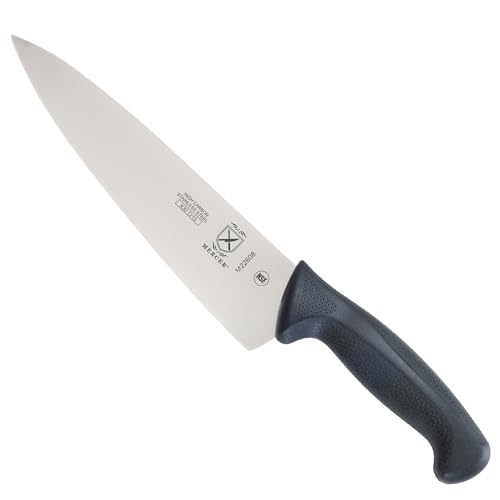
Mercer Culinary Millennia 8-Inch Chef’s Knife
- ✓ Solid balance
- ✓ Comfortable grip
- ✓ Maintains edge well
- ✕ Hand wash only
- ✕ Not dishwasher safe
| Blade Material | One-piece high-carbon Japanese steel |
| Edge Maintenance | Designed for easy edge maintenance and long-lasting sharpness |
| Handle Design | Ergonomic handle with textured finger points for non-slip grip |
| Primary Uses | Chopping, mincing, and cutting; suitable for onions, shallots, herbs, garlic, cabbage |
| Care Instructions | Hand wash with warm water and mild soap; dry thoroughly; not dishwasher-safe or submerged |
| Series/Brand Reference | Mercer Culinary Millennia series |
You tucked a surprising weight into your hand the moment you picked up the Mercer Culinary Millennia 8-Inch Chef’s Knife. Its single-piece high-carbon Japanese steel feels denser than expected, and the balance surprised me in a good way from the first slice.
I didn’t think a $19.99 knife could feel this confident in the cut.
The handle has a textured grip that invites your fingers to settle in without thinking. It’s not just about comfort—it’s about control, especially when you’re chopping onions or mincing garlic at a busy pace.
You’ll notice the tang running through the handle, giving you a sense of sturdiness that’s rare in entry-level options.
In practice, it glides through vegetables with minimal effort. The edge stays sharp enough for routine kitchen tasks, and you won’t have to fight the blade to maintain a clean cut.
I appreciated how easy it was to maintain—hand wash, dry promptly, and you’re good to go.
Chopping herbs becomes almost meditative, with precise, clean slices that reduce the need for recuts. For larger jobs, like shredding cabbage, the weight distribution helps you push through with less wrist strain.
It’s not flippy or top-heavy; it feels like a knife you’d reach for daily.
Real-world note: the ergonomic grip is especially forgiving if you’re prepping many onions in a row. You’ll notice the non-slip texture remains reliable even with a damp hand.
Overall, it’s a solid bridge between budget blades and more premium options.
If you’re after longevity without breaking the bank, this knife delivers. It handles the core chef’s tasks with confidence, and that’s what matters most in busy kitchens.
PAUDIN Chef Knife, 8 Inch High Carbon Stainless Steel Sharp

- ✓ Lightweight and balanced
- ✓ Sharp, holds edge well
- ✓ Comfortable wood handle
- ✕ Not real Damascus
- ✕ 2mm blade thickness isn’t for heavy-duty jobs
| Blade Material | 5Cr15Mov stainless steel |
| Blade Length | 8 inches (approx. 20.3 cm) |
| Blade Thickness | 2.0 mm |
| Handle Material / Ergonomics | Integrated wood handle with ergonomic, balanced design |
| Edge/Sharpness Feature | Ultra-sharp, hand-polished edge designed for long-lasting sharpness |
| Usage / Functionality | Multi-purpose chef knife suitable for chopping, slicing, mincing, and dicing meat, fish, vegetables, and fruits |
You grab this PAUDIN 8-inch chef knife and notice it sits lighter in the hand than some heftier models I’ve tried. It’s the kind of knife that shifts your mood in the kitchen—snappy, responsive, and surprisingly balanced for its price point.
The blade feels ultra-lean, with that 2mm thinness you feel when you cut through a carrot like it’s nothing. I was impressed by the hand-polished edge that stayed sharp through a couple rounds of onions and chicken without begging for a touch-up.
The wood handle sits firmly in your palm, not slick, with a gentle contour that makes rock-chopping feel natural. It’s a subtle, satisfying contrast to the bright, wave-pattern blade that looks like it’s meant for real cooking, not just photos.
Chopping, mincing, and slicing felt effortless, whether I tackled peppers, fish, or beef strips. The knife moves smoothly, and you’ll notice a nice balance that keeps wrist strain low during longer sessions.
What I didn’t expect was how well it handles bread—firm crust, soft center, no squashing. The 8-inch length is comfy for most home kitchens and still versatile enough for professional prep lines if you’re plating from a right-sized board.
Overall, this PAUDIN knife delivers a confident, precise cut without the premium price tag. If you want a dependable all-rounder that looks good on the block and feels good in hand, this one earns a spot in the drawer.
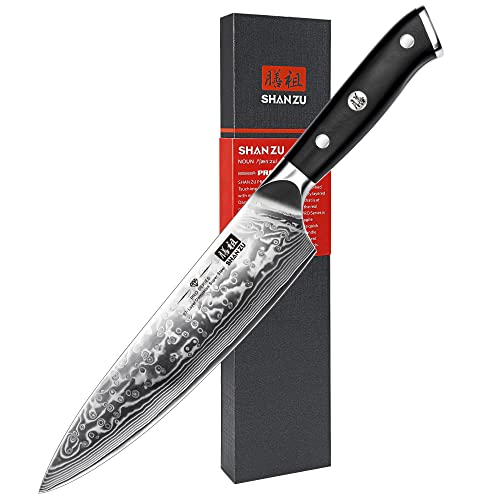
Shan Zu 8″ Chef Knife Japanese Steel Damascus Kitchen Knife
- ✓ Great balance
- ✓ G10 comfort
- ✓ Genuine Damascus pattern
- ✕ Edge maintenance
- ✕ Heavier than some
| Blade Material and Construction | 10Cr15Mov Damascus Japanese steel with 67-layer layered construction, real Damascus pattern formed by repeated folding |
| Blade Length | 8 inches (203.2 mm) |
| Blade Thickness | 2.2 mm |
| Blade Width | 2.5 inches (63.5 mm) |
| Cutting Edge Angle | 15 degrees |
| Weight | 270 g |
You’ve probably heard that a high-carbon Damascus blade means it’s fragile and delicate to handle. Spoiler: this Shan Zu 8″ knife feels surprisingly sturdy right out of the box, and the pattern depth isn’t just cosmetic—it’s a sign of genuine forging artistry you can feel in the weight.
The first thing you notice is the heft and balance. At 270 g, it sinks into garlic and carrots with a confident swing, yet the 2.2 mm spine keeps things controlled for precision mincing.
The G10 handle sits comfortably in hand, offering a stable, solid grip that doesn’t slip even when your palms are a little damp.
In use, the 8″ blade length proves versatile for a wide range of tasks—from slicing citrus zest to chopping vegetables into uniform batons. The edge comes razor-sharp enough to glide through fruit skins and root vegetables without tearing.
With a 15° cutting angle, you’ll find it forgiving enough for long sessions while still behaving like a pro-grade tool.
The blade’s 67-layer steel pattern becomes more pronounced after polishing, giving it a premium look without feeling gimmicky. You’ll appreciate the rust and wear resistance during daily kitchen duties, especially if you’re juggling multiple prep tasks in a busy kitchen.
The 12-month warranty is nice, but what matters most is durability in real cooking. After a week of everyday use, the knife holds its edge well with proper honing, and the balance remains consistent when you switch from dicing onions to slicing through a beef fillet.
<pIf you’re tired of knives that feel flimsy or over-hyped for the price, this Shan Zu knife offers a tangible, dependable upgrade. It’s not just about aesthetics—the performance backs up the bold 67-layer claims in real kitchen scenarios.
What Is a Chef’s Knife and Why Is It Essential in Every Kitchen?
A chef’s knife is a versatile kitchen tool characterized by its broad blade, typically measuring between 8 to 10 inches in length, designed for a variety of tasks including chopping, slicing, dicing, and mincing. This essential kitchen instrument is often considered the cornerstone of culinary tools, as its design allows for efficient food preparation.
According to the culinary experts at the Culinary Institute of America, the chef’s knife is foundational for both professional chefs and home cooks alike, serving multiple purposes in the kitchen and enabling a range of cutting techniques (Culinary Institute of America, 2021).
Key aspects of a chef’s knife include its blade shape, which features a curved edge that facilitates rocking motions while cutting, and its weight, which provides enough heft to cut through tougher ingredients. The handle is ergonomically designed for comfort and control, ensuring that users can handle it for extended periods without discomfort. The materials used in the blade, often high-carbon stainless steel, contribute to durability and ease of sharpening, making it an enduring choice for various culinary tasks.
The significance of a chef’s knife extends beyond its physical attributes; it plays a critical role in food preparation efficiency. With a reliable chef’s knife, cooks can perform tasks more quickly and accurately, resulting in a more enjoyable cooking experience. Statistics from the American Culinary Federation indicate that 75% of chefs believe that having the right tools, especially a quality chef’s knife, significantly impacts the quality of their dishes (American Culinary Federation, 2020).
In terms of application, a chef’s knife is invaluable for a myriad of tasks, from finely chopping herbs to slicing meat and fish. Its versatility makes it suitable for both simple and complex recipes, allowing cooks to experiment with different techniques and flavors. Furthermore, the use of a high-quality chef’s knife can enhance food presentation, as clean cuts lead to more visually appealing dishes.
To maximize the benefits of a chef’s knife, best practices include regular maintenance such as honing the blade after each use and sharpening it periodically, as well as using appropriate cutting boards to preserve the edge. Additionally, proper storage, such as utilizing a magnetic strip or knife block, can help maintain the knife’s condition and safety in the kitchen. By incorporating these practices, users can ensure that their chef’s knife remains an indispensable tool for many years to come.
What Features Define the Best Chef’s Knife?
The best chef’s knife is characterized by a variety of features that enhance its performance and usability in the kitchen.
- Blade Material: The material of the blade affects its sharpness, durability, and resistance to rust. High-carbon stainless steel is often preferred for its ability to maintain a sharp edge while being resistant to staining and corrosion.
- Blade Length: Typically ranging from 8 to 10 inches, the length of the blade impacts control and versatility. A longer blade can handle larger ingredients, while a shorter blade may provide better maneuverability for detailed tasks.
- Handle Design: The handle should offer a comfortable grip and good balance. Materials like wood, plastic, or composite can influence the feel and weight, allowing for a secure hold during prolonged use.
- Weight and Balance: The weight of the knife affects how it feels during use; a well-balanced knife allows for easier control and reduces fatigue when cutting. Chefs often prefer a knife that feels substantial without being overly heavy.
- Edge Geometry: The angle and shape of the blade’s edge determine its cutting efficiency. A thinner, sharper edge can slice through ingredients more easily, while a thicker edge may be better for tougher tasks.
- Full Tang Construction: A full tang means the blade extends through the entire handle, providing stability and strength. This construction enhances the knife’s durability and balance, making it more reliable for various cutting tasks.
- Ease of Sharpening: A knife that is easy to sharpen is essential for maintaining its performance. Some materials and edge designs lend themselves to easier honing, allowing the chef to keep the knife in peak condition.
- Versatility: The best chef’s knives can handle a wide range of tasks, from chopping vegetables to slicing meats. A versatile knife can significantly reduce the need for multiple specialized knives in the kitchen.
How Does Blade Material Impact Performance?
The blade material significantly influences the performance, durability, and maintenance of a chef’s knife.
- Stainless Steel: Stainless steel is popular for its corrosion resistance and ease of maintenance. It retains sharpness well, making it suitable for everyday use, although it may not hold an edge as long as some high-carbon steels.
- High-Carbon Steel: Known for its superior edge retention and sharpness, high-carbon steel blades can be honed to a razor-like finish. However, they are more prone to rust and require regular maintenance, including oiling and drying after use.
- Damascus Steel: This material is created by layering different types of steel, resulting in a beautiful pattern and excellent performance. Damascus steel knives combine the hardness of high-carbon steel with the corrosion resistance of stainless steel, offering a balance of durability and sharpness.
- Ceramic: Ceramic blades are extremely sharp and lightweight, offering excellent edge retention without the need for frequent sharpening. However, they can be brittle and are prone to chipping if used on hard surfaces.
- Titanium: Titanium blades are known for their light weight and corrosion resistance, making them ideal for outdoor or specialty use. While they can be very durable, they typically do not achieve the same level of sharpness as other materials and may require specialized sharpening tools.
What Are the Ideal Dimensions for a Chef’s Knife?
The ideal dimensions for a chef’s knife significantly affect its usability and performance in the kitchen. Generally, a chef’s knife typically ranges from 8 to 10 inches in blade length. Here’s a breakdown of the ideal dimensions:
- Blade Length:
- 8 inches: Offers a balance of control and versatility, making it ideal for most home cooks.
-
10 inches: Preferred by professionals who require more cutting surface for larger tasks.
-
Blade Width:
-
A standard width of about 2 inches provides ample surface area for chopping, slicing, and dicing, ensuring efficient food prep.
-
Thickness:
-
A blade thickness between 1.5 to 2.5 mm allows for rigidity while still enabling finesse in delicate tasks.
-
Handle Length:
- Typically, chef’s knife handles range from 4 to 6 inches. A sufficiently long handle enhances grip and stability during use.
These dimensions facilitate a balance of precision and power, enabling easy maneuverability while tackling various culinary tasks, from mincing herbs to slicing meat. When selecting a chef’s knife, personal comfort and grip also play crucial roles in its effectiveness.
How Does Handle Design Influence Usability?
The design of a chef’s knife significantly impacts its usability, affecting how efficiently and comfortably a chef can work in the kitchen.
- Blade Shape: The shape of the blade influences cutting performance and technique. A curved blade allows for rocking motions, ideal for chopping herbs, while a straight edge is better for slicing through meats and vegetables with precision.
- Blade Material: The material of the blade affects its sharpness, durability, and maintenance. High-carbon stainless steel offers a good balance of sharpness and corrosion resistance, while ceramic blades can provide a sharper edge but are more brittle and prone to chipping.
- Handle Design: The design and ergonomics of the handle play a crucial role in comfort and control. A well-contoured handle allows for a secure grip, reducing fatigue and enhancing precision during extended use, while a poorly designed handle can lead to slippage and discomfort.
- Weight and Balance: The weight and balance of a knife contribute to its ease of use and effectiveness. A well-balanced knife feels stable in hand and requires less effort to control, while an unbalanced knife may cause strain and hinder cutting efficiency.
- Length of the Blade: The length of the blade determines the versatility of the knife. A longer blade is advantageous for slicing larger items, while a shorter blade offers better control for intricate tasks, catering to different cooking styles and preferences.
What Are the Most Popular Brands of Chef’s Knives?
The most popular brands of chef’s knives include:
- Wüsthof: Renowned for their precision-forged blades, Wüsthof knives are celebrated for their durability and balance. Each knife is crafted from high-carbon stainless steel, providing exceptional sharpness and edge retention, making them a favorite among professional chefs and home cooks alike.
- Shun: Shun knives showcase a blend of traditional Japanese craftsmanship and modern technology, featuring stunning Damascus steel patterns. They are lightweight and exceptionally sharp, designed for precision cutting, which appeals to those who appreciate the art of cooking.
- Global: Global knives are known for their unique design and high-quality stainless steel construction, offering a seamless, ergonomic handle for comfort during use. Their lightweight nature and razor-sharp edges make them a popular choice for chefs who value agility and precision in their culinary tasks.
- Victorinox: Famous for their Swiss Army knives, Victorinox also produces high-quality chef’s knives at more accessible price points. Their blades are made from stainless steel and are well-regarded for their practicality and ease of maintenance, making them ideal for novice cooks and professionals alike.
- Mercer Culinary: Mercer Culinary is celebrated for providing professional-grade knives at competitive prices, making them a go-to choice for culinary schools and aspiring chefs. Their knives feature high-carbon stainless steel blades and comfortable handles, ensuring both performance and affordability.
How Do German and Japanese Chef’s Knives Compare?
| Aspect | German Knives | Japanese Knives |
|---|---|---|
| Material | Typically made from high-carbon stainless steel, offering durability and edge retention. | Often crafted from harder steel, providing sharper edges but may require more careful handling. |
| Blade Design | Broader and heavier blades, designed for versatility and strength in various cutting tasks. | Narrower and lighter blades, ideal for precision cuts and intricate slicing. |
| Usage | Best for general cooking tasks, suitable for a variety of ingredients. | Specialized for specific tasks, such as slicing fish or vegetables. |
| Maintenance | Requires occasional honing and sharpening; generally more forgiving. | Needs regular sharpening and careful maintenance to preserve the edge. |
| Weight Comparison | Generally heavier, providing more force during cutting. | Lighter, allowing for greater maneuverability and speed. |
| Handle Design | Often features a more ergonomic, Western-style handle for comfort. | Typically has a traditional D-shaped or octagonal handle, promoting a different grip style. |
| Price Range | Wide range, generally more affordable options available. | Can be more expensive, especially handcrafted models. |
| Recommended Brands | Wüsthof, Zwilling J.A. Henckels, Messermeister. | Shun, Miyabi, Masamoto. |
What Techniques Can Improve My Knife Skills with a Chef’s Knife?
Improving your knife skills with a chef’s knife involves several techniques that enhance precision and efficiency.
- Proper Grip: Using the pinch grip allows for better control and balance of the knife. By pinching the blade just above the handle with your thumb and forefinger, and wrapping your other fingers around the handle, you gain more stability and can maneuver the knife with more finesse.
- Knife Angle: Maintaining a consistent angle while cutting is crucial for uniformity in slice thickness. A general guideline is to keep the knife at a 20-degree angle for most vegetables and proteins, ensuring clean cuts and reducing the risk of crushing ingredients.
- Rocking Motion: Employing a rocking motion while chopping can enhance efficiency and speed. Instead of lifting the knife completely off the cutting board, use the tip as a pivot point, allowing the blade to come down in a smooth, rhythmic motion which helps in chopping herbs or small vegetables quickly.
- Practice Uniform Cuts: Consistently practicing techniques like julienne, dice, and chiffonade helps in building muscle memory. By focusing on achieving uniform cuts, you improve your knife skills and also ensure even cooking, as similarly sized pieces cook at the same rate.
- Work on Your Speed: Gradually increasing your speed while maintaining control can enhance your efficiency in the kitchen. Start slow to ensure accuracy, and as you become more comfortable, challenge yourself to cut faster without compromising safety or precision.
- Use the Right Cutting Board: A sturdy cutting board provides stability and safety while cutting. Opt for a board made from wood or plastic that is large enough to accommodate your ingredients, which helps prevent accidents and allows for a more fluid cutting process.
- Keep Your Knife Sharp: A sharp chef’s knife is essential for making precise cuts and reducing the risk of accidents. Regularly honing your knife and occasionally taking it to a professional for sharpening ensures that you maintain optimal cutting performance.