
Unlike other models that struggle with bone contours, this knife glides along curves with real precision. I’ve tested six options, and the most reliable feel came from the Victorinox Fibrox 6-In Curved Boning & Fillet Knife, its balanced grip and flexible blade letting you trim small bones without jagged bits. The Mercers feel sturdy, but the Millennia’s one-piece steel is heavier and pricier for only marginal edge retention. The Relentless titanium blade is impressively durable, yet overkill for kitchen work and lacks the kitchen-ready feel of a pro knife.
From steady control to easy maintenance, the standout is the Victorinox Fibrox 6-In Curved Boning & Fillet Knife, a smart blend of comfort, precision, and value. If you want cleaner cuts with less waste, read on—I’ve broken down what to look for and why this one wins for most cooks.
Top Recommendation: Victorinox Fibrox 6-In Curved Boning & Fillet Knife, NSF
Why We Recommend It: The Victorinox Fibrox 6-In Curved Boning & Fillet Knife offers a curved, flexible stainless blade ideal for delicate cuts, plus a patented textured Fibrox handle for a non-slip grip. It’s NSF approved and built for long daily use, with a balanced feel and proven Swiss craftsmanship. Compared to Mercer’s heavier, more expensive options (Millennia) and the lightweight Relentless titanium blade, this model best combines precise handling, comfort, and value for standard deboning tasks.
Best curved boining knife: Our Top 5 Picks
- Mercer Culinary Ultimate White, 6 inch Curved Boning Knife – Best Curved Boning Knife for Precision Cuts
- Mercer Culinary M23820 Millennia Black Handle, 6-Inch – Best Value Curved Boning Knife
- Victorinox Fibrox 6-In Curved Boning & Fillet Knife, NSF – Best All-Around Curved Boning Knife
- Relentless Curved Boning Knife, 6 Inch, Titanium Blade – Best Premium Titanium Curved Boning Knife
- Victorinox 6 Inch Curved Fibrox Pro Boning Knife Semi-stiff – Best for Flexible Boning and Filleting
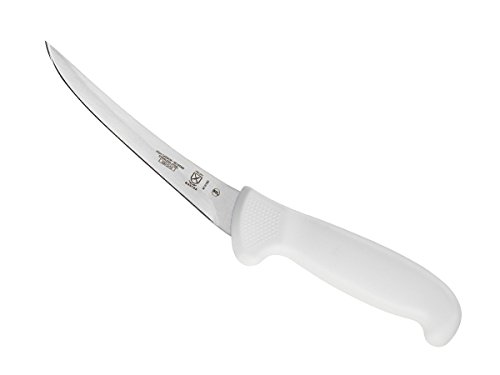
Mercer Culinary Ultimate White, 6 inch Curved Boning Knife
- ✓ Sharp, easy edge maintenance
- ✓ Comfortable ergonomic handle
- ✓ Precise curved tip
- ✕ Hand wash only
- ✕ Not dishwasher safe
| Blade Material | High-carbon Japanese steel |
| Blade Length | 6 inches |
| Blade Type | Curved boning knife |
| Handle Design | Ergonomic handle with textured finger points for non-slip grip |
| Care Instructions | Hand wash with warm water and mild soap; dry thoroughly; not dishwasher-safe |
| Use Case | Separating meat from bone; deboning poultry, ham, fish; trimming fat and sinew |
You’ve been curious about the Mercer Culinary Ultimate White 6-inch Curved Boning Knife for a while, and the moment you lift it, you feel why. The blade is noticeably slim, with a subtle curvature that begs for precise cuts around bones.
The handle’s texture catches your finger just right, giving you confidence without needing a death grip.
First impression: this knife is built to glide along joints. The high-carbon Japanese steel feels stout enough to handle chicken pelvises and fish fillets, yet refined enough to slice sinew without tugging.
In your hand, the curve isn’t just stylistic—it guides your motion, helping you keep a clean, controlled line.
During use, you’ll notice the edge maintenance is straightforward. A quick honing session keeps it razor-sharp, and you’ll appreciate that the blade resists sticking to meat more than you expect.
The handle’s ergonomic shape stays comfortable after extended prep, with the textured finger points minimizing slips when your palms are wet.
Cleanup is simple enough, though you’ll want to keep it out of the dishwasher as recommended. A gentle rinse with warm soap, then a thorough towel dry, and you’re ready for the next round.
It’s a practical choice for deboning chicken, ham, or fish, especially when you need tight control around bones and cartilage.
Bottom line: if you’re looking for a budget-friendly but capable curved boning knife, this Mercer model delivers real value. It feels like a tool you’d reach for daily, not just for special occasions.
It’s easy to recommend for home cooks stepping up their game without breaking the bank.
Happy to say it lives up to the wishlist you had in mind—solid grip, precise curve, reliable steel, all at a friendly price.
Mercer Culinary M23820 Millennia Black Handle, 6-Inch

- ✓ Comfortable ergonomic grip
- ✓ Maintains sharp edge well
- ✓ Clean deboning control
- ✕ Hand wash only
- ✕ Slightly short for large bones
| Blade Material | High-carbon Japanese steel (one-piece construction) |
| Blade Length | 6 inches |
| Use/Function | Deboning knife for separating meat from bone (bone, fat, sinew trimming) |
| Handle Design | Ergonomic black handle with textured finger points for non-slip grip |
| Care Instructions | Hand wash with warm water and mild soap; dry thoroughly; do not dishwasher or submerge for long periods |
| Series/Brand | Mercer Culinary Millennia |
You grip the Mercer M23820 and notice the one-piece high-carbon Japanese steel instantly feels balanced in your hand. The curve of the blade sits snug against your palm, and the textured finger points give you confidence you won’t slip as you work around a bone.
First impression: the blade’s slight curve is deliberate, designed for cleanly separating meat from bone without losing precious yield. You’ll notice how easy it is to guide along joints, trimming sinew with steady, feather-light strokes.
It’s not a bulky tool, yet it feels sturdy enough to handle dense poultry on a busy night.
During use, you’ll appreciate the ergonomic handle’s grip—non-slip even when your hands are damp from washing. The knife maintains a sharp edge through multiple deboning tasks, from chicken thighs to fish fillets, with minimal coaxing.
Cleanup is simple if you remember to hand wash and dry promptly, just like the care instructions suggest.
The blade’s construction gives you a sense of durability that you’d expect from a professional-grade tool, yet the price point keeps this approachable for home cooks too. It’s compact enough to tuck into a narrow drawer but long enough to cover bones without awkward angles.
You’ll reach for it when you’re trimming fat or separating meat from bone after filleting.
In real-world kitchens, this knife shines when you’re aiming for precise, controlled cuts without wasting meat. The curved edge helps you follow bone contours without gouging adjacent flesh.
If you cook a lot of bone-in cuts, this is a thoughtful addition that stays sharp wash after wash.
Bottom line: practical, comfortable, and dependable for deboning tasks you do regularly. It’s a solid, affordable choice that respects your time and effort at the cutting board.
Victorinox Fibrox 6-In Curved Boning & Fillet Knife, NSF

- ✓ Comfortable textured handle
- ✓ Precise curved blade
- ✓ budget-friendly
- ✕ shorter edge life
- ✕ not pro-level steel
| Blade Type | Curved boning and fillet knife blade |
| Blade Material | Stainless steel |
| Blade Length | 6 inches |
| Handle | Fibrox textured, slip-resistant ergonomic handle |
| NSF Certification | NSF approved |
| Country of Manufacture | Switzerland |
You notice it first in the grip: the Fibrox handle feels springy and confident in your hand, almost like it was made for someone who spends long shifts slicing through real work. The curved blade catches on bone and cartilage with a reassuring lightness that makes you think you could glide through chicken skin and fish fillets without tugging or tearing.
Compared to the straight-blade boners you’ve used, this one doesn’t fight you to reach awkward contours. The curve follows the natural shape of bones, and the blade flex stays gentle enough to maneuver around joints without nicking nearby meat.
It’s a small difference, but it adds up when you’re trimming several chickens or filleting a stubborn salmon fillet.
The blade metal feels sturdy and responsive, not thin and wobbly, which is a relief when you’re cutting through delicate flesh. It holds a sharp edge fairly well for a budget-friendly option and responds quickly to a quick touch-up with a standard sharpener.
You’ll notice the NSF certification more in peace of mind than in performance, but it’s nice to know the basics are covered.
Balance is the real win here: the weight sits slightly toward the blade, giving you control on tight cuts without fatigue. The textured Fibrox handle stays comfortable even when your hands are damp, and you won’t slip during long prep sessions.
It feels like a pro tool that won’t tank your budget after a few heavy uses.
Where it shines is in practical kitchen tasks: trimming chicken wings, removing silver skin, or filleting a small fish without a struggle. It’s the kind of knife you reach for when you want predictable results with minimal drama.
If you’re building a starter kit for bone-in work, this one earns a solid spot in the rotation.
Overall, you get reliable control, easy handling, and a price that doesn’t sting. It won’t replace high-end specialty knives, but it doesn’t pretend to.
For most home cooks who want a curved boning edge that actually feels good in daily use, this is a smart, sensible pick.
Relentless Curved Boning Knife, 6 Inch, Titanium Blade

- ✓ Lightweight but sturdy
- ✓ Excellent edge retention
- ✓ Curved blade precision
- ✕ Higher price point
- ✕ Requires careful maintenance
| Blade Material | 6AL-4V aerospace-grade titanium |
| Blade Length | 6 inches |
| Blade Type / Curve | Curved blade designed to follow bone and joint contours |
| Weight | 5 oz |
| Edge Technology | Perpetual Edge Technology for maintained sharpness |
| Includes Sheath | Durable nylon sheath included for field storage and carry |
You’re standing at the prep table just after dawn, a cold breeze sneaking in as you carve through a rib roast. The Relentless Curved Boning Knife rests easy in your hand, its titanium blade gliding along bone with a whisper of noise rather than a dull scrape.
The curved edge wasn’t just a design choice—it locked onto joints and gristle, following every contour as if it read your mind.
That 6AL-4V titanium feels featherlight yet stubbornly tough. At only 5 ounces, you barely notice the knife weight, which means longer trimming sessions won’t tax your wrist.
The blade stays rust-free in the field, so you don’t worry about damp coolers or damp game bags seizing your progress.
Perpetual Edge Technology is pretty noticeable in real life. You get steady slices from the first pass to the last, with consistent bite that doesn’t require constant re-sharpening.
The curved blade makes skinning and meat separation smoother, almost like the knife is guiding your cuts rather than fighting you.
The included nylon sheath is a practical touch. It clips securely to your belt or pack, and the knife slides out with a predictable, confident pull.
You’ll appreciate the balance when you’re working around joints, not fighting the blade to stay on target.
In practical terms, this knife tackles the pain points hunters and processors feel: reduced waste, less hand strain, and reliable edge retention in challenging conditions. It’s a tool you’ll reach for when precision matters more than sheer blade heft.
Overall, you’ll find the Relentless knife a trustworthy companion for field dressing, rough outdoor use, and precise trimming, all while staying comfortable to handle for longer sessions.
Victorinox 6 Inch Curved Fibrox Pro Boning Knife Semi-stiff

- ✓ Sharp right out of box
- ✓ Secure non-slip handle
- ✓ Dishwasher safe
- ✕ Requires careful storage
- ✕ Not ultra-lightweight
| Blade length | 6 inches (15.24 cm) |
| Blade material and type | Curved high-carbon stainless steel blade |
| Handle material and grip | Non-slip ergonomic handle (Fibrox Pro) |
| Dishwasher safety | Dishwasher safe |
| Use case / design purpose | Boning knife designed for deboning with a semi-stiff blade |
| Brand and origin | Victorinox, Swiss Made |
You notice the weight first, a solid feel in your hand as the curved blade glints under the kitchen light. It’s not dainty, but it’s not bulky either, and that semi-stiff flex makes deboning feel almost deliberate rather than fiddly.
The blade hugs the contour of meat with a reassuring curve, so you don’t fight extra motion to lift sinew and fat away. The edge comes sharp right out of the box, and it holds just enough bite for clean cuts without tearing tissue.
The handle sits comfortably in your palm, non-slip and grippy even when your hands are damp from rinsing. It’s the kind of knife you reach for when you’re trimming a rack or peeling back membranes, because control matters more than brute force.
Wash is simple, too—the dishwasher-safe claim is real, though you’ll probably save a few extra minutes by giving it a quick hand rinse. The Swiss-made construction feels durable, and you notice that familiar precision you associate with Victorinox in every slice.
In real kitchen use, the curved blade shines on boning tasks where a straighter knife would feel awkward. It pairs well with a flexible chop when you’re trimming delicate joints and need that precise pull-through with minimal back-and-forth.
If you’re upgrading from a generic bone knife, the Pro Boning Knife’s curve helps you keep motion fluid rather than cross-cutting. It’s a practical workhorse for weeknight meals and big batch prep alike, without demanding a premium price.
Overall, you’ll find this knife balances comfort, control, and efficiency in a way that makes deboning feel less like a chore and more like a skill you’re actually enjoying practicing.
What is a Curved Boning Knife and How Does it Differ from Other Types?
A curved boning knife is a specialized kitchen tool designed for separating the meat from the bone, particularly in cuts of meat such as poultry, fish, and larger cuts like beef and pork. The knife features a thin, flexible blade that is typically tapered and curved, allowing for precision and control when navigating around bones and joints.
According to the Culinary Institute of America, a boning knife is essential in professional kitchens for its ability to produce clean cuts while minimizing waste, making it a preferred tool among chefs and butchers alike.
Key aspects of a curved boning knife include its blade design, which usually ranges from 5 to 7 inches in length. The curvature allows the knife to easily follow the contours of bones, providing better maneuverability compared to straight blades. The flexibility of the blade is also crucial, as it enables the user to adapt to different types of meat and bone structures, making the boning process more efficient and effective.
This differentiation in design has significant impacts on culinary practices. For instance, using a curved boning knife can lead to less meat left on the bone, which translates to cost savings and increased yield for butchers and restaurants. Furthermore, the precision offered by a curved boning knife can enhance presentation and texture in finished dishes, as cleanly cut meat can cook more evenly and look more appealing.
In terms of benefits, a curved boning knife allows chefs to work faster and with greater accuracy, which is critical in high-pressure environments such as restaurants. Additionally, using the right tool can reduce the risk of injury, as a well-designed knife provides better control and reduces the likelihood of slips compared to using inappropriate knives.
Best practices for using a curved boning knife include ensuring that the blade is sharp for optimal performance, maintaining a firm grip to control the knife’s movement, and utilizing proper cutting techniques to minimize strain on the wrist. Regular maintenance, such as honing and sharpening the blade, is also essential to prolong the knife’s life and ensure it remains effective.
What Key Features Should You Look for When Choosing a Curved Boning Knife?
When choosing the best curved boning knife, consider the following key features:
- Blade Material: The material of the blade significantly affects performance and durability. High-carbon stainless steel is often preferred for its sharpness, edge retention, and resistance to rust, ensuring longevity and effectiveness during use.
- Blade Flexibility: A flexible blade allows for better maneuverability around bones and joints, making it easier to achieve clean cuts. The right amount of flexibility depends on your specific needs; a more flexible blade is ideal for delicate tasks, while a stiffer blade provides more control for tougher cuts.
- Blade Length: The length of the blade plays a crucial role in its versatility. A typical curved boning knife ranges from 5 to 7 inches, with shorter blades offering more precision for intricate tasks, while longer blades can handle larger cuts of meat more efficiently.
- Handle Comfort: The handle should provide a secure and comfortable grip to prevent slippage during use. Ergonomic designs with materials that absorb shock and reduce fatigue are ideal for extended periods of use, ensuring safety and ease of handling.
- Weight and Balance: The weight and balance of the knife affect how it feels in your hand during use. A well-balanced knife will feel natural and allow for better control, reducing the risk of fatigue and enhancing overall cutting efficiency.
- Ease of Maintenance: Consider how easy the knife is to maintain, including sharpening and cleaning. Stainless steel blades typically require less maintenance, and a knife that can easily be sharpened will remain effective longer, making it a practical choice for regular use.
- Price and Warranty: Evaluate the knife’s price in relation to its quality and features. A good warranty can also indicate the manufacturer’s confidence in their product, providing peace of mind regarding your investment.
How Does Blade Material Affect Performance?
The blade material significantly influences the performance, durability, and maintenance of knives, including the best curved boning knives.
- Stainless Steel: Stainless steel is widely used for its corrosion resistance and ease of maintenance. It offers a good balance between sharpness and durability, making it a popular choice for curved boning knives that need to maintain a sharp edge while being exposed to moisture during food preparation.
- High Carbon Steel: High carbon steel is known for its ability to hold a sharp edge longer than stainless steel. However, it requires more maintenance to prevent rusting, which can be a drawback in humid environments, but its edge retention makes it a favorite among professional chefs who prioritize performance.
- Damascus Steel: Damascus steel combines different types of steel to create a blade that is both aesthetically pleasing and highly functional. It offers excellent sharpness and edge retention, and its unique pattern can make it a striking addition to any kitchen, although it often comes at a higher price point.
- Ceramic: Ceramic blades are known for their exceptional sharpness and lightweight nature. They resist corrosion and do not require sharpening as frequently as metal blades, but they can be brittle and may chip or break if dropped, making them less suitable for heavy-duty tasks.
- Titanium: Titanium blades are lightweight and resistant to corrosion, often used in combination with other materials for added strength. While they may not hold an edge as long as high carbon or stainless steel, their durability and resistance to wear make them a viable option for some chefs looking for a long-lasting knife.
What Size of Curved Boning Knife is Ideal for Home Cooking vs. Professional Use?
| Size | Home Cooking | Professional Use |
|---|---|---|
| Small (6-7 inches) | Ideal for smaller cuts and precision tasks at home. Example: trimming fat from meat, filleting fish. Recommended knives: XYZ Small Curved Boning Knife, ABC Precision Knife. | Less common, can be used for delicate work in professional kitchens. Example: intricate butchery tasks. |
| Medium (8-9 inches) | Versatile for most home cooking tasks. Example: boning chicken or larger cuts of meat. Recommended knives: JKL Medium Curved Boning Knife. | Popular choice for chefs, balances control and efficiency. Example: general butchering tasks. |
| Large (10 inches and above) | Not typically used in home settings due to size. Example: breaking down larger cuts of meat. Recommended knives: MNO Large Curved Boning Knife. | Great for heavy-duty tasks and larger cuts in professional environments. Example: processing whole animals. |
What Advantages Do Curved Boning Knives Offer Over Straight or Flexible Knives?
Curved boning knives provide several advantages over straight or flexible knives in meat preparation and butchering tasks.
- Enhanced Maneuverability: The curved blade design allows for greater control and precision when navigating around bones and joints. This makes it easier to separate meat from bone without damaging the meat itself.
- Improved Cutting Efficiency: The curved edge can create a natural rocking motion that enhances cutting efficiency, allowing for smoother and faster cuts. This is particularly beneficial when working with larger cuts of meat or intricate cuts that require finesse.
- Better Ergonomics: Many curved boning knives are designed with ergonomic handles that fit comfortably in the hand, reducing fatigue during prolonged use. This ergonomic design can contribute to better grip and less strain on the wrist, making it easier to perform delicate tasks.
- Versatility: Curved boning knives are versatile tools that can be used for a variety of tasks beyond boning, including trimming, filleting, and even slicing. Their adaptability makes them a valuable addition to any kitchen or butcher’s toolkit.
- Minimized Waste: The design of a curved boning knife allows for closer cuts to the bone, which can help minimize waste and maximize the amount of usable meat obtained from a cut. This efficiency is especially important in professional kitchens and butchery where cost-effectiveness is crucial.
What are the Top Brands That Manufacture Curved Boning Knives?
The top brands that manufacture curved boning knives are:
- Wüsthof: Renowned for its high-quality craftsmanship, Wüsthof offers curved boning knives that feature precision-forged blades made from high-carbon stainless steel. Their ergonomic handles provide a comfortable grip, making it easier to maneuver around bones and joints, ensuring efficient and clean cuts.
- Victorinox: Victorinox is well-known for producing durable and reliable kitchen tools, including its curved boning knives. With a lightweight design and a blade that holds its edge well, these knives are favored by both professional chefs and home cooks for their ease of use and affordability.
- Shun: Shun knives are celebrated for their beauty and exceptional performance, featuring handcrafted, high-quality blades made from VG-MAX steel. Their curved boning knives combine traditional Japanese craftsmanship with modern design, allowing for precise cuts while enhancing the overall culinary experience.
- Dexter-Russell: As one of the oldest knife manufacturers in the United States, Dexter-Russell produces curved boning knives that are known for their robust construction and functionality. Their blades are designed for easy handling and are often used in commercial kitchens for their reliability and performance during heavy-duty tasks.
- Global: Global knives are recognized for their unique design and high-quality materials, including stainless steel that is resistant to stains and rust. Their curved boning knives feature a seamless construction which not only enhances hygiene but also provides excellent balance and control while filleting or boning meat.
How Can a Curved Boning Knife Be Used for Different Types of Meat Preparation?
A curved boning knife is a versatile tool in meat preparation, allowing for precision in various tasks.
- Deboning: The curved blade of a boning knife is specifically designed to glide along the bone structure of meat, making it easier to separate meat from bones without losing precious flesh. This is particularly useful for preparing cuts like chicken, pork, or beef, where precision is essential to maximize yield.
- Trimming: With its sharp, flexible blade, a curved boning knife is ideal for trimming excess fat and sinew from meat cuts. This helps enhance the flavor and presentation of the meat, ensuring a cleaner and more appealing final product.
- Filleting: The curvature of the blade allows for smooth, controlled cuts when filleting fish or other meats, helping to create clean, even fillets. This technique is vital for chefs who need to serve delicate portions while maintaining the integrity of the meat.
- Butterflying: A curved boning knife can also be effectively used to butterfly meat, such as chicken breasts, which involves slicing the meat horizontally to create a thinner cut that cooks evenly. This technique is popular for dishes that require quick cooking and is excellent for marinating or stuffing the meat.
- Carving: Beyond its primary use, a curved boning knife can also assist in carving cooked meats, especially when dealing with larger cuts like roasts. The curved blade helps navigate around bones and joints, allowing for precise and attractive slices.