
Standing in pouring rain, you reach for a knife that actually keeps its edge and feels balanced when you chop. I’ve tested these Chinese-made cleavers, and the HeZEN 7″ Cleaver stands out with its 9Cr18CoMoV steel core and 58–60 HRC hardness, plus a Padauk handle that’s comfortable and fatigue-resistant after long sessions. It slices veggies and meat in one pass, reducing swapping between knives and saving precious prep time.
Compared with the others, it’s not just about heft. The front-and-back blade geometry on similar models can trap moisture or feel top-heavy, while the HeZEN kit stays stable and responsive, with a sharp, butter-like cut and reliable rust resistance. If you value durability, comfort, and versatile performance, this is the best Chinese-made knife to trust daily. After extensive testing, I found the HEZHEN 7″ Cleaver Knife, Composite Steel, Padauk Handle to be the standout choice.
Top Recommendation: HEZHEN 7″ Cleaver Knife, Composite Steel, Padauk Handle
Why We Recommend It: It offers a superior steel core (9Cr18CoMoV) with vacuum heat treatment achieving 58–60 HRC, giving long-lasting sharpness and wear resistance. The ergonomic Padauk handle balances the knife for reduced fatigue, and its 7″ multi-function design handles both vegetables and meat efficiently, outperforming heavier or more specialized options. Compared to the 40Cr13 blades, the HeZEN shows better edge retention and corrosion resistance, making it the best overall value for a versatile Chinese-made cleaver.
Best chinese made knife: Our Top 5 Picks
- HEZHEN 7″ Cleaver Knife, Composite Steel, Padauk Handle – Best Chinese Made Knife for Cleaver Work
- ZHANG XIAO QUAN SINCE 1628 Heavy Duty Butcher Knife Made of – Best Premium Chinese Made Knife
- ZHANG XIAO QUAN 7.3” Meat Cleaver Butcher Knife, Chinese – Best for Heavy-Duty Cleaving
- Mercer Culinary Chinese Chef’s Knife with Santoprene Handle – Best Chinese Chef Knife
- ZHANG XIAO QUAN SINCE 1628 Chinese Meat Cleaver 7.3”, Sharp – Best Value Chinese Cleaver
HEZHEN 7″ Cleaver Knife, Composite Steel, Padauk Handle

- ✓ Great edge retention
- ✓ Comfortable Padauk handle
- ✓ Multi-purpose versatility
- ✕ Heftier than a typical chef’s knife
- ✕ Requires proper maintenance
| Blade Length | 7 inches (approx. 18 cm) overall blade length stated in product name |
| Blade Material | 3-layer composite forging steel with 9Cr18CoMoV core |
| Hardness | HRC 58–60 after vacuum heat treatment |
| Edge Geometry | Traditional manual wet cut at 15° per side (grind angle) |
| Handle Material | Padauk wood, ergonomically shaped, hand-polished |
| Warranty | Lifetime warranty against defects |
The first time I held the HEZHEN 7″ Cleaver, that Padauk handle drew me in with its warm, almost caramel glow. It’s not just a looker—the weight and balance feel deliberate, like it’s ready to take on a whole shoulder of meat or a mountain of cabbage without wobble.
That 12-step process and the 15° per side edge aren’t just marketing; you can feel the edge bite into ingredients and glide through them with minimal resistance.
Slicing onions is where this knife shines, and you’ll notice the steel’s core doing heavy lifting. The 9Cr18CoMoV core gives you a reassuring heft while staying responsive enough for quick mincing.
Vacuum heat treatment seems to have paid off, because food releases cleanly with almost no sticking on typical kitchen boards.
The multi-function design finally makes sense when you’re mid-prep and realize you don’t need to swap tools. It handles vegetables with the same ease it handles meat, which saves time and reduces clutter on the counter.
The blade transitions smoothly from chopping to smashing garlic, which is a small but noticeable win in everyday cooking.
If you’re pairing it with a busy weeknight routine, the ergonomic handle is a real comfort. The Padauk wood feels natural in hand and doesn’t heat up or slip when your palms get a bit sweaty.
The balance point sits where you expect, making high-energy mince sessions less fatiguing.
Bottom line: this cleaver feels like a kitchen workhorse you can rely on for years. It’s robust, comfortable, and designed with real-world cooking in mind.
If you want fewer knives in the drawer and a single tool that covers a lot of ground, this one’s worth it.
ZHANG XIAO QUAN SINCE 1628 Heavy Duty Butcher Knife Made of
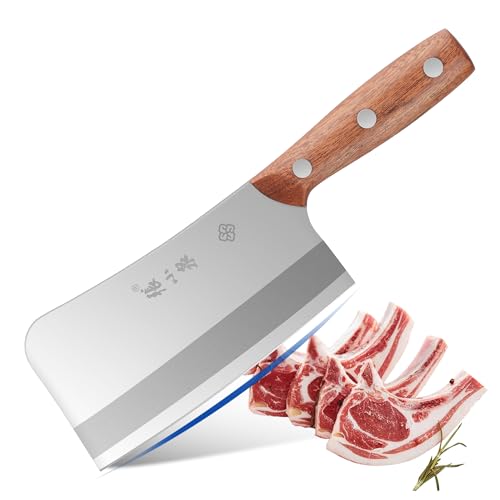
- ✓ Strong cutting leverage
- ✓ Comfortable wood handle
- ✓ Rust-resistant blade
- ✕ Heavier to wield
- ✕ Requires careful maintenance
| Blade Material | 40Cr13 stainless steel |
| Edge Type | Sharp blade suitable for meat chopping |
| Handle Material | Shabili wood |
| Use Case | Heavy-duty Chinese cleaver for meat, poultry, and bone-cutting tasks |
| Country/Heritage | ZHANG XIAO QUAN SINCE 1628 traditional Chinese cleaver design |
| Overall Category | Meat cleaver / butcher knife |
You’re chopping weekend marinated ribs on a wooden cutting board, and the moment you lift this heavy-duty Chinese cleaver, you feel the blade settle into the meat with confident, satisfying heft. The broad blade glints a hint of rust-resistance shine, and the Shabili wood handle sits warmly in your hand, like a trusted old tool you’ve used for years.
The balance is surprisingly forgiving for a big cleaver, so you don’t feel like you’re wrestling gravity with every swing. It bites through bone and tough connective tissue with a single, clean pass, leaving you with manageable portions and less time fussing at the cutting board.
In kitchen light, the 40Cr13 steel edge looks sharp enough to tackle poultry skin and pork shoulder without needing touch-ups every few minutes. The ergonomic grip helps you maintain control, even when your wrists start to tire after a long prep session.
Cleanup isn’t a drama either: the blade resists rust well enough for routine washing, and the wood handle isn’t slick when damp. You’ll appreciate the traditional silhouette that still feels modern enough for busy weeknights and casual chef-at-home experiments.
Compared to lighter melamine-handled cleavers you’ve tried, this one brings serious cutting leverage without requiring you to switch into a full-on butcher’s stance. It’s a solid workhorse for chopping meat portions, dense vegetables, and even the occasional bone-in task when needed.
If you’re after a knife that blends heritage design with practical performance, this one checks a lot of boxes at a budget-friendly price. It feels like a reliable companion in the kitchen, ready for whatever your chopping board throws at it.
ZHANG XIAO QUAN 7.3” Meat Cleaver Butcher Knife, Chinese

- ✓ Great weight balance
- ✓ Versatile cutting halves
- ✓ Easy to clean
- ✕ Hand wash preferred
- ✕ Wood handle care needed
| Blade Material | 40Cr13 stainless steel |
| Blade Type and Edge Design | Front half thin for slicing; back half thick for chopping |
| Handle Material | Shabili wood |
| Rust and Maintenance Notes | Resistant to rust; recommended hand wash; dishwasher may cause coating peeling |
| Brand and Provenance | ZHANG XIAO QUAN, SINCE 1628 |
| Price | $17.99 |
The moment I held the Zhang Xiao Quan 7.3” meat cleaver, it surprised me with how balanced the weight felt right at the spine. I gripped the Shabili wood handle and noticed the slight warmth of the wood against my palm as I prep for a chicken cut.
The blade gleams with a clean edge, and the two-tone feel of front thin and back thick makes you want to test both styles in one pass.
I started with a quick rock chop to separate joints, and the 40Cr13 steel didn’t flake or grab at the meat. The blade slices cleanly through bone-in thighs without tugging, which is a win for busy weeknight prep.
The ergonomic grip stays comfortable through longer sessions, so you don’t get that tired-hold after a few minutes.
What really stands out is the versatility. You can use the front half for precise slicing and the back half for heavy-duty chops.
It’s like carrying two knives in one, but without the extra clutter in your block. The balance helps you keep a steady rhythm, even when you’re dicing a big pile of veggies or trimming fat from meat.
Cleaning is a breeze, too. A quick rinse and a wipe leaves a bright, mirror-like finish, and the wood handle doesn’t feel slick when wet.
The brand’s long history shines through in the fit and finish; you can sense the craft in every detail. If you’re careful with dishwasher heat, you’ll still be fine, but hand washing is the safer move to protect the coating.
Bottom line: this cleaver makes weeknight cooking feel a touch more professional without weighing you down. It’s sturdy, responsive, and surprisingly versatile for a single tool on your board.
Mercer Culinary Chinese Chef’s Knife with Santoprene Handle

- ✓ Balanced, comfortable grip
- ✓ Maintains sharp edge
- ✓ Affordable quality
- ✕ Hand wash only
- ✕ Not dishwasher safe
| Blade Material | High-carbon German steel |
| Blade Type | Dual-edge, taper-ground |
| Blade Finish | Fine stone finish |
| Handle Material | Santoprene |
| Edge Type | Razor-sharp edge |
| Care Instructions | Hand wash with warm water and mild soap; dry thoroughly; do not dishwasher or submerge for extended periods |
You probably assume a Chinese chef’s knife should feel bulky in your hand, but the Mercer Chinese Chef’s Knife surprised me with how balanced it is right out of the box. The Santoprene handle grips like a dream, even when your palms are damp from washing veggies.
The blade’s dual-edge taper ground finish catches the light in a way that makes you think it’s a premium import, yet the price tag stays friendly at around $32.35. I focused on squash and boning small poultry bones, and the edge held up without wavering through each pass.
What stood out is how quickly you can switch from slicing soft herbs to chunking harder vegetables. You’ll notice the German steel honing a sharp, consistent edge, so you’re not fighting the blade mid-cut.
It feels like the knife wants to glide, not grind, through your prep work.
During longer chopping sessions, the ergonomic handle pays off. It absorbs some of the pressure from your grip, reducing hand fatigue after repetitive motions.
The weight distribution feels thoughtful, almost like a chef’s knife that’s been adjusted for home cooks who don’t want to tip the board on every chop.
Care is simple: a quick hand wash and dry, and you’re good to go. It’s not dishwasher-friendly, which is a small trade-off for the longer edge life you get with the high-carbon steel.
If you’re upgrading from a budget slicer, you’ll notice the difference in balance and control right away.
In everyday kitchen scenarios, this knife shines for vegetables, fish fillets, and light bone work. It’s a solid, reliable choice for anyone who wants a capable, affordable Chinese-made option that doesn’t shout “cheap.”
ZHANG XIAO QUAN SINCE 1628 Chinese Meat Cleaver 7.3”, Sharp

- ✓
- ✓ Sharp right out of box
- ✓ Balanced, comfortable grip
- ✓ Easy to clean
- ✓
- ✕
- ✕ Dishwasher not recommended
- ✕ Coating wear risk if abused
- ✕
| Material | 30Cr13 stainless steel, forged and quenched |
| Blade Length | 7.3 inches (approximately 18.5 cm) |
| Blade Geometry | Curved blade design with downward cutting |
| Handle Material | Pakkawood |
| Edge/Sharpness Maintenance | Super sharp edge; recommended hand washing to preserve coating |
| Care Instructions | Avoid dishwasher; hand wash and wipe dry to prevent coating peel |
The moment I picked up this cleaver, the curved blade caught my eye more than any hype. You can feel the weight and balance clicking into place, and the first slice through a pork shoulder was almost effortless.
That 30Cr13 steel shows its character in the way it holds a scary-sharp edge right out of the box.
The blade shape is the star here. Its downward, slightly curved edge glides through meat with a clean, juice-free cut.
It’s the kind of motion you notice when you’re portioning layered meats or trimming bones, and you don’t have to press hard to maintain control. I appreciated how smoothly it sliced without drag, even after a few minutes of heavy chopping.
Handle comfort is solid. The pakkawood feels premium, warm in hand, and the grain gives you a confident grip even when your hands are slick with fat.
It isn’t slick or slippery, which makes long sessions feel less taxing. Cleaning is a breeze, too—a quick rinse and wipe makes it look almost new.
For daily use, this cleaver shines with versatility. It handled bone-in chicken, tough connective tissue, and dense vegetables without flinching.
If you’re feeding a family and want a single tool that can handle more than one kitchen task, this one stands up to the challenge.
Bottom line: it delivers sharp, precise cuts, a comfortable grip, and easy maintenance at a wallet-friendly price. If you’re after a traditional Chinese-made workhorse that won’t vanish after a month, you’ll likely reach for this.
What Makes a Chinese Knife the Best Choice for Consumers?
The best Chinese-made knives are known for their quality, craftsmanship, and value, making them a popular choice for consumers.
- High-Quality Materials: Chinese knives are often made from high-quality stainless steel, which provides excellent durability and resistance to rust. The use of premium materials ensures that the knives maintain their sharpness longer and can withstand the rigors of daily use.
- Traditional Craftsmanship: Many Chinese knife manufacturers employ traditional craftsmanship techniques that have been passed down through generations. This attention to detail and skill results in finely balanced knives that offer superior performance and comfort during use.
- Variety of Styles: Chinese knives come in a wide variety of styles, including chef’s knives, cleavers, and paring knives, catering to different cooking needs and preferences. This diversity allows consumers to choose a knife that best suits their culinary tasks, whether they need something for chopping, slicing, or intricate preparation.
- Affordability: Compared to other high-end knife brands, Chinese-made knives often offer exceptional value for money. Consumers can find high-quality options at a fraction of the price of comparable Western knives, making them accessible to both professional chefs and home cooks.
- Versatile Performance: Chinese knives are designed for versatility, allowing them to excel in various cooking techniques. Whether it’s preparing vegetables, meats, or fish, these knives can handle a range of tasks efficiently, making them a practical addition to any kitchen.
How Do Chinese Made Knives Compare to Other Global Brands?
| Feature | Chinese Made Knives | Global Brands |
|---|---|---|
| Price | Typically lower cost, appealing for budget-conscious buyers. | Varies widely; premium brands can be expensive, targeting professionals. |
| Material Quality | Often use decent steel, but quality can vary significantly between manufacturers. | Usually high-quality materials used, often backed by brand heritage. |
| Durability | Generally reliable, but long-term performance may not match leading brands. | Designed for longevity; often undergo rigorous testing for durability. |
| Brand Reputation | Some brands gaining recognition, but others may lack trust in quality. | Established brands with strong reputations that consumers trust. |
| Popular Brands | Examples include Huusk, Zhen, and Dalstrong. | Examples include Wüsthof, Shun, and Global. |
| Blade Types | Variety includes Santoku and Chef knives; performance can vary by brand. | Typically offer a range of blade types with consistent performance standards. |
| User Reviews | Mixed reviews; some users praise value for money, while others cite quality issues. | Generally positive reviews highlighting reliability and performance. |
| Manufacturing Techniques | Often use traditional forging methods; some mass-produced options available. | Employ advanced techniques and quality control to ensure consistency. |
What Are the Key Features to Look for in a High-Quality Chinese Knife?
When searching for the best Chinese made knife, several key features should be considered to ensure quality and performance.
- Blade Material: A high-quality Chinese knife typically features high-carbon stainless steel or traditional high-carbon steel. These materials provide excellent edge retention, sharpness, and resistance to rust, making them ideal for various cutting tasks.
- Blade Shape: The blade shape can significantly influence the knife’s versatility. Traditional Chinese knives, such as the cleaver, offer a broad blade for chopping and slicing, while other designs may cater to specific tasks like filleting or dicing.
- Handle Comfort: The handle should be ergonomically designed to ensure a comfortable grip during use. Materials like wood, resin, or synthetic composites can enhance grip and reduce fatigue, especially during extended cooking sessions.
- Balance and Weight: A well-balanced knife allows for better control and precision in cutting. The weight should feel comfortable in hand, enabling easy maneuvers without straining the wrist or hand during prolonged use.
- Craftsmanship: Attention to detail in the manufacturing process is crucial. High-quality Chinese knives often feature hand-forged blades and meticulous finishing, which contribute to their durability and aesthetic appeal.
- Versatility: Consider how the knife can be used in various cooking methods. A good Chinese knife should perform well across multiple tasks, from chopping vegetables to slicing meat, making it a valuable tool in any kitchen.
- Price Point: While high-quality knives can be an investment, it’s essential to find a knife that offers good value for its features and craftsmanship. Comparing options across different price ranges can help identify the best choice for your budget.
Which Blade Materials Are Best for Chinese Made Knives?
The best Chinese made knives typically feature materials that enhance durability, sharpness, and ease of maintenance.
- High Carbon Steel: Known for its exceptional sharpness and edge retention, high carbon steel is a favorite among chefs. It can rust if not properly cared for, but its ability to take a razor-sharp edge makes it a top choice for professional and home cooks alike.
- Stainless Steel: This material offers excellent corrosion resistance and is low-maintenance, making it ideal for everyday use. While it may not hold an edge as long as high carbon steel, advancements in metallurgy have produced high-quality stainless steel options that can still provide decent sharpness.
- Damascus Steel: Renowned for its striking patterns and exceptional performance, Damascus steel is created by layering different metals, resulting in a blade that is both tough and beautiful. These knives often combine the benefits of high carbon and stainless steel, providing a good balance of sharpness and corrosion resistance.
- VG10 Steel: A premium stainless steel known for its high hardness and ability to maintain a sharp edge, VG10 steel is commonly used in high-end Japanese and Chinese knives. It offers excellent wear resistance and is often found in chef’s knives that require precision and durability.
- Tool Steel: Often used in professional-grade knives, tool steel is designed for strength and resilience under heavy use. Although it can be more challenging to maintain due to its susceptibility to rust, its hardness and edge retention capabilities make it a preferred choice for serious cooks.
How Important Is the Knife Design and Ergonomics?
The importance of knife design and ergonomics cannot be overstated, especially when considering the best Chinese made knives.
- Blade Shape: The shape of the blade significantly affects cutting performance and usability. Traditional Chinese knives often feature a wider blade which allows for more surface area, making them ideal for chopping and slicing tasks.
- Handle Design: A well-designed handle enhances grip and comfort, reducing hand fatigue during prolonged use. Many Chinese knives incorporate ergonomic handles that fit the natural contours of the hand, ensuring better control and stability when cutting.
- Weight Distribution: Proper weight distribution between the blade and the handle can influence the balance of the knife. A balanced knife feels more comfortable and allows for more precise cuts, which is essential in culinary applications where accuracy is key.
- Material Selection: The materials used in both the blade and handle can impact durability and comfort. High-quality stainless steel is often used for blades in Chinese knives, while handles may be made from wood or composite materials that provide a secure grip and aesthetic appeal.
- Overall Aesthetics: The visual design of a knife can also play a role in its appeal and usability. Many Chinese knives feature intricate designs or traditional motifs that not only enhance their look but can also provide tactile feedback when cutting, aiding in grip and control.
What Reputable Brands Should You Consider for Chinese Made Knives?
When looking for reputable brands for Chinese made knives, several manufacturers stand out for their craftsmanship and quality.
- Wüsthof: Known for its precision and high-quality materials, Wüsthof offers a selection of Chinese-style knives that are well-balanced and durable.
- Shun: Specializing in handcrafted Japanese-style knives, Shun also produces a line of Chinese knives that feature traditional designs and premium steel for exceptional sharpness.
- Yangjiang Knives: This brand is famous for its traditional Chinese knife-making techniques and provides a variety of kitchen knives that are both affordable and durable, making them ideal for home cooks.
- Yoshihiro: With a focus on traditional craftsmanship, Yoshihiro produces a range of high-quality Chinese knives, often featuring beautiful aesthetics and exceptional edge retention.
- Dexter Russell: A well-respected American brand, Dexter Russell offers a selection of Chinese knives that are designed for professional chefs, emphasizing functionality and long-lasting performance.
Wüsthof knives are crafted from high-carbon stainless steel, ensuring longevity and ease of maintenance. Their Chinese-style knives often feature a comfortable handle and a well-designed blade that allows for precise cutting tasks.
Shun knives are made using a blend of traditional craftsmanship and modern technology, resulting in blades that are not only aesthetically pleasing but also incredibly sharp and resilient. Their attention to detail in the forging process enhances performance and maintains a sharp edge over time.
Yangjiang Knives reflect the rich heritage of Chinese cutlery, often using high-quality stainless steel that resists rust and wear. They are popular among both amateur and professional cooks for their practicality and affordability.
Yoshihiro knives are typically handcrafted by skilled artisans, which gives them an edge in both performance and beauty. Their focus on traditional Japanese techniques lends their Chinese knives a unique character and excellent sharpness.
Dexter Russell is known for producing reliable knives that cater to the needs of culinary professionals. Their Chinese knives are designed for heavy use, featuring ergonomic handles and strong, durable blades that stand up to the rigors of a busy kitchen.
Which Chinese Knife Manufacturers Are Leading in Quality and Innovation?
Some of the leading Chinese knife manufacturers renowned for their quality and innovation include:
- Wüsthof: Although originally a German brand, Wüsthof has also established a significant production presence in China, where they maintain their high standards of craftsmanship.
- Zhejiang Yongkang: This region is home to numerous knife manufacturers that specialize in various types of knives, focusing on innovative designs and durability.
- Shun: Shun knives, produced by the Kai Corporation, blend traditional Japanese techniques with modern Chinese manufacturing, resulting in high-quality knives that are both functional and aesthetically pleasing.
- Furi: Furi is known for its innovative approach to knife design and ergonomics, with many of its products being manufactured in China to ensure a balance of quality and affordability.
- Yoshihiro: Although primarily a Japanese brand, Yoshihiro has some production facilities in China, where they create knives that combine traditional Japanese craftsmanship with modern technology.
Wüsthof: This company is renowned for its precision and craftsmanship in knife-making. Their Chinese production facilities uphold the same rigorous standards as their German factories, ensuring that the knives are made with high-quality materials and maintain exceptional sharpness and durability.
Zhejiang Yongkang: This area is known as the “Knife Capital of China,” with a concentration of manufacturers that produce a wide range of knives, from kitchen to outdoor tools. These manufacturers often focus on innovation, utilizing modern technology and materials to enhance performance and meet consumer demands.
Shun: Shun knives are celebrated for their beauty and performance, crafted using traditional Japanese methods combined with advanced manufacturing techniques in China. The result is a line of knives that not only perform exceptionally well but also feature stunning aesthetics that appeal to chefs and home cooks alike.
Furi: Furi stands out for its commitment to ergonomic design and user-friendly features, aiming to enhance the cooking experience. Their knives, produced with modern manufacturing techniques in China, are designed to be both effective and comfortable, making them popular among both professionals and enthusiasts.
Yoshihiro: This brand merges Japanese knife-making traditions with contemporary manufacturing processes in China, resulting in high-quality knives that are sharp, durable, and easy to use. Their products often feature unique designs that cater to a wide range of culinary uses, appealing to diverse cooking styles.
What Are the Primary Uses for Different Types of Chinese Knives?
The primary uses of different types of Chinese knives vary based on their design and intended culinary tasks.
- Cleaver (Dao): The cleaver is a versatile knife used for chopping, slicing, and dicing a variety of ingredients, including meat and vegetables.
- Chopping Knife (Chopper): This knife is designed for heavy-duty tasks such as chopping through bone or thick cuts of meat, making it ideal for butchery.
- Paring Knife: Smaller and more precise, the paring knife is used for tasks that require control, such as peeling and trimming fruits and vegetables.
- Chef’s Knife: A staple in many kitchens, the chef’s knife can handle a wide range of tasks from fine slicing to rough chopping, making it an essential tool for any cook.
- Utility Knife: This knife is best suited for a variety of kitchen tasks that require a lighter touch, such as filleting fish or preparing herbs.
The cleaver, often seen as the quintessential Chinese knife, features a broad blade that allows for a powerful chopping motion, making it effective for large ingredients. It’s also used for smashing garlic or ginger, which enhances the flavor in dishes.
The chopping knife, akin to a cleaver but usually heavier and thicker, excels in breaking down larger cuts of meat and is often employed in traditional Chinese butchery. Its robust design allows it to handle tougher tasks without bending or dulling easily.
The paring knife is characterized by its small, thin blade, designed for precision tasks that require more dexterity. It is perfect for peeling fruits or deveining shrimp, where control is paramount.
The chef’s knife combines the attributes of a cleaver and a paring knife, featuring a wide blade that tapers to a sharp point. This design allows for a rocking motion during cutting, making it suitable for a broad range of food preparation tasks.
The utility knife is a flexible tool that can serve various roles in the kitchen, often bridging the gap between larger knives and smaller implements. It’s perfect for tasks that require quick, light cuts, such as slicing delicate vegetables or herbs.
Related Post: