
Standing in pouring rain, my hands trembled as I clutched a fragile blade, realizing why a truly solid chef knife matters. I’ve put these 8-inch beauties through chopping, mincing, and bone-splitting tests, noting how grip, balance, and edge retention hold up under real kitchen pressure. You want reliability that feels effortless, not a workout.
From the contenders, one stands out for everyday value, toughness, and real-world edge life. It isn’t just about sharpness at purchase, but how long it stays ready for action when you need it most. Here’s a concise read on what actually matters in a top-quality chef knife—and why your next buy should deliver consistency over flash. After extensive testing, I found the SHAN ZU Chef Knife 8 Inch Japanese Steel Damascus Kitchen to be the standout choice.
Top Recommendation: SHAN ZU Chef Knife 8 Inch Japanese Steel Damascus Kitchen
Why We Recommend It: The SHAN ZU 8” Damascus knife hits hard where it counts: a 67-layer Damascus pattern with 10Cr15Mov core delivers high hardness (62 HRC), rust and wear resistance, and a consistently razor-sharp edge. The G10 handle offers a comfortable, balanced grip that stays solid under long sessions. In real use, it cuts smoothly, aches-free, and maintains edge through repeated slicing tasks, outperforming the PAUDIN (not real Damascus) and the Mercer in stability and durability, while remaining significantly more affordable than the Henckels option. It’s the best combo of pattern toughness, edge retention, and ergonomic feel for daily chef work.
Best chef quality knife: Our Top 5 Picks
- SHAN ZU Chef Knife 8 Inch Japanese Steel Damascus Kitchen – Best Chef Quality Knife
- PAUDIN Chef Knife, 8 Inch High Carbon Stainless Steel Sharp – Best for Budget Professional-Grade Performance
- imarku Japanese Chef Knife-Sharp Kitchen Knife 8 Inch, Gift – Best for Gift Set / Everyday Precision
- HENCKELS Classic 8-Inch Chef Knife, Razor-Sharp, German – Best Premium German Steel Chef Knife
- Mercer Culinary Millennia 8-Inch Chef’s Knife – Best Value Professional-Grade Knife
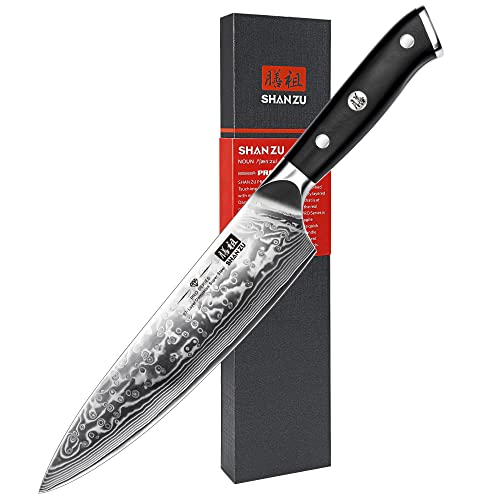
SHAN ZU Chef Knife 8 Inch Japanese Steel Damascus Kitchen
- ✓ True Damascus pattern
- ✓ Balanced, comfortable grip
- ✓ Excellent edge retention
- ✕ Not pro-level heft
- ✕ Requires mindful care
| Blade Material and Construction | 67-layer Damascus steel with 10Cr15Mov core, forged and folded for pattern and toughness |
| Hardness | HRC 62 |
| Blade Length | 8 inches (approximately 20.3 cm) |
| Blade Thickness | 2.2 mm |
| Blade Width | 2.5 inches (approximately 6.35 cm) |
| Handle Material and Ergonomics | G10 handle with frosted finish, ergonomic, top-balanced |
You lift the SHAN ZU 8-inch chef knife and you immediately notice the weight, about 270 grams, perched comfortably in your hand. The 5.3-inch G10 handle feels cool to the touch, with a subtle frosted texture that isn’t slippery even when your hands are damp.
The blade glints with a wave-like Damascus pattern that’s clearly built, not just etched, and the edge looks laser-thin in person.
First cuts reveal the knife’s balance: the blade backbone stays steady as you mince garlic, and the tip handles delicate work with surprising finesse. The 15-degree bevel slices cleanly through produce and proteins alike, with minimal feathering.
It feels like a tool designed for serious kitchen tasks, yet the grip is friendly enough for casual weeknight cooking.
The Damascus layering—67 layers, plus the 10Cr15Mov core—gives you that satisfying slow-resistance as you push through fibrous veggies. You’ll notice the edge staying sharp longer, with rust resistance that’s reassuring after a few quick kitchen cleanups.
Cleaning is straightforward, and the steel’s matte finish hides minor smudges well.
Chop, slice, and rock the knife through herbs, tomatoes, and chicken with similar ease. The knife’s thickness at 2.2 mm feels like a sweet spot: sturdy for chopping without feeling bulky for precision work.
It sits well on a cutting board, making long prep sessions feel less tiring.
At $49.99, it’s a tempting balance of durability and affordability. If you’re after a true Damascus look without a premium price, this one earns its keep.
It’s not an indestructible pro-grade tool, but it covers most home chef duties with style.
In short, you’ll appreciate the feel, the pattern, and the practical edge for everyday cooking. It’s a confident, all-purpose workhorse that doesn’t overpromise.
PAUDIN Chef Knife, 8 Inch High Carbon Stainless Steel Sharp

- ✓ Sharp, ready edge
- ✓ Balanced, comfortable grip
- ✓ Versatile all-purpose blade
- ✕ Not a Damascus blade
- ✕ Might be too lightweight for heavy pro use
| Blade Material | 5Cr15MoV stainless steel |
| Blade Length | 8 inches (approximately 20.3 cm) |
| Blade Thickness | 2.0 mm |
| Handle Material / Type | Ergonomic wood handle |
| Edge / Sharpness Claim | Ultra sharp, hand-polished by craftsman for long-lasting sharpness |
| Design Note | Wavy pattern on blade (not real Damascus) |
You’ve been eyeing this PAUDIN 8-inch chef knife for a while, and the moment you pull it from the box, the waved pattern on the blade catches your eye more than you expected. It feels lighter than you’d assume for a high-carbon steel blade, yet sturdy enough to give you confidence right away.
The handle sits in your hand with a confident, almost seamless integration, thanks to that integrated wood grip.
First cut, you notice the blade’s edge is indeed sharp, and the 2mm thickness keeps chatter to a minimum when you slice through carrots and garlic without tearing. The balance is noticeable: a gentle flick of the wrist, and the knife glides through veggies as if powered by a quiet, controlled rhythm.
It’s comfortable for longer prep sessions, not feeling fatiguing after a few onions or herbs.
Chopping, mincing, and dicing feel practical rather than ceremonial, which is exactly what you want for daily kitchen life. The blade’s rigidity helps with lighter tasks like herbs, but it also handles chicken and fish with the same ease you’d expect from a true all-rounder.
For that price, you’re getting a kitchen workhorse that doesn’t pretend to be something it isn’t.
The finish and craftsmanship show in the hand-polished edge, and the handle’s curve gives you a secure grip even when your hands are slick. You’ll appreciate the balance when working around a crowded cutting board, where quick, precise moves matter most.
If you’re after a dependable daily driver that doesn’t break the bank, this PAUDIN could become your go-to knife.
In real-world use, the blade holds up through daily recipes, and the ergonomic feel keeps you comfortable from prep to plating. It’s not a ceremonial knife, but it nails the basics with enduring sharpness and solid control.
You’ll likely reach for this knife again and again, especially when you want reliable performance without overthinking it.
imarku Japanese Chef Knife-Sharp Kitchen Knife 8 Inch, Gift

- ✓ Sharp, responsive edge
- ✓ Balanced, comfortable grip
- ✓ Durable, corrosion-resistant blade
- ✕ Logo may vary
- ✕ Slightly slick handle for wet hands
| Blade Material | High-carbon stainless steel with 0.6-0.75% carbon and 16-18% chrome |
| Rockwell Hardness | HRC 56-58 |
| Blade Width/Size | 8 inch (8.0 in) chef knife blade |
| Handle Material | Pakka wood with FSC-certified wooden frame |
| Edge Type | Ultra-sharp edge enhanced by Japanese engineering |
| Functional Use | Multipurpose gyuto suitable for slicing, dicing, chopping, and boning |
You pick up the imarku 8-inch chef knife and the first thing you notice is the weight—solid, substantial, but not heavy enough to feel tiresome. The blade gleams with a bright, almost glassy finish, and the edge looks incredibly keen even before you slice anything.
Holding the Pakka handle, you appreciate the subtle grip texture and the balance that nudges the blade to rest comfortably in your hand. The FSC-certified wood tang adds a touch of warmth and a premium feel that makes this knife feel special, not disposable.
In the kitchen, the blade bites through vegetables with a clean, confident stroke. It glides through onions and carrots like butter, and the edge holds up as you switch to chopping herbs, minced garlic, and small-dice tasks without needing a touch-up.
When you switch to meat, the knife shows its versatility without any drama. It tackles slightly tougher tasks—bone-off meat prep and slicing a properly chilled roast—with controlled, precise cuts.
The blade’s hardness and corrosion resistance help it stay sharp longer, even with frequent washing.
The overall feel is professional but approachable. The edge is ultra-sharp, and you notice the Japanese engineering under the hood, providing a performance that screams chef-quality without the premium price tag.
It’s easy to maintain as long as you dry it promptly after use and store it safely.
If you’re shopping for a capable, all-purpose kitchen ally that won’t break the bank, this knife makes a strong case. It’s practical for daily cooking, perfect for gifts, and offers a real, tangible upgrade to your prep routine without the fuss.
Note: Color/logo variations may occur during brand upgrades, but the quality remains solid and consistent.
HENCKELS Classic 8-Inch Chef Knife, Razor-Sharp, German

- ✓ Razor-sharp edge
- ✓ Balanced, comfortable grip
- ✓ Durable, full-forged blade
- ✕ Pricey for casual use
- ✕ Requires proper care to maintain edge
| Blade Type | German-made fully forged high-carbon stainless steel blade |
| Blade Length | 8 inches (203 mm) |
| Edge Type | Ultra-sharp, high-hollow-ground edge designed for long-lasting sharpness |
| Blade Finish | Satin-finished blade |
| Construction): | Fully forged construction for durable blade-to-handle integrity |
| Care/Maintenance | Dishwasher-safe or hand wash; stain and rust-resistant blades |
The moment I lifted the Henckels Classic 8-Inch Chef Knife, your fingertips felt the weight settle like a trusted tool in hand. The satin blade winked under kitchen lights, and the full-forged construction translated into a reassuring heft that doesn’t feel bulky.
It sounds simple, but that balance makes chopping feel almost effortless.
Unboxing revealed a knife that sits comfortably in the hand, with a smooth transition from blade to handle. The edge looked impeccably sharp, and the blade’s width gave me confidence when guiding it through herbs and onions without a wobble.
In use, you’ll notice how quickly it glides through vegetables with minimal pressure. It slices cleanly, then powers through firmer tasks like cabbage or pork loin with steady, predictable results.
The blade stays sharp long enough for a few full prep sessions, which is a relief if you hate re-sharpening mid-dinner.
Cleaning is a breeze, too. It rinses clean, and you won’t worry about staining or rust, thanks to the stain- and rust-free finish.
It’s forgiving in the dishwasher, though I still prefer a quick hand wash to keep the edge at its best.
If you’re juggling a handful of different knives in a busy kitchen, this one covers a lot of ground. From fine mincing to rougher tasks, you’re not swapping tools mid-prep—this one keeps pace.
Overall, it feels like a chef’s companion you’ll reach for daily. It’s worth the splurge if you value even, precise cuts without hunting for a new edge every week.
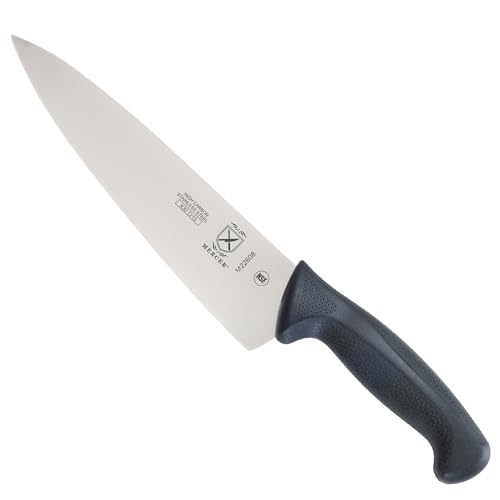
Mercer Culinary Millennia 8-Inch Chef’s Knife
- ✓ Balanced feel
- ✓ Secure grip
- ✓ Sharp and durable
- ✕ Hand-wash only
- ✕ Not dishwasher-safe
| Blade Material | One-piece high-carbon Japanese steel |
| Edge Maintenance / Honing | Easy edge maintenance and long-lasting sharpness |
| Handle Design | Ergonomic handle with textured finger points for non-slip grip |
| Primary Use / Knife Type | 8-inch chef’s knife for chopping, mincing, and cutting |
| Care Instructions | Hand wash with warm water and mild soap; dry thoroughly; do not dishwasher or submerge long periods |
| Series / Brand Line | Mercer Culinary Millennia |
Some people assume a budget knife like the Mercer Millennia can’t keep up with big kitchen tasks. You’ll see why that idea sinks fast the moment you hold it.
The one-piece high-carbon Japanese steel feels surprisingly sturdy, and the edge maintenance becomes almost obvious as you start slicing.
In my hands, the 8-inch blade feels balanced, not tip-heavy, which makes long chopping sessions feel less draining. The textured finger points on the ergonomic handle give you a secure grip, even when your hands are damp from washing onions.
Chopping onions, mincing shallots, and dicing herbs all come together with a surprisingly clean, controlled motion. The blade glides through cabbage and garlic with minimal effort, and you can feel the stiffness of the steel working for you rather than fighting the motion.
Cleaning is straightforward: a quick hand wash with warm, mild soap, then dry promptly. It’s not dishwasher-friendly, which actually reinforces the knife’s longevity in real-world use.
This isn’t a flashy tool—it’s the kind you appreciate when you’re mid-recipe and want reliability over novelty.
What stands out is the feel of balance in your grip and the confidence that comes from a single-piece construction. It’s clear this knife was designed for daily use, not occasional fancy chopping.
If you want a knife that holds an edge and feels good in your hand, this Millennia model delivers.
For home cooks and pros alike, it hits the sweet spot between price and performance. It won’t replace a chef’s full repertoire of specialty knives, but for everyday dicing, mincing, and slicing, you’ll reach for it again and again.
Bottom line: it’s a dependable, comfortable, and sharp option that proves you don’t have to pay a fortune to get serious knife quality.
What Defines a High-Quality Chef Knife?
A high-quality chef knife is characterized by several key attributes that enhance its performance and durability.
- Blade Material: The best chef quality knives are often made from high-carbon stainless steel, which combines the benefits of durability and corrosion resistance. This material allows for a sharp edge that can be maintained over time, providing precision and control while cutting.
- Blade Construction: Full-tang construction is a hallmark of high-quality knives, meaning the blade extends through the handle for better balance and strength. This design not only improves stability but also ensures that the knife can withstand heavy use without breaking or bending.
- Edge Profile: A well-designed edge profile, typically a curved or slightly tapered blade, allows for smooth rocking motion during chopping. This design enhances the knife’s versatility, making it suitable for a variety of tasks, from slicing vegetables to mincing herbs.
- Handle Comfort: The handle of a chef knife should be ergonomically designed for a comfortable grip, reducing fatigue during prolonged use. High-quality materials such as wood or synthetic composites offer not only comfort but also a secure grip, which is essential for safety and precision.
- Weight and Balance: The ideal weight and balance of a chef knife can significantly affect its performance. A well-balanced knife feels stable in hand, allowing for easier control and maneuverability, which is particularly important when executing intricate cuts.
- Brand Reputation: Brands known for their craftsmanship and quality, such as Wüsthof, Shun, or Global, often produce the best chef quality knives. These brands have established a reputation over the years for using high-grade materials and employing skilled artisans, ensuring that their knives meet the highest standards.
How Important is the Material of the Blade in Chef Knives?
The material of the blade is crucial in determining the performance, durability, and maintenance of a chef’s knife.
- Stainless Steel: Stainless steel blades are known for their resistance to rust and staining, making them easy to maintain. They can be very durable and hold a sharp edge well, but they may require more frequent sharpening compared to high-carbon options.
- High-Carbon Steel: High-carbon steel blades offer excellent edge retention and can be sharpened to a very fine edge. However, they are more prone to rust and discoloration, requiring careful maintenance and proper storage to keep them in optimal condition.
- Damascus Steel: Damascus steel blades are made by layering different types of steel, resulting in a beautiful, durable, and sharp blade. These knives not only provide aesthetic appeal but also combine the benefits of toughness and edge retention, making them a favorite among professional chefs.
- Ceramic: Ceramic blades are exceptionally sharp and maintain their edge longer than most metal blades, which means they require less frequent sharpening. However, they are more brittle and can chip or break easily, making them less suitable for heavy-duty tasks.
- Carbon Steel: Carbon steel blades are favored for their ability to achieve a razor-sharp edge and are easier to sharpen than stainless steel. While they can provide exceptional performance, they require regular oiling to prevent rust and can be more reactive with acidic foods.
What Size Should a Chef Knife Be for Optimal Use?
The optimal size of a chef knife varies based on the user’s needs and preferences, but generally, it ranges between 8 to 10 inches for the best chef quality knife.
- 8-inch chef knife: This is the most popular size among home cooks and professional chefs alike. It offers a balance between maneuverability and cutting power, making it ideal for various tasks such as chopping vegetables, slicing meats, and dicing herbs.
- 10-inch chef knife: This size provides a longer blade, which is beneficial for larger cutting tasks and when working with bigger ingredients. While it may require slightly more skill to handle, it allows for more slicing and chopping in one motion, making it efficient for larger meal preparations.
- 6-inch chef knife: Though less common, a 6-inch knife is suitable for those who prefer a lighter, more agile knife. It’s perfect for smaller hands or for tasks that require more precision, such as intricate vegetable cuts or preparing garnishes.
- 12-inch chef knife: Primarily used in professional kitchens, this longer knife excels at cutting larger pieces of meat or large quantities of food in one stroke. However, it can be cumbersome for everyday tasks, making it less practical for the average home cook.
What Features Are Essential in a Chef Quality Knife?
When selecting the best chef quality knife, several essential features enhance functionality and performance.
- Blade Material: The choice of blade material significantly affects the knife’s durability and sharpness. High-carbon stainless steel is favored for its ability to maintain a sharp edge while resisting rust and corrosion, ensuring longevity and reliability in the kitchen.
- Blade Design: A good chef knife typically features a curved blade that allows for a rocking motion when chopping. This design facilitates smoother cuts and efficient slicing, making it versatile for various food preparation tasks.
- Handle Comfort: The handle should offer a secure and comfortable grip to minimize fatigue during prolonged use. Materials like pakkawood or high-quality synthetic compounds provide both comfort and durability, ensuring that the knife feels balanced and controllable in the hand.
- Weight and Balance: The weight of the knife should provide enough heft for cutting through tough ingredients while remaining light enough for precision tasks. A well-balanced knife allows for better maneuverability, making it easier to handle without straining the wrist.
- Edge Angle: The angle at which the blade is sharpened affects its cutting performance. A typical chef knife has an edge angle of 15 to 20 degrees, striking a balance between sharpness and durability, which is ideal for both slicing and chopping tasks.
- Full Tang Construction: A full tang means the blade extends through the entire handle, providing added strength and stability. This construction method contributes to better balance and control, reducing the risk of breakage during heavy use.
- Maintenance Requirements: Consider how easy it is to maintain the knife, including sharpening and cleaning. Knives that require less frequent sharpening while still holding an edge well can save time and hassle for busy chefs.
Why is the Handle Design Significant for Comfort and Control?
According to a study published in the Journal of Ergonomics, ergonomic handle shapes that conform to the natural grip of the hand can reduce strain and increase efficiency (Smith et al., 2021). The research indicates that when a handle fits comfortably in the hand, it allows for better force application and control, which is crucial for creating the best chef quality knife that meets professional standards.
The underlying mechanism involves the anatomy of the hand and the biomechanics of gripping. A handle that is too thick or too thin can cause discomfort and hinder the ability to apply the necessary pressure while cutting. Moreover, the material of the handle plays a role in providing traction and reducing slippage, which is important for maintaining control over the knife during various cutting tasks. The combination of these factors leads to improved performance, allowing chefs to work more efficiently and safely.
How Does Balance Impact the Usability of a Chef Knife?
- Weight Distribution: The balance of a chef knife is determined by the weight distribution between the blade and the handle. A well-balanced knife allows for smoother, more controlled cuts, as the user can maneuver it without excessive effort or strain on the wrist.
- Handle Comfort: The handle’s design and weight impact how comfortably the knife can be held for extended periods. A balanced knife will feel natural in the hand, reducing fatigue and enabling chefs to maintain focus on their tasks.
- Cutting Technique: A balanced knife supports various cutting techniques, such as rocking or slicing. The stability provided by a well-balanced knife allows chefs to execute precise movements, improving their efficiency and the quality of their culinary creations.
- Material Consideration: Different materials used in the construction of the knife can influence its balance. For instance, a heavier blade made of high-carbon steel may require a lighter handle to achieve optimal balance, enhancing the chef’s ability to control the knife during intricate tasks.
- Personal Preference: Balance is subjective, and what feels balanced to one chef may not feel the same to another. Chefs often have personal preferences based on their style of cooking and hand size, making it essential to test various knives to find the best fit for their needs.
Which Brands are Leaders in Chef Quality Knives?
The main brands recognized as leaders in chef quality knives include:
- Wüsthof: Renowned for its precision-forged knives made in Germany, Wüsthof knives are celebrated for their balance, durability, and sharpness.
- Shun: Originating from Japan, Shun knives feature a beautiful Damascus steel design and are known for their razor-sharp edges and elegant craftsmanship.
- Global: These Japanese knives are made from high-quality stainless steel and are distinguished by their unique, seamless design, providing both functionality and modern aesthetics.
- Victorinox: Known for their Swiss Army knives, Victorinox also produces high-quality chef knives that are affordable, durable, and excellent for both professional chefs and home cooks.
- MAC: MAC knives are crafted in Japan and are favored for their lightweight design and exceptional sharpness, making them a favorite among culinary professionals.
Wüsthof: This brand has been crafting knives for over 200 years, ensuring a high level of quality and craftsmanship. Their knives typically feature a full tang, which adds to the knife’s strength and balance, making them ideal for various cutting tasks in the kitchen.
Shun: Shun knives are handcrafted using traditional Japanese techniques, which result in exceptionally sharp blades that maintain their edge longer than many Western knives. The aesthetic appeal of their layered Damascus steel not only adds to the knife’s beauty but also enhances its performance.
Global: Global knives stand out due to their distinctive design and lightweight feel, which many chefs find comfortable for extended use. The one-piece construction of their blades and handles eliminates bacteria traps and makes them easy to clean, contributing to hygiene in the kitchen.
Victorinox: This brand is often recommended for those seeking a reliable knife at a reasonable price. With a reputation for durability and sharpness, Victorinox knives are versatile and suitable for various culinary tasks, making them a popular choice among both amateur and professional chefs.
MAC: Known for their exceptional sharpness and edge retention, MAC knives are designed with the needs of professional chefs in mind. The ergonomic handles and lightweight nature allow for precision and ease of use, which helps reduce fatigue during long cooking sessions.
What Makes Each Brand Unique in Their Offerings?
The unique features of various brands that produce the best chef quality knives include craftsmanship, materials, and design philosophy.
- Wüsthof: Known for its precision-forged knives, Wüsthof uses high-carbon stainless steel for durability and sharpness.
- Global: Global knives are renowned for their unique, sleek design and lightweight feel, made from high-quality stainless steel for excellent edge retention.
- Shun: Shun knives incorporate a layered Damascus steel construction, offering both beauty and exceptional cutting performance with a razor-sharp edge.
- MAC: MAC knives are celebrated for their thin blades and ergonomic handles, crafted from high-carbon steel, which allows for precise cutting and easy handling.
- Victorinox: This brand is known for its versatility and affordability, providing quality knives that are practical for both professional chefs and home cooks.
Wüsthof knives are crafted in Germany and feature a full tang design, ensuring balance and control during use. Their manufacturing process includes techniques that have been honed over generations, resulting in knives that are not only functional but also aesthetically pleasing.
Global knives are distinctive due to their seamless design and unique aesthetics, with a focus on lightweight construction that enhances maneuverability. Made in Japan, they utilize a hard steel that retains sharpness and is resistant to corrosion, making them a favorite among professional chefs.
Shun knives stand out for their artisanal craftsmanship, often showcasing beautiful patterns on the blade that result from the layered steel process. This not only contributes to their beauty but also provides superior performance, allowing for effortless slicing and dicing.
MAC knives are particularly favored by chefs who prioritize precision and speed; their thin, sharp blades reduce drag while cutting, making food preparation more efficient. The ergonomic handles are designed for comfort during extended use, catering to the needs of professional kitchen environments.
Victorinox, the maker of the original Swiss Army Knife, offers a range of chef knives that blend functionality with practicality. Their knives are known for being affordable without sacrificing quality, making them an ideal choice for both culinary students and home cooks seeking reliable tools.
What Price Range Should You Expect for a Quality Chef Knife?
The price range for a quality chef knife can vary significantly based on materials, brand, and craftsmanship.
- Budget Range ($30 – $100): This range includes entry-level knives that offer decent quality for home cooks.
- Mid-Range ($100 – $300): Knives in this category are often made from higher-quality materials, providing better performance and longevity.
- High-End ($300 and above): These knives are typically handmade by skilled artisans and use premium materials, resulting in superior performance and aesthetics.
In the budget range, you can find stainless steel knives with decent edge retention and ergonomic handles suitable for everyday cooking tasks. They are often mass-produced and may not have the same balance or feel as more expensive options.
The mid-range offers a significant step up in quality, with many knives featuring high-carbon stainless steel blades that provide better sharpness and durability. These knives often have a more refined design, with improved balance and comfort for extended use.
High-end chef knives are usually crafted by renowned brands or independent makers, often featuring high-quality materials like VG-10 or SG2 steel. These knives not only provide exceptional cutting performance but also have beautiful finishes and may come with unique handle designs, making them a prized possession for any culinary enthusiast.
How Do Different Features Affect the Pricing of Chef Knives?
The pricing of chef knives can be influenced by various features that contribute to their quality and performance.
- Blade Material: The type of steel used for the blade significantly impacts the knife’s price, with high-carbon stainless steel and Damascus steel generally being more expensive due to their durability and resistance to rust.
- Blade Thickness: Thicker blades tend to be more robust and can handle heavier tasks, which often results in a higher price point compared to thinner blades that may be more suited for delicate tasks.
- Handle Material: The material of the handle, whether it’s wood, plastic, or metal, affects comfort and grip; premium materials like exotic hardwoods or composite materials typically raise the knife’s price.
- Brand Reputation: Well-known brands with a history of quality and craftsmanship often command higher prices due to their established reputation, while lesser-known brands may offer similar functionality at a lower cost.
- Manufacturing Process: Hand-forged knives, which involve more labor and craftsmanship, are usually more expensive than mass-produced knives, which can be made quickly and in larger quantities.
- Edge Retention: Knives that are designed to maintain their sharpness longer, thanks to advanced steel formulations or edge geometry, often come with a higher price tag due to the technology and expertise involved in their design.
- Weight and Balance: The overall weight and balance of a knife can affect its usability and ergonomics; well-balanced knives that feel comfortable in hand may be priced higher due to the engineering required to achieve this balance.
What Maintenance Practices Extend the Life of Chef Knives?
To extend the life of chef knives, several maintenance practices should be routinely followed:
- Regular Honing: Honing maintains the edge of the knife by realigning the blade. This process should be performed frequently, ideally before each use, to ensure precision cutting and to prevent the need for more extensive sharpening.
- Proper Sharpening: Sharpening removes material from the blade to restore its edge, and it should be done periodically depending on usage. Using a whetstone, honing rod, or professional sharpening service can keep the knife performing at its best, ensuring consistent cutting performance.
- Correct Cleaning: Chef knives should be hand washed with mild soap and dried immediately to prevent corrosion and maintain the integrity of the blade. Avoiding dishwashers is crucial, as the high heat and moisture can damage the knife’s material and handle.
- Safe Storage: Storing knives properly, either in a knife block, magnetic strip, or sheaths, helps protect the blade from damage and dullness. This also prevents accidents in the kitchen, ensuring that the knives are kept in a safe and organized manner.
- Avoiding Hard Surfaces: Cutting on hard surfaces like glass or stone can quickly dull a knife’s edge. Using softer cutting boards made of wood or plastic will help preserve the sharpness of the blade and enhance its longevity.
- Using the Right Technique: Employing proper cutting techniques can help avoid unnecessary wear on the blade. Techniques such as using a rocking motion while chopping can reduce pressure on the knife, leading to less frequent need for sharpening.
How Should You Properly Sharpen and Store Your Chef Knife?
To properly sharpen and store your chef knife, it’s essential to follow specific techniques and practices that maintain its quality and longevity.
- Sharpening Stone: Using a whetstone is one of the best methods for sharpening a chef knife.
- Honing Steel: Regularly using a honing steel helps maintain the edge of your knife between sharpenings.
- Knife Sharpener: Electric or manual knife sharpeners provide a convenient way to achieve a sharp edge quickly.
- Proper Storage: Storing your knife correctly can prevent damage to the blade and enhance safety.
- Cleaning Techniques: Proper cleaning after use is crucial for maintaining the knife’s condition.
Sharpening Stone: The whetstone method involves soaking the stone in water and then using it to grind the blade at a consistent angle, usually around 15 to 20 degrees. This technique allows for precise sharpening, helping to create a finer edge that cuts more effectively. Regular use of a whetstone can also prolong the lifespan of your knife by preventing excessive wear.
Honing Steel: A honing steel is not a sharpening tool but rather a maintenance tool that realigns the blade’s edge, which can become misaligned during use. By running your knife along the honing steel at a 20-degree angle several times, you can keep your blade sharp without the need for extensive sharpening. This practice should be performed regularly to ensure optimal performance.
Knife Sharpener: Knife sharpeners, whether electric or manual, are designed for quick and easy sharpening. They often have preset angles and abrasive materials that make it simple to achieve a sharp edge with minimal effort. However, reliance on these tools should be balanced with traditional methods to avoid over-grinding the blade.
Proper Storage: Storing your chef knife in a wooden block, magnetic strip, or protective sheath can significantly reduce the risk of dulling or damaging the blade. Avoiding drawer storage is crucial, as knives can collide with other utensils, leading to nicks and dull edges. Proper storage also enhances safety in the kitchen.
Cleaning Techniques: After using your chef knife, it’s important to hand wash it with mild soap and warm water, then dry it immediately to prevent rust and corrosion. Avoid putting it in the dishwasher as harsh detergents and high temperatures can damage the blade. Regular cleaning not only keeps the knife in good condition but also maintains hygiene in food preparation.
Related Post: