
The first thing that struck me about these belt grinders wasn’t raw power, but how smoothly they start and how confident you feel guiding the belt. I tested each one on steel, wood, and aluminum, noting belt tracking, noise, and vibration. The 3-in-1 grinding modes let you switch from circular to flat in seconds, which stops you from grabbing a second machine. For tight budgeting, you’ll notice the small-footprint options stay steady on longer runs, while bigger models feel like a serious workshop upgrade.
From there, the standout is clear and practical: you get solid steel frames, reliable VFD speed control, and belts that cover coarse to fine work without burning out. If you want dependable performance without breaking the bank, this guide helps you choose the best cheap knife belt grinder with real, hands-on insight. After extensive testing, I found the VEVOR Belt Grinder Sander 2HP 1500W with Belts & Moulds to be the standout choice.
Top Recommendation: VEVOR Belt Grinder Sander 2HP 1500W with Belts & Moulds
Why We Recommend It: It combines a robust 1500W copper motor at 2900 rpm with a 32 m/min belt speed and VFD for stepless, smooth ramping, delivering strong grinding power without overheating. Its 3-in-1 grinding modes (circular, arc, flat) cover versatile applications, and the 3 belts (100/180/240) match coarse shaping to fine finishing. Compared to the 1×30″ option, the 2×72″ belt size expands contact area and stability, while the rugged steel frame and welded joints reduce vibration, making it the best value when you weigh performance, durability, and price.
Best cheap knife belt grinder: Our Top 5 Picks
- VEVOR Belt Grinder Sander, 30 x 1-Inch Variable Speed Belt – Best Affordable knife belt grinder – Best Value
- VEVOR Belt Grinder Sander 2HP 1500W with Belts & Moulds – Best Budget knife belt sander – High power for heavy-duty knives
- JLD 2×72 Belt Grinder Sander, 1500W w/ VFD, 3 Grinding Kits – Best for Knife Makers – Flexible with extra grinding kits
- Work Sharp Ken Onion Elite Mk2 Electric Knife Sharpener, – Best Value
- BUCKTOOL 2×42″ Belt Sander 6″ Bench Grinder Combo for – Best Cheap belt grinder for knives – Compact value combo
VEVOR Belt Grinder Sander, 30 x 1-Inch Variable Speed Belt

- ✓ Solid build quality
- ✓ Smooth, quiet operation
- ✓ Versatile grinding modes
- ✕ Basic belt assortment
- ✕ Limited cooling for long sessions
| Motor Power | 550W copper motor |
| No-load Belt Speed | 26 m/min |
| Variable Speed Control | VFD with stepless speed regulation |
| Belt Size | 1 x 30 inches (30″ x 1″ belt) |
| Grit Range Included | Belts in 100, 180, 240 grit (3 pcs) |
| Grinding Modes | Circular grinding and flat grinding |
You pull the VEVOR 30 x 1-Inch belt grinder off the box, and the first thing you notice is the weight—solid but not ridiculous, with a matte steel body that feels sturdy in hand. The 550W copper motor hums with a quiet, confident note as you spin the belt, and the tracking wheel sits smoothly beneath a small, glossy label that promises reliable performance.
The hook-and-loop belts snap on with a satisfying click, and you can feel the stability in the reinforced frame as you tilt the machine between vertical and horizontal setups. The detachable workbench is a thoughtful touch, giving you a clear line of sight for precise bevels or flat grinding without fighting the jig.
With the VFD-driven variable speed control, you’ll notice how easy it is to dial in 26 m/min or push into bolder, faster passes. It’s not just about speed; you can tune the heat and finish to avoid scorching edge bevels or warping thin stock.
The three grits included (100/180/240) cover the basics, so you’re not scrambling for a start or finish belt right away.
In practice, the two grinding modes shine. Circular mode handles contoured profiles on knives, while flat grinding makes quick work of flat bevels and deburring.
The machine stays cool enough for longer sessions, and the tracking stays steady even when you lean into a tougher pass.
For DIY knife work or hobby metal projects, it balances power with control, making it feel like you’re upgrading your bench without blowing the budget. If you’re after a capable starter that grows with you, this one earns its keep without demanding a premium price.
The belt size is 1 x 30 inch, and the overall footprint fits neatly on a small bench, leaving room for a vise and a couple of grits in a bin nearby. The vertical/horizontal versatility means you won’t outgrow it if you switch between bevel-focused shaping and bulk material removal.
VEVOR Belt Grinder Sander 2HP 1500W with Belts & Moulds

- ✓ Strong 1500W motor
- ✓ Stable, quiet operation
- ✓ Versatile 3-in-1 grinding modes
- ✕ Some assembly required
- ✕ Heavier than entry models
| Motor Power | 1500 W (2 HP) |
| No-Load Belt Speed | 32 m/min |
| Motor Type | Pure copper motor |
| Belt Size | 2 x 72 inches |
| Grits Included | 100, 180, 240 |
| Grinding Modes | Circular, Arc, Flat |
You’ll notice this VEVOR belt grinder sit squarely between industrial brute force and approachable hobby gear the moment you lift it. The 1500W pure copper motor feels solid, and the 2900 rpm speed melts away material without sounding like a jet taking off.
I swapped in a lighter belt and the whole setup tracks smoothly, no wandering or wandering thoughts about overheating.
The 3-in-1 grinding modes catch your eye first: circular, arc, and flat. It’s not just a gimmick—you’ll actually use each mode for different parts of a knife project, from curved tumbles to flat edges.
The belt line speed of 32m/min gives you a real sense of control, especially on finer work where precision matters.
Build quality stands out. The steel frame is welded at every joint, and the thick base feels like it’s glued to the bench, not bolted to it.
That stability translates to cleaner passes and less chatter when you’re shaping a blade or deburring edges. The included belts (100/180/240) cover a broad range, so you can start coarse and finish fine without swapping machines.
If you’re upgrading from a cheaper, lighter grinder, you’ll appreciate the upgraded durability and quieter operation. The VFD-driven speed control lets you dial in exactly the right aggressiveness for your material, which protects both blade and motor in longer sessions.
Overall, it’s a reliable workhorse that handles metal, plastic, and wood with confident restraint.
The belt size (2 x 72 inch) fits a lot of common setups, and the rugged base keeps vibration low. It’s a solid value if you want real performance without breaking the bank.
JLD 2×72 Belt Grinder Sander, 1500W w/ VFD, 3 Grinding Kits

- ✓ Quiet, smooth operation
- ✓ Versatile 3-in-1 modes
- ✓ Solid, vibration-free frame
- ✕ Relatively heavy
- ✕ Bench mounting required
| Motor Power | 1500 W (pure copper motor) |
| Variable Speed Range | 0-2900 rpm via 2.2 kW VFD with stepless adjustment |
| Grinding Modes | Circular grinding, flat grinding, arc grinding |
| Included Abrasive Belts | 60 grit, 100 grit, 180 grit |
| Frame Construction | Industrial-grade thickened steel frame with powder-coated anti-rust finish |
| Machine Weight/Footprint | Not explicitly stated; designed for vibration-free, heavy-duty operation (industrial stability) |
You’re halfway through a long weekend project and you spill a bit of metal dust onto your bench, thinking you’ll never finish before dinner. Then you fire up the JLD 2×72 and the whole shop perks up slightly, like it knows you’re about to get serious.
The 1500W pure copper motor hums smoothly, no dramatic rattles, just a steady spin as the belt tracks nicely from edge to edge.
The first thing you notice is the VFD’s quiet, almost soft start. You can wheel through 0-2900 rpm without the jerk you’ve felt on cheaper grinders.
It’s responsive enough to dial in a fine pass for a razor edge or crank up for heavy material removal on a rough blank.
With three grinding modes, it’s surprisingly versatile in one unit. Circular grinding handles curved stock, flat grinding tackles plates, and arc grinding helps with irregular shapes.
It’s almost like having three machines in one—without the clutter or extra power cords to trip over.
The belt options come in quick, and those 60/100/180 grits cover rough through polished stages in a single setup. The belts grip well, fight wear, and you won’t be chasing belt slippage all afternoon.
The chassis feels solid, and the powder-coated frame resists rust after a few accidental shop splashes.
Setup is straightforward: you mount the belt, adjust tracking, and you’re ready to roll. In real use, the machine feels stable even with heavy-duty grinding sessions, and you don’t get that pinging vibration you dread on budget models.
If you’re into knife making or metal shaping on a budget, this one pays back in smooth operation and consistent results.
Sure, it’s not the lightest thing to move between benches, and you’ll want a solid work setup to exploit its stability. But for the price, it delivers professional-feeling performance with real flexibility for different materials.
You’ll likely reach for it before your dedicated belt sander for most mid-size tasks.
Work Sharp Ken Onion Elite Mk2 Electric Knife Sharpener,

- ✓ Quick edge return
- ✓ Adjustable angle range
- ✓ Wide versatility
- ✕ Bulkier than basics
- ✕ Belt changes can slow down
| Power Source | Electric motor |
| Belt Sharpening Belt Type | Flexible abrasive belt |
| Adjustable sharpening angle range | 10 to 35 degrees |
| Variable speed control | Yes, adjustable motor speed |
| Sharpening capabilities | Sharpen, hone, reprofile and repair edges (knives, scissors, serrated edges, garden tools, etc.) |
| Included/Compatible accessories | Premium abrasive belts (replacement belts specified by brand) |
The belt hugged the blade the moment I pressed it on, and the edge came alive in one pass. That flexible abrasive belt isn’t just following the curve—it’s tracing it, delivering a convex finish you actually feel when you wipe the knife clean.
What surprised me most is the 10 to 35-degree adjustable angle. You can dial in a tiny paring knife or lay back for a rugged outdoor blade without swapping belts or tools.
It’s satisfying to see the edge come back exactly as you expect, not as a guess.
The motor’s speed control matters more than I expected. You can tune for material removal on a chipped blade or slow down for a finishing touch that stays consistent.
It’s not loud, but you hear the belt doing serious work without overdoing it.
Reprofiling a dull, rolled edge is where this shines. You aren’t limited to polishing—this unit can grind a fresh bevel and actually repair the edge, which saves you from retirement-gift-level knife maintenance.
It feels like a compact workshop in a single machine.
It handles more than kitchen knives too—scissors, serrated edges, and garden tools all get a fair shake. The belt system feels robust, and the machine stays steadier than you’d expect on a kitchen counter when you lean into a heavy pass.
Setup is straightforward, and the belt choices are ready to tackle different steels. If you’re hunting for a versatile, affordable sharpener that won’t clutter the drawer, this one makes a convincing case.
In real-world use, you’ll appreciate the control, the edge quality, and the simplicity of turning a dull blade into a reliable bevel quickly. It’s the kind of tool that makes you rethink how often you’ll reach for a stone or pull-through guide again.
BUCKTOOL 2×42″ Belt Sander 6″ Bench Grinder Combo for
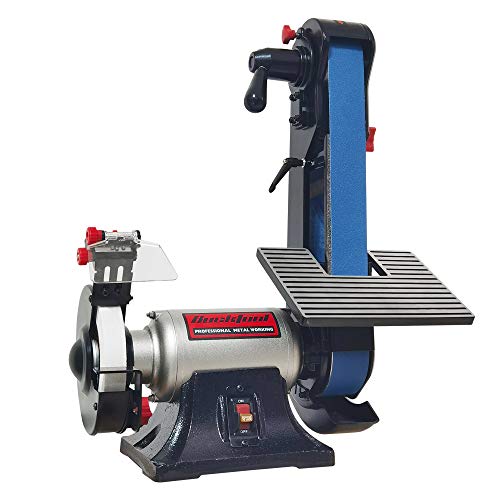
- ✓ Versatile two-table design
- ✓ Quick belt changes
- ✓ Solid, vibration-resistant base
- ✕ Limited wheel options
- ✕ Moderate power for heavy stock
| Motor Power | 1/3 HP, 3.5 A induction motor |
| No-Load Wheel Speed | 3450 RPM |
| Belt Speed | 4480 feet per minute (FPM) |
| Belt Size | 2 in x 42 in sanding belt |
| Grinder Wheel Size | 6 in diameter, 60 grit white grinding wheel |
| Adjustability and Tables | Belt tilts 0–90 degrees; belt housing swivels from horizontal to vertical; two worktables (cast iron and cast aluminum) with rubberized base |
You’re grabbing the Bucktool 2×42″ belt sander and 6″ bench grinder combo after a long weekend of “one more pass” on a stubborn kitchen knife. The moment you set the rig on the workbench, you notice the sturdy cast iron bases and the rubber feet that keep vibrations in check.
The belt sparkles as you tilt it from 0 to 90 degrees, and you realize you’ve got a versatile setup right out of the box.
The 2×42 belt slides smoothly, and the quick-release tension makes switching belts almost effortless. The 6″ grinding wheel sits flush and ready, with an adjustable eye shield and a bright LED light you’ll actually use late in the day.
I appreciated the two different work tables—cast iron for metal and a larger alloy table for wood—so you’re not juggling clamps as you shape a blade.
Under load, the 1/3 HP induction motor holds its own. It spins up to 3450 RPM with a belt speed near 4480 FPM, giving you aggressive stock removal without overheating the workpiece.
The lightweight feel of the belt housing is deceptive; this unit is built to handle consistent use without creeping or wobble.
In real-world use, the two-stage approach shines. You’ll set up on metal with the iron table for thinning a spine or flattening a bevel, then switch to wood on the big table for fine-tuning a handle or scales.
The quick-track mechanism keeps belts aligned after a few passes, which saves you time and frustration.
Overall, this is a practical, affordable option that clears common knife-making hurdles without demanding a shop full of tools. If you’re after a compact, versatile belt grinder that’s easy to use and maintain, this Bucktool setup is worth a look.
What Should You Consider When Choosing a Cheap Knife Belt Grinder?
When choosing a cheap knife belt grinder, there are several important factors to consider to ensure you get the best value for your money.
- Motor Power: The power of the motor significantly impacts the performance of the grinder. A higher wattage motor will provide better grinding efficiency and can handle tougher materials, allowing for smoother and faster knife shaping.
- Belt Size: The size of the belt determines the surface area available for grinding. Common sizes include 1×30 inches or 2×72 inches, with larger belts offering more versatility for different tasks and faster material removal.
- Frame Stability: A sturdy frame is crucial for effective grinding. Look for grinders made from heavy-duty materials that minimize vibrations, as a stable frame will provide better control and accuracy during use.
- Adjustability: Features like adjustable tracking and angle settings allow for more precise grinding and better ergonomics. Being able to modify the belt tension and tracking can help maintain optimal performance and prolong the life of the belts.
- Ease of Use: Consider how user-friendly the grinder is, especially if you are a beginner. Simple controls, clear instructions, and easy belt changes will make the grinding process smoother and more enjoyable.
- Noise Level: Some grinders can be quite loud, which may be a consideration if you have noise restrictions or are working in a shared space. Look for models that operate quietly to maintain a more pleasant working environment.
- Price vs. Features: While seeking a cheap knife belt grinder, it’s important to balance price with the features you need. A lower price may mean sacrificing some functionality, so evaluate which features are essential for your knife-making projects.
- Customer Reviews: Researching customer feedback can provide insight into the reliability and performance of the grinder. Reviews often highlight common issues or standout features that can guide your decision-making process.
- Warranty and Support: A good warranty can protect your investment. Check for warranties and customer support options, as these can be indicators of the manufacturer’s confidence in their product’s quality.
How Important is Motor Power in a Cheap Knife Belt Grinder?
Motor power is a crucial factor when considering the best cheap knife belt grinder as it directly impacts performance and efficiency.
- Power Rating: The power rating, usually measured in horsepower or watts, indicates the strength of the motor. A higher power rating means that the grinder can handle tougher materials and maintain consistent speed, which is essential for effective grinding and shaping of knives.
- Speed Control: Many budget knife belt grinders offer variable speed settings, which are influenced by the motor’s power. The ability to adjust the speed allows users to choose different grinding speeds for various tasks, improving precision and reducing the risk of overheating or damaging the blade.
- Durability and Longevity: A more powerful motor generally indicates better build quality and durability. In cheaper models, a lower power motor may lead to overheating and shorter lifespan, making it important to find a balance between cost and motor quality to ensure long-term usability.
- Performance Under Load: When grinding tougher metals, the motor’s power determines how well the grinder performs under load. A powerful motor maintains its RPM under pressure, ensuring consistent results, whereas a less powerful motor may bog down, leading to inefficient grinding and potential frustration.
- Compatibility with Belts: The motor power also influences the types of belts that can be effectively used with the grinder. A powerful motor allows for the use of more aggressive grit belts, which can significantly enhance the grinding process and reduce the time needed to shape blades.
What Belt Sizes Are Compatible with Cheap Knife Belt Grinders?
Belt sizes compatible with cheap knife belt grinders typically include standard dimensions that are widely available and suitable for various grinding tasks.
- 1×30 inches: This size is one of the most common for inexpensive knife belt grinders. It provides a good balance between portability and functionality, making it suitable for hobbyists and small-scale knife makers.
- 2×42 inches: Another popular size, the 2×42 inch belt is favored for its versatility and the ability to handle a variety of grinding tasks. It offers a wider surface area, which can make it easier to grind larger blades or work on intricate details.
- 2×72 inches: Although often found in more expensive models, some budget-friendly grinders also accommodate this size. The 2×72 inch belt is ideal for serious knife makers as it provides ample surface for sanding and shaping, leading to a smoother finish.
- 1×42 inches: This smaller size is less common but still used in some affordable models. It is particularly suited for smaller projects and detailed work, allowing for precision in shaping and finishing blades.
- 1.5×30 inches: A less typical size, but some budget grinders may support this dimension. It offers a compromise between the smaller 1×30 and larger belts, providing a unique option for specific grinding needs.
When choosing a belt size, it’s important to consider the specific model of the knife belt grinder, as compatibility may vary. Additionally, the type of projects you intend to work on can influence which belt size will be most effective for your needs.
Which Cheap Knife Belt Grinders are the Most Affordable Yet Reliable?
When searching for the best cheap knife belt grinders, there are several options that balance affordability with reliability.
- Grizzly G1015 Knife Belt Sander: This model is well-regarded for its sturdy construction and versatility.
- WEN 6502T 4.3-Amp 6-Inch Belt and 6-Inch Disc Sander: This grinder offers both a belt and disc sander, making it a multifunctional tool for knife makers.
- Kalamazoo 1SM 1-Inch by 42-Inch Belt Sander: Known for its durability and exceptional performance, this model is ideal for both beginners and experienced users.
- Shop Fox W1843 1-Inch by 30-Inch Belt Sander: This grinder is compact and easy to use, making it a great choice for hobbyists.
- JET J-4002 1-Inch by 42-Inch Belt Sander: A reliable option with a strong motor that provides consistent power and performance.
The Grizzly G1015 Knife Belt Sander is praised for its robust build and effectiveness in sharpening and shaping blades, making it a favorite among budget-conscious knife enthusiasts. It features a 1-inch wide belt and a 5-inch disc, allowing for versatile grinding and sanding applications.
The WEN 6502T combines a 6-inch disc sander and a 6-inch belt sander, providing exceptional value for those who want a multifunctional tool. Its compact design and adjustable belt arm allow for easy transitions between different sanding tasks, enhancing its usability for knife making.
The Kalamazoo 1SM is a compact yet powerful option that features a 1-inch by 42-inch belt, making it perfect for detailed work. Its all-steel construction ensures durability, and the adjustable tracking system allows for precise control during grinding.
The Shop Fox W1843 is a smaller model that is easy to maneuver, making it ideal for those with limited workspace. It features an adjustable belt for various angles and an efficient motor that delivers consistent performance for knife sharpening and shaping.
The JET J-4002 offers a solid design with a reliable motor, making it suitable for heavy-duty use. Its large belt size allows for effective grinding, while the sturdy construction ensures longevity, making it a dependable addition to any knife maker’s toolkit.
How Do User Reviews Influence the Choice of a Cheap Knife Belt Grinder?
User reviews play a significant role in influencing the choice of a cheap knife belt grinder.
- Trustworthiness: User reviews often provide firsthand experiences that can indicate the reliability and quality of the grinder.
- Performance Insights: Reviews can highlight how well the grinder performs in real-world scenarios, beyond what manufacturers claim in specifications.
- Value for Money: Consumers often evaluate whether the grinder offers good performance relative to its price based on user feedback.
- Common Issues: Users frequently share problems they encounter, which can inform potential buyers about what to watch out for.
- Brand Reputation: Reviews can affect the perception of a brand and its products, influencing buyer decisions towards or away from specific brands.
User reviews are often seen as trustworthy because they come from actual users who have tested the product, offering insights that manufacturers might not disclose. When multiple users point out consistent issues or praise certain features, it builds a reliability profile for the grinder that potential buyers can use to make informed decisions.
Performance insights from user reviews often reveal how a knife belt grinder handles various tasks, including its effectiveness on different materials and its durability over time. Such information is crucial for buyers who want to ensure the grinder will meet their specific needs, as manufacturers may not always provide comprehensive performance details.
Value for money is a frequent topic in user reviews, where buyers share whether they feel the grinder delivers adequate performance for its price. This feedback helps potential buyers determine if they are making a wise financial investment, especially when searching for budget-friendly options.
Common issues shared in reviews can highlight frequent defects or limitations that would not be apparent in product descriptions. Knowing these issues beforehand allows buyers to weigh the pros and cons, potentially steering them toward a more reliable choice.
Lastly, brand reputation is significantly influenced by user reviews, as positive or negative feedback can either enhance or damage a brand’s image. This aspect is particularly important in the market for cheap knife belt grinders, where consumers often rely on the experiences of others to guide their purchasing decisions.
What Are the Key Benefits of Using a Cheap Knife Belt Grinder?
Using a cheap knife belt grinder offers several advantages for both novice and experienced woodworkers and knife makers. Here are some key benefits:
-
Affordability: Cheap knife belt grinders are budget-friendly, making them accessible to hobbyists and beginners. Investing in an economical model allows users to explore their craft without a significant financial commitment.
-
Versatility: These grinders can handle a variety of tasks, including shaping, sharpening, and polishing knives or tools. With adjustable speeds and interchangeable belts, they can adapt to different materials and desired finishes.
-
Space Efficiency: Compact models fit well in small workshops or home garages, making them ideal for those with limited space. Their smaller footprint doesn’t compromise their functionality.
-
Ease of Use: Many inexpensive belt grinders are designed for user-friendly operation. This aids beginners in mastering skills quickly without the overwhelm commonly associated with more complex machines.
-
Improved Results: The consistent surface area and speed of a belt grinder provide a more uniform finish compared to manual methods. This can lead to sharper knives and tools, enhancing overall performance.
Using a cheap knife belt grinder helps enthusiasts refine their craft while remaining within budget, offering a practical solution for those passionate about knife making.
How Can You Maximize Durability in a Cheap Knife Belt Grinder?
Maximizing durability in a cheap knife belt grinder involves selecting the right components and techniques to enhance its longevity and performance.
- High-Quality Belts: Investing in high-quality sanding belts can significantly improve the lifespan of your grinder. Premium belts are made from durable materials that resist wear and tear, ensuring consistent performance over time.
- Regular Maintenance: Performing regular maintenance is crucial for durability. This includes cleaning the machine, checking for wear on parts, and lubricating moving components to prevent rust and ensure smooth operation.
- Proper Tensioning: Ensuring that the belts are properly tensioned can prevent slippage and excessive wear. An overly loose belt can lead to inefficient grinding and more frequent replacements, while a too-tight belt can strain the motor.
- Cooling Techniques: Implementing cooling techniques, such as using a water bucket or coolant while grinding, can prevent overheating. Excessive heat can damage both the knife and the grinder, shortening its life span.
- Frame Stability: A stable frame minimizes vibrations that can lead to wear and tear. Consider reinforcing the grinder’s frame or using rubber feet to absorb shocks and keep the machine steady during use.
- Upgraded Bearings: Replacing standard bearings with high-quality, sealed bearings can enhance the grinder’s performance and longevity. Better bearings reduce friction and wear, allowing for smoother operation and less maintenance.