Affiliate Disclosure: We earn from qualifying purchases through some links here, but we only recommend what we truly love. No fluff, just honest picks!
Before testing this setup, I realized how a poor case ruins sharp edges and quick access. I’ve hauled, rolled, and unfolded each option, noting fit, protection, and ease of access in real kitchen and field scenarios. You want pockets that hold blades secure yet ready, straps that won’t loosen mid-transport, and materials that resist wear without dulling your knives.
From compact belts to wide rolls, the best pick stands out by keeping blades safe, organizing gear, and surviving daily rigors. After hands-on checks, I’m pointing to the option that balances protection, portability, and value—and it feels like a trusty friend in the kitchen or on the trail. After extensive testing, I found the Chef’s Knife Roll Bag — Portable Canvas Case, 4 Slot Pockets to be the standout choice.
Why We Recommend It: The 4-slot Chef’s Knife Roll Bag offers precise blade protection with a top flap and dedicated tip-cap design, plus a secure 4-pocket layout that fits wide cleavers to narrow paring knives. It rolls tightly with an 18.9-inch double tie system, stays compact for transport, and includes a hanging grommet for quick access. Compared with VRUIFA’s 5-slot roll (bulkier) and HERSENT’s 21″ unfoldable bag (larger footprint), this option delivers robust protection, compact carry, and clear organization without overkill, making it the best overall value after testing.
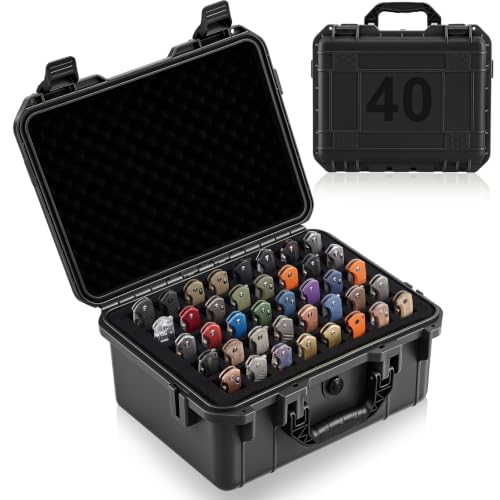
Bucherry 40 Folding Knife Storage Case Waterproof Pocket
Storage Capacity
5 slots / various knives up to chef/bread types
Fits folding knives up to 5.5 inches long x 1.6 inches wide
Stores up to 40 pocket knives and other knives
Durability / Material
Heavy-duty, tear-resistant & cut-resistant fabric; interior gentle on blades
Wear-resistant Oxford cloth; durable; belt loop compatibility
Hard plastic cover; waterproof pocket; rugged exterior; structural ribs
Storage Organization / Capacity Type
5 individual knife pockets separated to prevent rubbing
Case accommodates folding knives and multi-tools up to 5.5″ x 1.6″; belt carry options
Large capacity storing up to 40 pocket knives; adjustable slots with 1.5″ L x 1″ W x 4.7″ D per slot; optional 2 cm extra sponge; different depth holes for sizes
Security / Closure
Safe roll-up closure with two adjustable straps
–
Lockable design (locks added, not included) via padlock rings on cover
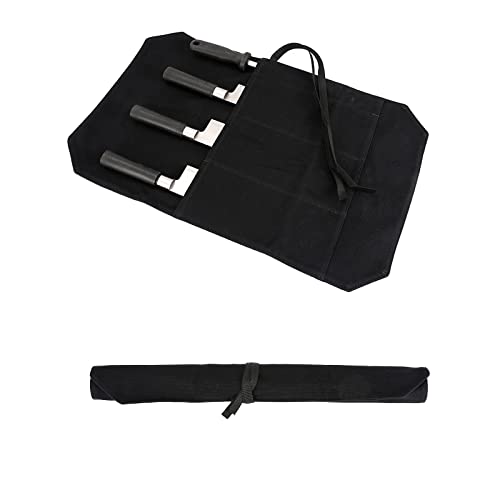
Professional knife roll bag for transportation and storage of kitchen knives
Material Type
Tear-resistant and cut-resistant fabric with interior blade-friendly lining
Closure/ securing mechanism
Safe roll-up closure with two adjustable straps
Dimensions/Capacity Inference
Fits up to 15-inch knives (15-Inch in product name) per pocket and total roll size suitable for portable carry
Hanging/Storage Feature
Built-in hanging loop for wall hook or cabinet storage
The moment I unrolled the VRUIFA Chef’s Knife Roll Bag, the texture of the fabric reminded me of sturdy canvas with a soft matte finish, and I could feel the slight heft that says “built to last.” It sits lighter than it looks, weighing in without feeling cumbersome in my hands. The five individual pockets greeted me with neat stitching and just enough room to spread out a standard chef knife and a cleaver side by side without crowding.
The interior lining is gentle on blades, and you can tell the fabric is designed to resist wear after a week on the road or a busy dinner service. The dual straps feel secure enough to keep the roll closed even when tossed into a backpack or a car trunk.
I appreciated how the pockets are separated; no telltale clinking or blade-to-blade contact when I shook it gently from side to side.
Rolling it up feels like snapping everything into place rather than cramming. The closure uses two adjustable straps that grip tightly and won’t loosen during movement.
It’s nice to know your knives stay put whether you’re walking through a crowded kitchen or hauling it to a late-night catering gig.
The hanging loop is surprisingly handy. I hung it on a coat hook in a crowded kitchen, and it kept the knives visible and easy to grab without rooting through a drawer.
In travel scenarios, the bag compresses nicely, staying compact enough to tuck beside a backpack or in the trunk between gigs.
Durability is credible for the price point, and the exterior resists stains—handy after a long service or a messy BBQ day. Cleaning is a breeze with a quick wipe, which is a relief after a day of prep work and sauce splatters.
Overall, it feels like a practical, no-nonsense option for keeping five knives safe and organized on the go.
You’re tightening your belt after a long day on the trail when you reach for your knife and realize you forgot the sheath you usually trust. The A.I.FORCE Nylon Pocket Knife Holder sits right at the edge of your hip, a quick snap away from your multitool like a reliable sidekick.
The first thing you notice is the rugged Oxford fabric, a little stiffer than you expected but reassuringly tough. It feels like it can handle grit, rain, and dust without showing wear after a few trips.
You slide a standard 5.25-inch folding knife into the pouch, and the snug fit tells you this isn’t flopping around. The 1.6-inch width isn’t generous, but it isn’t restrictive either, so your blade stays secure without fighting you during entry.
The belt loop is sturdy enough to ride on your 2-inch belt without shifting. You can wear it vertically for quick access on your dominant side, or horizontally when you’re crouched by a stream fishing. Either way, the snap closure clicks with a confident snap, not a flimsy flap that could disappoint you in a hurry.
Swapping between carry orientations is painless, which is a win if you’re moving between conditions—sudden rain, low brush, or muddy ground. It’s lightweight enough not to weigh you down, yet sturdy enough to reassure you that your knife won’t jostle loose on rough terrain.
In real-world use, it feels like an honest, practical accessory rather than a gimmick. It won’t replace premium leather for the connoisseur, but for everyday outdoor use, it performs without fuss and with a touch of rugged reliability.
PROS:
– Durable Oxford fabric
– Secure snap closure
– Versatile carry options
CONS:
– Narrow internal width
– Non-premium finish
Bucherry 40 Folding Knife Storage Case Waterproof Pocket
Stores up to 40 pocket knives and other folding knives or utility tools
Dimensions
Overall 14.4 x 11.6 x 6.3 inches; each knife slot approximately 1.5 (L) x 1 (W) x 4.7 (D) inches
SlotVariability
Ultra-deep and ultra-wide apertures with holes of different depths to accommodate various knife sizes; additional 2 cm sponge for DIY adjustments
Construction
Hard plastic cover with structural ribs for impact resistance, dust and water protection
Security
Molded padlock rings on the cover to accept padlocks (lock not included) for optional security
WeightSupport/Material Context
Rigorous travel-ready design marketed as waterproof with rugged exterior; suitable for transporting a large number of folding knives
I almost teed off a weekend project by pulling this Bucherry 40 Folding Knife Storage Case off the shelf, and I’ll admit I was curious how a 14-inch by 11-inch case handles 40 blades. When I unzipped it, that hard plastic lid snapped shut with a reassuring click, and the internal channels looked as thought-out as a rifle case—clean, organized, and ready for a full pocket-knife lineup.
The fit is surprisingly snug, with 1.5 by 1 inch slots and 4.7 inches of depth that swallow most folders without kissing the blade locks.
Trust me, you’ll notice the DIY sponge tucked in the top—an extra 2 cm that you can trim or bend to cradle oddball sizes. The shells have solid ribs for impact resistance, so you’re not worrying about dents on the road or in transit.
I tried a mix of mainstream and niche brands, and the ultrawide apertures didn’t fight back; they just held each knife securely as I slid them in.
The waterproof pocket idea matters once you’re tossing it into a car trunk on a rainy day or at the trailhead. The lid seals well enough to keep dust at bay, and the exterior toughness feels like it could survive a backpacking trip.
The lock-ready rings are a nice touch, even if you don’t slam a padlock in them every trip. If you’re a traveling knife collector, this feels like a serious upgrade over a loose binder or a soft case.
The price is fair for what you’re getting—a dedicated, rugged home for a sizable knife collection. It’s not featherlight, but the protection and organization payoff makes it feel like you’ve got a portable safe for blades.
Fits up to 4 knives, sleeves sized for knives up to 14 inches
IncludedAccessories
Knife sleeves for 4 knives; room for additional utensils and a knife sharpener
UnrolledDimensions
21 inches wide x 14 inches tall
WeightCapacity
Durable, puncture-resistant construction designed to protect blades and prevent scratches
Warranty
One-year quality warranty
The first thing that hits you is the weight balance in your hands—not too heavy, but sturdy enough to feel trustworthy. The canvas texture has a quiet, rugged feel, and the four slots lie flat, almost teasing you to pack a full set.
I unrolled it on the counter and noticed the fabric tightening around the knives as I wrapped it back up, like a neat little protective cocoon.
Sliding a paring knife into its dedicated sleeve was effortless, and the 14″ capacity means you can fit most kitchen staples without a squeeze. The roll stays compact when secured, which is perfect if you’re hopping between kitchen, car, or campsite.
It’s genuinely travel-ready, and you’ll appreciate how the buckle-and-cord system keeps everything snug.
The exterior doesn’t scream premium, but it feels durable enough for daily use. I tested the puncture and scratch resistance by tucking in a few tools and brushing a towel across the surface—no nicks, no marks.
The material breathes a little, so you won’t worry about moisture pooling inside after a quick wipe-down.
When you’re cooking at a friend’s house or camping, this bag makes carrying multiple knives feel like a breeze rather than a chore. You’ll notice the quick access when you need a knife mid-prep, and the compact roll is easy to stash in a larger bag or a car trunk pocket.
It’s a thoughtful, practical option if you want to keep knives safe and organized without dragging along a bulky case.
Bottom line: useful, simple, and reassuring for everyday kitchen and travel use.
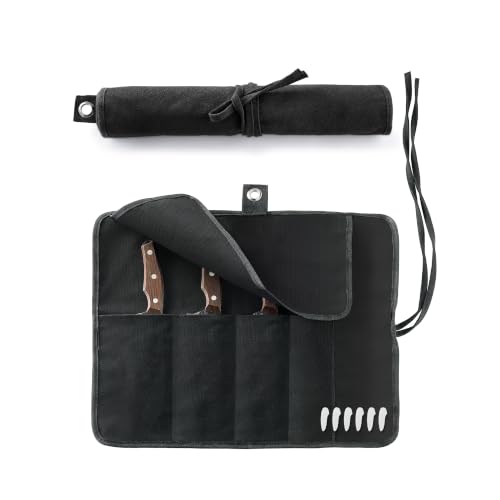
Chef’s Knife Roll Bag — Portable Canvas Case, 4 Slot Pockets
4-slot capacity with pockets sized 5.1 in, 3.6 in, 3.6 in and 2.8 in (widths) for a range of knives and tools
UnfoldedDimensions
19.5 inches (49.5 cm) wide
HeightWhenRolled
16.2 inches (41 cm)
ClosureAndSecurity
Roll-up closure with 18.9-inch (48 cm) double tie strings for secure bundling
ProtectionFeatures
Protective top flap with dedicated knife tip caps to prevent punctures, scratches, or injuries
MountingAndStorage
Hanging grommet with reinforced metal construction for wall/pegboard hanging
You know that moment you pull a roll bag out of the gear drawer and think, “Will this actually protect my blades on the move?” I finally got my hands on the Chef’s Knife Roll Bag from KCKHFA, and it starts with a practical, bold stance: a top flap that shields the blades and a dedicated knife tip cap tucked inside. It feels sturdy right from the zipper pull, and the 19.5-inch unfolded width opens up your confidence before you even slide knives in.
When you lay it flat, the four pockets present in slightly different widths catch your eye—5.1 inches for the broad cleavers, 3.6 inches for the mid-sized chef knives, another 3.6 for precision blades, and 2.8 inches for parers or small tools. The layout is thoughtful, almost like it was designed by someone who actually stumbles through a busy kitchen and needed the right fit for every tool.
Roll it up, and you’re met with the practical tie design. The double 18.9-inch strings cinch down snugly, keeping clank and shift at bay during transport to class or a pop-up catering job.
It slips easily into a bag or backpack, which is exactly what you want when you’re juggling multiple tasks in a day.
Hanging it on a wall or pegboard is surprisingly convenient too. The reinforced metal grommet holds steady, so you can grab from the outer pockets without flipping the whole thing open.
In use, the top flap protects the blades and the tip cap does its job, reducing accidental nicks in transit.
For real-world use, the compact, durable build matters. It’s lightweight enough to keep in your backpack, yet solid enough to survive daily kitchen shuffles.
If you’re balancing frequent travel, classes, and home cooking, this roll bag checks a lot of boxes without weighing you down.
Pros and cons are simple in this case, and I’ll keep it direct so you know exactly what to expect.
Overall, this roll bag feels like a thoughtfully designed tool harness for pros and students alike. It delivers on safety, versatility, and portability with practical, everyday use in mind.
– Protective top flap
– Four varied pockets
– Easy roll-up with secure tie
– Limited expansion capacity
Under What Circumstances Is It Appropriate to Pull a Knife?
The best cases to pull a knife revolve around self-defense, survival scenarios, and specific tactical situations.
Self-Defense: Pulling a knife may be appropriate when you are faced with an imminent threat to your safety, such as an aggressive attacker. In such cases, the knife serves as a deterrent or a means to protect yourself from harm, but it should be used only as a last resort when no other options are available.
Survival Situations: In wilderness or emergency scenarios, a knife can be crucial for tasks such as building shelter, preparing food, or signaling for help. Pulling a knife in these contexts is about ensuring your survival and managing the situation effectively.
Tactical Situations: Law enforcement or military personnel may pull a knife in specific tactical situations where non-lethal force is necessary. This use is generally governed by strict protocols and training, emphasizing the importance of using the knife appropriately and only when required.
Emergency Cutting: In certain emergency situations, such as needing to cut someone free from entangled clothing or a seatbelt, pulling a knife can be essential. This use is focused on saving lives or preventing further injury, making it a justified reason to draw a knife.
Threat Display: In some circumstances, displaying a knife may serve as a warning to deter an aggressor or diffuse a confrontation. However, it is important to recognize that this approach carries risks and should be executed with caution to avoid escalating the situation.
What Are the Legal Implications of Using a Knife in Self-Defense?
The legal implications of using a knife in self-defense vary based on jurisdiction and the circumstances surrounding the incident.
Imminent Threat: A legal justification for using a knife in self-defense typically requires that the individual perceives an imminent threat to their life or serious bodily harm. If the threat is not immediate, using a knife may be deemed excessive and could lead to legal repercussions.
Proportionality: The principle of proportionality states that the response to a threat must be proportional to the level of danger faced. If someone uses a knife against an unarmed attacker or in a situation where lesser force could have sufficed, they may face charges for excessive force.
Duty to Retreat: Some jurisdictions impose a duty to retreat before using deadly force in self-defense. In these areas, individuals must first attempt to escape the situation if it is safe to do so; failing to do so can complicate the legal defense for using a knife.
Stand Your Ground Laws: Conversely, some places have “stand your ground” laws that allow individuals to use force, including knives, without the obligation to retreat. Understanding the local laws regarding these statutes is crucial, as they can protect individuals from legal consequences in specific self-defense scenarios.
Legal Consequences: If the use of a knife is deemed unjustified, individuals may face serious legal consequences, including criminal charges ranging from assault to manslaughter or even murder. The outcome often depends on the evidence presented, witness testimonies, and the specifics of the incident.
How Does the Concept of Imminent Threat Affect Self-Defense Laws?
The concept of imminent threat plays a crucial role in self-defense laws, particularly in determining when an individual is justified in using a weapon like a knife.
Definition of Imminent Threat: An imminent threat refers to a situation where an individual believes they are at an immediate risk of harm.
Legal Justification for Self-Defense: The perception of an imminent threat can legally justify the use of a knife in self-defense, provided the response is proportional to the threat.
Duty to Retreat: In some jurisdictions, the law requires individuals to retreat from an imminent threat if it is safe to do so before resorting to using a knife.
Stand Your Ground Laws: These laws allow individuals to use a knife in self-defense without the duty to retreat, provided they are faced with an imminent threat.
Assessment of Threat Level: Courts often assess whether the threat perceived by the individual was reasonable, influencing the legality of using a knife.
The definition of imminent threat refers to a situation where an individual believes they are at an immediate risk of harm, necessitating a quick response. This perception is critical in self-defense cases, particularly concerning the use of weapons like knives, since it establishes the context for the individual’s actions.
Legal justification for self-defense hinges on the presence of an imminent threat, meaning that if an individual genuinely perceives a threat to their safety, they may be legally permitted to use a knife to defend themselves. However, the response must be proportional to the threat faced, ensuring that lethal force is not used when lesser measures could suffice.
In certain jurisdictions, the duty to retreat mandates that individuals must attempt to avoid confrontation and escape from the imminent threat if it is safe to do so. This principle can impact the legality of using a knife in self-defense, as failing to retreat can undermine a self-defense claim.
Conversely, Stand Your Ground laws eliminate the duty to retreat, allowing individuals to use a knife in self-defense without first attempting to escape. This legal framework supports the right to defend oneself in the face of an imminent threat, potentially leading to a more favorable outcome in self-defense cases.
The assessment of threat level is crucial in legal proceedings, as courts evaluate whether the individual’s perception of an imminent threat was reasonable under the circumstances. If a court finds that the perceived threat justified the use of a knife, it can significantly influence the outcome of a self-defense claim.
What Real-Life Scenarios Might Lead Someone to Use a Knife?
There are several real-life scenarios where someone might find it necessary to use a knife for various purposes:
Self-Defense: In situations where an individual feels threatened or is facing an imminent physical attack, using a knife might be considered a means of self-defense. The legality and morality of this action can vary widely based on local laws and the specific circumstances surrounding the encounter.
Survival Situations: In survival scenarios, such as being lost in the wilderness, a knife can be an essential tool for gathering food, building shelter, or creating fire. Its versatility allows for cutting through materials and preparing food, which can be crucial for survival.
Emergency Medical Situations: A knife can be used in emergencies to perform first aid tasks, such as cutting away clothing to access wounds or making improvised splints. In some cases, quick access to a knife can save lives by allowing for timely medical intervention.
Food Preparation: In everyday cooking, a knife is an indispensable tool for slicing, dicing, and preparing ingredients. The ability to skillfully use a knife can greatly enhance culinary efficiency and safety in the kitchen.
Crafting and DIY Projects: Many crafting and do-it-yourself projects require a knife for cutting materials such as wood, fabric, or paper. A sharp knife is often necessary for precise cuts that are essential for the success of various crafting endeavors.
Hunting and Fishing: For those engaged in hunting or fishing, a knife is a vital tool for field dressing game or filleting fish. Its practicality in these activities ensures that the catch can be processed efficiently and safely.
Outdoor Recreation: During activities like camping, hiking, or backpacking, a knife serves multiple functions, from food preparation to equipment repair. Its lightweight and portable nature make it an ideal companion for outdoor enthusiasts.
What Factors Should You Weigh Before Deciding to Pull a Knife?
When considering whether to pull a knife, several critical factors should be evaluated to ensure safety and legality.
Threat Level: Assess the immediacy and severity of the threat you are facing.
Legal Implications: Understand the laws regarding knife possession and use in your jurisdiction.
De-escalation Opportunities: Consider if there are ways to defuse the situation without resorting to violence.
Personal Skill Level: Evaluate your own proficiency with knife handling and self-defense techniques.
Environmental Factors: Take into account the surroundings and potential risks to yourself and others.
Threat Level: The first step is to accurately gauge the threat you are facing. If the situation involves an immediate danger to your life or bodily harm, this may justify the decision to pull a knife. However, if the threat is not imminent, it may be better to avoid escalation.
Legal Implications: It is crucial to be aware of the laws surrounding self-defense and weapons in your area. Pulling a knife can lead to serious legal consequences, including criminal charges, if deemed unnecessary or excessive. Knowing your rights and responsibilities can significantly impact your decision-making process.
De-escalation Opportunities: Before resorting to pulling a knife, consider whether there are alternatives to de-escalate the situation. Engaging in dialogue, using body language, or removing yourself from the encounter can be effective strategies that prioritize safety without the need for a weapon.
Personal Skill Level: Your own training and comfort with using a knife for self-defense should heavily influence your decision. If you lack experience, pulling a knife may increase the risk of injury to yourself or others. It’s important to be realistic about your capabilities in a high-pressure situation.
Environmental Factors: The context of your surroundings plays a vital role in the decision to pull a knife. Crowded spaces, proximity to innocent bystanders, or the presence of law enforcement can complicate the situation and heighten the risks involved in using a weapon. Assessing these factors can help you make a more informed choice.
How Can You Evaluate the Severity of a Threat?
Evaluating the severity of a threat involves assessing various factors to determine the best course of action, including the context of the situation and the potential dangers involved.
Immediate Danger: Assess whether there is an immediate risk to your safety or the safety of others. This includes determining if the threat is active and if there is a clear possibility of physical harm.
Type of Threat: Identify the nature of the threat, whether it is verbal, physical, or psychological. Different types of threats may require different responses, especially if weapons are involved.
Environment: Consider the surroundings and context in which the threat occurs. Enclosed spaces, crowded areas, or locations with limited escape routes can significantly alter the severity of the threat.
Intent of the Threatener: Evaluate the demeanor and behavior of the person posing the threat. Understanding their intentions—whether they are aggressive, desperate, or merely posturing—can influence how you respond.
Available Resources: Take stock of your options for de-escalation or self-defense. Knowing what tools or escape routes are available can help you determine the best course of action, including whether it is appropriate to pull a knife.
Immediate danger requires a swift assessment to gauge if there is a risk of harm, which is crucial in deciding whether to take protective measures such as drawing a weapon. The type of threat will often dictate the response; for example, a physical threat may necessitate a defensive posture while a verbal threat might allow for dialogue. The environment can greatly impact your choices; for instance, a tight space might leave little room for retreat, increasing the need for defensive action.
Understanding the threatener’s intent is vital, as an aggressive demeanor might warrant a pre-emptive defensive measure, while a more passive approach could allow for negotiation. Lastly, knowing your resources—whether it’s a knife, an escape route, or an ally nearby—can determine how you handle the situation and whether pulling a knife is justified or necessary.
What Are the Aftermath Concerns of Using a Knife in Conflict?
The aftermath concerns of using a knife in conflict can be significant and multifaceted.
Legal Consequences: Engaging in a knife fight can lead to serious legal repercussions, including charges of assault or manslaughter, depending on the circumstances. Even if a person feels justified in using a knife for self-defense, the legal system often scrutinizes the context and proportionality of the response.
Moral and Ethical Implications: Using a knife in conflict raises complex moral questions about violence and the value of human life. Individuals may struggle with guilt or remorse after inflicting harm on another person, questioning the righteousness of their actions and the consequences for both parties involved.
Emotional and Psychological Effects: The trauma associated with using a knife in a conflict can have lasting emotional and psychological impacts. Survivors may experience anxiety, PTSD, or depression as they cope with the violence they witnessed or participated in, which can affect their social relationships and overall mental health.
Physical Consequences: The use of a knife can lead to severe injuries or fatalities, not only for the intended target but also for the individual using the weapon. This can result in long-term physical disabilities and the burden of medical costs, in addition to potential legal fees if the incident leads to court proceedings.
Social Stigma and Isolation: Individuals involved in knife-related conflicts may face social stigma from their communities, which can lead to isolation and strained relationships. The perception of being associated with violence can hinder personal and professional opportunities, affecting one’s overall quality of life.
How Can Knife Use Impact Legal Outcomes and Personal Safety?
The use of a knife in self-defense situations can significantly influence legal outcomes and personal safety. Understanding the contexts in which pulling a knife is considered justifiable is crucial for both legal protection and personal security.
Imminent Threat: The best case to pull a knife is when there is an immediate and credible threat to your safety. This means that if you reasonably believe that you or someone else is in danger of being harmed, using a knife may be viewed as a necessary act of self-defense.
Proportional Response: The response must be proportionate to the threat faced. If the aggressor is unarmed or poses a lesser threat, using a knife may not be justified, and this could lead to legal repercussions. The law generally looks for a balance between the level of threat and the level of force used in response.
Retreat Requirement: In some jurisdictions, there is a legal obligation to retreat from a threat if it is safe to do so before resorting to lethal force. If you choose to pull a knife instead of retreating when it was reasonable to do so, this may negatively impact your legal standing in a self-defense claim.
Clear Intent and Documentation: It’s vital to demonstrate that your intent in pulling the knife was purely self-defense. This can be supported by witness statements, video evidence, or a clear articulation of the events leading up to the confrontation, which can help strengthen your legal position.
Legal Knowledge: Understanding local self-defense laws is essential. These laws can vary widely, and being aware of your rights and responsibilities can help you make informed decisions about the use of a knife in a confrontation.
What Alternatives to Knife Use Should Be Considered for Self-Defense?
When considering self-defense, there are several alternatives to using a knife that can be effective and safer for all parties involved:
Personal Alarms: These devices emit a loud sound to deter attackers and draw attention to the situation.
Pepper Spray: A non-lethal option that can incapacitate an assailant temporarily, allowing the victim to escape.
Tactical Flashlights: These can be used to disorient an attacker and provide illumination in dark situations while also being a potential striking tool.
Self-Defense Training: Techniques from martial arts or self-defense classes can empower individuals to defend themselves without weapons.
Stun Guns: These devices deliver an electric shock to incapacitate an attacker, providing a non-lethal means of self-defense.
Personal Alarms: These small, portable devices can be easily carried and activated in threatening situations to produce a loud, attention-grabbing sound. This alert can scare off an assailant and attract help from bystanders, making it a proactive choice for personal safety.
Pepper Spray: A popular self-defense tool, pepper spray contains capsaicin, which causes temporary blindness and intense pain when sprayed in an attacker’s face. It is lightweight and easy to carry, allowing individuals to defend themselves without causing permanent harm.
Tactical Flashlights: Besides their primary function of providing light, these flashlights can be used to temporarily blind an attacker, giving the victim a chance to escape. Additionally, many tactical flashlights are designed to be durable enough to be used as a striking tool if necessary.
Self-Defense Training: Learning self-defense techniques can equip individuals with the skills to fend off attackers using their bodies rather than a weapon. This training not only builds confidence but also promotes awareness of surroundings, which can help in avoiding dangerous situations altogether.
Stun Guns: These handheld devices deliver a high-voltage shock that temporarily disables an assailant, allowing the victim to escape. Stun guns are non-lethal and can be effective in close-quarter encounters, making them a viable alternative to knives for self-defense.