
If you want a reliable, long-lasting edge that doesn’t break the bank, go with the SHAN ZU 8-Inch Japanese Damascus Kitchen Knife. It blends hardness, wear resistance, and a comfortable grip for extended prep sessions.
Top Recommendation: SHAN ZU 8-Inch Japanese Damascus Kitchen Knife
Why We Recommend It: The SHAN ZU knife uses 10Cr15Mov Damascus steel with 67-layer layering, delivering high hardness (62 HRC), excellent edge retention, and superior wear and rust resistance. It features a 2.2 mm blade thickness, a balanced 5.3″ G10 handle, and a 15° cutting angle, which together provide precise, long-lasting cuts and comfortable handling during extended prep. Compared with PAUDIN, SHAN ZU offers a more robust Damascus pattern and tougher edge. Amazon Basics is cheaper but lacks the premium steel and edge stability, while Huusk focuses on craftsmanship over consistent daily cutting balance. The SHAN ZU’s combination of durability, sharpness, and practical ergonomics makes it the strongest overall choice for true carbon steel performance.
Best carbon steel shef knife: Our Top 4 Picks
- PAUDIN Chef Knife, 8 Inch High Carbon Stainless Steel Sharp – Best Carbon Steel Chef Knife
- SHAN ZU 8-Inch Japanese Damascus Kitchen Knife – Best Carbon Steel Kitchen Knife
- Amazon Basics Classic 8-inch Full Tang High Carbon – Best Carbon Steel Chef Knives
- Huusk Viking Knife Leather Sheath, Hand Forged Chef Butcher – Best Value
PAUDIN Chef Knife, 8 Inch High Carbon Stainless Steel Sharp

- ✓ Sharp out of the box
- ✓ Balanced for comfortable use
- ✓ Inexpensive for blade quality
- ✕ Not Damascus steel
- ✕ May require occasional touch-ups
| Blade Material | 5Cr15Mov stainless steel |
| Knife Length | 8 inches (approximately 20 cm) blade |
| Blade Thickness | 2 mm |
| Edge Type / Sharpness | Ultra sharp, hand-polished by craftsman |
| Handle Material / Ergonomics | Wood handle integrated with blade for balanced grip |
| Pattern / Finish | Special waved pattern on blade |
You drop this PAUDIN 8-inch chef knife onto the cutting board and immediately notice that it isn’t just another broad-tipped blade. The blade’s wave-like pattern catches the light, and the edge looks incredibly fine right out of the box.
It feels distinctly balanced because the handle and blade meet in a way that invites a confident, controlled slice.
In hand, the wood handle is warm to the touch, and the grip sits comfortably without fuss. You’ll find the 2mm-thick blade surprisingly sturdy for daily tasks like mincing garlic or slicing carrots, yet light enough to flick through herbs with ease.
It’s easy to control during long prep sessions, which makes you forget you’re using a budget-friendly option.
When you tackle vegetables, the knife glides through onions and peppers with minimal resistance. The edge stays sharp through light bread slicing and fish filleting, which is where some budget knives lose their bite.
You’ll appreciate the smooth release after each cut, thanks to the craftsman-polished finish.
Chopping meat presents a similar sense of reliability. The blade’s 8 inches feels almost tailor-made for round chicken breasts and fajita-ready slices.
It’s not a heavy chef knife, but it punches above its price point, delivering precise, clean cuts without crushing delicate items.
The ergonomic handle reduces hand fatigue during longer sessions, and the integrated design helps balance control with safety. If you’re balancing multiple knives in a busy kitchen, this PAUDIN blade feels like a dependable daily driver that you’ll reach for first.
Overall, you’ll enjoy the sharpness, balance, and approachable price. It’s a solid all-arounder for home cooks and even some light professional use, especially if you’re chasing that chef-grade feel without the premium cost.
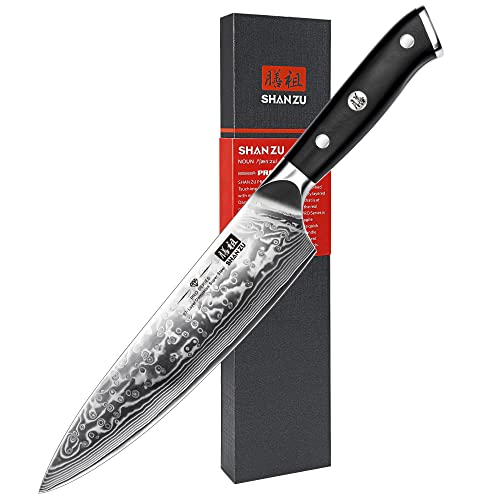
SHAN ZU 8-Inch Japanese Damascus Kitchen Knife
- ✓ Sharp out of the box
- ✓ Balanced, comfortable grip
- ✓ Durable 67-layer steel
- ✕ Requires careful hand washing
- ✕ Slightly heavier than some rivals
| Blade Material | 10Cr15Mov Damascus Japanese steel, 67-layer construction |
| Hardness | 62 HRC |
| Blade Length | 8 inches (approximately 20.3 cm) |
| Blade Thickness | 2.2 mm |
| Blade Width | 2.5 inches (approximately 6.4 cm) |
| Handle Type | G10 handle with frosted glass fiber reinforcement |
You unwrap the SHAN ZU 8-Inch Japanese Damascus knife and first notice the weight resting in your palm, about 270 grams of steady balance. The 2.2 mm blade feels reassuringly sturdy, with a cool, matte finish that hints at the 67-layer damascus patterns beneath.
The G10 handle sits flush against the tang, a touch grippy yet smooth enough for long sessions.
The blade edge comes razor-sharp out of the box, and you can feel the 15-degree bevel inviting precise, confident slices. It slices through onions and carrots with minimal effort, and the pattern on the blade becomes more pronounced as you polish the edge during use.
It’s not just pretty—it’s clearly designed to stay sharp with proper care.
In hand, the knife feels like it wants to live in your dominant grip. The balanced weight distribution reduces wrist fatigue, making long prep tasks feel almost effortless.
You’ll notice the steel’s hardness while slicing through tougher produce, where the knife bites without chipping yet remains forgiving with a patient press.
Chopping chicken breasts and mincing herbs reveal the real-world benefits: clean cuts, minimal tearing, and steady control. The frosted glass fiber G10 handle keeps moisture at bay and dries quickly, which is a welcome relief after a quick wash.
It’s a practical companion for weeknight dishes and weekend culinary experiments alike.
Maintenance is straightforward: hand wash, dry promptly, and occasional oiling keeps the pattern vivid and the edge faithful. The 12-month warranty adds peace of mind if you encounter any quirks.
For the price, you get a knife that feels premium without the premium sticker shock.
Overall, this SHAN ZU Damascus knife hits a sweet spot between beauty and daily performance. It’s a reliable workhorse that looks great on the block and handles like a pro in your kitchen routine.
Amazon Basics Classic 8-inch Full Tang High Carbon

- ✓ Balanced feel
- ✓ Rust-resistant satin
- ✓ Easy to control
- ✕ Hand-wash only
- ✕ Not premium steel
| Blade Material | High carbon stainless steel |
| Blade Length | 8 inches |
| Blade Finish | Satin |
| Construction | Forged full tang with three rivets |
| Care Instructions | Hand wash only |
| Dimensions | 13.28 x 1.85 x 0.87 inches |
The first time you grip this Amazon Basics 8-inch chef’s knife, you’ll notice the heft sits comfortably in your palm, thanks to the full tang and three rivets that feel sturdy from the get-go. That semi-bolster design isn’t just for show—it adds real balance when you’re chopping onions and you don’t have to press down as hard to keep the blade stable.
The blade slides through veggies with surprising ease for the price. The satin finish hides fingerprints and resists rust, which is handy if you’re like me and forget to towel-dry after a quick rinse.
It’s also kept its edge well enough for everyday meals, even when you’re slicing denser produce.
You’ll appreciate the feel during mincing sessions, where the knife’s weight helps pull through herbs without tearing leaves. I noticed that the full tang underpins confident cuts, especially when you’re moving from carrot baton to mince in rapid succession.
Cleaning is straightforward, though the “hand wash only” note is real—a quick rinse and dry keeps the curvature pristine.
Size-wise, the 8-inch blade is versatile for most kitchen tasks without being unwieldy. The overall dimensions fit comfortably on a standard cutting board, and the satin blade hides minor scratches that come from everyday use.
It’s clearly built to handle a busy home kitchen, not just occasional fruit slicing.
If you’re on a budget but want a reliable workhorse, this knife earns its keep. It won’t replace a premium steel for pro-level tasks, but for most weeknight dinners, you’ll reach for it first.
Huusk Viking Knife Leather Sheath, Hand Forged Chef Butcher

- ✓ Solid grip, confident balance
- ✓ Anti-stick hammered blade
- ✓ Portable leather sheath
- ✕ Carbon steel requires care
- ✕ Slight tip heaviness for some tasks
| Blade Material | High-carbon steel (premium high-carbon steel) |
| Blade Thickness | 4.0 mm |
| Edge Geometry | Single bevel? No, stated 15-degree edge at 0.25 mm on both sides |
| Blade Profile / Design | Curved belly with top curvature for ease of peeling; anti-stick hammered texture |
| Handle / Construction | Full tang with ergonomic handle and non-slip cutout grip; finger holes for enhanced control |
| Includes | Leather sheath for outdoor use (grip-friendly sheath) |
You grip the Huusk Viking knife and notice the weight sits satisfyingly in your hand, the full tang anchoring your wrist as you press the first slice through a ripe tomato. The hammered blade glints, catching the kitchen light, and the edge gleams at a precise 15 degrees.
You’re not just cutting—you feel the blade unlock a rhythm you didn’t know you had.
The leather sheath slides on easily, a snug cradle for outdoor grilling or a camping trip. When you flip the knife to the side, the blade’s curve invites a natural rocking motion, making mince and dice feel almost automatic.
The top curvature helps you guide the cut without the blade wandering off the path.
The handle fits like a well-worn grip you’ve trusted for years, with those little finger holes offering extra purchase when you tackle tougher tasks. You notice the balance shifts forward slightly, but not enough to throw you off your rhythm.
It’s confident in hand, not fragile in feel.
Cleaning is a breeze—the hammered texture sheds bits neatly, and the carbon steel doesn’t cling to stubborn residues the way you’d expect from a rougher surface. You’re reminded why this design choice matters when you’re slicing through dense fiber or delicate greens in quick succession.
It handles everything from trimming sinewy bits to precision carrot rounds with calm control.
Real-world use bumps it up a notch: you reach for it mid-dinner prep and the knife glides through like a warm-up routine that just works. The 4mm thickness gives sturdiness without being a brick, and the edge holds through a busy service with minimal touch-up.
Is it a kitchen showpiece or a rugged outdoor companion? It manages both, and the included leather sheath seals the deal for portability.
If you want a blade that feels forged for legend and performs with steady reliability, this Huusk makes a compelling case.
What Makes a Carbon Steel Chef Knife the Best Choice for Cooks?
Natural Patina: Over time, carbon steel develops a natural patina that not only enhances its aesthetic appeal but also provides a degree of protection against rust. This unique characteristic allows each knife to develop a personal touch, making it a cherished tool for many cooks.
How Do the Features of Carbon Steel Chef Knives Impact Their Performance?
The features of carbon steel chef knives significantly enhance their performance in the kitchen.
- Edge Retention: Carbon steel knives are renowned for their ability to hold a sharp edge longer than stainless steel counterparts. This means they require less frequent sharpening, allowing chefs to focus more on their culinary tasks rather than maintenance.
- Ease of Sharpening: When they do need sharpening, carbon steel knives can be honed more easily and quickly. This is due to the softer nature of the steel, which allows for a finer edge to be achieved without requiring specialized equipment.
- Durability: High-quality carbon steel is incredibly durable and can withstand heavy use in professional kitchens. The toughness of the material allows it to handle tough cutting tasks without chipping or breaking.
- Weight and Balance: Many carbon steel chef knives are designed to provide an optimal balance between the blade and the handle, which enhances control and reduces fatigue during extended use. This balance allows for precise cuts, making it easier to execute intricate knife techniques.
- Patina Development: Over time, carbon steel knives develop a natural patina that can enhance their performance and aesthetic appeal. This patina not only protects the blade from further rusting but also helps to create a unique character in each knife as it ages.
- Responsiveness: The responsiveness of carbon steel allows chefs to feel more connected to their cutting tasks, as the blade responds quickly to pressure and movement. This tactile feedback can improve cutting accuracy and overall efficiency in food preparation.
What Are the Advantages of Using Carbon Steel Over Other Materials?
The advantages of using carbon steel for knives, particularly chef knives, include superior sharpness, ease of sharpening, and durability.
- Superior Sharpness: Carbon steel can achieve a much finer edge compared to other materials, allowing for precise cutting and slicing. This property makes it particularly favored among professional chefs who require high-performance tools in the kitchen.
- Ease of Sharpening: Unlike stainless steel, carbon steel is generally easier to sharpen and maintain. Its hardness allows for a sharper edge to be maintained with minimal effort, making it ideal for those who frequently use their knives and need them to perform at their best.
- Durability: Carbon steel knives, when properly cared for, can last a lifetime and even improve with age. Their ability to withstand heavy use without chipping or breaking adds to their appeal for both home cooks and culinary professionals.
- Better Edge Retention: Carbon steel maintains its edge longer than many stainless steel options, which means less frequent sharpening is required. This is particularly beneficial in busy kitchen environments where time is of the essence.
- Versatility: Carbon steel knives can be used for a wide range of culinary tasks, from delicate slicing to heavy-duty chopping, making them an indispensable tool in any chef’s arsenal. Their adaptability to various cooking styles adds to their value.
- Aesthetic Appeal: Many chefs appreciate the rustic and classic look of carbon steel, as it often develops a patina over time that enhances its character. This visual aspect is often favored in culinary settings where tools are on display.
How Do the Sharpness and Edge Retention of Carbon Steel Compare to Others?
| Aspect | Carbon Steel | Stainless Steel | High Carbon Stainless Steel |
|---|---|---|---|
| Sharpness | Holds a fine edge, easy to sharpen; often preferred by chefs for precision. | Generally retains a good edge but may not be as sharp as carbon steel. | Combines sharpness of carbon steel with better corrosion resistance. |
| Edge Retention | Excellent edge retention but can dull faster if not maintained properly. | Better edge retention than carbon steel, resistant to rust, but harder to sharpen. | Offers good edge retention while being easier to maintain than pure carbon steel. |
| Examples | Wusthof Classic, Tojiro DP, Shun Classic | Victorinox Fibrox, Wüsthof Gourmet, Henckels Classic | Shun Premier, Dalstrong Gladiator, Misono UX10 |
| Maintenance | Requires regular oiling to prevent rust; needs to be dried immediately after washing. | Low maintenance; resistant to stains and rust; wash and dry normally. | Moderate maintenance; should be dried after use but less prone to rust than carbon steel. |
| Typical Uses | Ideal for precise cutting tasks, such as slicing vegetables and filleting fish. | Great for everyday tasks; versatile for cooking and food preparation. | Good for both precision and durability; suitable for professional and home kitchens. |
How Can You Identify High-Quality Carbon Steel Chef Knives?
To identify high-quality carbon steel chef knives, consider the following key characteristics:
- Material Composition: Look for knives made from high-carbon steel, which generally contains a higher percentage of carbon than stainless steel. This composition allows for better edge retention and superior sharpness, making the knife more effective in the kitchen.
- Blade Construction: Knives with a forged blade are often of higher quality than stamped ones. Forged blades are crafted from a single piece of steel, providing greater strength, balance, and durability, while stamped blades are cut from a sheet of steel and may lack the same level of robustness.
- Edge Geometry: A good carbon steel chef knife should have a well-defined edge with a proper bevel angle, typically between 15 to 20 degrees. This angle allows for precision cutting and a sharper edge, which is essential for various culinary tasks.
- Handle Comfort and Design: The handle should be comfortable to grip and made from durable materials such as wood, synthetic composites, or stainless steel. A well-designed handle not only enhances comfort during use but also contributes to the overall balance and control of the knife.
- Weight and Balance: The knife should feel well-balanced in your hand, with the weight distributed evenly. A knife that is too heavy or too light can lead to fatigue and affect precision, making it crucial to find one that feels right for your cooking style.
- Brand Reputation: Research brands known for producing high-quality carbon steel knives. Established brands often have a history of craftsmanship and positive customer reviews, indicating their commitment to quality and performance.
- Maintenance Requirements: Consider how easy it is to maintain the knife, as high-carbon steel requires more care to prevent rust and corrosion. A good knife will come with care instructions and recommendations for sharpening to ensure longevity.
Which Brands Are Most Recommended for Their Carbon Steel Chef Knives?
The most recommended brands for carbon steel chef knives are:
- Shun: Renowned for their craftsmanship, Shun carbon steel chef knives are made using traditional Japanese techniques, featuring stunning Damascus patterns. Their blades offer excellent sharpness and edge retention, making them a favorite among both professional chefs and home cooks.
- Wüsthof: This German brand combines modern technology with traditional techniques to create high-quality carbon steel chef knives. Known for their durability and balance, Wüsthof knives are designed for precision cutting and are ergonomically shaped for comfort during prolonged use.
- Miyabi: A luxury brand under the Zwilling umbrella, Miyabi knives are crafted in Japan with a focus on beauty and performance. Their carbon steel blades are often enhanced with a stunning finish, and they are celebrated for their sharpness and ability to hold an edge, making them ideal for intricate culinary tasks.
- Victorinox: Famous for their Swiss Army knives, Victorinox also produces high-quality carbon steel chef knives that are both affordable and reliable. Their knives are lightweight and well-balanced, making them a popular choice for both amateur cooks and culinary students.
- Tojiro: Tojiro offers an excellent range of carbon steel knives that are highly regarded for their performance and value. Their knives are crafted using traditional Japanese methods and are known for their exceptional sharpness and ease of maintenance, appealing to both new and experienced chefs.
What Essential Maintenance Tips Keep Carbon Steel Chef Knives in Top Shape?
Essential maintenance tips for keeping carbon steel chef knives in top shape include:
- Regular Cleaning: Cleaning your carbon steel knife immediately after use is crucial to prevent rust and corrosion. Use warm water and mild soap, avoiding harsh detergents, and dry the knife thoroughly with a clean cloth to maintain its finish.
- Proper Storage: Storing your knife properly helps protect its edge and prevents damage. Use a knife block, magnetic strip, or a protective sheath to keep the blade safe when not in use, avoiding drawers where it may clash with other utensils.
- Frequent Sharpening: Carbon steel knives maintain their sharpness well but should be regularly sharpened to ensure optimal performance. Use a whetstone or honing rod, sharpening at the correct angle to avoid damaging the blade, keeping it sharp for precision cutting.
- Oiling the Blade: Applying a thin layer of food-safe mineral oil can help prevent rust and maintain the knife’s appearance. This is especially important if the knife is not used frequently, as it creates a protective barrier against moisture.
- Avoiding Dishwasher Use: Never put carbon steel knives in the dishwasher, as the heat and moisture can lead to rust and damage the blade. Hand washing is the best practice to ensure your knife stays in pristine condition.
What Misconceptions Surround Carbon Steel Chef Knives That You Should Know?
There are several misconceptions about carbon steel chef knives that can lead to misunderstandings about their use and maintenance:
- Carbon steel knives are too high maintenance: While carbon steel does require more care than stainless steel, the maintenance is manageable. Regular oiling and prompt cleaning after use can prevent rust and keep the blade in excellent condition.
- Carbon steel knives are only for professional chefs: Many home cooks can benefit from carbon steel knives due to their sharpness and edge retention. With proper handling and care, anyone can effectively use and enjoy the advantages of a carbon steel chef knife.
- Carbon steel knives are prone to rusting: While carbon steel is more susceptible to rust compared to stainless steel, this does not mean they will rust easily if cared for properly. Keeping them dry and storing them in a suitable environment can significantly reduce the risk of rust.
- Carbon steel knives are not as durable: This misconception stems from the idea that carbon steel is more fragile, but in reality, these knives can be incredibly durable and long-lasting. They can withstand significant use and, with proper sharpening, maintain their edge for longer periods.
- All high-quality knives are made of stainless steel: While stainless steel knives are popular, high-quality carbon steel knives are equally valuable, offering superior sharpness and edge retention. Many professional chefs advocate for carbon steel due to its ability to take a sharper edge and its ease of sharpening.