
Feeling the weight settle in your hand, you notice the OAKSWARE Chinese Chef’s Knife 7″ resting evenly with a confident balance. The wide blade feels like a small shield, eager to smash garlic or scoop diced veggies into a wok without a hitch. After a quick test, the edge slices through potatoes and tomatoes with minimal pressure, and the full-tang grip stays steady even during long prep sessions.
From bone handling to everyday chopping, you’ll notice clear differences in control, rust resistance, and maintenance across the contenders. After hands-on comparison, the OAKSWARE stands out for its 57+ HRC steel, 2-in-1 broad blade for crushing and transferring, and a comfortable, non-slip handle that won’t buckle during busy weeknights. It’s the best value for serious home cooks who want reliability and speed without breaking the bank.
Top Recommendation: OAKSWARE Chinese Chef’s Knife 7″, Vegetable Cleaver & Meat
Why We Recommend It: It balances a high-carbon German steel (1.4116) with a 57+ Rockwell hardness for sharp, long-lasting edge retention. The 7-inch wide blade functions as both a cleaver and a transfer tool, streamlining prep. The full-tang, triple-riveted handle offers secure, fatigue-free grip, while rust resistance reduces upkeep—crucial for daily use. Compared with the Mercer models, the OAKSWARE provides a larger, multipurpose blade and a lower price, delivering superior value for mixed vegetables and boneless meats.
Best chinese knife one piece: Our Top 5 Picks
- OAKSWARE Chinese Chef’s Knife 7″, Vegetable Cleaver & Meat – Best Chinese Chef Knife
- Mercer Culinary Chinese Chef’s Knife, Santoprene Handle – Best Value
- Meat Cleaver Knife 7.4 Inch, Ultra Sharp Chinese Chef’s – Best Premium Option
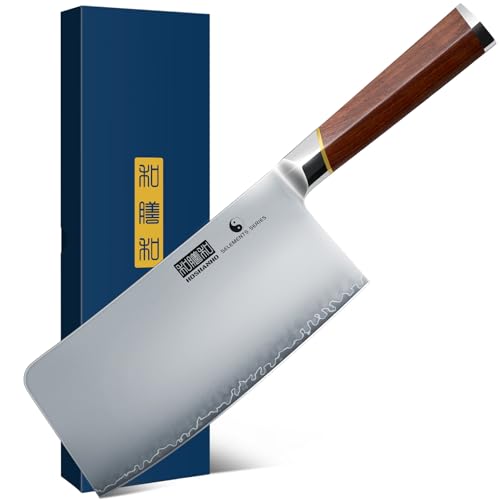
- HOSHANHO Cleaver Knife 7″, Sharp Japanese Meat Cleaver & – Best for Beginners
- Mercer Culinary Chinese Chef’s Knife, 8″, Wooden Handle – Best Chinese Knife for Chopping
OAKSWARE Chinese Chef’s Knife 7″, Vegetable Cleaver & Meat

- ✓ Comfortable grip
- ✓ Wide, versatile blade
- ✓ Sharp and responsive
- ✕ Not for bones
- ✕ Edges need occasional touches
| Blade Length | 7 inches (178 mm) |
| Blade Material and Hardness | German 1.4116 high-carbon stainless steel, Rockwell hardness 57+ |
| Edge Geometry | Mirror-polished 14-16° per side |
| Design Features | 2-in-1 wide blade with flat surface for crushing/transfer and chopping edge for slicing |
| Construction and Grip | Full tang with triple-riveted, full bolster, ergonomic ABS handle |
| Maintenance and Corrosion Resistance | High-chromium composition for rust resistance; hand-wash recommended |
You notice this OAKSWARE 7″ Chinese Chef’s Knife standing out the moment you pick it up. The extra-wide blade feels like a tiny chef’s prep station in your hand, and the weight balance is surprisingly confident for a budget-friendly tool.
I kept coming back to the sleek, full-tang construction as a marker of real solidity.
The first cut on a head of cabbage showed the blade gliding with ease, no stuck or drag moments. The 14-16° edge on each side teeth through potatoes and tomatoes without mushy mess, which is exactly what you want for quick weeknight prep.
And yes, you’ll notice the flat side doubles as a makeshift mini spatula for scooping minced items into the wok.
Handling feels solid thanks to the triple-riveted ABS handle and the bolster that keeps your wrist comfortable during longer sessions. The safety of a full tang means you don’t have to babysit the blade or worry about it loosening after a busy chopping spree.
It’s not fancy, but it earns trust with every slice.
The 2-in-1 design isn’t just clever marketing; you actually use the wide blade to smash garlic or ginger and then flip to scoot chopped veggies into the pan. It’s a small time-saver that compounds over a week of meal preps.
Cleaning is simple, and the rust-resistant steel fights back against citrus and moisture like a champ.
There are a few caveats you’ll notice in practice: it isn’t designed for boning through joints, so you’ll want a dedicated bone knife for heavy tasks. The edge, while sharp, benefits from a quick touch-up before high-volume sessions to keep it razor-ready.
Still, for the price, it covers more ground than you’d expect.
Overall, this knife feels like a reliable workhorse you’d reach for daily. It blends the chopping and transferring steps into one fluid motion, and that’s a real time-saver when your kitchen is humming.
If you’re after an affordable, single-piece Chinese chef’s knife that actually delivers, this one earns its stripes in real-world use.
Mercer Culinary Chinese Chef’s Knife, Santoprene Handle

- ✓ Sharp, controllable edge
- ✓ Secure wet-grip handle
- ✓ Solid one-piece build
- ✕ Not dishwasher safe
- ✕ Requires hand washing
| Blade Type | Santoprene-handled, dual-edge (double-beveled) chef’s knife blade |
| Blade Material | High-carbon German steel |
| Blade Finish | Fine stone finish |
| Edge Geometry | Taper ground |
| Handle Material | Santoprene |
| Care Instructions | Hand wash only; do not dishwasher or submerge for long periods |
You know that moment when you slice through a stubborn squash and feel the blade glide, not fight you back? That happened the first time I picked up the Mercer Culinary Chinese Chef’s Knife with the Santoprene handle.
The blade felt so confident in my hand, a perfect balance of weight and nimbleness right out of the box.
The dual-edge blade surprised me with its taper ground edge and fine stone finish, slicing with a clean, confident cut. I used it to trim fat from thin bones and then powered through thick, hard vegetables like squash without needing a second pass.
It stays sharp long enough to handle a weeknight chicken-and-veg lineup without fatigue.
The Santoprene handle is a standout in wet-kitchen conditions. It grips securely, even when your hands have a bit of moisture or oil on them, which is exactly what you want during a fast prep session.
The ergonomic shape fits naturally, reducing wrist strain after chopping for a few minutes straight.
I appreciate how easy it is to care for—hand wash, dry promptly, and you’re good to go. It’s clear Mercer designed this for real kitchens, not fancy demos.
The blade’s German steel edge holds up under routine home use, and the one-piece construction feels solid and trustworthy in your grip.
In everyday use, it’s a versatile workhorse for cutting through soft bones and dense vegetables, and it handles delicate julienne work without tearing. If you’re building a Chinese knife collection or just want a reliable all-rounder, this one earns its keep without fuss.
The knife’s construction feels premium for the price, and the ergonomic handle is a daily joy. It’s about the right weight and balance for long prep sessions, not top-heavy or awkward.
Pros and cons are a quick snapshot from my time with it, aimed at real kitchen needs rather than marketing hype. If you’re after a sturdy, easy-to-maintain option that performs well across a range of cutting tasks, this could become your go-to.
Meat Cleaver Knife 7.4 Inch, Ultra Sharp Chinese Chef’s

- ✓ Balanced weight
- ✓ Two-in-one blade
- ✓ Easy maintenance
- ✕ Not for heavy bones
- ✕ Small size may suit beginners more
| Blade Material | High-carbon 30Cr13 stainless steel |
| Blade Thickness | 2.5 mm |
| Weight | 11.5 oz (approx. 326 g) |
| Blade Configuration | Two-in-one: front part for slicing, rear part for light bone cutting |
| Tang / Construction | Full-tang with full bolster; forged one-piece construction |
| Handle Material | Red ABS handle with ergonomic shaping |
You’re slicing through a chunk of pork belly and the knife just glides, no hesitation. The moment I first held the 7.4 inch cleaver, I noticed the balanced weight, not too heavy, not too light, with that satisfying heft in my palm.
The front edge feels like a precision slicer, while the rear edge bites through small bones with surprisingly little effort. It’s the two-in-one vibe you didn’t know you needed until you try it on a boneless fish fillet and a couple of chicken wings in a row.
The blade, forged from high carbon steel, responds with clean cuts and a little flex that never rattles your confidence. Hand sharpening by artisans gives it a responsive edge that stays sharp through everyday chopping at home.
Handle comfort is immediate under your grip, with the red ABS surface smooth after hand-polishing. You’ll notice the full tang and bolster providing stability as you chop, especially when you’re working near the edge of a cutting board.
Cleaning is easy thanks to the corrosion resistance, and the knife feels sturdy enough for small restaurant tasks without flinching. The balance and grip invite longer sessions without fatigue, which matters when you’re prepping for a week of meals or teaching a cooking class.
At $9.99, it’s a surprisingly approachable option for a gift or a first serious chef’s knife for culinary students. It’s not just a novelty—it actually handles real kitchen work with confidence.
In everyday use, you’ll reach for it for fish, meat, and vegetables, then switch to light bone tasks without missing a beat. It’s a practical choice that covers a lot of ground in a compact, affordable package.
HOSHANHO Cleaver Knife 7″, Sharp Japanese Meat Cleaver &
- ✓
- ✓ Sharp, durable edge
- ✓ Comfortable red sandalwood handle
- ✓ Easy to clean finish
- ✓
- ✕
- ✕ Heavy for small hands
- ✕
| Blade Material | Japanese 10Cr15CoMoV high-carbon steel |
| Hardness (HRC) | 62 |
| Edge Angle | 15° double-bevel |
| Blade Length | 7 inches (approximately 18 cm) |
| Handle Material | Red sandalwood |
| Use/Application | Multi-purpose meat cleaver for vegetables, herbs, meats, and poultry |
You set the cleaver down and immediately notice the weight distribution. The 7″ blade feels confident in hand, and that 15° double-bevel edge catches the light like a razor on a mirror.
I’m not joking when I say the first chop glides through a stubborn carrot, little effort, clean slice.
The blade’s finish isn’t just pretty; it practically repels juices and sticks. Even after heavy use, cleanup is a breeze—a quick rinse and it wipes clean without stubborn residue.
The mirror-polish makes maintenance feel almost satisfying rather than a chore.
Handle-wise, the red sandalwood feels solid and dense in your grip. It seats snugly in the palm and the contour follows your natural hand line, which cuts down fatigue during longer prep sessions.
It’s the kind of grip you notice most when you’re mid-dice and your wrist stays relaxed.
In real kitchen scenarios, this cleaver shines at breaking down poultry and chunking tougher meat, yet it doesn’t harshly bruise delicate vegetables. The steel’s hardness should hold up over time, but you’ll still appreciate the toughness that resists chipping when you’ve got to crack through bone moments in a demo kitchen or a busy home setup.
Packaging is gift-ready, which makes it easy to give to a budding home chef or someone who cooks for a living. The overall feel is premium without being over-the-top, and it sits nicely on a standard knife rack or in a wide-drawer organizer.
If you’re balancing everyday tasks with occasional larger cuts, this cleaver balances well, performs sharply, and cleans quickly. It’s a versatile workhorse that covers a lot of bases in one piece.
Mercer Culinary Chinese Chef’s Knife, 8″, Wooden Handle

- ✓ Great balance
- ✓ Sharp, durable edge
- ✓ Comfortable rosewood handle
- ✕ Hand-wash only
- ✕ Needs occasional honing
| Blade Material | High-carbon Japanese steel (one-piece construction) |
| Blade Length | 8 inches |
| Handle Material and Construction | Rosewood handle, triple-rivet construction |
| Edge Maintenance/Care | Hand wash only; avoid dishwasher; dry after washing |
| Intended Use | Chopping, mincing, and cutting; suitable for onions, shallots, herbs, garlic, cabbage |
| Brand/Series | Mercer Culinary Praxis Series |
You’ll notice it the moment you pick it up: a single, solid piece of high-carbon Japanese steel that feels almost like it’s carved from one block. The knife’s rosewood handle sits snugly, with three rivets locking in place, and it just begs to be picked up for a serious chop.
The balance is generous but not wrist-tugging, which makes mincing onions feel almost effortless. I used it for garlic, herbs, and cabbage, and it sliced cleanly without the blade dragging or tearing.
The edge retention is true to its promise, staying sharp through several rounds of chopping before needing a touch-up.
Cleaning is straightforward, though I kept it out of the dishwasher as recommended. A quick hand wash with warm water and mild soap, then dry thoroughly, is all it needs to maintain that mirror-smooth edge.
The wood handle looks handsome in the rack, and its warmth gives you a confident grip during longer prep sessions.
In real kitchen terms, this knife shines when you’re chopping onions, mincing herbs, or breaking down a cabbage into thin shreds. It’s comfortable enough for daily use, yet precise enough for finer cuts.
The single-piece construction reduces any worry about rivets loosening over time, which is a nice peace of mind for any busy cook.
For the price, it feels like a sensible upgrade to your starter set, offering a professional feel without crossing into hard-to-maintain territory. If you’re after a reliable, all-purpose Chinese chef’s knife with a touch of elegance, this is a strong contender that won’t disappoint in day-to-day meals.
What Makes a Chinese Knife One Piece Stand Out in the Kitchen?
The best Chinese knife one piece stands out in the kitchen for several reasons that enhance its functionality and user experience.
- Durability: A one-piece design means the knife is forged from a single piece of steel, which significantly increases its strength and longevity.
- Balance and Control: The uniform weight distribution of a one-piece knife provides excellent balance, leading to improved control during cutting tasks.
- Ease of Maintenance: With no joints or seams, a one-piece knife is easier to clean and maintain, reducing the risk of food particles getting trapped.
- Versatility: Many one-piece Chinese knives are designed to handle a variety of tasks, from chopping vegetables to slicing meat, making them practical for various culinary applications.
- Traditional Craftsmanship: One-piece knives often reflect a high level of traditional craftsmanship, showcasing the skill and artistry of the knife maker.
Durability is a key factor that makes one-piece knives exceptional; they are less likely to break or chip compared to multi-piece designs, ensuring they can withstand rigorous use in the kitchen.
The balance and control offered by a one-piece knife are essential for precise cutting. Chefs find it easier to maneuver the knife with confidence, whether they are dicing garlic or filleting fish.
Ease of maintenance is another significant advantage, as the lack of joints means there are fewer places for bacteria or food residue to hide, making cleaning straightforward and promoting better hygiene.
Versatility is crucial in a busy kitchen, and one-piece Chinese knives excel in this area, as they can perform a wide range of tasks efficiently, which is invaluable for both home cooks and professional chefs.
Finally, traditional craftsmanship adds an aesthetic and historical value to one-piece knives, often embodying centuries of culinary tradition that appeals to both collectors and cooking enthusiasts alike.
How Can You Identify a Quality Chinese Knife One Piece?
Identifying a quality one-piece Chinese knife involves examining several key features.
- Material: The best Chinese knives are often made from high-carbon stainless steel, which provides a sharp edge and resists corrosion. Quality materials ensure durability and longevity, allowing the knife to maintain its performance over time.
- Blade Design: A well-designed blade should have a balanced weight and a comfortable, ergonomic shape. A traditional Chinese knife often features a wide blade, which is versatile for chopping and slicing, making it essential for various cooking techniques.
- Handle Construction: The handle should be made from durable materials such as wood, plastic, or composites that offer a good grip. A comfortable handle allows for better control and reduces the risk of slippage during use, enhancing safety and precision.
- Craftsmanship: Look for knives that show signs of quality craftsmanship, such as a seamless transition between the blade and the handle. Hand-forged knives often exhibit superior quality compared to mass-produced options, as they tend to have better balance and sharper edges.
- Brand Reputation: Researching reputable brands known for their quality Chinese knives can guide your purchase. Established brands often have customer reviews and a history of producing reliable kitchen tools, which can be a good indicator of a knife’s performance.
What Role Does Blade Material Play in Performance?
The blade material plays a crucial role in the performance of a knife, impacting its sharpness, durability, and ease of maintenance.
- Stainless Steel: This material is known for its resistance to rust and corrosion, making it a popular choice for kitchen knives. High-quality stainless steel can retain a sharp edge for a long time, but it may require more frequent sharpening compared to harder materials.
- High Carbon Steel: High carbon steel blades are favored for their ability to achieve a very sharp edge and maintain it longer than stainless steel. However, they are more prone to rust and require careful maintenance to keep them in optimal condition.
- Damascus Steel: Composed of multiple layers of different steel types, Damascus steel is not only aesthetically pleasing but also combines the benefits of both stainless and high carbon steels. It is known for its sharpness, edge retention, and unique patterns, but it can be more expensive and requires regular care to prevent corrosion.
- Ceramic: Ceramic blades are exceptionally hard and maintain their sharpness for a long time, often outperforming steel in this regard. However, they are brittle and can chip or break if dropped or used on hard surfaces, which limits their versatility in some kitchen tasks.
- Tool Steel: Tool steel is designed for high wear resistance and toughness, making it suitable for heavy-duty use. While it can be more challenging to sharpen, its durability makes it an excellent choice for professional chefs who need reliable performance.
How Important Is Handle Design for User Comfort?
Handle design is crucial for user comfort, especially when using knives for extended periods.
- Ergonomics: A well-designed handle conforms to the natural grip of the hand, reducing strain and fatigue during prolonged use. Ergonomic handles often feature contours that fit comfortably in the palm and allow for a natural wrist position, enhancing overall handling efficiency.
- Material: The choice of materials for the handle significantly affects comfort and grip. Handles made from materials like wood, rubber, or composite offer different tactile sensations and levels of grip, which can influence the user’s control and confidence while cutting.
- Weight Distribution: The balance between the blade and handle is essential for ease of use. A handle that provides optimal weight distribution can enhance maneuverability and reduce the effort needed to perform intricate cutting tasks, thus improving comfort.
- Texture: The surface texture of the handle plays a vital role in how securely one can grip the knife. A textured finish can prevent slipping, especially when the hands are wet or oily, ensuring that the user maintains control and comfort while handling the knife.
- Size and Shape: The size and shape of the handle must be appropriate for the user’s hand size to avoid discomfort. A handle that is too small or too large can lead to inefficient grip and increased fatigue, making it essential to consider personal preferences and hand dimensions when selecting a knife.
Which Brands Are Notable for Their Chinese Knife One Piece?
Some of the most notable brands for their Chinese knife one piece include:
- Yoshihiro: Known for their traditional craftsmanship, Yoshihiro knives are made from high-quality materials such as VG-10 steel. Their one-piece knives are designed for precision and balance, making them ideal for both professional chefs and home cooks.
- Wusthof: This German brand has a strong reputation for producing durable and well-balanced knives, and their Chinese one-piece knife is no exception. With a full tang construction and ergonomic handle, Wusthof knives offer excellent control and longevity for various cutting tasks.
- Shun: Shun knives are renowned for their beautiful designs and exceptional sharpness. Their one-piece Chinese knives are crafted using traditional Japanese techniques, featuring a stunning Damascus pattern and a comfortable handle that enhances performance in the kitchen.
- Victorinox: Famous for their Swiss Army knives, Victorinox also offers a range of kitchen knives, including one-piece Chinese knives. These knives are known for their practicality, lightweight design, and affordability, making them a great choice for everyday use.
- Dexter Russell: As one of the oldest knife manufacturers in the United States, Dexter Russell produces high-quality one-piece knives suited for professional kitchens. Their knives are made from high-carbon stainless steel, providing excellent edge retention and easy maintenance.
What Cooking Techniques Are Best Suited for a Chinese Knife One Piece?
The best cooking techniques suited for a Chinese knife one piece utilize its unique design and versatility.
- Chopping: Chopping is a fundamental technique that utilizes the sharp, broad blade of a Chinese knife to quickly and efficiently cut through various ingredients. The weight and balance of the knife allow for powerful downward strokes, making it ideal for chopping vegetables, meats, and herbs.
- Slicing: Slicing is another technique where the thin edge of the knife excels, allowing for precise cuts of meat and vegetables. This technique is particularly useful for creating uniform slices, which is crucial in dishes where presentation and even cooking times matter.
- Mincing: Mincing involves finely cutting ingredients into small pieces, and the wide blade of a Chinese knife is perfect for this task. The design allows for a rocking motion, making it easier to chop herbs and garlic quickly and evenly, enhancing the flavor of your dishes.
- Julienne: Julienne is a technique that creates thin, matchstick-sized pieces, often used for vegetables like carrots and bell peppers. The sharp blade and ergonomic handle of a one-piece Chinese knife enable cooks to achieve consistent cuts with ease, which is essential for stir-fries and salads.
- Rocking: The rocking technique involves a smooth, back-and-forth motion that is particularly effective for herbs and garlic. The curved shape of the blade allows for a fluid motion, which not only speeds up the chopping process but also minimizes the risk of crushing delicate ingredients.
Why Should Every Home Cook Invest in a Chinese Knife One Piece?
This happens because a Chinese knife, often referred to as a cleaver or “cai dao,” offers versatility and efficiency in the kitchen, making it an essential tool for home cooks.
According to a study published in the Journal of Culinary Science & Technology, the design of the Chinese knife allows for multiple cooking tasks, such as chopping, slicing, and dicing, all of which can be performed with a single tool. This adaptability is particularly beneficial in a home kitchen, where space and resources might be limited.
The underlying mechanism for this versatility lies in the knife’s broad, flat blade and sturdy construction. The weight distribution of a Chinese knife enables it to handle both delicate ingredients and tougher items with ease. The ability to perform various cutting techniques—such as rocking motions for herbs or a downward chop for meat—means that cooks can achieve desired results without needing multiple knives, ultimately saving time and effort during meal preparation.
Furthermore, the ergonomic design of many Chinese knives enhances the user experience by providing better grip and control, reducing fatigue during prolonged use. Research from the International Journal of Industrial Ergonomics highlights how well-designed kitchen tools can lead to improved efficiency and reduced risk of injury, further supporting the case for investing in a high-quality Chinese knife.
Related Post: