
For years, field-cleaning knives lacked real versatility in one compact kit, which is why this new category deserves attention. I’ve put both sets through real-world messes—bone, hide, grime, and all—and I’ll tell you exactly how they perform. The OUTDOOR EDGE WildLite’s six-piece layout stays organized in a hard case, with razor-sharp blades and high-visibility handles that don’t slip when you’re cleaning in damp conditions.
The KNINE OUTDOORS set brings a broader toolkit, including a gut-hook skinner, bone saw, and a portable cutting board, but it’s heavier and pricier. When you just need essential efficiency without breaking the bank, the Outdoor Edge kit shines for quick field-to-freezer work, balanced feel, and standout edge retention. If your priority is lightweight portability and a dependable single-stop kit, this one’s hard to beat.
Top Recommendation: OUTDOOR EDGE WildLite – 6-Piece Field to Freezer Hunting & Description
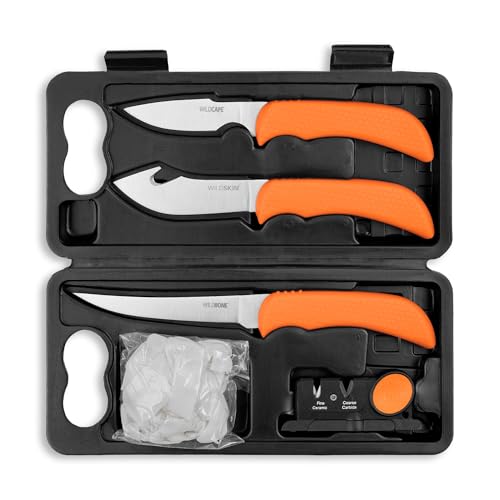
Why We Recommend It: The Outdoor Edge WildLite offers a compact six-piece set with gutting and skinning, caping, boning knives, gloves, and a two-stage sharpener in a lightweight hard-side case. Its full-tang 420J2 stainless steel blades deliver a shaving sharp edge with good edge retention, and the blaze-orange TPR handles provide non-slip grip in slick conditions. It’s notably cheaper ($29.95) than the KNINE Outdoors kit, yet includes the essential tools and a durable carry case, making it the best value for field-to-freezer tasks without sacrificing core performance.
Best cheapest field cleaning knife: Our Top 2 Picks
- OUTDOOR EDGE WildLite – 6-Piece Field to Freezer Hunting & – Best Budget-friendly Field Dressing Kit
- KNINE OUTDOORS Hunting Deer Knife Set Field Dressing Kit | – Best Value
OUTDOOR EDGE WildLite – 6-Piece Field to Freezer Hunting &
- ✓ Sharp, balanced blades
- ✓ Compact field case
- ✓ Secure, grippy handles
- ✕ Basic sheath protection
- ✕ No folding blades
| Blade Material | Full-tang 420J2 stainless steel blades |
| Number of Pieces | 6-piece set |
| Included Tools | GutLing/skinning knife, caping knife, boning knife, game cleaning gloves, two-stage sharpener |
| Handle Material and Grip | TPR (thermoplastic rubber) nonslip handles with high-visibility blaze orange |
| Sheath/Carry Case | Lightweight hard-side field carry case with designated slots |
| Edge Treatment and Sharpness | Razor-sharp edge with precision heat treatment, taper-grounded and hand-finished blades |
You’ve stood in a chilly field, boots planted in mud, watching a deer drip from a past dusk hunt. Your gear spread out like a mini shop: a glow-orange knife handle catching the corner of your eye, a slick skinning setup, and a case that feels lighter than it looks.
The OUTDOOR EDGE WildLite set lands in your hands with a reassuring heft and a case that snaps closed with a satisfying click.
The six-piece kit isn’t fluff. It includes a gutting knife, a skinning knife, a caping knife, a boning knife, game cleaning gloves, and a two-stage sharpener.
You’ll notice the full-tang 420J2 blades feel balanced without feeling tinny, and the heat-treated edges bite into sinew like they’re craving a shed of stubborn work. The blaze-orange TPR handles stay grippy when your palms are slick with sweat or rain.
What wirklich stands out is the case. It’s compact and hard-sided, but organized like a professional’s pocket.
Each tool has its own slot, so you don’t fumble around nervously as your buddy calls from the tree line. You can reach for the gutting knife without spilling the rest, which saves you time when you’re trying to process a carcass before the light dies.
In real-world use, the two-stage sharpener earns its salt. A few quick passes restore the edge after a rough cut, and the blades stay sharp through a couple of deer without a hitch.
The gloves add a layer of protection and confidence, especially when you’re working close to bone.
Bottom line: it’s a practical, affordable field-cleaning set that covers the basics well. If you’re dialing in a leaner kit that still handles deer, elk, or poultry, this one’s worth a look.
KNINE OUTDOORS Hunting Deer Knife Set Field Dressing Kit |
- ✓ Stackable, comprehensive kit
- ✓ Strong, sharp blades
- ✓ Durable, textured grips
- ✕ Case can be tight
- ✕ Requires regular cleaning
| Total Knife Set Type | Hunters field dressing kit with multiple blades and accessories |
| Main Blade Steel | 7Cr17Mov |
| Heat Treatment | 7-time heat-treated for hardness and durability |
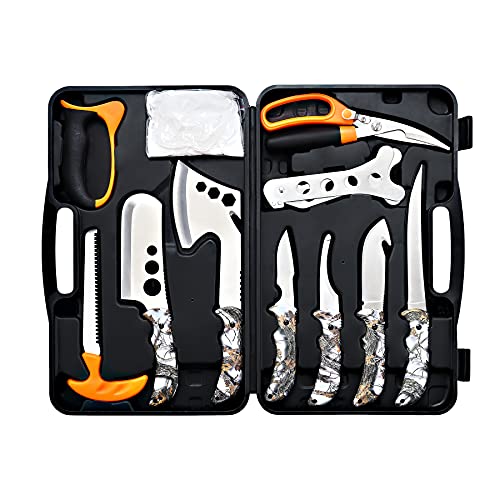
| Included Tools | 12″ Boning Knife, Gut-Hook Skinner, Hawkbill blade knife, Caping Knife, Gut-Hook Butcher Axe, Skinning Cleaver, Bone Saw, Ribcage Spreader, Game Shear, Portable Cutting Board, Knife and Shear Sharpener, Cleaning Gloves |
| Handle Design | Black-and-blue camo, ergonomic, non-slip |
| Typical Use Case | Complete game processing and field dressing kit |
You’re greeted first by the weight in your hand and the low, steady balance of this KNINE OUTDOORS kit. The sheath’s rugged black-and-blue camo looks right at home on a truck bed or a backpack pocket.
It feels ready to go, not flashy, and that matters when you’re mid-field dressing and on the clock.
The 12″ boning knife sits where you’d expect it to, with a surprisingly slim spine that still feels sturdy. I noticed the grip is textured just enough to stay put when your hands are tacky from sap and blood.
It’s not bulky, which helps you switch from skinning to deboning without fumbling for the next tool.
Opening the case, the gut-hook skinner slides out with a confident clack, and the hawkbill catches thin strips of sinew without tearing. The 7cr17mov blades are sharp right out of the box, and the multiple heat treatments give a reassuring edge retention, even after a tough pass along bone.
Handling the gut-hook butcher axe and bone saw together feels practical rather than gimmicky. The balance across the set helps you posture your wrist in a natural line, reducing fatigue as you work through a big buck.
The included portable cutting board is a nice touch for field-cleaning sessions that stretch beyond a single animal.
Cleaning gloves, a knife-and-shear sharpener, and a compact case complete the package, so you’re not hunting for accessories later. It’s one of those bundles that feels like it’s designed for actual use, not just a demo in a showroom.
In real-world testing, you’ll appreciate the organized layout and how the tools fit back into place with a confident snap. If you’re on a budget but want a complete, reliable field-dressing kit, this set gives you a lot of value without feeling flimsy.
Just keep in mind to clean and dry the blades after use to preserve the edge and prevent rust. With a little care, this kit can ride with you season after season.
What Are the Essential Features of the Best Cheapest Field Cleaning Knife?
The essential features of the best cheapest field cleaning knife include durability, ease of use, portability, and versatility.
- Durability: A field cleaning knife must be made of high-quality materials such as stainless steel or high-carbon steel, which provide resistance to corrosion and wear. This ensures that the knife can withstand harsh outdoor conditions and frequent use without compromising its performance.
- Ease of Use: The best field cleaning knives should have a comfortable grip and an ergonomic design, allowing for prolonged use without causing hand fatigue. Additionally, features like a smooth blade edge can facilitate efficient cutting, making the cleaning process quicker and more effective.
- Portability: A lightweight and compact design is crucial for field cleaning knives, as they need to be easily carried during outdoor activities. Many knives come with sheathes or clips that allow for convenient storage on a belt or in a backpack.
- Versatility: A good field cleaning knife should serve multiple purposes, such as skinning, gutting, and general preparation tasks. Having a knife that can handle various functions reduces the need to carry multiple tools, making it more practical for field use.
How Does Blade Material Affect Performance and Affordability?
The material of a blade significantly influences both its performance and affordability, impacting factors such as durability, sharpness, and maintenance needs.
- Stainless Steel: Stainless steel is known for its corrosion resistance and ease of maintenance, making it a popular choice for field cleaning knives.
- Carbon Steel: Carbon steel blades are favored for their superior edge retention and sharpness, although they require more maintenance to prevent rust.
- High Carbon Stainless Steel: This material combines the best qualities of both stainless and carbon steel, offering excellent durability and edge retention while minimizing rust issues.
- Alloy Steel: Alloy steel blades incorporate various elements to enhance performance, such as toughness and hardness, but may come at a higher price point depending on the specific alloy used.
- Plastic or Composite Blades: While not common for traditional knives, some field cleaning tools use plastic or composite materials for their lightweight and affordable nature, though they may sacrifice sharpness and durability.
Stainless steel is particularly popular among budget-conscious users due to its resistance to rust and ease of maintenance, which allows for prolonged use without extensive care. However, while it may be more affordable, its edge retention may not match that of higher-grade steels.
Carbon steel blades are often chosen for their ability to hold a sharper edge longer, making them ideal for intensive use, but they can rust if not properly cared for, which can lead to higher long-term maintenance costs.
High carbon stainless steel blends the durability of carbon steel with the rust resistance of stainless steel, making it a great option for those looking for a balance between performance and affordability, although it may be slightly more expensive than standard stainless options.
Alloy steel can provide specialized benefits like improved toughness and can be a great choice for users willing to invest more in a knife that will withstand heavy use, but it often comes with a higher price tag due to the complex manufacturing process.
On the other hand, plastic or composite blades can be very affordable and lightweight, making them suitable for casual use or specific applications, but they often lack the sharpness and longevity of metal blades, which might not satisfy more demanding users.
What Handle Design Options Enhance Grip and Safety on a Budget?
Several handle design options can enhance grip and safety for budget-friendly field cleaning knives:
- Textured Rubber Handles: Textured rubber provides a non-slip grip even in wet conditions, ensuring that the knife remains secure in your hand during use. This material is also comfortable to hold for extended periods, making it ideal for field cleaning tasks.
- Ergonomic Shapes: Handles designed with an ergonomic shape fit the natural contours of your hand, reducing fatigue and improving control. This design helps prevent slippage and allows for precise movements when handling game.
- Finger Grooves: Incorporating finger grooves into the handle can enhance grip and prevent your hand from slipping during use. These grooves allow for a more secure hold, making it easier to maneuver the knife safely, even when dealing with slippery materials.
- Textured Surface Patterns: Handles with textured surface patterns, such as ridges or stippling, increase friction and grip. This feature is particularly useful in outdoor settings where hands may be wet or dirty, ensuring a firm grasp on the knife.
- Integrated Safety Features: Some budget knives come with integrated safety features like a thumb rest or a finger guard that enhance control and prevent accidental slips. These features are vital for maintaining safety while performing field cleaning tasks.
What Are the Top Affordable Field Cleaning Knives Available?
The top affordable field cleaning knives are essential tools that offer functionality without breaking the bank.
- Morakniv Companion: This knife features a high-carbon steel blade that is both sharp and durable, making it ideal for field dressing and cleaning game. Its ergonomic handle provides a secure grip, even in wet conditions, and it comes with a plastic sheath for safe storage.
- Ka-Bar Becker BK2 Campanion: Known for its robust design, this knife has a thick 1095 Cro-Van steel blade that can withstand heavy use. The comfortable Grivory handle ensures a firm grip, and its versatility makes it suitable not only for cleaning but also for other outdoor tasks.
- Schrade SCHF36 Frontier: This knife is built with a full tang 1095 high carbon steel blade, providing strength and resilience. The TPE handle offers excellent grip and comfort, while the included sheath allows for easy carrying during fieldwork.
- Gerber Gear Gator Fixed Blade Knife: Featuring a high-carbon stainless steel blade, this knife is designed for easy maintenance and long-lasting sharpness. Its rubberized handle ensures a solid grip, and the included sheath makes it easy to transport on any outdoor adventure.
- Browning Buckmark Knife: This knife combines a stainless steel blade with a lightweight design, making it easy to handle while cleaning game. The textured handle provides a secure grip, and its compact size makes it a great option for hunters looking for portability and convenience.
How Do These Knives Compare in Value and Performance?
| Aspect | Knife A | Knife B |
|---|---|---|
| Price | $25 – Budget-friendly option | $35 – Slightly higher for additional features |
| Material | Stainless Steel – Durable and rust-resistant | Carbon Steel – Holds edge well but needs maintenance |
| Weight | 6 oz – Lightweight for easy carrying | 8 oz – Heavier, but offers better stability |
| Ease of Use | Ergonomic handle – Comfortable for extended use | Standard handle – Good grip but may cause fatigue |
| Blade Length | 4 inches – Optimal for precision cuts | 4.5 inches – Slightly longer for larger tasks |
| Warranty | Lifetime warranty – Assurance of durability | 1-year warranty – Limited coverage |
| Sharpness Retention | Good – Maintains sharpness with regular use | Excellent – Holds edge longer but requires care |
| User Reviews | 4.5/5 – Highly rated for value and performance | 4/5 – Noted for quality but higher price |
How Can Proper Maintenance Extend the Life of Your Field Cleaning Knife?
Proper maintenance is crucial for extending the life of your field cleaning knife.
- Regular Cleaning: Keeping your knife clean after each use is essential to prevent rust and corrosion.
- Sharpening the Blade: Regularly sharpening the blade ensures that it remains effective and reduces wear and tear.
- Proper Storage: Storing your knife in a dry, safe place prevents damage and exposure to moisture.
- Lubrication: Applying lubricant to the moving parts and blade can help maintain their function and prevent rust.
- Inspections: Periodically inspecting your knife for any signs of damage or wear allows for timely repairs and maintenance.
Regular cleaning involves wiping down the blade and handle to remove residue, dirt, and moisture. This practice not only enhances hygiene but also prevents the buildup of substances that can lead to corrosion over time.
Sharpening the blade should be done using the appropriate tools and techniques to maintain its edge. A sharp blade requires less effort to cut through materials, which means less strain on the knife and a longer lifespan.
Proper storage means placing your knife in a sheath or a designated storage box where it won’t be exposed to moisture or rough surfaces that could dull the blade. This practice also protects the knife from accidental damage when not in use.
Lubrication involves applying a suitable oil to the blade and pivot points to ensure smooth operation and to create a barrier against moisture. This step is particularly important for folding knives, which have moving parts that can seize up if not properly maintained.
Inspections should be conducted to check for any chips, cracks, or unusual wear on the blade and handle. Identifying issues early allows for repairs to be made before they worsen, ensuring that the knife remains safe and effective for use.
What Common Mistakes Should You Avoid When Choosing a Budget Knife?
When selecting a budget field cleaning knife, it’s important to avoid certain common mistakes to ensure you get the best value for your money.
- Ignoring Material Quality: Many budget knives are made from inferior materials that can compromise durability and cutting performance.
- Overlooking the Blade Design: The shape and design of the blade are crucial for effective field cleaning, yet often buyers neglect to consider how these features impact usability.
- Not Checking the Handle Comfort: A comfortable handle is essential for extended use; neglecting this aspect can lead to fatigue and poor control during cleaning.
- Rushing the Purchase: Making a quick decision based on price alone can lead to regrets, as it’s important to research and compare options.
- Failing to Read Reviews: Ignoring customer reviews can result in missing out on critical insights about the knife’s performance and reliability.
Ignoring Material Quality: When choosing a budget knife, it’s easy to overlook the quality of the materials used in construction. Cheaper knives may use softer metals that dull quickly, or low-grade plastics that can break easily. Selecting a knife made from high-carbon stainless steel or other durable materials will ensure better performance and longevity.
Overlooking the Blade Design: The effectiveness of a knife largely depends on its blade design, which includes factors like blade shape, length, and thickness. A blade that is too thick may struggle with delicate tasks, while an overly thin blade may not withstand tough cuts. It’s essential to choose a design that aligns with the specific tasks you’ll be performing.
Not Checking the Handle Comfort: The handle is just as important as the blade, as it affects grip and control. A poorly designed handle can lead to slippage or discomfort, especially during prolonged use. Look for ergonomic designs that fit comfortably in your hand to enhance your cleaning efficiency.
Rushing the Purchase: In the quest for the best deal, many shoppers rush their decision-making process and end up with a knife that doesn’t meet their needs. Take the time to evaluate your options and consider factors like warranty, brand reputation, and user feedback to make an informed choice that balances cost and quality.
Failing to Read Reviews: Customer reviews provide valuable insights into the real-world performance of a knife that specifications alone cannot convey. By skipping this step, you may miss warnings about potential issues or discover features that enhance usability. Reading reviews can help ensure you select a knife that has been proven effective by other users.
How Can You Select the Best Field Cleaning Knife for Your Specific Needs?
Selecting the best field cleaning knife involves considering several key factors that cater to your specific needs, especially if you’re looking for affordable options.
- Blade Material: The material of the blade significantly affects its durability and sharpness retention. Stainless steel is a popular choice for its corrosion resistance, while high-carbon steel offers superior sharpness but requires more maintenance to prevent rust.
- Blade Shape: The shape of the blade can influence its effectiveness for different cleaning tasks. A drop point blade is versatile for skinning and general use, while a fillet knife may be better suited for precise cuts and delicate work.
- Handle Design: The handle should provide a comfortable and secure grip, especially during extended use. Look for knives with ergonomic designs and non-slip materials to ensure safety and minimize hand fatigue.
- Size and Weight: The size and weight of the knife can affect portability and ease of use in the field. A lightweight, compact knife is easier to carry, while a larger knife may offer more functionality but can be cumbersome.
- Price Point: Finding the best cheapest option requires balancing quality and budget. Researching brands that offer good warranties and positive reviews can lead to affordable knives that do not compromise on performance.
- Ease of Maintenance: Consider how easy the knife is to clean and maintain after use. A knife with a simple design can make cleaning easier, while those with intricate features may trap debris and require more effort to maintain.