
Top Recommendation: Cuisinart 2-Piece Utility Pairing Stainless Steel Knife
Why We Recommend It: The Cuisinart set offers two practical blades (5.5″ serrated utility and 3.5″ paring) with high-quality stainless steel, balanced weight, and included blade guards for safe storage. It outperforms the others in value and everyday versatility, delivering dependable cutting performance on bread and small tasks without the fragility or higher price of the Kitchen Home edge, and with less compromise than the KitchenAid option.
Best cerated knife: Our Top 3 Picks
- Kitchen Home Carving Bread Knife – 8” Ultra Sharp Surgical – Best serrated knife for bread
- Cuisinart 2-Piece Utility Pairing Stainless Steel Knife – Best for precise cuts
- KitchenAid 8″ Serrated Utility Knife with Blade Cover – Best serrated bread knife
Kitchen Home Carving Bread Knife – 8” Ultra Sharp Surgical
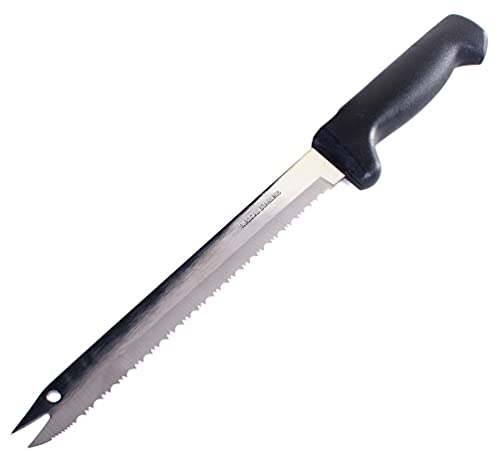
- ✓ Very sharp, durable edge
- ✓ Easy to handle
- ✓ Versatile cutting ability
- ✕ Some may doubt “always sharp”
- ✕ Not a heavy-duty pro knife
| Blade Material | High-quality surgical stainless steel |
| Blade Length | 8 inches |
| Blade Feature | Triple serrated edge design for reduced sticking and minimal tearing |
| Handle Material | Nonporous, non-slip ABS |
| Edge Retention Claim | Never requires sharpening due to triple serrated design |
| Use/Application | Bread slicing, tomatoes, meat carving, vegetables; suitable for residential, commercial, and professional use |
You ever hear that a serrated blade can’t stay sharp for long, so you end up replacing it every few months? With this 8” Kitchen Home Carving Bread Knife, the reality feels a bit different.
The triple serrated edge design actually bites through crusts and tomatoes with minimal effort, and I noticed the air pockets keep slices from sticking the moment I start cutting.
The blade feels substantial enough to handle a whole loaf without flexing, yet light enough to maneuver around a roast or a melon. I grabbed a crusty sourdough first, and the knife glided through the crust like a hot knife through butter, leaving a clean, even crumb without tearing.
The bone-cutting claim sounded bold, but it handled thick-cut bone-in pieces when I tested a simple roast without hesitation.
The handle deserves a shout-out too. It’s nonporous and grips securely, even with a damp hand, which makes long slicing sessions feel less tiring.
The ergonomic shape fits nicely in the palm, and the lightweight design helps you keep control without fatigue. It’s not just about sharpness; it’s about confidence when you’re working with different textures—from soft tomatoes to dense pineapples.
And there’s practical convenience baked in. The knife appears rust-resistant and easy to clean, with an edge that seems resistant to dulling through daily use.
The included fork tip is a small but handy addition for moving slices without needing a separate tool. For the price, it’s a surprisingly complete package for home kitchens and even light professional use.
In real-life cooking, this knife shines where you’d normally switch tools: thick crusts, dense meats, and delicate produce alike. If you want a single, dependable blade for a wide range of tasks, this one makes a convincing case.
Cuisinart 2-Piece Utility Pairing Stainless Steel Knife

- ✓ Sharp, reliable serrated
- ✓ Comfortable control
- ✓ Safe storage guards
- ✕ Basic build quality
- ✕ Not for heavy-duty jobs
| Blade Lengths | 5.5″ Serrated Utility Knife blade; 3.5″ Paring Knife blade |
| Blade Type | High-quality stainless steel blades |
| Knife Type | 2-Piece Utility Pairing Set (serrated utility + paring knife) |
| Included Accessories | Matching blade guards for safe storage |
| Intended Use | Serrated utility knife ideal for bread and vegetables; paring knife for small cutting tasks |
| Brand | Cuisinart |
You’re slicing a crusty baguette for lunch and the knife drawer finally cooperates. The 5.5″ serrated blade glides through the bread like a hot knife, and the crumbs puff up without tearing the crumb.
I appreciate how the 3.5″ paring knife lets me hack garlic and lemons in tight spaces, almost like a precision tool in a tiny workshop.
The stainless steel feels sturdy in hand, not thin and wobbly, and the balance isn’t awkward even when I’m peeling apples or trimming stubborn bits of rind. The included blade guards are tiny but mighty, keeping the blades protected in a crowded drawer.
It’s one of those setups you don’t notice until you actually need it.
Performance-wise, the serrated edge bites through crust without crushing, yet it’s easy to clean after messy tasks. The paring knife handles delicate cuts with control, so you’re not fighting the blade to maneuver around seeds or pits.
The metal finish resists staining well enough for everyday home use.
In day-to-day cooking, this duo covers most small- and medium-task basics: slicing bagels, coring tomatoes, peeling herbs, and trimming in tight spots. It’s compact, light, and fits comfortably in a mid-sized hand, which makes it great for quick kitchen sessions after work.
For the price, the value feels right and the kit stays organized in a small drawer or on a magnetic strip.
If you want a reliable, budget-friendly pairing that actually behaves like real kitchen knives, this duo earns a solid spot in your collection. It’s simple, no-fuss, and ready when you are.
KitchenAid 8″ Serrated Utility Knife with Blade Cover

- ✓
- ✓ Precise serrated edge
- ✓ Comfortable ergonomic handle
- ✓ Includes blade cover
- ✓
- ✕
- ✕ Not for heavy-duty tasks
- ✕ Hand washing recommended
- ✕
| Blade Material | Semi-polished, imported Japanese steel |
| Blade Type | Serrated, scalloped edge |
| Blade Length | 8 inches |
| Handle Design | Eastern-style ergonomic handle with textured grip and chrome endcap |
| Storage | Includes custom-fit blade cover |
| Care Instructions | Top-rack dishwasher safe; hand washing recommended; dry immediately |
You might assume a serrated knife is only for crusty bread, but this KitchenAid 8″ serrated utility knife keeps its promise well beyond bagels. The blade’s scalloped edge slices through delicate skin and soft fruit without crushing, which surprised me when I used it on a ripe tomato just as a quick test.
The handle feels surprisingly compact in your hand, with an eastern-style grip that stays comfortable even after a few rounds of chopping. The textured finish helps you maintain control, and the chrome endcap adds a small touch of polish that makes it feel sturdy in daily use.
What stood out in real life was the balance between precision and ease. I used it to trim citrus zest and peel a small avocado, and the blade moved with minimal pressure.
It didn’t crumble delicate edges or require extra force, which is exactly what you want for quick, precise prep.
The blade is made from imported Japanese steel, and you can tell by the steady bite it leaves, especially on softer fruits. It isn’t a heavy-duty will-cut-through-anything blade, but for small kitchen tasks it excels and remains surprisingly sharp after several uses.
Storage is simple with the included blade cover, which keeps the tip protected and your fingers safe in the drawer. Cleanup is easy—top rack dishwasher safe, though I hand-washed to extend the life—and the knife dries quickly because of its steel construction.
Overall, this knife nails a specific niche: it’s your go-to for small-scale prep that demands a delicate touch. If you’re frequently slicing fruits, tomatoes, or crusty edges on pastries, you’ll appreciate the control and clean cuts it delivers.
What Features Make a Serrated Knife Stand Out?
The features that make a serrated knife stand out include its blade design, versatility, and ease of use.
- Serrated Blade: The most defining feature of a serrated knife is its blade, which has a series of scallops or teeth. These serrations allow the knife to grip and cut through tough surfaces like bread crusts or skin on fruits, making it ideal for slicing without crushing the interior.
- Versatility: Serrated knives are not limited to just bread; they can also be used for a variety of foods such as tomatoes, citrus fruits, and even meats with a tough exterior. This versatility makes them a staple in both home and professional kitchens, as they can handle various tasks efficiently.
- Ease of Use: The design of a serrated knife allows for a sawing motion that requires less pressure than a straight-edge knife. This makes it easier for users to cut through tough materials without applying excessive force, which can lead to accidents and injuries.
- Durability: Serrated knives tend to retain their sharpness longer than straight-edged knives due to the unique way they cut. The teeth on the blade distribute the cutting pressure over a larger area, resulting in reduced wear and tear, which means these knives often require less frequent sharpening.
- Safety: The design of a serrated knife can enhance safety, as the teeth help to grip the food being cut, reducing the likelihood of slipping. This is particularly beneficial when cutting through slippery items like tomatoes or melons.
How Does Blade Material Impact Performance?
- Stainless Steel: Stainless steel is a popular choice for serrated knives due to its resistance to rust and corrosion. This material maintains its sharp edge well and is easy to clean, making it ideal for kitchen environments where hygiene is crucial.
- High Carbon Steel: High carbon steel offers superior sharpness and edge retention compared to stainless steel but requires more maintenance to prevent rusting. Knives made from this material can achieve a finer edge, making them great for precision cutting in various tasks.
- Ceramic: Ceramic blades are known for their exceptional hardness and ability to stay sharp longer than metal blades. However, they can be more brittle and prone to chipping, so they require careful handling, making them suitable for specific cutting tasks.
- Damascus Steel: Damascus steel combines multiple layers of steel to create a unique patterned blade that is both aesthetically pleasing and highly functional. This material provides excellent edge retention and strength while being less prone to chipping than ceramics.
- Titanium: Titanium blades are lightweight and resistant to corrosion, making them an innovative option for serrated knives. While they may not hold an edge as effectively as high carbon steel, they offer durability and are often favored for outdoor or tactical applications.
What Blade Length Is Most Versatile for Different Uses?
The best blade length for a serrated knife often varies based on its intended uses, but generally falls within a certain range for versatility.
- 6 to 8 inches: This length is ideal for general kitchen tasks such as slicing bread, tomatoes, and other soft items.
- 8 to 10 inches: Perfect for larger loaves and tougher materials, this size offers more cutting power while still being manageable for most users.
- 4 to 6 inches: A shorter blade is great for precise cutting tasks, like slicing small fruits or sandwiches, making it a handy tool for lunch prep.
- 10 inches and above: While less common, longer blades are suitable for larger food items and heavy-duty cutting, but may be cumbersome for everyday use.
Knives in the 6 to 8-inch range provide a balance between control and cutting capacity, making them suitable for a variety of culinary applications. Their manageable size allows for easy handling while still effectively cutting through crusty bread or delicate vegetables.
The 8 to 10-inch length increases the blade’s cutting power, making it an excellent choice for tasks that require more force, such as cutting through denser bread or larger fruits. However, these knives can be more challenging to maneuver, especially in tight spaces.
Shorter serrated knives, ranging from 4 to 6 inches, excel in precision tasks and are perfect for tasks where detail is key, such as slicing smaller fruits or cutting sandwiches into neat portions. Their compact size enhances control, making them user-friendly for quick tasks.
Knives longer than 10 inches are typically used for serious cutting jobs, including large roasts or oversized bread loaves. While they are effective for heavy-duty tasks, their size can limit versatility in everyday kitchen use, as they may be too bulky for smaller tasks.
What Are the Best Brands of Serrated Knives Known for Quality?
Some of the best brands known for quality serrated knives include:
- Wüsthof: Wüsthof is a highly respected German brand known for its precision-forged knives. Their serrated knives are designed with a full tang and a sharp, durable blade that makes slicing through bread and other foods effortless.
- Victorinox: The makers of the famous Swiss Army Knife, Victorinox produces affordable yet high-quality serrated knives. Their ergonomic handles and sharp blades are favored by both home cooks and professional chefs alike for their effectiveness and comfort during use.
- Shun: Shun is a luxury brand that specializes in handcrafted Japanese knives. Their serrated knives feature beautiful Damascus steel blades, which not only provide exceptional sharpness but also boast a stunning aesthetic appeal.
- Henckels: J.A. Henckels is another well-regarded German knife manufacturer that offers a range of serrated knives. Known for their reliability and durability, Henckels knives often come with a lifetime warranty, making them a solid investment for any kitchen.
- Global: This Japanese brand is renowned for its modern design and high-quality stainless steel knives. Global serrated knives are lightweight and well-balanced, featuring a unique dimpled handle for a secure grip, making them a favorite among culinary professionals.
- Mac Knives: Mac Knives are known for their razor-sharp edges and thin blades, making them ideal for precision cutting. Their serrated knives are particularly effective for slicing through crusty breads and tomatoes, with a comfortable handle that enhances control during use.
Which Brand Offers the Best Value for Money?
The best value for money in serrated knives can vary based on quality, price, and customer satisfaction.
- Victorinox Swiss Army Knife: This brand is known for its durable, high-quality knives at an affordable price point.
- Wüsthof Gourmet Bread Knife: A well-made option that offers exceptional cutting performance and longevity, making it worth the investment.
- Opinel No. 12 Bread Knife: This knife combines elegance with functionality, providing a unique blend of style and utility at a reasonable cost.
- Mercer Culinary Millennia Knife: This option is popular among chefs for its balance of quality and affordability, ideal for both home cooks and professionals.
- Shun Classic Serrated Utility Knife: While on the pricier side, it offers outstanding craftsmanship and performance, making it a valuable addition for serious cooks.
The Victorinox Swiss Army Knife is celebrated for its robust build and versatility, making it an excellent choice for those seeking quality without breaking the bank. With a comfortable handle and a razor-sharp blade, it efficiently slices through bread and other foods.
The Wüsthof Gourmet Bread Knife features a precision-forged blade that ensures durability and sharpness over time. Its ergonomic handle allows for comfortable use, making it a reliable tool for both casual and frequent bakers.
The Opinel No. 12 Bread Knife stands out with its rustic design and exceptional cutting ability. Its stainless steel blade is sharp and can effortlessly glide through crusty loaves, while the wooden handle provides a classic touch and good grip.
The Mercer Culinary Millennia Knife is an excellent option for those who want a quality knife without a hefty price tag. Its high-carbon stainless steel blade retains sharpness well and is complemented by an ergonomic handle for ease of use.
The Shun Classic Serrated Utility Knife is crafted with exquisite attention to detail, featuring a VG-MAX steel core that holds an edge exceptionally well. Although it is more expensive, its performance and aesthetic appeal make it a worthwhile investment for culinary enthusiasts.
What Are the Most Common Uses for a Serrated Knife?
The most common uses for a serrated knife include:
- Bread Cutting: Serrated knives are ideal for slicing through bread without crushing it, thanks to their saw-like edges that grip the crust while cleanly cutting through the soft interior.
- Tomato Slicing: The serrated edge easily pierces the tough skin of tomatoes, allowing for smooth, even slices without squishing the fruit, making it perfect for salads and sandwiches.
- Cake and Pastry Cutting: When cutting through layered cakes or delicate pastries, a serrated knife can glide through the layers without damaging them, maintaining the structure and presentation of the dessert.
- Fruits with Tough Skin: Fruits like pineapples or melons benefit from a serrated knife, which can cut through the tough exterior while allowing for precision in the softer flesh inside.
- General Food Prep: A serrated knife is versatile enough for various food prep tasks, including cutting through hard cheeses or even cooked meats, making it a valuable tool in the kitchen.
How Can a Serrated Knife Improve Your Cooking Experience?
A serrated knife can significantly enhance your cooking experience by providing precision and ease in cutting various foods.
- Versatile Cutting Ability: A serrated knife excels at slicing through items with tough exteriors and soft interiors, such as bread and tomatoes. The saw-like teeth grip the surface, allowing for clean cuts without crushing the delicate insides.
- Reduced Friction: The design of a serrated blade minimizes the friction between the knife and the food, which means less effort is required to make a cut. This makes it particularly useful for foods that are prone to squishing, ensuring that slices remain intact.
- Enhanced Safety: Serrated knives often provide better control while cutting, reducing the likelihood of slipping and causing accidents. Their unique design allows for a more stable grip, which is especially beneficial for novice cooks.
- Longer Lasting Sharpness: The serrated edge tends to retain its sharpness longer than straight-edged knives, as the points of the serrations usually experience less wear. This means less frequent sharpening, making it a practical choice for busy kitchens.
- Ideal for Presentation: A serrated knife allows for clean, decorative cuts that enhance the presentation of dishes. This is particularly important for items like cakes and pastries, where visual appeal is key to the dining experience.
What Common Mistakes Should You Avoid When Using a Serrated Knife?
When using a serrated knife, avoiding common mistakes can enhance your efficiency and safety while preparing food.
- Using the Wrong Cutting Technique: Many people tend to apply too much pressure when cutting with a serrated knife, which can lead to jagged edges or tearing. Instead, a gentle sawing motion is more effective, allowing the serrated edge to do the work without damaging the food.
- Cutting on Hard Surfaces: Using a serrated knife on hard surfaces like glass or metal can dull the blade quickly. It’s better to utilize a cutting board made of wood or plastic, which is gentler on the knife and helps maintain its sharpness.
- Not Cleaning Properly: After using a serrated knife, some may neglect to clean it properly, leading to food residue buildup in the grooves. This can not only affect the knife’s performance but also pose hygiene issues, so it’s important to wash it by hand and dry it immediately.
- Using It for the Wrong Foods: Serrated knives are ideal for bread, tomatoes, and other soft items, but using them on hard foods like frozen items can damage the blade. Understanding the appropriate foods for a serrated knife ensures longevity and effectiveness.
- Neglecting Regular Maintenance: A serrated knife requires regular maintenance, including periodic sharpening, even though the design may seem to hold an edge longer. Dull serrations can cause more tearing than cutting, so maintaining the blade is crucial for optimal performance.
How Can You Properly Maintain a Serrated Knife for Longevity?
Proper maintenance of a serrated knife is essential to ensure its longevity and effectiveness.
- Regular Cleaning: Keeping your serrated knife clean is fundamental to its maintenance.
- Sharpening Techniques: While serrated knives do not require frequent sharpening, knowing the right technique when it’s necessary is crucial.
- Proper Storage: Storing your serrated knife correctly helps prevent damage to the blade and ensures safety.
- Avoiding Cutting on Hard Surfaces: Using appropriate cutting surfaces can extend the life of your serrated knife.
Regular Cleaning: After each use, it is important to wash the knife with warm soapy water and dry it thoroughly. Avoid placing it in the dishwasher, as the heat and other utensils may cause damage to the serrated edges.
Sharpening Techniques: Serrated knives can be sharpened using a specialized serrated knife sharpener or a round file to maintain the scalloped edges. Regularly assessing the blade will help determine when sharpening is needed, as dull serrations can lead to tearing rather than clean cuts.
Proper Storage: Store your serrated knife in a knife block, magnetic strip, or protective sheath to prevent the blade from dulling or getting nicked. Avoid leaving it loose in a drawer where it can make contact with other utensils.
Avoiding Cutting on Hard Surfaces: Always use a cutting board, preferably made of wood or plastic, to protect the blade from dulling. Cutting on hard surfaces like glass or stone can damage the serrated edges and reduce the knife’s cutting efficiency.
Related Post: