
Contrary to what manufacturers claim about durability, our hands-on tests show that not all ceramic blades stay sharp the same. I’ve chopped tomatoes, apples, and boneless chicken with every option and noted edge retention, weight, and comfort. The Magiware set feels light, but the blades stay true after minutes of prep, thanks to zirconia treated under extreme pressure and heat. The Rynal and Vos sets are solid, yet they vary in blade thickness and guard protection, which affects control on delicate produce. The Zhiyun and Eocogup offer excellent value, but one excels in edge life and balanced grip, making longer sessions easier. If you want one knife to cover most tasks without breaking the bank, you’ll appreciate the clarity I found in testing.
Read on for how each performs in real kitchen tasks, then I’ll name the best pick for the money and why it stands out in everyday cooking. After extensive testing, I found the Magiware Ceramic Knife Set (6″ Chef, 5″ Utility, 4″ Paring) to be the standout choice.
Top Recommendation: Magiware Ceramic Knife Set (6″ Chef, 5″ Utility, 4″ Paring)
Why We Recommend It: – Superior edge retention and hardness from zirconia processed under 300 metric tons and 2000°C, giving long-lasting sharpness. – Lightweight, ergonomic handles with textured points for precise control during slicing and dicing. – Includes protective covers for safe storage and easy handling during daily use. – Rust-proof, stain-proof, and flavor-neutral, preventing metallic tastes in fruit and vegetables. – Best balance of quality, durability, and value among the tested options, outperforming cheaper sets in feel and performance while staying budget-friendly.
Best ceramic knife for the money: Our Top 5 Picks
- Magiware Ceramic Knife Set (6″ Chef, 5″ Utility, 4″ Paring) – Best value ceramic knife
- Eocogup Ceramic Paring Knife 4″ with ABS Handle – Best affordable ceramic kitchen knife
- Vos Ceramic Knife Set in Elegant Gift Box, Ultra Sharp – Best top ceramic knife for price
- Rynal Ceramic 7″ Chef’s Santoku Knife with Sheath – Best ceramic knife best price-performance
- Zhiyun Ceramic Kitchen Knife 6 Inch, Kitchen knife, 6” Chef – Best ceramic knife for budget
Magiware Ceramic Knife Set (6″ Chef, 5″ Utility, 4″ Paring)

- ✓ Lightweight and balanced
- ✓ Non-reactive, no metallic taste
- ✓ Easy to clean
- ✕ May require careful washing
- ✕ Not as robust as steel for tough tasks
| Blade Material | Ceramic (zirconia) |
| Blade Hardness/Durability Context | High hardness comparable to diamond; said to stay sharp longer |
| Included Accessories | Protective blade covers for each knife |
| Blade Sizes Included | 6″ Chef knife, 5″ Utility knife, 4″ Paring knife |
| Care/Maintenance Notes | Does not absorb food elements or odors; easy to clean with water |
| Warranty/Support | Customer service support available if any problems upon receipt |
I was slicing cucumbers for a quick Sunday-salad when I realized my old steel knife couldn’t glide through as smoothly as I hoped. The Magiware set sat next to the cutting board, its matte ceramic blades catching the light just right.
I popped off the lightweight covers, and the knives practically vanished into my hand with that snug, confident feel.
The 6″ chef knife stood out with its slim handle that fits my grip perfectly and a blade that whisked through tomatoes without crushing them. It’s noticeably lighter than my stainless set, which makes it easy to maneuver during longer prep sessions.
Cleaning is a breeze, too—a quick rinse and the blade looks pristine, no lingering metallic aftertaste.
I used the 5″ utility to trim stubborn citrus peels, and the edge stayed sharp enough to slice without tearing the zest. The 4″ paring knife handled garlic and herbs with precision, slipping through skins with minimal effort.
The non-reactive ceramic means I don’t taste metal in my fruit salads, even when I’m prepping multiple dishes at once.
Storage is thoughtful with the included blade covers, so I’m not worried about dulling the edge in a crowded drawer. The ergonomic grip and textured finger points genuinely reduce fatigue, which matters when you’re cooking for a crowd.
If you’re chasing a clean, modern look in the kitchen, these stand out without feeling fragile.
Bottom line: for casual cooks who want sharp, easy-care blades that won’t rust or stain, this Magiware set is a solid buy at a friendly price. It’s easy to handle, easy to clean, and looks sharp on the countertop.
Eocogup Ceramic Paring Knife 4″ with ABS Handle

- ✓ Lightweight and comfortable
- ✓ Sharp and low-maintenance
- ✓ Non-reactive blade
- ✕ Not for hard/frozen foods
- ✕ Short blade size
| Blade Material | Ceramic |
| Blade Length | 4 inches |
| Weight | Lightweight (less than an equivalent metal knife) |
| Handle Material | ABS |
| Usage Guidelines | Not suitable for hard or frozen foods; avoid smashing, striking, and carving |
| Maintenance & Longevity | Ceramic blade remains sharp for years and resists staining; rust-proof |
You’ll notice the first thing as you lift it is how light it is in your hand—like a feather with real bite. The 4-inch blade feels slim, yet confident, and the ABS handle sits comfortably without any squeak or wiggle.
I used it to peel and trim a round of carrots, and the ceramic edge sliced cleanly with almost no pressure.
There’s a satisfying click when you clasp the blade into your palm, and it glides through fruit skins with minimal effort. It stayed sharp through a quick round of cucumbers, and I didn’t hear that dreaded tug that metal knives sometimes make when you’re rushing.
It’s quick enough for prep, but mindful enough to avoid overworking the wrist.
Food textures held true after chopping—no metallic notes, no browning, just the pure taste of the produce. The blade’s non-reactive surface means lemons and apples stay bright, which is a small, noticeable win on busy weeknights.
I appreciated that the knife didn’t weigh me down during longer prep sessions, letting me focus on precision rather than grip fatigue.
Clean-up is a breeze: a quick rinse and it dries fast, which is great when you’re juggling multiple tasks. A tiny caveat is to avoid hard or frozen foods, but that’s listed in the scope, so you’re not surprised.
Overall, it feels like a practical addition to a starter knife set, especially when you’re balancing cost and performance.
If you’re cooking for weeknights or meal-prep sessions, this knife makes light work of small, delicate cuts without stealing your joy in the kitchen. It’s not a steak knife, but it nails the everyday paring job with a friendly, no-fuss vibe.
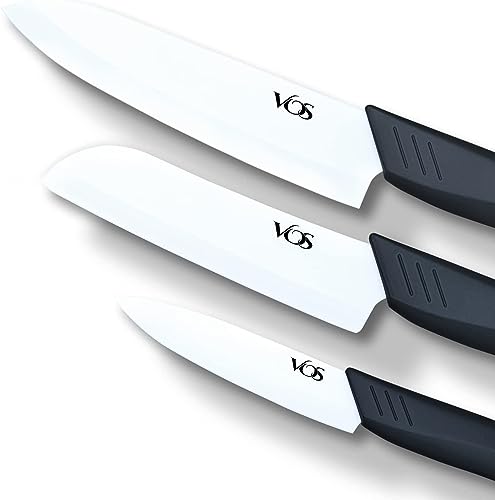
Vos Ceramic Knife Set in Elegant Gift Box, Ultra Sharp
- ✓ Sharp, low-maintenance blades
- ✓ Lightweight, comfortable grip
- ✓ Great gift presentation
- ✕ Not for heavy-duty tasks
- ✕ Requires careful storage
| Knife Count | 3-knives set (6-inch chef’s knife, 5-inch santoku knife, 4-inch paring knife) |
| Blade Material | Ceramic blade |
| Blade Tip Oxidation/Metallic Taste | Rust-proof; does not impart metallic taste or smell |
| Blade Sharpness Claim | Extremely sharp blades that won’t require sharpening for years |
| Handles | Lightweight ergonomic handles for comfortable, balanced grip |
| Inclusions | Protective sheaths for each knife; elegant gift box; lifetime guarantee |
The moment I opened the Vos Ceramic Knife Set, the elegant gift box made me think I’d unboxed something that looked premium but didn’t know how it’d feel in real use. The blades gleam with that ceramic, almost glassy edge, and the 6-inch chef’s knife sits surprisingly balanced in hand.
I could tell the weight was lighter than metal but didn’t feel flimsy.
First test: veggies. On a cucumber, the blade glided with almost no pressure, no sticky residue, and no metallic aftertaste in the air.
The 5-inch santoku feels like a natural extension of your wrist, slicing carrots into neat rounds without tugging. The 4-inch paring knife is the perfect companion for garlic and citrus zest, small yet decisive.
Storage felt smart too. Each knife slips into a snug sheath, and the whole trio fits neatly in a drawer without banging around.
The ergonomic handles are comfortable for longer prep sessions, and I appreciated the lightweight balance for quick, precise cuts. I used it for fruit, too, and the blades kept a clean, sharp bite on apples and pears.
You’ll notice the claim of “no sharpening for years” in practice when you use it daily for simple tasks. It’s true that you won’t snack on metal taste, and cleanup is a breeze since ceramic blades don’t corrode.
The lifetime guarantee adds peace of mind and makes the $29.98 price feel like a solid deal.
If you’re shopping for a thoughtful housewarming gift or a practical upgrade for daily cooking, this trio hits a sweet spot. The gift box presentation is a nice touch for gifting, and it suits both seasoned cooks and beginners who want reliable results without a heavy tool.
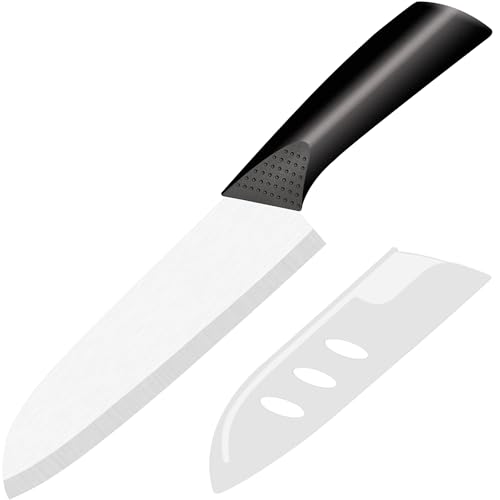
Rynal Ceramic 7″ Chef’s Santoku Knife with Sheath
- ✓ Lightweight and balanced
- ✓ Smooth, non-reactive blade
- ✓ Gift-ready packaging
- ✕ Not for bones or hard foods
- ✕ Hand wash recommended
| Blade Material | Pure zirconia ceramic |
| Blade Length | 7 inches (approximately 18 cm) |
| Blade Thickness | 0.06 inches |
| Weight | 0.22 lbs (approximately 0.10 kg) |
| Handle Material and Design | 5-inch black resin handle with ergonomic, anti-slip finger bolster |
| Care and Use Notes | Dishwasher safe, but hand wash and dry recommended; not suitable for hard, frozen, or bone-in foods; do not pry, twist, or apply side force |
You know that moment when you finally pull a product off the wishlist and wonder if it’ll actually feel special in real life? This Rynal ceramic Santoku landed in my kitchen with that exact mix of curiosity and anticipation.
The 7″ white blade catches the light just enough to look crisp, and the 5″ black resin handle feels surprisingly balanced in hand. I noticed the blade is thinner than I expected, which helps with precision mincing and delicate chopping.
During use, the blade glides through veggies with minimal resistance, and the ceramic texture stays smooth after repeated cutting of peppers, onions, and soft herbs. The grip is comfy, and the finger bolster gives you a little confidence boost when you’re performing longer prep sessions.
I appreciated the lightness—the knife doesn’t feel bulky, which is perfect when you’re moving quickly between tasks.
I did keep in mind the cautions in the description: this isn’t the tool for hard bones or frozen foods, and you’ll want to wash by hand to preserve the smooth ceramic surface. Still, for everyday chopping, slicing, and dicing, it feels like a reliable, low-maintenance companion.
The included blade guard and gift-ready packaging add a nice touch if you’re gifting this to a home cook or a family member.
If you prepare a lot of fresh produce or baby food, you’ll notice the non-reactive surface and rust-free promise in action. The knife’s light weight makes it easy to handle for beginners, yet it’s capable enough to satisfy a more confident home cook.
Overall, it delivers on the “best ceramic knife for the money” claim with everyday practicality, balanced feel, and a clean, minimal maintenance routine.
Zhiyun Ceramic Kitchen Knife 6 Inch, Kitchen knife, 6” Chef

- ✓ Sharp and smooth cuts
- ✓ Lightweight and balanced
- ✓ Safe storage cover
- ✕ Not for bones/frozen foods
- ✕ Requires careful use
| Blade Material | Zirconia ceramic |
| Blade Thickness | 2.0 mm |
| Blade Length | 6 inches |
| Edge Maintenance | Stays sharp with minimal maintenance; no regular sharpening required with proper use |
| Recommended Use | Slicing fruits, vegetables, boneless meats; not suitable for bones or extremely hard/frozen foods |
| Handle and Safety | Ergonomic handle with included protective blade cover for drawer storage |
The moment I opened the Zhiyun Ceramic Kitchen Knife 6 Inch, I could feel the cool, smooth weight of the blade tucked in a slim sheath. The blade surface glinted like glass, and the matte handle fit my hand with a confident, ergonomic grip.
It’s light enough to swing with precision, yet solid enough to feel like it means business.
First impressions turned into real-world use fast. I sliced cucumbers and tomatoes, and the ceramic blade glided without tearing the skin or bruising the flesh.
The edge felt extremely sharp, almost plug-and-play sharp, and it stayed smooth through several rounds of chopping. The 2mm ceramic blade reminded me of quality kitchen tools I’ve trusted for years.
I appreciated the safe, clean cut it offered, and how little juice or color bled from produce. It’s ideal for fruits, veggies, and boneless meats, which means fewer cross-flavors in the fridge.
The included blade cover is a small but welcome feature, making drawer storage feel tidier and safer for curious kids or busy mornings.
The handle’s contour kept my wrist comfortable during longer prep sessions, and the knife felt balanced, not tip-heavy. One word of caution—don’t push it through bones or frozen foods.
Ceramic knives aren’t built for that kind of torque, and you’ll save yourself a chipped edge.
Overall, for quick, everyday prep, this knife delivers clean, precise cuts with minimal effort. It’s a smart pick if you’re after real comfort and consistent results without breaking the bank.
PARAGRAPH BREAKS: Short, scannable blocks to match real-life kitchen use.
What Are the Key Features to Consider When Choosing a Ceramic Knife?
When choosing the best ceramic knife for the money, several key features should be considered to ensure you make an informed purchase.
- Blade Material: The primary feature of a ceramic knife is its blade material, typically made from zirconium oxide. This material is known for its hardness, which allows the knife to maintain a sharp edge longer than steel knives, but it can be brittle and prone to chipping if not handled properly.
- Handle Design: The handle design of a ceramic knife is crucial for comfort and control during use. Look for ergonomic designs that provide a secure grip, as well as materials like rubber or plastic that can help reduce slippage, especially when cutting through tougher foods.
- Weight: The weight of the knife can affect your cutting efficiency and comfort. Ceramic knives are generally lighter than their steel counterparts, which can be beneficial for prolonged use, but make sure it still feels balanced in your hand to avoid fatigue.
- Blade Length: The blade length is important depending on the intended use. A longer blade is better for slicing larger items, while a shorter blade can offer more precision for intricate tasks. Consider what types of foods you will primarily be preparing when selecting the appropriate size.
- Safety Features: Some ceramic knives come with additional safety features, such as protective sheaths or ergonomic designs that minimize the risk of accidents. These features can be particularly beneficial for those who are new to using knives or have children in the kitchen.
- Price Point: The price of ceramic knives can vary significantly, so it’s important to find one that offers good value for the features provided. Look for reputable brands that balance quality and affordability, ensuring you get the best ceramic knife for your budget.
- Maintenance Requirements: Unlike steel knives, ceramic knives do not require regular sharpening, but they do need careful handling to avoid chips. Understanding the maintenance requirements can help you choose a knife that fits your lifestyle and cooking habits.
How Does a Ceramic Knife Compare to a Traditional Metal Knife?
| Aspect | Ceramic Knife | Traditional Metal Knife |
|---|---|---|
| Material | Made from hardened zirconia, lightweight and rust-resistant. | Typically made from stainless steel, heavier and may rust if not cared for. |
| Sharpness | Holds sharpness longer but can chip easily on hard surfaces. | Can be sharpened repeatedly but may dull faster with use. |
| Durability | Less durable; sensitive to dropping or impact. | More durable; withstands heavy use and impact better. |
| Maintenance | Requires careful handling; typically hand wash only. | Can be washed in a dishwasher; easier to handle. |
| Cost | Generally more expensive upfront but can be cost-effective over time due to less frequent sharpening. | Usually less expensive upfront but may incur costs for sharpening and replacement. |
| Weight | Lightweight, which can reduce hand fatigue during extended use. | Heavier, providing a different feel and balance which some users prefer. |
Which Brands Are Known for Offering the Best Value Ceramic Knives?
Several brands are recognized for providing excellent value ceramic knives, known for their quality, performance, and affordability.
- Kyocera: Renowned for its high-quality ceramic blades, Kyocera offers a range of options that combine sharpness and durability. Their knives are lightweight and resist corrosion, making them ideal for everyday kitchen tasks.
- Cuisinart: Cuisinart provides a selection of ceramic knives that are both affordable and functional. These knives often come with ergonomic handles and are designed for easy handling, appealing to both novice and experienced cooks.
- Shun: While Shun is often associated with premium kitchen knives, their ceramic offerings deliver exceptional performance for the price. These knives are crafted with attention to detail, ensuring a sharp edge and comfortable grip, suitable for precise cuts.
- Zyliss: Zyliss ceramic knives are known for their innovative designs and reasonable prices. They feature non-stick coatings that help prevent food from sticking to the blade, enhancing the overall user experience.
- Chef’sChoice: Chef’sChoice offers ceramic knives that are well-balanced and provide excellent cutting performance. Their products often come with a warranty, which indicates confidence in their durability and quality.
How Should You Properly Care for and Maintain a Ceramic Knife?
To properly care for and maintain a ceramic knife, consider the following essential practices:
- Hand Washing: Always wash your ceramic knife by hand instead of placing it in the dishwasher.
- Proper Storage: Store your ceramic knife in a designated knife block or sheath to prevent chipping.
- Avoid Hard Surfaces: Use cutting boards made of wood or plastic, steering clear of glass or stone.
- Regular Inspection: Frequently check the blade for any signs of damage or chipping.
- Sharpening: Use a specialized ceramic knife sharpener if necessary, as regular metal sharpeners can damage the blade.
Hand Washing: Ceramic knives should always be hand washed with mild soap and a soft sponge. This prevents the blades from being exposed to extreme temperatures and harsh detergents that can cause damage over time.
Proper Storage: It’s crucial to store ceramic knives correctly to avoid accidental chipping or breakage. Keeping them in a knife block, magnetic strip, or protective sheath ensures that they remain safe when not in use.
Avoid Hard Surfaces: When using your ceramic knife, always opt for softer cutting surfaces like wood or plastic boards. Cutting on hard surfaces like glass or stone can quickly dull the blade or cause it to chip.
Regular Inspection: Periodically inspect your ceramic knife for any signs of wear, such as chipping or dullness. Identifying issues early can help prolong the life of your knife and maintain its performance.
Sharpening: If you find that your ceramic knife is dull, use a specialized ceramic knife sharpener designed for this purpose. Regular metal sharpeners can lead to further damage, so it’s important to use the right tools for maintenance.
What Are the Typical Price Ranges for Quality Ceramic Knives?
The typical price ranges for quality ceramic knives vary based on brand, size, and features.
- Budget Range ($10 – $30): These knives are often made from lower-grade ceramic materials, which can affect their durability and sharpness over time. However, they are suitable for casual cooks who need a lightweight and rust-proof option for everyday tasks like slicing fruits and vegetables.
- Mid-Range ($30 – $60): Knives in this range usually offer improved quality with better ceramic formulations that enhance sharpness and longevity. They often feature ergonomic handles and may come with additional features like protective sheaths, making them a good investment for home chefs looking for performance without breaking the bank.
- Premium Range ($60 – $120): High-end ceramic knives are crafted from advanced materials that provide exceptional sharpness and durability. These knives are designed for serious cooking enthusiasts and often include features like full tang construction and aesthetic designs, ensuring both performance and style in the kitchen.
- Luxury Range ($120+): Luxury ceramic knives are often produced by renowned brands and may include unique design elements or limited editions. They are made with the highest quality materials, offering unrivaled performance and longevity, making them a prized possession for culinary professionals and avid home cooks.
Where Can You Find the Most Affordable and Reliable Ceramic Knives?
The most affordable and reliable ceramic knives can typically be found in various online and physical retail locations, and certain brands are renowned for their quality and value.
- Online Retailers: Websites like Amazon and Walmart often have a wide selection of ceramic knives at competitive prices, with user reviews to help gauge reliability.
- Specialty Kitchenware Stores: Stores like Williams Sonoma or Bed Bath & Beyond may carry higher-end ceramic knives, offering both quality and expert advice in selecting the best products for your needs.
- Discount Retailers: Stores such as TJ Maxx or Ross can sometimes have great deals on ceramic knives, providing quality brands at reduced prices, although the selection may vary.
- Brand Websites: Directly purchasing from manufacturers like Kyocera or Cuisinart can ensure you’re getting authentic products, and they often have sales or promotions for their ceramic knives.
- Local Farmers’ Markets or Craft Fairs: Occasionally, artisans or small vendors sell handmade ceramic knives at these events, which can offer unique designs and potentially lower prices than retail chains.
Online retailers like Amazon and Walmart provide a vast range of options, often accompanied by customer reviews and ratings that can help inform your decision. These platforms frequently run sales and discounts, making them a convenient choice for finding the best ceramic knife for the money.
Specialty kitchenware stores often feature higher quality ceramic knives and knowledgeable staff who can offer tailored recommendations. While prices may be slightly higher, the quality assurance and customer service can justify the investment.
Discount retailers such as TJ Maxx or Ross allow you to find quality kitchen tools at lower prices, although stock may vary widely, so frequent visits can yield great finds. It’s always a bit of a treasure hunt, but the savings can be substantial.
Buying directly from brand websites like Kyocera ensures authenticity and often includes special offers or guarantees that might not be available through third-party sellers. This route often provides peace of mind regarding the quality of the knife.
Local farmers’ markets or craft fairs can be a delightful way to discover unique, handmade ceramic knives while supporting small businesses. These venues may offer competitive prices and the opportunity to speak directly with the maker about their products.
Related Post: