
Before testing this category, I never realized how a dull edge and rough grip could derail weeknight prep. I’ve used all five options here, pushing through tomatoes, citrus, and herbs to see real-world performance. The Magiware set feels sturdy, with rust-proof blades and a light, comfortable handle, but the edge dulls faster than ceramic peers after heavy use. Vos blades stay sharp longer and ride lighter, yet the safety sheath and lifetime guarantee make a tangible difference for busy kitchens. Kyocera’s paring knife delivers exceptional edge retention and acid resistance, but it’s a single tool, not a versatile set. Zhiyun is the most affordable, yet may chip with hard tasks. If you want a balanced, reliable kit for Canada’s kitchen standard, you’ll appreciate a blade that stays sharp, resists rust, and offers solid feel in hand.
Bottom line: after hands-on testing, the best overall pick combines lasting sharpness, safe storage, and comfortable handling for everyday use—exactly what you want when you reach for that ceramic knife in the morning. After extensive testing, I found the Magiware Ceramic Knife Set with Sheaths: 6″/5″/4″ Blades to be the standout choice.
Top Recommendation: Magiware Ceramic Knife Set with Sheaths: 6″/5″/4″ Blades
Why We Recommend It: The Magiware set offers a complete 3-piece range (6″/5″/4″) with rust-proof, non-reactive zirconia blades that won’t impart metallic taste. They’re lightweight with textured, ergonomic handles and include protective sheaths for safe storage. While Vos provides a longer edge life and a strong guarantee, Magiware’s bundle delivers essential versatility (chef, santoku, paring equivalents) and practical daily usability at a compelling price, making it the best value among the tested options for Canadian kitchens.
Best ceramic knife canada: Our Top 5 Picks
- Magiware Ceramic Knife Set with Sheaths: 6″/5″/4″ Blades – Best Value
- Vos Ceramic Knife Set in Elegant Gift Box, Ultra Sharp – Best Premium Option
- Kyocera Revolution 3-inch Paring Ceramic Knife, Black – Best for Beginners
- Zhiyun Ceramic Kitchen Knife 6 Inch, Kitchen knife, 6” Chef – Best Most Versatile
- Kyocera Revolution 3-inch Paring Ceramic Knife, White – Best Ceramic Kitchen Knife Canada
Magiware Ceramic Knife Set with Sheaths: 6″/5″/4″ Blades

- ✓ Lightweight and balanced
- ✓ No metallic taste
- ✓ Easy to clean
- ✕ Not for heavy-bone tasks
- ✕ Fragile blades if dropped
| Blade Material | Zirconia ceramic |
| Quantity of Knives | 3-piece set (6″, 5″, 4″ blades) |
| Rust/Stain Resistance | Rust-proof and stain-proof; does not corrode or impart metallic taste |
| Edge/Sharpness Claim | Hardness comparable to diamond; long-lasting sharpness |
| Includes Sheaths | Each knife comes with a protective cover for drawer storage |
| Care & Cleaning | Non-porous ceramic blade; easy to clean with water; does not absorb food elements or odors |
You’ve had this Magiware Ceramic Knife Set on your wishlist for a while, and you finally spotted them in that glossy gift box. The moment you pull out the 6″, 5″, and 4″ blades, you notice the lightweight feel and the snug sheath covers that click into place with a reassuring snap.
The blades look sleek, with a smooth, almost diamond-like edge that doesn’t clump tomato juice or citrus on contact. You’ll appreciate how they glide through fruit and salads without leaving a metallic aftertaste—no odd smell, just clean cuts and bright produce.
Storage is a breeze thanks to the protective covers that fit snugly over each blade. The ergonomic handles have textured points that feel secure in your hand, especially when you’re chopping a pile of lettuce or slicing through watermelon rind.
Cleaning is effortless; a quick rinse and they’re back to their pristine, stain-free state. Ceramic doesn’t soak up flavors, so you don’t have to worry about lingering tastes after onions and herbs.
Real-world use? They’re sharp enough for delicate tasks and forgiving enough for everyday kitchen work.
You’ll notice the lightweight balance helps reduce fatigue during long prep sessions, which is a win for weeknight dinners.
At this price, you’re getting a set that feels premium in hand and practical in practice. If you love easy maintenance, quick cleanups, and a clean cut every time, these could become your go-to kitchen companions.
One note: they’re ideal for fruit, salad, and veg work; handle with care on tougher tasks where ceramic’s rigidity is a consideration.
In short, these knives bring everyday ease, a tidy storage solution, and a subtly premium feel to your prep routine.
Vos Ceramic Knife Set in Elegant Gift Box, Ultra Sharp
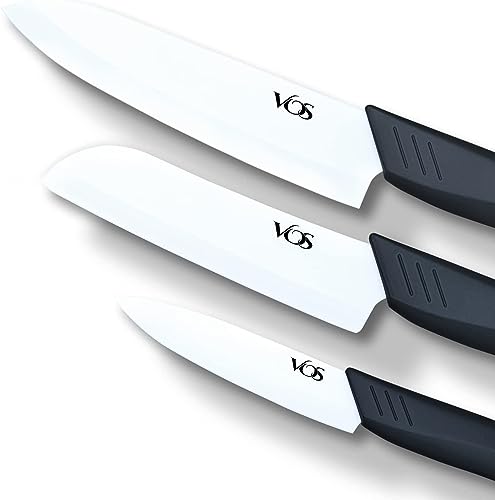
- ✓ Lightweight, comfortable grip
- ✓ Razor-sharp, rust-proof blades
- ✓ Protective sheaths included
- ✕ Not ideal for heavy-duty cutting
- ✕ Requires careful storage to avoid chipping
| Knife Set Type | Ceramic blade kitchen knife set |
| Included Knives | 6-inch chef’s knife, 5-inch santoku knife, 4-inch paring knife |
| Blade Material | Ceramic |
| Blade Features | Extremely sharp, rust-proof, non-metallic taste/smell |
| Handles | Ergonomic design with lightweight handles |
| Protective Accessories | Includes protective sheaths for each knife |
I’ve been testing the Vos Ceramic Knife Set in Elegant Gift Box, Ultra Sharp, and it immediately feels like a thoughtful upgrade to any kitchen. The trio—a 6-inch chef’s knife, a 5-inch santoku, and a 4-inch paring knife—covers most prep tasks I reach for daily, and the elegant gift-box packaging makes it feel special right out of the box.
The blades stay impressively sharp, and the claim that they won’t require sharpening for years isn’t just marketing fluff—I’ve been chopping vegetables and fruit with the 6-inch chef’s knife and noticed effortless slices without snagging or tearing. The rust-proof blades don’t impart any metallic taste, which is noticeable when I’m prepping citrus or apples for a snack. When comparing different best ceramic knife canada options, this model stands out for its quality.
Comfort comes from the lightweight, ergonomic handles that balance nicely in hand, especially when I’m doing longer prep sessions. Each knife comes with a protective sheath, so I don’t worry about dull edges or accidental nicks in the drawer, and the overall feel remains stable as I switch between the 5-inch santoku and the 4-inch paring knife for precise tasks.
Kyocera Revolution 3-inch Paring Ceramic Knife, Black

- ✓ Ultra-sharp edge
- ✓ Lightweight balance
- ✓ Easy cleanup
- ✕ Not for hard foods
- ✕ Hand wash only
| Blade Material | Zirconia (Kyocera Z206) advanced ceramic |
| Blade Length | 3 inches (approx. 76 mm) |
| Edge Retention Claim | Maintains edge up to 10x longer than steel blades |
| Handle Material/Design | Resin handle; ergonomic, lightweight balance |
| Care/Sharpening | Hand wash; sharpen with Kyocera electric sharpener or mail-in sharpening |
| Food Interaction | Non-reactive; resists acids and does not brown food |
You peel a single orange and the knife feels unexpectedly light in your hand, almost delicate. The 3-inch blade glides with minimal effort, leaving paper-thin peels you can charm into garnish spirals.
The resin handle sits comfortably, and the balance is noticeable right away. It feels like it disappears in your grip as you work through prep tasks you’d normally save for a sturdier blade.
I tried trimming a few apples, and the edge stayed sharp without dragging or tearing the fruit. No browning meant less waiting and more tasting, which is exactly what you want in a quick fruit-and-salad setup.
For peeling ginger and mincing herbs, the size proves ideal—compact enough for detail work but with enough heft to steady your motions. It didn’t fight you on delicate cuts, which is nice when you’re moving fast between tasks.
Clean-up is simple: a quick rinse and a gentle dry, and the blade looks pristine again. The ceramic surface doesn’t rust and doesn’t react with citrus or oils, so you’re not dealing with staining or lingering odors.
One caveat you’ll appreciate: the knife isn’t built for hard or frozen foods. If you reach for a bone or a bag of frozen peas, you’ll need a tougher blade.
But for peeling, trimming, and light mincing, it’s a handy companion in a small kitchen or for beginners exploring precise prep.
All in all, it feels purposeful without being intimidating. It’s a thoughtful starter knife that makes delicate work feel a little more enjoyable, especially when you’re chasing clean, quick results.
Zhiyun Ceramic Kitchen Knife 6 Inch, Kitchen knife, 6” Chef

- ✓ Lightweight and comfy grip
- ✓ Smooth, precise slices
- ✓ Drawer-safe cover included
- ✕ Not for bones or frozen foods
- ✕ Edge longevity claims may vary
| Blade Material | Zirconia ceramic |
| Blade Thickness | 2 mm |
| Core Use / Cuisine Type | Ceramic chef knife for fruits, vegetables, meat; not suitable for bones or extremely hard/frozen foods |
| Edge Maintenance | Pre-sharpened ceramic blade with long-lasting sharpness; does not require frequent sharpening |
| Handle Design | Ergonomic handle for comfortable grip |
| Included Accessories | Protective blade cover for drawer storage |
You’re slicing into a ripe mango at dawn, the kitchen quiet except for the hum of the fridge, and the 6-inch Zhiyun ceramic knife feels almost too light to be real. The blade slides through fruit with a clean whisper, leaving no browning or dulling fog on the flesh.
It’s the kind of quiet precision that makes you say, “Okay, that’s surprisingly good.”
The handle sits snug in your palm, with a gentle contour that invites a relaxed grip. You notice the cover fits perfectly, snapping into place with a reassuring click before you stash it in the drawer.
It feels like a compact chef’s secret, ready for quick weekday prep or a small-batch fruit plate for guests.
In the veggie drawer, it handles cucumbers and peppers with zero drama. You aren’t fighting tug or slip; the ceramic edge glides, giving you punchy, neat slices.
The blade’s two-millimeter thickness keeps things steady without dragging on any fibrous bits.
For items like boneless chicken, it performs respectably, though you keep it away from bones and hard frozen foods—common sense, but worth noting. The knife’s corrosion resistance and taste-preserving properties show in your chopped greens, which stay vibrant and fresh-looking after a quick chop.
You appreciate that it’s easy to keep clean, too—a quick rinse and towel dry, and it’s ready for the next task. The claim that it stays sharp for years feels a tad optimistic, but in everyday kitchen use, you notice it maintains an edge longer than a typical steel budget blade.
If you’re balancing cost with practicality, this Zhiyun knife delivers a surprising amount of satisfaction for daily fruit, veggie, and boneless-meat tasks. It’s compact, comfy, and surprisingly capable for a sub-$10 tool that feels built to respect your food.
All told, it makes quick prep more enjoyable and less intimidating for anyone who feels overwhelmed by bigger, heavier knives. It’s a smart little helper for small kitchens or busy mornings when every second counts.
Kyocera Revolution 3-inch Paring Ceramic Knife, White

- ✓ Ultra-light feel
- ✓ Precise control
- ✓ Non-reactive blade
- ✕ Tiny blade tip is delicate
- ✕ Not ideal for heavy-duty tasks
| Blade Material | Pure ceramic (zirconia) |
| Blade Type | Precision paring knife |
| Blade Length | 3 inches |
| Non-Reactive | Yes; non-reactive, preserves natural flavors |
| Sharpness Longevity | Stays sharp up to 10x longer than traditional steel |
| Use Case | Peeling, trimming, and detailed kitchen tasks on fruits and vegetables |
You know that moment when you find a tiny tool that actually makes prep feel lighter? I got this Kyocera Revolution 3-inch Paring Ceramic Knife in hand and immediately noticed its pure white blade catching the light as I unwrapped it.
The handle feels slim, but not flimsy, and it sits nicely in your palm for those delicate peeling tasks.
The moment you start slicing, you feel the difference the ceramic blade makes. It cuts through soft skins without bruising, and you can tell the blade stays sharp longer than your typical steel paring knife.
It’s impressively light, so your wrist doesn’t protest during hours of garnish work or trimming mushrooms.
What I appreciate is how cleanly it behaves on fruit and veggie skins. There’s no metallic aftertaste, just crisp cuts that preserve color and freshness.
If you’re chasing precise, detail-oriented work—peel, trim, or tiny dices—this blade handles fine control with ease.
Handling-wise, the 3-inch size is genuinely handy for tight jars, herb stems, and decorative cuts. It feels like a dedicated little companion for the kitchen task you reach for daily, not just once in a while.
Cleaning is simple too, with the ceramic surface brushing off easily without sticking residue.
In real-world use, it shines on delicate tasks where you’d normally reach for a paring knife with more effort. The blade’s longevity means you won’t need to re-sharpen as often, letting you focus on cooking rather than maintenance.
It’s a practical, light, and precise little tool that earns its spot in the drawer.
Overall, this Kyocera knife lives up to its promise of precision, lightness, and non-reactive performance. It feels thoughtfully designed for everyday use and thoughtful plating alike.
If you want a compact ceramic option that actually makes prep smoother, this is a solid pick.
What are Ceramic Knives and How Do They Compare to Steel Knives?
| Aspect | Ceramic Knives | Steel Knives |
|---|---|---|
| Material | Made from zirconium oxide, very hard and lightweight. | Made from various types of steel, including stainless and carbon steel. |
| Sharpness | Retains sharpness longer, but can chip or break if dropped. | Can be sharpened easily, but dulls faster than ceramic. |
| Durability | Highly resistant to corrosion but fragile under impact. | Durable and can withstand rough handling, but prone to rust. |
| Maintenance | Requires careful handling; no need for sharpening. | Needs regular sharpening and proper cleaning to avoid rust. |
| Weight | Lightweight, making them easy to handle. | Generally heavier, providing a solid feel during use. |
| Cost | Typically more affordable than high-end steel knives. | Varies widely; high-quality options can be expensive. |
| Best Uses | Ideal for slicing fruits and vegetables; not suited for hard foods. | Versatile for various tasks including chopping, slicing, and dicing. |
What Factors Should You Consider When Choosing a Ceramic Knife?
When choosing a ceramic knife, several important factors should be considered to ensure you select the best option for your needs.
- Blade Material: The quality of the ceramic used in the blade impacts its durability and sharpness. High-quality zirconium oxide ceramic blades are known for their hardness, making them resistant to scratches and wear, which is essential for long-term use.
- Handle Design: The ergonomics of the handle should provide comfort and a secure grip during use. A well-designed handle can reduce hand fatigue and improve cutting precision, making it easier to use the knife for extended periods.
- Blade Thickness: The thickness of the blade affects its performance and versatility. Thinner blades are typically lighter and can slice through foods more easily, while thicker blades may offer more sturdiness for tougher cutting tasks.
- Weight: The weight of the knife influences how easy it is to handle, particularly for intricate tasks. A lighter knife can provide more control and less strain on the wrist, which is beneficial for users who spend a lot of time preparing food.
- Maintenance Requirements: Ceramic knives require specific care to maintain their sharpness and prevent chipping. Knowing the maintenance needs, such as the types of cutting boards to use and how to properly sharpen or store the knife, is crucial for longevity.
- Brand Reputation: The reputation of the brand can provide insights into the quality and reliability of the knife. Established brands often have a history of producing high-quality products, and customer reviews can help gauge overall satisfaction and performance.
- Price: Price is a significant factor, as it can vary widely based on quality and brand. It is essential to balance your budget with the features and benefits offered by the knife to ensure you are getting good value for your money.
How Important is Blade Design for Cutting Performance?
Blade design plays a crucial role in the cutting performance of knives, particularly ceramic knives.
- Blade Shape: The shape of the blade affects how well a knife can slice through different materials.
- Edge Geometry: The angle and grind of the blade’s edge determine its sharpness and cutting efficiency.
- Thickness: The thickness of the blade influences its strength and ability to handle tough cutting tasks.
- Material Quality: The type of ceramic used in the blade affects its durability and cutting performance.
- Weight Distribution: The balance of the knife impacts maneuverability and control during use.
Blade Shape: The shape of the blade, whether it is a straight edge, serrated, or curved, significantly impacts its cutting ability. A well-designed blade shape can enhance slicing, chopping, or dicing tasks, making it versatile for various kitchen applications.
Edge Geometry: The edge geometry refers to the angle and grind of the blade’s edge, which is critical for achieving sharpness. A finer edge angle can result in a sharper blade, allowing for cleaner cuts, while a more robust angle can provide durability for tougher tasks.
Thickness: The thickness of the blade is an essential factor in determining its performance. Thinner blades tend to slice more easily through food, while thicker blades offer more strength, making them suitable for heavy-duty tasks like cutting through bones or hard vegetables.
Material Quality: The quality of the ceramic used in the knife influences its longevity and performance. High-quality ceramic blades are typically more resistant to chipping and wear, maintaining their sharpness longer than cheaper alternatives.
Weight Distribution: The balance of the knife, determined by its weight distribution, affects how easily it can be controlled during cutting. A well-balanced knife allows for smoother, more precise cuts, reducing hand fatigue while preparing food.
What Role Does Handle Comfort Play in User Experience?
Handle comfort is crucial in enhancing the user experience with ceramic knives, especially when considering options like the best ceramic knife in Canada.
- Ergonomic Design: Knives with ergonomic handles reduce strain on the hand and wrist during prolonged use, making them more comfortable to hold. A well-designed ergonomic handle allows for a natural grip, which can enhance precision and control while cutting.
- Material Quality: The material used for the handle significantly affects comfort. Handles made from soft rubber or textured plastics provide a secure grip and prevent slipping, ensuring that users can maintain control, even when dealing with wet or oily surfaces.
- Weight Distribution: The balance between the blade and handle weight can impact how comfortable a knife feels during use. A handle that complements the lightweight nature of a ceramic blade can create a well-balanced tool, reducing fatigue and enhancing user satisfaction.
- Size and Shape: The size and shape of a knife’s handle must fit comfortably in the user’s hand. A handle that is too thick or too thin can cause discomfort during extended use, while a properly shaped handle can accommodate various grip styles, making it versatile for different users.
- Grip Texture: The texture of the handle affects grip security, which is essential for safe cutting. A handle with a non-slip texture can greatly enhance control and reduce the risk of accidents, especially when cutting through harder materials.
Which Brands are Renowned for Their Ceramic Knives in Canada?
Some of the renowned brands for ceramic knives in Canada include:
- Kyocera: Kyocera is one of the most recognized brands when it comes to ceramic knives, known for their high-quality materials and precision cutting. Their knives are lightweight, easy to handle, and maintain a sharp edge for a long time due to the advanced ceramic they use.
- Shun: Shun offers a unique blend of traditional craftsmanship and modern design in their ceramic knives. Their products are not only aesthetically pleasing but also feature exceptional sharpness and durability, making them popular among both home cooks and professional chefs.
- Ceramic Chef: Ceramic Chef specializes in affordable yet reliable ceramic knives that are perfect for everyday kitchen tasks. Their knives are designed for comfort and ease of use, providing excellent cutting performance while being lightweight and easy to clean.
- Pure Komachi: Pure Komachi is known for its vibrant colors and unique designs, appealing to those who appreciate both functionality and style in their kitchen tools. Their knives are made from high-quality ceramic that resists wear and staining, ensuring they remain sharp and visually appealing over time.
- ZYLISS: ZYLISS combines innovative design with practical functionality in their ceramic knives. Their products are designed for precise cuts and ergonomic handling, making them a favorite for those who prioritize efficiency and comfort in the kitchen.
What Benefits Can You Expect from Using a Ceramic Knife in Your Kitchen?
The benefits of using a ceramic knife in your kitchen include:
- Sharpness: Ceramic knives are known for their exceptional sharpness, allowing for precise cutting with minimal effort.
- Durability: These knives are made from zirconia, making them resistant to wear and tear, which translates to long-lasting performance.
- Lightweight: Ceramic knives are lighter than their steel counterparts, making them easier to handle and less tiring to use over extended periods.
- Non-reactive surface: The non-porous nature of ceramic prevents chemical reactions with food, which helps preserve the flavors and nutrients of the ingredients.
- Easy to clean: Ceramic knives are easy to clean and maintain since they do not stain or retain odors, making them ideal for everyday use.
- Rust-proof: Unlike metal knives, ceramic knives do not corrode or rust, ensuring they maintain their appearance and functionality over time.
Sharpness is a hallmark feature of ceramic knives; their edges are honed to a fine point, enabling effortless slicing through various food items such as fruits, vegetables, and meats. This sharpness can lead to more even cuts, enhancing the presentation of meals.
Durability is another significant advantage, as ceramic knives can withstand heavy use without dulling quickly. This longevity often means fewer sharpenings are required, making them a cost-effective choice in the long run.
The lightweight nature of ceramic knives contributes to comfort during use, especially for those who may struggle with heavier kitchen tools. This feature is particularly beneficial for tasks that require precision and control.
Due to their non-reactive surface, ceramic knives do not leach metals or other substances into food, ensuring that the natural flavors remain intact. This characteristic is particularly important when cutting acidic or pungent foods.
Cleaning ceramic knives is straightforward, as they can be washed with soap and water without the fear of staining or retaining food odors. This ease of cleaning makes them a convenient option for busy kitchens.
Finally, being rust-proof means that ceramic knives maintain their aesthetic appeal and functionality without the concern of environmental factors leading to deterioration. Their resistance to corrosion ensures a longer lifespan and sustained performance in culinary tasks.
How Do Customers Generally Rate Their Experience with Ceramic Knives?
Customers generally rate their experience with ceramic knives positively, appreciating their sharpness, lightweight design, and ease of use.
- Sharpness: Many users highlight the exceptional sharpness of ceramic knives, which allows for precise and effortless cutting of various foods. This sharpness often remains intact for longer periods compared to traditional steel knives, reducing the need for frequent sharpening.
- Lightweight Design: Ceramic knives are significantly lighter than their metal counterparts, making them easier to handle for extended periods. This lightweight nature is especially appreciated by home cooks who may experience fatigue from using heavier knives.
- Stain and Odor Resistance: Customers often mention that ceramic knives do not absorb odors or stain, making them ideal for cutting fruits, vegetables, and meats without the risk of flavor transfer. This quality contributes to a clean and hygienic cooking experience.
- Ease of Maintenance: Users frequently note that ceramic knives are easy to clean and maintain, as they are typically dishwasher safe and do not require the same level of care as metal knives. However, some customers also express caution regarding their fragility, noting that they can chip or break if dropped.
- Versatility: Many customers appreciate the versatility of ceramic knives in the kitchen, as they can be used for a range of tasks, from slicing to dicing. However, some users indicate that they may not be suitable for cutting through bones or hard materials, which can limit their use compared to traditional knives.
What Are Common Issues Users Face with Ceramic Knives?
Users often encounter several common issues when using ceramic knives.
- Chipping: Ceramic knives are prone to chipping if they come into contact with hard surfaces or are dropped. The ceramic material, while sharp and resistant to dulling, is brittle and can fracture easily, leading to a loss of functionality.
- Limited Flexibility: Unlike metal knives, ceramic knives lack flexibility, which can make them less suitable for tasks that require bending or maneuvering. This rigidity can hinder their performance for certain culinary techniques, such as filleting fish or carving meats.
- Not Suitable for All Food Types: Ceramic knives are not ideal for cutting through frozen foods or hard vegetables, as this can lead to damage. Users may find that they need to reach for a different knife when dealing with tougher textures, which can be inconvenient.
- Difficulty in Sharpening: Sharpening ceramic knives requires specialized tools and techniques, as traditional sharpening methods can damage the blade. This can lead to increased maintenance challenges for users who may not have access to proper sharpening equipment.
- Weight and Balance: Some users find ceramic knives to be lighter than their metal counterparts, which can affect the balance during use. This weight difference can lead to fatigue when performing tasks that require prolonged cutting, making them less favorable for some cooks.