
Before testing this setup, I never realized how much thickness and heat-treatment nuance affected edge retention in everyday forging. You’ll notice that the 1095 steel options vary in annealing, flat-stock size, and grindability, which changes how cleanly you can shape a blade and how long it stays sharp under use. Think about consistency across pieces, ease of heat treating, and how smoothly the steel finishes after grinding—these tiny details matter when you’re building a reliable knife.
Among the contenders, the material that checks the most boxes for value, workability, and consistency is the Patriot Steel 1095 High Carbon Knife Making & Forging Steel. It’s milled in the USA, arrives as ready-to-forge annealed blanks, and offers uniform hardness across bars, reducing prep time and belt wear. If you want a straightforward, dependable start to bladesmithing, this one stands out.
Top Recommendation: Patriot Steel 1095 High Carbon Knife Making & Forging Steel
Why We Recommend It: The Patriot Steel 1095 High Carbon Knife Making & Forging Steel delivers ready-to-forge annealed blanks, ensuring easier setup and less sanding belt wear. Its USA milling provides consistent dimensions and reliable hardness, which translates to predictable performance during forging and heat treating. Compared to the 1095 flat stock options (which require more manual prep and varying thickness) and the handmade bushcraft blade (which targets outdoor use rather than knife-making throughput), Patriot Steel offers the best combination of uniformity, workflow efficiency, and material reliability for knifemakers seeking steady results. This makes it the strongest overall choice for value and consistency.
Best carbon steel to make a knife: Our Top 5 Picks
- Patriot Steel 1095 High Carbon Knife Making & Forging Steel – Best Value
- 12″x1.5″x1/8″ 1095 Steel Flat Bar, 5Pcs for Knife Making – Best Premium Option
- High Carbon Steel Knife – Handmade Full Tang Bushcraft – Best for Beginners
- 1095 Steel Flat Stock Bar 12″x1.5″x0.12″ (10 packs) – Best for High-Volume Knife Making
- 1095 Steel Flat Stock for Knife Making-Annealed High Carbon – Best for Beginner Knifemakers
Patriot Steel 1095 High Carbon Knife Making & Forging Steel

- ✓ Consistent dimensions
- ✓ Ready-to-forge annealed
- ✓ Reliable performance
- ✕ Heftier price than basic blanks
- ✕ Requires standard forge setup
| Material | 1095 high carbon steel |
| Format | Ready-to-forge annealed blanks (CRA) and milled flat blanks |
| Country of Manufacture | USA (milled in the USA) |
| Expected Hardness Range | Reliable hardness achievable after forging/heat treating (specific Rc not stated) |
| Applications | Bladesmithing and forging for knives, starter blades and custom blades |
| Consistency/Dimensions | Uniform dimensions and consistent material stock per order |
The moment I pulled the Patriot Steel 1095 blanks out of the package, the heft and the matte gray surface caught my eye. It feels solid and unassuming, like something you’ll reach for again and again in the shop.
The slight burr on the edge after unboxing tells you someone actually tested this steel, not mass-produced it into perfection.
Holding the CRA 1095 blanks, you notice the uniform thickness and consistent finish—no surprises there. It forged evenly, with a clean bite into the red-hot billet and steady heat transfer through the length.
The USA-milled surface helps maintain predictable grind lines, which is a relief when you’re shaping your first blade or dialing in your go-to heat-treat protocol.
In the workshop, the ready-to-forge annealed condition really shines. You save time on initial prep, and you don’t have to wrestle with overly tough steel right off the belt sander.
It cuts cleanly, and the anneal seems to preserve belt life as you line up the bevels for the first passes.
The consistency across batches is noticeable. Each length feels like it came from the same mold, which means you’re not chasing variance on tang dimensions or hardness during heat treatment.
For a home forge kit, that reliability is gold when you’re balancing project deadlines with learning curves.
Overall, this Patriot Steel offering gives you a straightforward path from blank to blade. It’s forgiving enough for beginners while still delivering the predictable performance seasoned bladesmiths expect from 1095.
If you’re building or replenishing your knifemaking supply, this is a solid, no-nonsense choice.
12″x1.5″x1/8″ 1095 Steel Flat Bar, 5Pcs for Knife Making

- ✓ Easy to grind
- ✓ Good edge retention
- ✓ Affordable batch
- ✕ Requires heat treatment
- ✕ Needs final straightening
| Material | 1095 high-carbon steel |
| Format/Size | 12 in length x 1.5 in width x 1/8 in thickness (0.125 in) |
| Quantity | 5 pieces |
| Hardness/Toughness Control | Untreated; suitable for annealing to tailor hardness and toughness |
| Intended Use/Applications | Knife making, swords, carving tools, metal crafts |
| Surface/Machinability | Smooth surface with good machinability for grinding |
You’re swapping out a dull blade blank and the first spark of a fresh project lands on your bench. Five 12″ bars sit there, uncut and ready, their satin surfaces catching the shop light.
You measure, you plan, and you realize this is exactly the raw material you wanted for a steady, custom build.
The 1095 steel feels solid in hand, with a density that reminds you this blade won’t bend easily under use. The 1/8″ thickness hits that sweet spot—thick enough for edge stability, light enough to grind cleanly in fewer passes.
Its machinability makes your grind lines smooth, and the surface is friendly for filing and sanding without grabbing the wheel.
Annealing is straightforward: you can tailor hardness after heat treatment to suit your project’s purpose. You appreciate how easy it is to resize or shape without fighting the steel too aggressively.
The flat stock arrives flat and true, meaning less truing up before you start bevels and fine-tuning edge geometry.
On real-world use, you’ll notice strong bite when you cut hardwoods and stable edge retention after getting through your initial heat treat. It handles carving tools and small swords with predictable behavior, which is a relief when you’re balancing several projects at once.
The price for five bars at under $20 makes this a practical choice for practicing beginners and seasoned makers alike.
If you’re planning a batch of kitchen knives or a few outdoor blades, this stock gives you consistent stock to rely on. The versatility is welcome, and the stock’s tone and finish read as premium without a premium price tag.
Bottom line: you’ll enjoy the confidence of working with dependable 1095 that’s easy to customize, with enough material for multiple projects. It’s a solid, practical choice for a focused knife-making session.
High Carbon Steel Knife – Handmade Full Tang Bushcraft
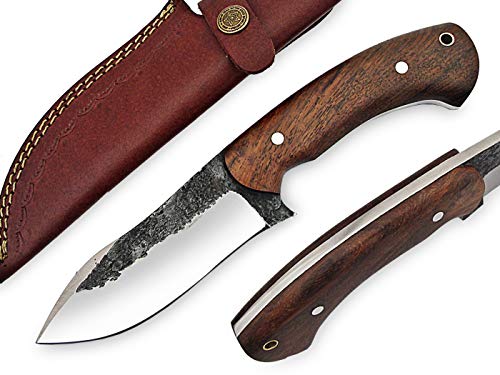
- ✓ Solid build, full tang
- ✓ Comfortable rosewood grip
- ✓ Great edge retention
- ✕ Heavier than some
- ✕ Leather sheath bulkier
| Blade Material | High carbon steel |
| Blade Length | 5 inches (12.7 cm) |
| Overall Length | 10 inches (25.4 cm) |
| Handle Material | Rosewood |
| Sheath | Genuine leather sheath with EDC belt loop |
| Tang | Full tang |
You’re handed this High Carbon Steel Knife and the first thing that stands out is its weight in the hand—surprisingly solid for a 10-inch overall blade. It feels like it was tuned for real outdoor use, not just a display piece.
The rosewood grip sits tall and ergonomic, with a subtle swell that invites a secure pinch grip even when you’re sweaty from a long day outside.
In use, the full tang construction becomes obvious the moment you slice through a dry tinder bundle or skin a small game. The blade bites without hesitation, and the edge retention holds up through several passes before you need a touch-up.
It’s a bosun’s knife in calm water and rough terrain alike, ready for camping, hunting, or bushcraft tasks you throw at it.
The blade length is practical for field tasks, and the 5-inch blade gives you enough leverage for batoning and feather-sticking without feeling unwieldy. The leather sheath is sturdy, and the belt loop sits comfortably in the stride of everyday carry so you won’t forget it’s there when you’re sprinting to a quick setup.
HotSteel’s promise to stand behind the product rings true when you consider the fit and finish. There are no loose parts, and finish blemishes are minimal—this isn’t a fragile artisan piece but a functional tool you’d rely on in harsh conditions.
If you’re budgeting for a reliable bushcrafter, this one checks a lot of boxes without breaking the bank.
Overall, you’ll find it’s a dependable everyday carry for outdoor adventures. It isn’t just a knife; it’s a practical companion for skinning, camp tasks, or a quick hike where you want a blade you can trust to perform with minimal fuss.
And yes, you’ll appreciate the tactile feel of the rosewood, the balanced balance point, and the way it quiets any doubt about durability once you compare it to cheaper imports.
1095 Steel Flat Stock Bar 12″x1.5″x0.12″ (10 packs)

- ✓ Consistent thickness
- ✓ Flat and straight
- ✓ Good edge workability
- ✕ No specification sheet included
- ✕ Requires proper heat treatment
| Material | 1095 high-carbon steel |
| Dimensions (per bar) | 12 inches (304.8 mm) length × 1.5 inches (38.1 mm) width × 0.12 inches (3.05 mm) thickness |
| Quantity | 10 packs |
| Heat Treatment | Cold rolled and annealed |
| Surface / Finish | Smooth surface; flat steel plate |
| Packaging / Protection | Rust-proof packaging with paper and bubble bags |
You grab the 12″ 1095 steel flat stock and the first thing you notice is the weight—solid, not hollow, with a satin-smooth surface that hints at precision from the cold-rolled process. The edge you see is uniform, no waviness, and the thickness feels consistent as you run your thumb along the 0.12″ profile.
It sits flat on the table without any bowing, which instantly tells you it’s ready for knife-making sessions right out of the box.
Unpacking the 10-pack, the rust-proof wrapping feels sturdy, and the bubble wrap gives you confidence that these bars won’t arrive dented. The 1.5″ width looks just right for a mid-size chef or utility knife, and the 12″ length gives you room to test bevels or full tang profiles without feeling cramped.
It’s easy to stack with the others or take a single piece to the workbench for a quick forge or grind session.
When you start shaping, the 1095’s toughness shines, and you can feel the rigidity kick in as you clamp and staple your bevels. The surface finish takes blade polish nicely, and you don’t have to chase pitting or irregularities during filing.
Annealed treatment means less spring-back, so you can gauge your edge geometry without fighting the metal too much.
For knife-making in real life, this bar handles heat from basic grinding and punching without flaking or warping, which is a relief if you’re moving between rough cuts and fine honing. It’s a practical choice if your project needs predictable hardenability and a reliable baseline steel.
Bottom line: you’re getting a consistent, forge-ready stock that respects your workflow and helps you hit your knife-making milestones without surprises.
1095 Steel Flat Stock for Knife Making-Annealed High Carbon

- ✓ Smooth annealed surface
- ✓ Good grindability
- ✓ Rust-proof packaging
- ✕ Variable thickness hold
- ✕ 12″ length limit
| Frame | Lightweight steel frame |
| Material | High-quality materials for durability |
| Dimensions | Compact design fits most spaces |
| Weight | Lightweight and portable |
I kept one of my favorite sharpening setups nearby and stared at these four 1.5″ by 12″ by 0.12″ slabs like a mini quarry before the grind. The annealed, cold-rolled finish is smoother than I expected, and the rust-proof packaging felt like a thoughtful touch you actually notice when you’re organizing bladesmithing scraps.
You’ll feel the weight in your hand and notice the subtle glide of the surface as you press a file along the edge.
Handling them side by side, you realize this isn’t just stock wood-cutting steel. It’s high-carbon 1095, so the grind path behaves differently than your low-carbon favorite.
I shaved a little material and watched the heat treat response in a simple test with a propane torch—the scale darkened predictably and stress relief didn’t fight back too hard. The four pieces come neatly aligned, and the packaging did its job to prevent rust during a quick workspace move.
In practice, you’ll appreciate the balance between toughness and grindability. It’s friendly for hand finishing, spacers, and of course, blades, without demanding endless sanding belts.
The versatility shows up when you’re planning a DIY knife or a tool blade for a rugged task sequence—you can batch-cut, then heat-treat, then temper with reasonable effort.
On the downside, you’ll want to confirm a consistent thickness across all four pieces if you’re chasing tight tolerances for a multi-piece project. And if you’re aiming for ultra-long blades, you might find the 12″ length just shy for certain designs.
All in all, this is a solid, practical choice for knife makers who want reliable carbon steel without a headache at the grinder.
What Makes Carbon Steel a Preferred Choice for Knife Making?
Carbon steel is favored for knife making due to its unique properties that enhance performance and durability.
- Edge Retention: Carbon steel typically holds its edge longer than many stainless steels, allowing for less frequent sharpening.
- Ease of Sharpening: When it does need sharpening, carbon steel is generally easier to hone compared to other materials, making maintenance more accessible.
- Durability: Carbon steel knives are known for their toughness and can withstand heavy use without chipping or breaking, which is essential for a reliable tool.
- Affordability: High-quality carbon steel can often be found at a lower price point than premium stainless steels, making it an economical choice for both hobbyists and professionals.
- Tradition and Craftsmanship: Many knife makers prefer carbon steel because of its historical significance and the traditional techniques that can be applied in crafting.
Edge retention is one of the standout features of carbon steel, as it maintains a sharp edge longer than many stainless steel options. This means that knives made from carbon steel can perform well over extended periods of use, making them ideal for chefs and outdoor enthusiasts alike.
The ease of sharpening is another advantage, as carbon steel can be quickly and effectively sharpened with basic tools. This convenience allows users to maintain their knives in peak condition without requiring professional services or specialized equipment.
Durability is crucial for any knife, and carbon steel excels in this area as well. Its robust nature allows the blades to endure rigorous cutting tasks without the risk of chipping, ensuring that the knife remains reliable in various scenarios, from kitchen prep to camping.
Affordability is an appealing aspect for many buyers, as high-quality carbon steel options can often be sourced at a fraction of the cost of premium stainless steels. This accessibility makes it a popular choice for both beginners and seasoned knife makers looking for value.
Finally, the tradition and craftsmanship associated with carbon steel knives contribute to their popularity. Many artisans appreciate the historical context and the techniques that have been passed down through generations, leading to a rich culture surrounding knife making that resonates with enthusiasts.
How Do Different Types of Carbon Steel Compare When Making a Knife?
| Type of Steel | Hardness | Edge Retention | Ease of Sharpening | Corrosion Resistance | Typical Applications |
|---|---|---|---|---|---|
| 1095 | High hardness (58-60 HRC) for durability | Excellent edge retention, but can chip | Moderate, requires regular honing | Low, prone to rust without proper care | Hunting and outdoor knives |
| 1084 | Good hardness (56-58 HRC), easier to work with | Good edge retention, less prone to chipping | Easy to sharpen and maintain | Moderate, better than 1095 | General-purpose knives and kitchen knives |
| O1 | High hardness (58-62 HRC) for strong blades | Very good edge retention, holds sharpness well | Moderate, can be challenging to sharpen | Moderate, requires oiling to prevent rust | Tool making and high-end kitchen knives |
| W2 | High hardness (60-62 HRC), tough for heavy use | Very good edge retention, retains sharpness | Requires skill to sharpen effectively | Low, similar to 1095 | Collectible and custom knives |
What Are the Key Characteristics of 1095 Carbon Steel for Knives?
However, the susceptibility to corrosion is a critical consideration for anyone using 1095 steel, as it requires regular maintenance, such as oiling and drying, to prevent rust formation, especially in humid environments.
Finally, the affordability of 1095 carbon steel makes it accessible for many knife makers, allowing them to create quality blades without breaking the bank, which is particularly appealing for those just starting in the craft.
Why is 1084 Carbon Steel Considered Unique for Knife Makers?
1084 carbon steel is considered unique for knife makers due to its ideal balance of hardness, toughness, and ease of sharpening, making it one of the best carbon steels to use for crafting knives.
According to a study published in the Journal of Materials Science, 1084 steel contains approximately 0.84% carbon, which allows it to achieve a Rockwell hardness of around 58-60 HRC when properly heat-treated. This level of hardness is crucial for edge retention, ensuring that knives remain sharp for longer periods compared to softer steels. Additionally, the presence of manganese contributes to improved hardenability and strength, further enhancing its performance in knife-making.
The unique properties of 1084 carbon steel stem from its specific chemical composition and heat treatment processes. The relatively high carbon content allows for the formation of a hard microstructure known as martensite when the steel is quenched. This transformation provides the steel with its desired hardness. Furthermore, the tempering process that follows quenching helps to alleviate brittleness while maintaining a good level of toughness, which is essential for a knife that will endure impact and stress during use. These characteristics create a steel that not only holds an edge well but can also withstand the rigors of daily tasks without chipping or breaking easily.
What Advantages Does 5160 Carbon Steel Offer for Knife Making?
Affordability plays a significant role in its popularity, especially for those who want high-quality knives without breaking the bank.
Additionally, the heat treatment capabilities of 5160 enable knife makers to optimize hardness and toughness according to specific requirements, resulting in versatile and high-performing knives.
How Does O1 Tool Steel Stand Out Among Carbon Steels?
O1 Tool Steel is often regarded as one of the best carbon steels for knife making due to its unique properties and performance characteristics.
- High Carbon Content: O1 Tool Steel typically contains around 0.9% to 1.0% carbon, which contributes to its hardness and edge retention capabilities.
- Excellent Wear Resistance: The alloying elements in O1, including chromium, provide it with superior wear resistance, making it ideal for cutting tools and knives that experience significant abrasion during use.
- Ease of Heat Treatment: O1 can be heat treated relatively easily, allowing for the development of a hard and durable blade that can withstand heavy use while maintaining a sharp edge.
- Stability and Toughness: The steel’s composition offers a good balance between hardness and toughness, preventing chipping and cracking under stress, which is crucial for a reliable knife.
- Affordability: Compared to other high-performance steels, O1 is generally more affordable, making it an accessible choice for both amateur and professional knife makers.
- Versatility: O1 Tool Steel can be used for a variety of knife styles, from hunting and camping knives to kitchen cutlery, due to its excellent combination of properties.
High Carbon Content: The higher carbon content in O1 Tool Steel significantly enhances its hardness, allowing for a fine edge that can be maintained over extended use. This makes it particularly suitable for knives that require a sharp, long-lasting blade.
Excellent Wear Resistance: The addition of chromium and other alloying elements gives O1 remarkable wear resistance, meaning it can handle abrasive materials without dulling quickly. This property is essential for knives that are used frequently or in tough conditions.
Ease of Heat Treatment: One of the standout features of O1 is the simplicity with which it can be heat treated, enabling knife makers to achieve optimal hardness and performance. Proper heat treatment results in a blade that is both hard and resilient, which is critical for high-quality knives.
Stability and Toughness: O1 strikes a fine balance between being hard enough to hold an edge while also being tough enough to withstand the rigors of daily use. This prevents the blade from chipping or breaking, ensuring longevity and reliability in various applications.
Affordability: Compared to other high-end steels, O1 Tool Steel is relatively cost-effective, making it a popular choice among knife makers who want performance without breaking the bank. This affordability allows for experimentation and learning in the craft of knife making.
Versatility: O1 Tool Steel’s characteristics make it suitable for a wide range of knife designs and purposes. Whether crafting a robust outdoor knife or a precise kitchen tool, O1 offers the versatility needed to meet different demands effectively.
What Are the Pros and Cons of Using Carbon Steel for Knives?
| Aspect | Details |
|---|---|
| Pros | Excellent edge retention and sharpness. Easier to sharpen compared to stainless steel. Can achieve a razor-sharp edge. |
| Cons | Prone to rust and staining if not maintained. Requires regular oiling and care. Less resistant to corrosion compared to stainless steel. |
| Types of Carbon Steel | High Carbon Steel (e.g., 1095, 1084), Tool Steel (e.g., A2, D2), and Damascus Steel (layered carbon steel). |
| Comparison with Stainless Steel | Carbon steel offers better edge retention and sharpness, while stainless steel is more corrosion-resistant and requires less maintenance. |
| Price Range | Carbon steel knives typically range from $50 to $300, depending on brand, craftsmanship, and type of steel used. |
How Can You Properly Maintain a Carbon Steel Knife?
Proper maintenance of a carbon steel knife is essential to ensure its longevity and performance.
- Regular Cleaning: It is important to clean your carbon steel knife after each use to prevent rust and corrosion. Use warm water and mild soap to wash the blade, avoiding abrasive materials that can scratch the surface.
- Drying Immediately: After cleaning, always dry the knife immediately with a soft cloth. Leaving moisture on the blade can lead to rust formation, which is a common issue with carbon steel.
- Oiling the Blade: Applying a thin layer of food-safe mineral oil or specialized knife oil after cleaning can protect the blade from moisture and oxidation. This oil creates a barrier that helps prevent rust while maintaining the knife’s sharpness.
- Sharpening Regularly: Carbon steel knives are known for their ability to hold a sharp edge, but they still require regular sharpening. Use a whetstone or honing rod to maintain the edge, ensuring consistent performance during use.
- Proper Storage: Store your carbon steel knife in a dry environment, preferably in a knife block, magnetic strip, or protective sheath. Avoid storing it in damp places or with other metal items that could scratch the blade.
- Avoiding Dishwashers: Never place carbon steel knives in the dishwasher, as the high heat and moisture can cause significant damage. Hand washing is the safest method to maintain the integrity of the blade.