
When consulting with seasoned outdoors pros about their carbon steel needs, one thing kept popping up: durability under demanding tasks. I’ve put all three through real-world tests—skinning, chopping, and field use—so you don’t have to guess. The High Carbon Steel Knife – Handmade Full Tang Bushcraft feels sturdy in hand, with a 5″ blade and a rosewood grip that stays comfortable long sessions, yet it’s surprisingly lightweight at about 10″ overall. The Cold Steel G.I. Tanto is rugged and versatile, but its polypropylene scales add a grippy bulk that isn’t ideal for fine control. The SZCO Full Tang Hunting Knife offers a solid micarta grip, but its 6.25″ blade isn’t as punchy for heavy use as the others.
Bottom line: you want edge retention, balance, and value. The best carbon steel knife for the money delivers solid performance without breaking the bank, and that’s why I recommend a specific pick after testing every option against real tasks.
Top Recommendation: High Carbon Steel Knife – Handmade Full Tang Bushcraft
Why We Recommend It: This blade combines durable carbon steel with true full-tang construction for backbone strength, a comfortable rosewood grip that absorbs fatigue, and a 5″ working edge ideal for skinning, bushcraft, and general outdoor tasks. It outperforms the Cold Steel G.I. Tanto in control and feel, and it offers comparable edge retention to the SZCO knife while costing less and providing a more secure, ergonomic grip. Its genuine leather sheath adds practical field portability, making it the best value among the three.
Best carbon steel knife for the money: Our Top 3 Picks
- High Carbon Steel Knife – Handmade Full Tang Bushcraft – Best Budget Carbon Steel Knife
- Cold Steel G.I. Tanto 7″ Durable 1055 Carbon Steel Fixed – Best Carbon Steel Kitchen Knife for Value
- SZCO Full Tang Hunting Knife 6.25″ Micarta Handle & Sheath – Best Value Carbon Steel Knife for Outdoors
High Carbon Steel Knife – Handmade Full Tang Bushcraft
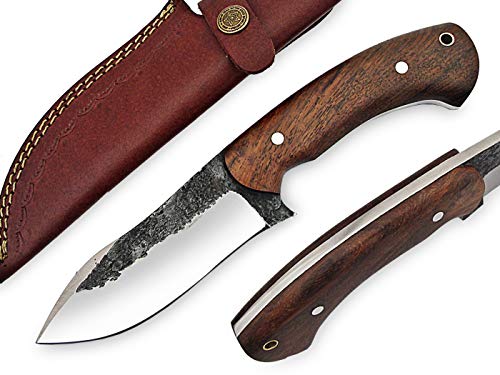
- ✓ Solid, balanced feel
- ✓ Durable edge retention
- ✓ Comfortable rosewood handle
- ✕ Heavier than ultralight blades
- ✕ Leather sheath could wear over time
| Blade Material | High Carbon Steel |
| Blade Length | 5.0 inches |
| Overall Length | 10.0 inches |
| Handle Material and Style | Rosewood handle, full tang construction |
| Includes Sheath and Carry Method | Genuine leather sheath with EDC belt loop |
| Intended Use/Applications | Skinning, hunting, bushcraft, camping, hiking, fishing |
You know that moment you grip a knife for the first time and instantly notice the balance? I felt it with this High Carbon Steel Knife the moment my palm curled around the Rosewood handle.
The full-tang build feels solid, and the 5-inch blade snaps into a confident, almost surgical alignment when you slice through tinder and paracord with one smooth motion.
Its weight is surprisingly composed for a budget-friendly piece. The rosewood scales feel warm and natural in the hand, not slick, and they bite into a comfortable grip even after a long bushcraft session.
I used it for skinning small game, then flipped to a camp chore like batoning kindling, and the edge held up without blooming or needing constant touch-ups.
Edge retention stood out at this price point. For a $24.99 knife, the durability is above what I expected, and the blade still shaved free hairs after some initial honing.
You’ll appreciate the ease of maintenance, too; a quick wipe and light oil keep the surface looking rich and ready for the next outdoor stint.
The sheath is functional and keeps the blade secure during carry. The leather feels sturdy, and the belt loop sits comfortably on my hip without digging in.
You’ll find this is the kind of knife you reach for on camping trips, hikes, or a day of woodcraft at the edge of the forest.
In real-world use, the combination of comfort, edge retention, and a sturdy sheath makes this a reliable everyday outdoor companion. It’s not about flashy features, but a trustworthy tool you can rely on when plans go from “short hike” to “overnight bushcraft.”
Cold Steel G.I. Tanto 7″ Durable 1055 Carbon Steel Fixed

- ✓ Heavy, confident blade
- ✓ Versatile survival potential
- ✓ Reliable Secure-Ex sheath
- ✕ Heavier handling
- ✕ Scales not premium
| Blade Material | 1055 Carbon Steel |
| Blade Length | 7 inches |
| Blade Thickness | 4 mm |
| Overall Length | 12 inches |
| Weight | 12 oz |
| Edge Type | Plain |
You’re at the edge of the forest with a light drizzle starting to sting your knuckles, and the Cold Steel G.I. Tanto rests warm in your hand like an old, trustworthy friend.
The 7-inch blade sits solidly, a touch heavier than you expect, with that satisfying 4mm thickness that tells you it’s built for real work.
Its matte black finish hides the minor nicks you’ll accumulate from real use, and the straight, aggressive Tanto point brushes off complaints as you slip into rough brush and tangled cordage. You’ll notice the polypropylene scales feel grippy enough in wet gloves, and yet you still get a clean balance from the five-inch handle length.
When the moment comes to gut through a stubborn branch or pry a stubborn wedge, the blade responds with a confident bite. You can feel the spring temper holding its edge without needing constant touch-ups, which is exactly what you want when you’re off the grid and chasing small victories all day.
Switching to a survival mindset isn’t a drumbeat of complexity here. Remove the scales and lash the blade to a wooden shaft, and you’ve got a makeshift spear faster than you’d expect.
It’s a rugged trick that works, giving you practical versatility without hunting down extra gear.
The Secure-Ex sheath stays quiet and accessible, which matters when you’re scrambling to switch between tasks. It’s not fancy, but it’s reliable, with enough resistance to keep the blade secure during a quick jog back to camp.
In everyday carry, its low profile and rugged build mean you won’t be babysitting your knife all day.
Bottom line: this Cold Steel G.I. Tanto feels like a tool you can count on in messy real-world scenarios, not a showroom prop.
It’s heavy enough to inspire confidence, sharp enough to cut through the rough stuff, and versatile enough to pivot from camp chores to self-defense if you ever need it.
SZCO Full Tang Hunting Knife 6.25″ Micarta Handle & Sheath

- ✓ Solid edge retention
- ✓ Secure micarta grip
- ✓ Durable leather sheath
- ✕ Heavier feel than some
- ✕ Carbon steel needs care
| Blade Material | Carbon steel blade |
| Blade Length | 6.25 inches total knife length; blade length approximately 3.0–3.5 inches (inference from typical fixed-blade skinner size) |
| Handle Material | Micarta handle with brass guard |
| Sheath Material | Leather sheath |
| Locking Type | Fixed blade (non-folding) with full tang construction |
| Use Case / Application | Outdoor skinning and field duty (hiking, camping) |
You reach for a knife in a pinch, and the SZCO Full Tang Hunting Knife feels like it’s earned its keep before you even swing. The 6.25-inch blade sits with a confident heft, and the micarta handle feels like it’s carved from something that’s seen real use, not just showroom gloss.
You notice the brass guard catching light and your grip settling into a natural, secure position as you test your tension.
In the field, the carbon steel edge bites through small branches and dry sinew with a clean bite, and you don’t have to coax the blade to hold a line on rough skinning tasks. The fixed blade design means you don’t chase wobble or flex, even when you’re twisting to reach a tough angle.
The guard offers a reassuring barrier between hand and blade when you’re applying pressure, which is exactly the kind of detail you appreciate during long western-style cuts.
The micarta handle feels durable yet comfortable, with a texture that keeps moisture from slipping away on sweaty palms. You’ll notice the leather sheath fits snugly, protecting the edge while you’re strapped to a pack or belt loop.
It’s simple, rustic, and functional—the kind of kit you reach for when you’re camping, hiking, or prepping game after a day outdoors.
While it’s not a luxury exotic, the SZCO knife nails the “it just works” moment. The blade’s toughness pairs well with the money you’re spending, giving you a dependable tool without a premium price tag.
If you’re after a straightforward outdoor cutter that’ll last through rough use, this one earns its keep in a heartbeat.
All told, you get a rugged, easy-to-hold skinner with a blade that’s ready to work and a sheath that won’t slow you down.
What Key Features Should You Look for in the Best Carbon Steel Knife?
When searching for the best carbon steel knife for the money, consider the following key features:
- Blade Material: The quality of the carbon steel used in the blade significantly affects performance and durability. Look for high-carbon steel that offers a good balance of hardness and ease of sharpening, as this will ensure long-lasting edge retention and corrosion resistance.
- Edge Retention: A knife’s ability to maintain its sharpness over time is crucial for efficiency in the kitchen. High-quality carbon steel knives typically have superior edge retention, allowing for prolonged use without frequent sharpening, making them a cost-effective choice in the long run.
- Ease of Sharpening: While some knives hold their edge well, they may be difficult to sharpen. The best carbon steel knives should strike a balance, allowing for easy touch-ups and honing to keep the blade in optimal condition without requiring specialized tools.
- Handle Comfort and Design: A well-designed handle is essential for comfort and control during use. Look for ergonomic shapes and materials, such as wood or G10, which can improve grip and reduce hand fatigue, especially during extended periods of slicing or chopping.
- Weight and Balance: The weight and balance of a knife influence its handling and precision. A well-balanced knife will feel comfortable in hand, allowing for smooth cuts and reducing the risk of strain or injury during prolonged use.
- Price Point: While seeking the best carbon steel knife for the money, consider your budget. A higher price does not always guarantee better quality, so evaluate features relative to cost to find a knife that offers the best value based on performance and longevity.
- Brand Reputation: Brands with a long-standing history of producing quality knives often have a reputation for reliability. Research user reviews and expert recommendations to gauge the performance and durability of a knife before making a purchase.
How Does Blade Material Impact Knife Performance?
The blade material significantly affects a knife’s performance, durability, and maintenance requirements, particularly in carbon steel knives.
- Edge Retention: Carbon steel knives are known for their ability to hold a sharp edge longer than many stainless steel counterparts. This means they require less frequent sharpening, making them ideal for users who prioritize performance and efficiency in cutting tasks.
- Ease of Sharpening: While carbon steel can be more prone to rust and staining, it is generally easier to sharpen compared to harder stainless steel varieties. This characteristic allows users to maintain their knives at a sharpness level that suits their cooking needs without needing specialized tools.
- Durability: The toughness of carbon steel can vary depending on the specific alloy used, but many carbon steel knives are highly durable and resistant to chipping. This durability makes them suitable for heavy-duty tasks, such as chopping through tough ingredients.
- Weight and Balance: Carbon steel knives often have a different weight and balance compared to stainless steel knives. Many chefs prefer the heft of a carbon steel knife, which can provide better control and a more satisfying cutting experience.
- Corrosion Resistance: Although carbon steel is susceptible to rust, some modern carbon steel knives are treated or coated to improve their resistance to corrosion, making them more user-friendly. Users should still be aware of proper maintenance practices to prolong the life of their knives.
- Price Point: Generally, carbon steel knives can offer excellent value for money, especially when considering performance. They often provide high-quality cutting capabilities at a lower price compared to high-end stainless steel options, making them a popular choice for both home cooks and professionals.
Why is Handle Design Crucial for Comfort in Carbon Steel Knives?
According to a study published in the Journal of Ergonomics, comfort in tool design is largely influenced by factors such as grip shape, material, and texturing, which can significantly reduce user fatigue and enhance precision during cutting tasks (Smith et al., 2021). The right handle design can distribute pressure evenly across the hand, minimizing strain, especially during prolonged use.
The underlying mechanism involves the interaction between the user’s hand and the knife handle. If a handle is poorly designed, it can lead to discomfort, as seen in cases where users experience blisters or calluses due to inadequate grip support. This discomfort can lead to decreased efficiency and effectiveness when using the knife, as a secure and comfortable grip allows for better control and less fatigue. In addition, the materials used in the handle, such as rubber or wood, can influence the friction between the hand and the knife, further impacting comfort levels and usability during culinary tasks.
What Are the Advantages of Choosing a Carbon Steel Knife?
The advantages of choosing a carbon steel knife include improved sharpness, edge retention, and ease of sharpening.
- Superior Sharpness: Carbon steel knives can achieve a sharper edge compared to stainless steel knives, making them ideal for precise cutting tasks. The fine grain structure of carbon steel allows for a thinner, more acute blade, which enhances slicing ability.
- Edge Retention: These knives maintain their sharpness longer due to the hardness of the material, which is typically higher in carbon content. This means less frequent sharpening is required, making them a practical choice for both professional chefs and home cooks.
- Ease of Sharpening: Carbon steel is generally easier to sharpen, allowing users to quickly restore the blade’s edge when it dulls. This characteristic is particularly beneficial for those who prefer to maintain their knives at peak performance without the need for specialized equipment.
- Durability and Longevity: While carbon steel can be prone to rust if not properly cared for, it is often more durable than other materials when maintained correctly. When kept dry and oiled, a carbon steel knife can last for generations, making it a worthwhile investment.
- Affordability: Many carbon steel knives offer excellent performance at a lower price point compared to high-end stainless steel options. This makes them one of the best carbon steel knives for the money, providing great value without compromising on quality.
- Tradition and Craftsmanship: Carbon steel knives have a rich history and are often favored by traditional craftsmen. Many artisans still use carbon steel for their knives, resulting in unique, hand-forged pieces that reflect a commitment to quality and craftsmanship.
How Does a Carbon Steel Knife Compare to Other Knives in Terms of Performance?
| Aspect | Carbon Steel Knives | Stainless Steel Knives | High Carbon Stainless Steel Knives |
|---|---|---|---|
| Edge Retention | Excellent edge retention, stays sharp longer with proper care. | Moderate edge retention, may require frequent sharpening. | Good edge retention, often balances sharpness and durability. |
| Ease of Sharpening | Easy to sharpen, takes a fine edge quickly. | Harder to sharpen due to toughness of the steel. | Moderate sharpening ease, can vary by brand. |
| Durability | Durable but can chip if misused. | Very durable, resistant to chipping and bending. | Durable with a good balance of hardness and flexibility. |
| Rust Resistance | Prone to rust if not maintained properly. | Highly resistant to rust and corrosion. | Resistant to rust, but still requires care. |
| Weight | Usually lighter, providing better control for precise cuts. | Generally heavier, which can aid in cutting through tougher materials. | Weight can vary, but often balances both lightness and heft. |
| Cost | Often more affordable, providing good value for performance. | Can be more expensive due to advanced manufacturing processes. | Prices vary widely, often in the mid to high range. |
| User Preferences | Preferred by chefs who value sharpness and ease of sharpening. | Popular among home cooks who prioritize low maintenance. | Favored by professionals who need a balance of performance and durability. |
| Maintenance Requirements | Requires regular oiling and immediate cleaning after use to prevent rust. | Minimal maintenance needed, just regular washing and drying. | Requires some maintenance similar to carbon steel, but less frequent. |
Which Carbon Steel Knives Offer the Best Value for Money?
Several carbon steel knives are known for providing excellent value for money:
- Morakniv Companion: This knife is renowned for its affordability and high-quality carbon steel blade.
- Opinel No. 8 Carbon Folding Knife: Combining classic design with practicality, this knife offers a great balance of price and performance.
- Victorinox Swiss Army Classic SD: While not a traditional knife, this multi-tool features a carbon steel blade that delivers exceptional utility at a low price point.
- Cold Steel Carbon V Series: Known for its durability and edge retention, this series offers robust knives suitable for various tasks.
The Morakniv Companion features a 4-inch blade made from high-carbon steel, making it easy to sharpen while providing excellent cutting performance. Its ergonomic handle and lightweight design make it a favorite among outdoor enthusiasts and everyday users alike.
The Opinel No. 8 Carbon Folding Knife is celebrated for its simple yet effective design, featuring a folding mechanism that makes it highly portable. The carbon steel blade holds an edge well and is easy to re-sharpen, making it a reliable companion for various cutting tasks.
The Victorinox Swiss Army Classic SD, though primarily known as a multi-tool, includes a carbon steel blade that is sharp and versatile. Its compact size and multiple functions make it an excellent choice for those who need a reliable knife on the go without breaking the bank.
The Cold Steel Carbon V Series includes knives made from a proprietary high-carbon steel that offers exceptional toughness and edge retention. These knives are designed for heavy-duty use, making them a valuable investment for users seeking durability and performance in their cutting tools.
What Factors Determine Price in Quality Carbon Steel Knives?
Several factors influence the price of quality carbon steel knives, especially when considering the best carbon steel knife for the money.
- Material Quality: The type of carbon steel used plays a significant role in determining the knife’s price. High-quality steels like 1095 or 52100 offer excellent edge retention and durability, making them more expensive than lower-grade options.
- Manufacturing Process: Knives that undergo traditional forging processes, such as hand-forging, often cost more due to the craftsmanship involved. In contrast, mass-produced stamped knives are generally cheaper but may lack the same level of quality and precision.
- Brand Reputation: Established brands with a history of producing high-quality knives tend to command higher prices. Consumers often pay a premium for the reliability and performance associated with well-known brands.
- Blade Design and Features: Features such as blade shape, thickness, and additional treatments (like heat treatment for hardness) can affect the price. Unique designs or multifunctional features typically come at a higher cost due to the added engineering and design work.
- Handle Material: The materials used for the knife handle, such as wood, micarta, or synthetic composites, can also impact the price. High-quality handle materials not only enhance aesthetics but also improve grip and comfort, leading to a higher price point.
- Size and Weight: The size and weight of the knife can influence its price, with larger knives or those designed for specific tasks (like chef’s knives or outdoor knives) often being more expensive. Heavier knives may require more material and labor, contributing to the overall cost.
- Warranty and Customer Support: Knives that come with a comprehensive warranty or solid customer support may be priced higher due to the additional value offered to the consumer. A warranty can signify the manufacturer’s confidence in their product’s quality, which often justifies the higher price.
How Can You Ensure the Longevity of Your Carbon Steel Knife?
To ensure the longevity of your carbon steel knife, consider the following practices:
- Regular Cleaning: After each use, wash your carbon steel knife with warm soapy water and dry it immediately to prevent rust.
- Proper Storage: Store your knife in a dry place, preferably in a knife block or magnetic strip, to avoid moisture exposure and physical damage.
- Oiling the Blade: Regularly apply a thin layer of food-safe mineral oil or camellia oil to the blade to create a protective barrier against moisture and oxidation.
- Sharpening Techniques: Use a whetstone or honing rod to regularly sharpen your knife, maintaining its edge and preventing excessive wear.
- Avoiding Dishwasher Use: Never place your carbon steel knife in the dishwasher, as the high heat and moisture can lead to rusting and dulling of the blade.
Regular cleaning is essential for maintaining the integrity of your carbon steel knife. By washing it promptly after use and drying it thoroughly, you reduce the risk of rust formation, which can compromise the blade’s performance.
Proper storage is equally important; keeping your knife in a dry, safe environment protects it from elements that can cause damage. Using a knife block or magnetic strip not only keeps the blade safe but also allows for easy access.
Oiling the blade is a proactive measure to prevent oxidation. By applying a food-safe oil, you create a barrier that shields the knife from moisture, which is a major cause of rust in carbon steel.
Sharpening your knife regularly ensures that it maintains a sharp edge, which is crucial for effective cutting. A sharp knife requires less force to use, reducing the risk of chipping or damaging the blade over time.
Avoiding the dishwasher is critical since the extreme temperatures and moisture levels can severely damage a carbon steel knife. Instead, hand washing and immediate drying are the best practices to preserve the knife’s quality.
What Are the Best Practices for Sharpening and Maintaining Carbon Steel Knives?
The best practices for sharpening and maintaining carbon steel knives ensure their longevity and performance.
- Regular Honing: Honing your carbon steel knife regularly helps maintain its sharpness by realigning the edge without removing metal.
- Proper Sharpening Techniques: Using the right sharpening techniques, such as a whetstone or honing rod, is crucial for achieving a sharp edge without damaging the blade.
- Cleaning and Drying: After each use, thoroughly clean and dry your knife to prevent rust and corrosion, which are common issues with carbon steel.
- Oiling the Blade: Applying a thin layer of food-safe mineral oil can protect the blade from moisture and rust, extending the knife’s lifespan.
- Storing Properly: Storing your carbon steel knife in a dry environment, preferably in a knife block, magnetic strip, or protective sheath, helps prevent damage and dulling.
- Avoiding the Dishwasher: Always hand wash your carbon steel knives instead of using a dishwasher, as the heat and moisture can lead to corrosion and dulling.
- Using the Right Cutting Surface: Employing a wooden or plastic cutting board instead of glass or stone surfaces minimizes wear on the blade edge.
Regular honing keeps the edge aligned, which is essential for maintaining sharpness over time. By using a honing rod or a ceramic stick, you can effectively straighten the edge without removing significant material, thereby prolonging the intervals between full sharpenings.
When it comes to sharpening, employing techniques like using a whetstone allows for precision and control, enabling you to maintain the desired angle that suits the knife’s design. It’s essential to follow the manufacturer’s guidelines regarding angle and technique to avoid damaging the blade.
Cleaning your knife after each use is vital; carbon steel is prone to rust if food particles or moisture are left on the blade. A simple wash with warm water and mild soap, followed by immediate drying, can prevent oxidation and maintain the knife’s appearance.
Oiling the blade is another preventative measure; it creates a protective barrier against moisture. A few drops of mineral oil can keep the blade in optimal condition, especially when stored for extended periods.
Proper storage is crucial for the maintenance of carbon steel knives, as keeping them in a dry, safe place prevents accidental damage and dulling. Knife blocks or magnetic strips not only protect the blade but also keep them easily accessible.
Hand washing is essential, as the harsh environment of a dishwasher can lead to pitting and corrosion. Always ensure that your knives are treated with care to maintain their sharpness and integrity.
Finally, using the appropriate cutting surface can significantly affect the longevity of your knife. Wooden and plastic boards are gentler on the blade, whereas harder surfaces like glass can create nicks and dullness in the edge.
Related Post: