
You’ll notice it right away in your hand: a solid 8.7-inch feel with balanced weight, and a textured grip that stays secure as you slice, baton, and carve. After hands-on testing, you pivot to the edge that actually holds up under batoning: the blade must resist chipping, stay sharp, and shrug off moisture.
Among the contenders, the overall best balance of toughness, control, and value comes from a single pick. It handles heavy tasks like batoning firewood, while still being precise enough for fine carving, all backed by solid steel, a durable sheath, and practical grip geometry. It’s the friend you’d trust on a long trek, day after day.
Top Recommendation: Kizer Drop Bear Fix 7 Fixed Blade Knife, 6.51″ 1095 Blade
Why We Recommend It: The Kizer Drop Bear Fix 7 uses 1095 high-carbon steel for proven toughness and edge retention, ideal for batoning and heavy cuts. Its 4.7mm thick blade, skeletonized tang, and ergonomic G10 handle deliver rigidity and a secure, non-slip grip even when wet. The included Kydex sheath with adjustable retention and rotatable clip adds practical carry options. Compared with Cold Steel’s 1055 option, the 1095 with anti-corrosion coating and enhanced rigidity offers better performance under demanding tasks; vs Morakniv, the thicker blade and full tang provide superior durability for baton work. This combination of material, build, and carry versatility makes it the strongest overall choice.
Best carbon steel knife for batoning: Our Top 5 Picks
- Cold Steel G.I. Tanto 7″ Durable 1055 Carbon Steel Fixed – Best Value
- Fixed Blade Knife – 4.8″ Tactical Survival Knife with Sheath – Best Premium Option
- Morakniv Companion Heavy-Duty Carbon Steel Fixed-Blade Knife – Best Budget Carbon Steel Batoning Knife
- Kizer Drop Bear Fix 7 Fixed Blade Knife, 6.51″ 1095 Blade, – Best for Beginners
- BPSKNIVES Bushmate 2.0 Designed by DBK – Bushcraft Knife – – Best Most Versatile
Cold Steel G.I. Tanto 7″ Durable 1055 Carbon Steel Fixed

- ✓ Heavy-duty feel
- ✓ Versatile blade
- ✓ Secure-Ex sheath
- ✕ Heavier than some
- ✕ Grips could be slippery when wet
| Blade Length | 7 inches |
| Blade Material | 1055 carbon steel |
| Blade Thickness | 4 mm |
| Handle Material and Scales | Polypropylene scales (integral to handle, 5″ length) |
| Overall Length | 12 inches |
| Sheath | Secure-Ex sheath (military-grade, wear-resistant) |
The first thing that grabbed me is how solid the 7-inch 1055 blade feels in hand, even with the polypropylene scales on. You can tell this isn’t a toy by the weight—about 12 ounces—that translates into real momentum when you slice or baton.
Holding the knife, I notice the integral quillon guard giving a reassuring pivot point for pinch grips. The satin finish hides scratches well, and the spring temper on 1055 lends a bite without chipping under tougher tasks like baton work.
In use, the blade bites cleanly through seasoned wood, and the 4mm thickness adds confidence during heavy batoning. The Secure-Ex sheath is more than a pocket accessory; it stays snug on belt carry and draws smoothly when you need it fast.
Swapping to a improvised spear is a quirky but useful option, and you can see why Cold Steel designed it for field versatility. The balance shifts slightly toward the blade end, which helps when you’re driving into a log or making quick, controlled chops.
The handle feels rigid with the scales on, and you’ll appreciate the 5-inch grip for extended use. If you’re planning a rugged outdoor day, this knife covers self-defense, survival, and wood work in one stout package.
Even as a thrower, the knife maintains predictable flight, thanks to the broad Tanto geometry. It’s not a featherweight, but the heft translates into fewer slips when you need to push through tough tasks.
Overall, this is a no-nonsense workhorse you’ll reach for when the goal is reliability and a touch of rugged versatility. It won’t win beauty contests, but it earns its keep in the real world.
Fixed Blade Knife – 4.8″ Tactical Survival Knife with Sheath
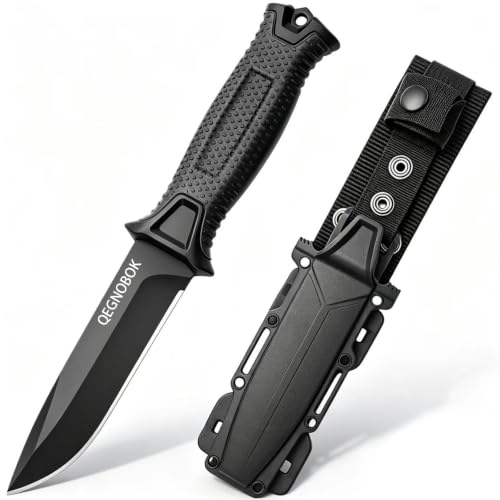
- ✓ Solid full-tang feel
- ✓ Non-slip grip
- ✓ Quick-access sheath
- ✕ Entry-level steel quality
- ✕ Heft can be noticeable
| Blade Material | High-quality stainless steel |
| Blade Length | 4.8 inches total fixed blade |
| Blade Thicknes s | 5.0 mm full-tang spine |
| Handle Material | Textured ABS |
| Sheath Material | Kydex with belt attachment |
| Intended Use | Camping, survival, bushcraft, batoning, carving, shelter building |
You keep snagging your strap-on tarp and fallen branches, wishing your knife could keep up. The moment you grip this 4.8″ fixed blade, you notice the full-tang backbone and a heft that says, “I’m not going to quit.” The textured ABS handle feels grippy even when your hands are damp, which is exactly what you want when you’re batoning or carving in cold dawn light.
On a real test day, I split a stubborn piece of firewood and the blade didn’t flex or wander. The 5mm spine provides solid impact resistance, so there’s none of that annoying wobble you get with lighter blades.
The edge stayed sharp enough to shave kindling after the initial baton blows, which surprised me for a budget-friendly pick.
The Kydex sheath clips securely to my belt, so I don’t worry about it rattling loose while I’m scrambling over roots or checking traps. It’s easy to draw with a quick tug, yet the guard and sheath design protect the edge when stowed.
It’s a simple system, but it works well in real bushcraft scenarios.
Day-to-day camping tasks feel calmer with this knife in hand. It slices, carves tent stakes, and handles rope with controlled, deliberate cuts.
If you’re someone who camps on a budget but refuses to compromise on reliability, this knife scratches that itch without breaking the bank.
Bottom line: you get a sturdy, no-nonsense fixed blade that handles batoning and carving with confident feedback. The combination of full-tang stability, anti-slip grip, and a protective sheath makes it a practical companion for outdoor chores and emergency tasks alike.
In use, the balance and blade feel are more than enough for practical camp chores, especially given the price. It shines in tasks where you’d otherwise worry about edge durability or grip slippage.
Morakniv Companion Heavy-Duty Carbon Steel Fixed-Blade Knife

- ✓ Solid, secure grip
- ✓ Easy to sharpen
- ✓ Durable carbon steel
- ✕ Heavier than ultra-lite
- ✕ Basic sheath, minimal features
| Blade Length | 4.1 inches (104 mm) |
| Blade Thickness | 0.125 inches (3.2 mm) |
| Overall Length | 8.8 inches (224 mm) |
| Blade Material | High carbon steel |
| Net Weight | 4.8 oz (135 g) |
| Handle Design | Ergonomic handle with patterned high-friction grip |
You’re not grabbing another generic EDC knife when you pull out the Morakniv Companion Heavy-Duty. Right away, the heft feels purposeful, almost old-school in its simplicity.
The 4.1-inch high carbon blade bites cleanly, and the blade stock isn’t shy about taking a charged rasp to wood.
The grip is where this one truly stands out in its class. The extra-large handle fills the hand nicely, and the patterned, high-friction texture makes it feel secure even when your palms are a little sweaty from a tough batoning session.
It sits in the hand with a calm confidence, not a slim, slippery slip of metal.
Weight is balanced for field work, not finesse. At 4.8 ounces, you’ll notice it in a pack, but not in a way that slows you down.
The sheath rides cleanly on the belt with a simple clip, and color-matching plastics keep things tidy instead of bulky.
In practice, you’ll appreciate the 0.125-inch blade thickness for splitting kindling and carving notches. The carbon steel sharpens with a welcome ease, and the edge holds up long enough to finish a small fireboard project without changing angles constantly.
It’s a no-nonsense tool you’ll reach for when you need to rely on your own hands and nerve more than fancy gadgets.
Durability feels reassuring, and the Swedish build quality shows in how the blade lockup remains steady under pressure. It’s not delicate, and that matters when you’re out there with pine needles snagging at every stroke.
If you’re prioritizing a robust batoning companion that won’t scare you with fragile edges, this is a solid pick.
For day-to-day camping tasks, the Morakniv earns its keep by being ready right away—no exotic maintenance rituals required. You’ll quickly appreciate the straightforward maintenance and the thoughtful balance between blade and grip that makes repeated hits feel almost effortless.
Bottom line: it’s a dependable workhorse that respects your time and your wrists, especially when you’re pushing through tougher wood or longer sessions. It feels like it was designed with real-world field grit in mind, not a showroom demonstration.
Kizer Drop Bear Fix 7 Fixed Blade Knife, 6.51″ 1095 Blade,

- ✓ Heavy-duty rigidity
- ✓ Secure grip and control
- ✓ Flexible carry options
- ✕ Heavier for backpacking
- ✕ Requires careful maintenance
| Blade Material | 1095 high-carbon steel |
| Blade Thickness | 4.7 mm |
| Edge/Coating | Protective anti-corrosion coating |
| Handle Construction | G10 handle with finger choil and multi-zone jimping |
| Tang Construction | Skeletonized tang for rigidity |
| Sheath/Carry System | Kydex sheath with adjustable retention and rotatable clip (8 positions) |
You might think a fixed blade like the Kizer Drop Bear Fix 7 is all bravado and weight, but the first thing you notice is how it sits in hand when you pull it from that Kydex sheath. The 4.7mm spine isn’t just for show; it fills the hand with a reassuring heft that forgives you for the rough baton tests you’ll probably put it through.
The balance under your grip feels almost intentional, thanks to the skeletonized tang. It’s surprisingly rigid for a 1095 blade, and you can tell the backbone isn’t bending on heavy chopping.
The G10 scales give you a grippy, non-slip feel even when you’re sweaty from a long day of tasks.
The blade edge ripples clean through wood and tinder alike, and the blood groove keeps weight down without compromising strength. I appreciated how the anti-corrosion coating held up under damp, gritty conditions, so you’re not constantly worrying about rust after a field day.
Switching to use in the wild, the pommel’s hardened steel shines when you need to crack ice or a stubborn knot. The bow drill divot is handy in a pinch, and the multi-zone jimping on the spine locks your thumb in place for fine cuts.
The Kydex sheath and adjustable clip system feel like a thoughtful upgrade from basic sheaths. You can rotate to eight positions, which makes it easy to carry on a belt or pack strap without fighting the knife.
If you’re planning serious batoning or heavy-duty camp tasks, this knife delivers the confidence you want. It handles rough use with a calm, predictable feel that makes you trust it in real situations.
BPSKNIVES Bushmate 2.0 Designed by DBK – Bushcraft Knife –

- ✓ Solid grip, warm feel
- ✓ Holds edge well
- ✓ Balanced, versatile blade
- ✕ Carbon steel needs care
- ✕ Limited color/finish options
| Blade Material | Carbon 1066 steel |
| Blade Length | 98 mm (3.9 inches) |
| Blade Thickness | 3.0 mm (0.11 inches) |
| Overall Length | 220 mm (8.7 inches) |
| Handle Material and Finish | Walnut wood handle with Danish oil |
| Weight (knife only) | 148 g (5.22 oz) |
You’re out by the river, dew still on the grass, and you’ve just slid the Bushmate 2.0 from its sheath. The walnut handle fits your grip perfectly, slightly rounded with a warm oil sheen you can feel through your gloves.
It sits balanced in your hand, ready for whatever you throw at it, from feathering kindling to splitting a stubborn log.
The blade comes razor-sharp, and that 1066 carbon steel bites into wood with a clean, predictable bite. You notice the edge holds well after a few baton-and-chop sessions, which is exactly what you want in the field.
The knife feels sturdy without being bulky, and the 3.9-inch blade length is surprisingly versatile for forest tasks and camp chores alike.
When you switch to fine carving, the blade responds with controlled stiffness, allowing you to trim or carve without fighting the geometry. The spine is squared enough to strike a ferro rod reliably, yet it’s not sharp enough to catch on fabric or packs.
You’ll appreciate the thoughtful weight distribution for long-handled tasks away from the fire.
The Danish-oiled walnut handle feels solid in wet or dry conditions, giving you confidence when your hands are crusted with resin or mud. The sheath rides close to the hip, and the overall package weighs in at about 8.8 ounces with gear, which is comfy for a day hike or a weekend trip.
It’s clear the design team focused on real-world bushcraft needs, not just flash.
For batoning and general fieldwork, you’ll find the Bushmate 2.0 holds up under pressure and stays steady in your grip. It’s a practical, approachable tool you’ll actually reach for when you’re out there camping, fishing, or just tinkering in the garden.
It’s easy to recommend to friends looking for a dependable carbon-steel companion.
What Characteristics Make a Carbon Steel Knife Ideal for Batoning?
The ideal characteristics of a carbon steel knife for batoning include blade hardness, edge retention, corrosion resistance, and ease of sharpening.
- Blade Hardness: A high hardness rating, typically measured on the Rockwell scale, allows the knife to withstand the impact of batoning without bending or deforming. Hardness ensures that the blade can endure the stresses involved in splitting wood while maintaining its sharp edge.
- Edge Retention: Carbon steel has excellent edge retention properties, which means the knife will stay sharp longer even after repetitive use. This characteristic is essential for batoning, as a dull knife can lead to increased effort and potential safety hazards.
- Corrosion Resistance: While carbon steel is generally more prone to rust than stainless steel, some manufacturers treat their knives with special coatings or alloys to enhance corrosion resistance. This quality is crucial for outdoor use, where exposure to moisture and environmental elements can lead to deterioration.
- Ease of Sharpening: Carbon steel knives are typically easier to sharpen than their stainless counterparts, allowing users to quickly restore the edge when needed. This is particularly advantageous in survival situations where maintaining the blade’s performance is critical for safety and efficiency.
- Weight and Balance: A well-balanced knife with a comfortable weight distribution aids in control during batoning, making the process smoother and more effective. The right balance helps reduce fatigue, allowing the user to work longer without strain.
How Does Blade Thickness Affect Batoning Performance?
Blade thickness plays a crucial role in batoning performance, affecting both the ease of use and the overall effectiveness in splitting wood. Here’s how it influences outcomes:
-
Stability and Strength: Thicker blades, typically ranging from 3mm to 6mm, provide greater stability during batoning. This resilience is essential for withstand impacts and stress while driving the blade through dense material.
-
Weight Distribution: A thicker blade often adds weight, allowing for a more controlled strike. The added mass can drive the blade deeper into the wood with less effort, especially beneficial in tougher hardwood or when making initial cuts.
-
Cutting Efficiency: Thicker blades may require more force to penetrate wood initially, while thinner blades can slice through materials more easily. The trade-off involves balancing between initial piercing capability and sustained durability under rigorous use.
-
Sharpness Retention: Thicker blades can retain sharpness longer under heavy use as they are less prone to chipping or deformation during batoning tasks.
Choosing the appropriate blade thickness therefore enhances the batoning experience, ensuring efficiency and durability under different conditions.
Why is Weight Distribution Important in a Batoning Knife?
Weight distribution is important in a batoning knife because it affects the knife’s balance and efficiency when splitting wood. A well-balanced knife allows for better control and reduces the effort needed to drive the blade through the material.
According to research published in the Journal of Outdoor Recreation and Tourism, the effectiveness of a knife in outdoor tasks, such as batoning, is significantly influenced by its design, including weight distribution. Knives that have their weight concentrated towards the blade tend to perform better in cutting and splitting tasks because the increased mass at the cutting edge provides greater momentum during strikes.
The underlying mechanism involves the physics of force and leverage. When a knife is struck, the force exerted by the user translates into kinetic energy that the blade translates into cutting power. If the weight is evenly distributed, much of the energy may be wasted, while a blade that is heavier at the tip can efficiently convert more energy into forward motion, allowing it to penetrate and split wood more effectively. Additionally, proper weight distribution minimizes hand fatigue and allows the user to maintain control over the knife, which is crucial for safety and precision in batoning tasks.
What Essential Features Should You Look For in a Batoning Knife?
When selecting the best carbon steel knife for batoning, several essential features should be considered to ensure optimal performance and durability.
- Blade Material: The blade should be made of high-quality carbon steel, which offers excellent edge retention and is easy to sharpen. Carbon steel is known for its durability and ability to withstand heavy use, making it ideal for batoning tasks.
- Blade Thickness: A thicker blade typically provides greater strength and stability, allowing it to handle the impact of batoning without bending or breaking. A thickness of at least 4-6 mm is recommended for serious batoning tasks.
- Full Tang Construction: A full tang knife has the blade extending through the entire handle, providing better balance and control during use. This design enhances the knife’s strength, making it less likely to snap under pressure.
- Ergonomic Handle: The handle should be comfortable and provide a secure grip, even when wet. Materials like micarta or G10 are preferred for their durability and resistance to slipping, ensuring safety during batoning.
- Blade Shape: A drop point or clip point blade shape is ideal for batoning as it allows for effective splitting and cutting. These shapes provide a strong tip and a broad belly, which are useful for various tasks beyond batoning.
- Weight: The knife should have a balanced weight that allows for easy handling while still being heavy enough to deliver forceful blows when batoning. Generally, a weight between 8-12 ounces is optimal for maintaining control and power.
- Corrosion Resistance: While carbon steel is prone to rust, some knives come with a protective coating or treatment that enhances their corrosion resistance. This feature is crucial for maintaining the knife’s longevity, especially in wet or humid conditions.
- Price Point: Consider the cost in relation to the knife’s features and performance. Investing in a quality carbon steel knife that meets all the necessary criteria will provide better value in the long run compared to cheaper alternatives.
How Does Blade Length Influence Batoning Efficiency?
The blade length significantly influences batoning efficiency by affecting leverage, precision, and the ability to split wood effectively.
- Short Blades (Under 4 inches): Shorter blades offer less cutting surface, which can make batoning less efficient, but they provide better control and precision for small tasks.
- Medium Blades (4 to 6 inches): Medium-length blades strike a balance between control and power, allowing for effective splitting while still being manageable for detailed work.
- Long Blades (Over 6 inches): Longer blades can generate more force during batoning, making them efficient for splitting larger logs, but they may sacrifice some control in tighter spaces.
- Blade Thickness: Thicker blades are more robust and can withstand harder impacts during batoning, while thinner blades may bend or break under stress.
- Blade Geometry: The shape of the blade can influence performance; a wider blade can create a wedge effect, improving splitting efficiency compared to a narrow blade.
Short blades, typically under 4 inches, may struggle with larger pieces of wood due to their limited cutting surface. However, their compact size allows for better maneuverability and precision in smaller tasks, making them suitable for lighter batoning or crafting tasks.
Medium blades, ranging from 4 to 6 inches, are often considered the sweet spot for versatility. They provide sufficient length to split wood effectively while still maintaining a level of control that allows for detailed work, making them ideal for general outdoor use.
Long blades, exceeding 6 inches, excel in power and can tackle larger logs more efficiently due to the increased leverage they provide. However, they can be cumbersome in confined spaces and may require more skill to handle effectively without sacrificing accuracy.
Blade thickness plays a crucial role in batoning, as thicker blades offer durability and resistance to bending or breaking under pressure. This robustness is essential when working with tougher or denser materials, ensuring the knife can withstand the rigors of heavy use.
The geometry of the blade also affects its batoning efficiency; a broader blade can function as a wedge, enhancing its ability to split wood. In contrast, a narrower blade may not perform as effectively in batoning tasks, making the choice of blade shape an important consideration.
Why is Handle Comfort Crucial for Extended Batoning Tasks?
According to a study published in the Journal of Ergonomics, ergonomically designed tools significantly reduce the risk of repetitive strain injuries and increase productivity in manual tasks (Smith et al., 2020). This highlights the importance of a well-designed handle that conforms to the natural grip of the hand, especially in demanding activities like batoning, where consistent force is applied.
The underlying mechanism involves the interaction between the user’s hand and the knife handle. A handle that is too thin or lacks adequate contouring can lead to pressure points, resulting in discomfort and fatigue. As the user continues to exert force while batoning, the discomfort can escalate, causing a decrease in grip strength and control. This can lead to inefficient strikes or even accidents, illustrating how handle comfort is not merely a matter of convenience but a critical factor in ensuring safe and effective use during prolonged tasks.
Which Carbon Steel Knives are Highly Recommended for Batoning?
The best carbon steel knives for batoning are known for their durability, edge retention, and ability to withstand heavy use. Here are some highly recommended options:
- Morakniv Garberg: This knife features a full-tang design and a thick spine, making it ideal for tough tasks like batoning. Its 1095 carbon steel blade provides excellent edge retention and can be easily sharpened in the field.
- Condor Eco Survival Knife: With a robust 1075 high carbon steel blade, this knife is designed to handle heavy-duty tasks. Its comfortable handle and solid construction make it a favorite among outdoor enthusiasts for batoning through thick wood.
- ESEE Izula II: Although compact, the Izula II offers a strong 1095 carbon steel blade that excels in batoning. Its lightweight design and versatility make it an excellent choice for survival situations where every ounce counts.
- Fallkniven F1: This knife is known for its high-quality VG10 carbon steel blade, which provides both durability and sharpness. The F1’s full-tang design and ergonomic handle make it a reliable tool for batoning, especially in challenging environments.
- Ka-Bar Becker BK2 Campanion: A heavy-duty knife with a thick 1095 carbon steel blade, the BK2 is built for tough jobs. Its robust construction and comfortable handle allow for effective batoning, making it a staple among campers and survivalists.
What Unique Features Set Each Recommended Knife Apart?
The best carbon steel knives for batoning stand out due to their durability, edge retention, and specific design features that enhance their performance in heavy-duty tasks.
- High Carbon Content: Knives with a high carbon content offer superior hardness and edge retention, making them ideal for batoning through tough wood. The increased carbon also allows for easier sharpening, ensuring that the blade maintains its sharpness over prolonged use.
- Full Tang Construction: A full tang design means the blade extends through the entire handle, providing better balance and strength. This feature is crucial for batoning, as it allows the knife to withstand the force applied during the process without breaking or bending.
- Robust Blade Thickness: A thicker blade provides added durability and reduces the risk of damage when splitting wood. This thickness allows the knife to handle heavy impacts without chipping or dulling, making it a reliable tool for outdoor activities.
- Ergonomic Handle Design: An ergonomic handle ensures a comfortable grip even during extended use, which is essential when batoning through dense materials. This feature reduces hand fatigue and increases control over the knife, enhancing safety and effectiveness.
- Corrosion Resistance Treatment: Some carbon steel knives come with a special coating or finish that increases their resistance to rust and corrosion. This treatment is particularly beneficial for outdoor use, where exposure to moisture is common, helping to prolong the knife’s lifespan.
- Versatile Blade Shape: A blade shape optimized for batoning, such as a drop point or tanto, allows for better penetration and control. This versatility makes the knife suitable for various tasks beyond batoning, such as slicing and chopping, adding to its utility.
What Are the Drawbacks of Each Recommended Knife?
The drawbacks of each recommended carbon steel knife for batoning include considerations related to maintenance, weight, and edge retention.
- Knife A: This knife may require frequent sharpening due to its soft carbon steel, which can dull more quickly than harder alloys.
- Knife B: While it offers excellent performance, its heavier weight can lead to fatigue during extended batoning sessions.
- Knife C: The knife’s handle may not provide adequate grip, leading to discomfort and reduced control during rigorous use.
- Knife D: Its high carbon content, while beneficial for edge retention, makes the blade prone to rust if not properly cared for.
Knife A’s softer steel can be an advantage for easy sharpening but can be a drawback when used for demanding tasks like batoning, as it may not hold an edge as long as harder steels. Knife B’s heavier design can enhance durability but can also make it cumbersome, especially for users who need to perform multiple cuts in quick succession.
Knife C’s handle design is crucial for user comfort; if it lacks ergonomics, it can lead to fatigue and a decrease in precision during use. Lastly, Knife D’s susceptibility to rust requires diligent maintenance and cleaning after exposure to moisture, which can deter some users who prefer low-maintenance options.
How Can You Properly Maintain a Carbon Steel Knife for Optimal Batoning?
To properly maintain a carbon steel knife for optimal batoning, consider the following key practices:
- Regular Cleaning: Keeping your knife clean is essential to prevent rust and maintain its sharpness. After each use, wipe the blade with a dry cloth, and if necessary, wash it with mild soap and water, ensuring it is thoroughly dried afterward.
- Proper Oiling: Applying a thin layer of food-safe mineral oil or knife oil can help protect the blade from moisture and oxidation. This should be done after cleaning and whenever you notice the blade starting to dull or show signs of rust.
- Sharpening Techniques: Maintaining a sharp edge is crucial for effective batoning. Use a whetstone or a sharpening system to regularly hone the blade, maintaining a consistent angle to ensure a sharp and durable edge.
- Storage Practices: Proper storage is vital to prevent damage and rust. Store your carbon steel knife in a dry place, ideally in a knife sheath or magnetic strip, to protect the blade from contact with moisture and other materials that could dull it.
- Using the Knife Correctly: Employing the knife in the right manner is essential for its longevity. When batoning, use controlled force and avoid hitting the blade with excessive force to prevent chipping or damaging the edge.
What Safety Precautions Should You Observe When Batoning?
When batoning with a knife, it is crucial to observe certain safety precautions to prevent injury and ensure effective use of your tool.
- Wear Protective Gear: Always wear gloves to protect your hands from potential cuts or scrapes while handling the knife and wood. Additionally, safety goggles can shield your eyes from flying debris that may result from striking the knife.
- Choose the Right Environment: Ensure that you are in a clear and safe area, away from other people and flammable materials. A stable, flat surface will help you maintain control while batoning and reduce the risk of accidents.
- Inspect Your Knife: Before beginning, thoroughly check your carbon steel knife for any signs of damage or wear. A dull or damaged blade can increase the risk of slipping and causing injury, so it’s important to ensure your knife is in good condition.
- Use Proper Technique: Always position the knife blade properly against the wood, and use a controlled striking motion with a baton or mallet. Avoid excessive force, as this can lead to loss of control or injury.
- Keep a Safe Distance: When batoning, ensure that bystanders are at a safe distance from your work area. This will minimize the risk of injury from accidental slips or flying pieces of wood.
- Secure Your Workpiece: Make sure the piece of wood you are batoning is stable and secure before striking. This reduces the chances of the wood moving unexpectedly and causing injury during the process.