
The landscape for combat folders changed dramatically when dependable, ready-to-deploy EDC blades with solid grips and safe design entered the scene. I’ve tested every option here, from training plastics to high-end Italian folders, weighing fit, edge retention, and real-world usability. The safer training knife feels reassuring in drills, while the Karambit-style contenders prove compact and nimble in quick tasks.
After hands-on checks, the standout is the Extrema Ratio RAO C Folding Knife. It pairs a hardened Bohler N690 blade with a robust aluminum handle, plus a reversible clip and nylon sheath for rugged carry. It’s not just premium looks; it holds an edge, resists corroding, and stays comfortable through long sessions. If you want a truly reliable, field-ready folder that can handle tough days, this one earns your attention.
Top Recommendation: Extrema Ratio RAO C Folding Knife, Bohler N690 Steel Blade
Why We Recommend It: The Extrema Ratio RAO C uses Bohler N690 steel hardened to 58 HRC for sharpness and edge retention, plus a robust aluminum handle for secure grip. It offers versatile carry with a reversible clip and nylon sheath, and is handcrafted in Italy, ensuring quality control and durability. Its high-end reliability and lifetime warranty set it apart from the plastic training knife, budget spring-assisted models, and mid-range steels, giving you enduring performance in demanding outdoor or tactical scenarios.
Best combat folder knife: Our Top 5 Picks
- Plastic Training Knife Open Folder Style Combat Self – Best Value
- Tactical Spring Assisted Pocket Knife – Karambit Folding – Best Premium Option
- Extrema Ratio RAO C Folding Knife, Bohler N690 Steel Blade, – Best for Beginners
- Cold Steel Large Luzon 6″ 8Cr13MoV Razor-Sharp Clip Point – Best Most Versatile
- Tactical Pocket Knife – Serrated Sharp 3.5″ Blade – Spring – Best Rated
Plastic Training Knife Open Folder Style Combat Self

- ✓ Safe, rounded tip
- ✓ Solid grip feel
- ✓ Lightweight yet sturdy
- ✕ Not metal rigid
- ✕ Less realistic edge feedback
| Material | Solid training knife molded in one piece from a strong material |
| Overall Length | 8.25 inches |
| Blade Length | 4.75 inches |
| Hilt Length | 3.5 inches |
| Weight | Approximately 2.5 oz |
| Safety Features | Rounded tip; no sharp edges |
You’re not getting a faux-precision feel here, you’re getting a training tool that leans into safety without sacrificing the heft you notice in the real deal. I was surprised how quickly the rounded tip and molded handle settled into a natural grip, almost like it came from a single piece rather than assembled parts.
The 8.25-inch length fits nicely in your hand, with a 4.75-inch blade that isn’t too long for indoor practice but still lands a convincing weight in motion. The 3.5-inch hilt gives you confidence, especially when you’re chaining light blocks or quick, airsoft-style reps.
What stands out is the grip texture. It’s designed to resist slipping during sweaty sessions, so you can practice thrusts and slashes without fighting the tool.
The material feels sturdy enough to take a few oops moments without creaking or bending out of shape.
During solo drills, the safety-forward design really pays off. You can drill quick transitions and footwork without worrying about sharpened edges or snag hazards.
It mirrors the feel of a real trainer while staying clearly within training-confidence territory.
Where it shines is as a teaching aid for Krav Maga and similar systems, where you want close-to-life dimensions but zero danger. It’s light enough to flick and reset between reps, yet robust enough to endure repeated throws into a practice mat.
If you’re setting up a home-sparring or demonstration kit, this MACS trainer keeps things approachable and affordable. It’s not a metal blade, but in the right hands, it closely recreates the approach and cadence of real training when you’re focusing on form and muscle memory.
In short: practical, safe, and easy to handle for most training drills, at a price that makes you smile after a long session. It won’t replace your primary trainer, but it clearly earns its keep in a beginner-to-intermediate setup.
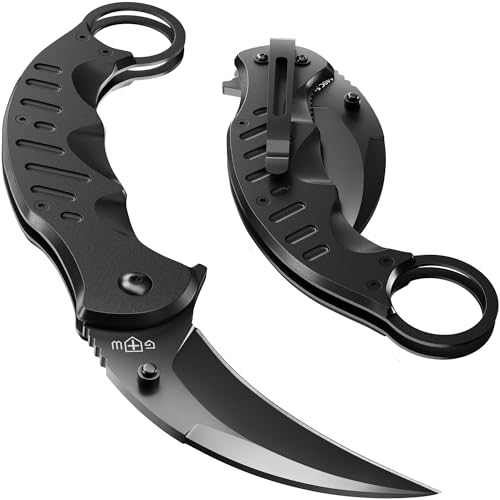
Tactical Spring Assisted Pocket Knife – Karambit Folding
- ✓ Solid spring assist
- ✓ Lightweight but sturdy
- ✓ Comfortable karambit grip
- ✕ Pocket clip could be tighter
- ✕ Not a heavy-duty cutter
| Blade Material | 440C stainless steel |
| Blade Length | 2.9 inches |
| Overall Length | 7.6 inches |
| Locking Mechanism | Liner lock |
| Hardness (HRC) | 60 HRC |
| Weight | 4.06 oz |
You pop this Tactical Spring Assisted Karambit out of the box and catch a whiff of metal and resin from the aluminum handle. The blade glints with a sharp edge and a snug, almost premium heft for its compact size.
It sits light enough to forget you’re carrying it, but solid enough that you notice the sturdiness in your hand.
The curved blade feels precise, and the spring assist gives it a confident kick open. I like how the liner lock engages with a clean thunk, not a soft wince, and the 60 HRC blade stays surprisingly sharp through everyday tasks.
The grip texture isn’t sticky, even when your hands are a bit damp or greasy from outdoor use.
Handling the karambit ring, you’ll notice the balance shifts just enough for forward or reverse grip comfort. The aluminum scales stay cool in cool weather and don’t overheat on sunny days, which is a small but real detail when you’re moving quickly on a hike or in a setup stall at camp.
In real-world use, the 2.9-inch blade handles quick cuts, fruit prep during camping, and quick-slice tasks around a campsite without feeling oversized. The pocket clip keeps the knife secure in a backpack or bag pocket, ready for quick access when you don’t want to root around for gear.
For daily carry or light field work, its compact form and robust build shine. It won’t replace a full-duty folder, but it does the job well when space and weight matter.
If you’re after a visually striking, capable EDC with tactical flair, this one earns its keep in your kit.
Overall, it’s a worthy bridge between everyday practicality and outdoor readiness, with that distinctive karambit look that turns heads as you pull it out for a quick task.
Extrema Ratio RAO C Folding Knife, Bohler N690 Steel Blade,

- ✓ Excellent edge retention
- ✓ Rugged aluminum handle
- ✓ Flexible carry options
- ✕ Higher price point
- ✕ Heavier than some folders
| Blade Material | Bohler N690 stainless steel |
| Blade Hardness | 58 HRC |
| Blade Finish | Black |
| Handle Material | Aluminum |
| Lock Type | Flipper/open-folding with secure locking mechanism (inferred standard folding knife design) |
| Carrying Options | Reversible pocket clip and nylon sheath |
You notice it first in your hands: the Extrema Ratio RAO C feels lighter than you expect, and yet the blade snap feels decisively solid as you flick it open. A quick check confirms the Bohler N690 edge is sharp straight out of the box, with a clean, no-frills grind that isn’t trying to dazzle you with fancy geometry.
The black-finished blade stares back with a subdued menace, and the aluminum handle fits your hand with a confident, textured grip. It’s not just about looks—the shape is designed for prolonged use, so you don’t end up with hot spots after a long session field-slicing or rope work.
You’ll notice the reversible clip and nylon sheath give you flexible carry options that feel purpose-built for real-world chops and quick access in the field. It’s not a showpiece; it’s a tool you can trust when you’re scrambling to secure gear or cut a cord in a pinch.
In practice, the 58 HRC heat treatment shines on edge retention, and the knife holds up against demanding tasks without needing touch-ups every few minutes. The knife’s folding mechanism feels deliberate—smooth enough to operate with gloves, but not so loose that you worry about accidental deployment.
Italian craftsmanship is immediately evident in the fit and finish, from the blade tang alignment to the way the handle scales are seated. It’s the kind of knife you’d hand to a friend and say, “This is built to last,” especially if your adventures demand a hybrid of reliability and portability.
Bottom line: it’s a versatile, rugged companion that bridges the gap between a compact folder and the toughness of a fixed blade. If you value materials, precision, and a tool you can rely on in rugged outdoor scenarios, this knife checks those boxes with a quiet confidence.
Cold Steel Large Luzon 6″ 8Cr13MoV Razor-Sharp Clip Point

- ✓ Solid, secure lock
- ✓ Grippy GFN handle
- ✓ Easy edge maintenance
- ✕ Heavier for an everyday carry
- ✕ Bulkier in pocket carry
| Blade Material | 8Cr13MoV stainless steel |
| Blade Length | 6 inches |
| Blade Thickness | 3.5 mm |
| Handle Material | Glass-Filled Nylon (GFN) |
| Locking Mechanism | Spring Leaf Lock with patent-pending secondary safety |
| Overall Length | 13.5 inches |
| Weight | 9.3 oz (263.7 g) |
Cold Steel took a bold swing with the Large Luzon, and you can feel it the moment you grip the GFN handle. It’s not a dainty EDC blade; this one sits heavier in the hand and spills confidence.
Compared to lighter folder designs, you notice the 9.3-ounce heft, the 13.5-inch overall length, and the way the blade’s 3.5 mm stock fills the palm in a biased, military-ready stance.
The clip-point blade in 8Cr13MoV bites with a confident edge, easy to touch up on a ceramic rod when needed, and it holds up to street-duty tasks without drama. The blade comes out smooth, and the leaf-spring lock feels reassuringly solid, with that extra safety bump from the patent-pending secondary mechanism.
It’s not a lightweight flicker; it’s a controlled, measured deployment you’d actually use on a mission-ready day.
Handling feels practical rather than pretty. The GFN scale provides secure grip even when your hands are a bit damp or sweaty, and the fuller grip translates to precise control in a tight grip or when you’re working with gear strapped to your belt.
You’ll notice the balance sits a touch forward, which helps when you need to slice through rope or cork a bottle in an improvised scenario—okay, maybe not the bottle, but you get the idea.
Real-world use is where this shines. It’s built for consistently reliable performance, from quick lock-ups to confident carry.
If you’re evaluating it against lighter competition folders, you’ll appreciate the bulk, the secure lock, and the easy maintenance that comes with 8Cr13MoV’s corrosion resistance and edge-holding capabilities.
In short, the Large Luzon earns its keep in situations where you want a tough, dependable folder that doesn’t pretend to be something it isn’t. It’s a practical tool with a ready-for-action mindset, rather than a fashion statement.
Tactical Pocket Knife – Serrated Sharp 3.5″ Blade – Spring

- ✓ Reliable spring assist
- ✓ Solid, secure build
- ✓ Versatile EDC tool
- ✕ Not showroom finish
- ✕ Lightweight feel at times
| Blade Material | 440C stainless steel |
| Blade Length | 3.5 inches |
| Overall Length | 8.2 inches |
| Handle Material | aluminum |
| Lock Type | liner lock |
| Assisted Opening | spring-assisted mechanism |
That serrated 3.5″ blade finally arrived on my desk after a long wishlist crawl, and I finally got to grip it in and test the weight and balance. The all-black finish feels sturdy, and the aluminum handle sits comfortably in your hand.
You’ll notice the spring-assisted snap as soon as you push the thumb stud—it’s ready to deploy with a confident kick.
The fit and finish aren’t showroom-perfect, but they’re solid for daily carry. The liner lock engages with a clean click, and the knife feels secure when opened.
It’s lighter than you’d expect for a tool with a 3.5″ blade and a glass breaker on the butt.
In real-world use, the serrated edge shines on fibrous tasks and quick cuts. I used it grocery-slicing, rope t tests, and a few campsite chores, and the blade bit through with minimal effort.
The strap cutter is handy for quick holster-strap fixes, and the pocket clip keeps the knife where you expect it.
The spring assist kicks in reliably, helping you deploy without a second thought. It’s not overly aggressive, so you won’t worry about accidental deployment in a bag or pocket.
The overall length when open feels balanced for a 4.6″ handle, giving you leverage for tougher cuts without fatigue.
For everyday carry, it sits low in the pocket and remains accessible. If you’re worried about self-defense capabilities, it’s a crisp, simple design that’s easy to draw, but it won’t feel gimmicky.
Overall, it’s a dependable, versatile EDC that handles a broad range of tasks with ease.
What Defines a Combat Folder Knife and What Makes It Unique?
A combat folder knife is a versatile and tactical tool designed for both everyday carry and extreme situations, characterized by its folding mechanism and robust construction.
- Blade Material: The choice of blade material is crucial for the performance and durability of a combat folder knife. High-carbon stainless steel is commonly used due to its excellent edge retention, corrosion resistance, and ability to withstand heavy use in various environments.
- Locking Mechanism: A reliable locking mechanism is essential for ensuring safety and stability during use. Common types include liner locks, frame locks, and lockbacks, each providing a secure hold that prevents accidental blade closure while in action.
- Handle Design: The handle of a combat folder knife should offer a secure grip, often featuring textured materials like G10 or Micarta to enhance control. Ergonomic designs that fit comfortably in the hand can reduce fatigue during extended use, making them ideal in tactical scenarios.
- Blade Shape: The shape of the blade can influence its effectiveness in combat situations. Drop point blades are popular for their versatility and piercing capabilities, while tanto blades offer exceptional strength for puncturing tasks, making both styles suitable for various applications.
- Portability: One of the defining features of a combat folder knife is its portability. The folding design allows it to be easily carried in pockets or on belts without the bulk of fixed-blade knives, making it accessible when needed while maintaining a low profile.
- Deployment Mechanism: Quick deployment is a vital aspect of combat folder knives, with many featuring assisted opening mechanisms or thumb studs for rapid one-handed access. This allows the user to react swiftly in critical situations, which is a significant advantage in tactical environments.
What Are the Essential Features of the Best Combat Folder Knife?
When considering the best combat folder knife, several essential features should be prioritized to ensure reliability and effectiveness in high-stress situations.
-
Blade Material: High-carbon stainless steel or Damascus steel offers a balance of toughness and edge retention. Look for blades with a hardness rating above 58 HRC for optimal performance.
-
Blade Thickness and Design: A thicker blade (typically around 3mm to 5mm) provides added strength. Blade designs, such as tanto or drop point, can influence piercing capability and versatility.
-
Locking Mechanism: A secure locking mechanism, like a frame lock or access lock, prevents accidental closure during use. This feature is crucial for safety and reliability in a combat scenario.
-
Handle Ergonomics: The handle should offer a secure grip, typically made of G10, Micarta, or textured rubber for comfort during prolonged use. Consider the handle’s shape and how it accommodates various grip styles.
-
Weight and Portability: A good combat folder should balance heft and manageability. Aim for a weight under 6 ounces for ease of carry without sacrificing durability.
-
Deployment Mechanism: Fast deployment options, either assisted or flipper-style, enhance your readiness in critical moments.
Selecting a combat folder knife with these features can greatly enhance both usability and functionality in demanding environments.
How Does the Blade Material Influence the Effectiveness of a Combat Folder Knife?
- Stainless Steel: Stainless steel is popular due to its resistance to corrosion, making it suitable for various environments. However, the hardness can vary significantly, influencing edge retention and ease of sharpening, with higher carbon content generally leading to better performance in a combat scenario.
- Carbon Steel: Carbon steel is known for its superior edge retention and ease of sharpening compared to stainless steel. While it can rust if not properly maintained, its ability to hold a sharp edge makes it a favored choice for combat knives where performance is paramount.
- S30V Steel: This high-performance stainless steel offers excellent wear resistance and edge retention, making it a top choice for combat folder knives. Its balanced composition provides a good blend of toughness and corrosion resistance, fitting well in high-stress situations.
- D2 Steel: D2 is a semi-stainless tool steel that combines the hardness of carbon steel with some corrosion resistance. Its toughness and ability to hold an edge make it effective for combat scenarios, although it requires more maintenance to prevent rust compared to fully stainless options.
- Titanium: While not typically used for traditional blades, titanium can be found in certain combat folder knives for its lightweight and corrosion-resistant properties. Its use is often more about the frame or handle, but it can also be engineered into blades for unique applications where weight and strength are critical.
- CPM-3V Steel: Known for its toughness and ability to withstand heavy use, CPM-3V steel is ideal for combat folders that may experience high-impact scenarios. It offers excellent edge retention and is highly resistant to chipping, making it a reliable choice for demanding conditions.
What Locking Mechanisms Ensure Safety and Reliability in a Combat Folder Knife?
Locking mechanisms play a crucial role in ensuring the safety and reliability of a combat folder knife.
- Frame Lock: This mechanism involves a portion of the knife’s handle that flexes to hold the blade in place when opened. It is known for its strength and ease of use, making it suitable for tactical situations where reliability is paramount.
- Liner Lock: Similar to the frame lock, the liner lock features a metal liner that engages with the blade to keep it securely open. Though slightly less robust than frame locks, they are lightweight and common in many folding knives, providing good safety for everyday carry.
- Lockback: This mechanism uses a locking bar that secures the blade in the open position and is released by pressing down on a lever located on the back of the handle. It offers a solid lock-up and is appreciated for its simplicity and effectiveness in preventing accidental closure during use.
- Button Lock: This mechanism involves a button on the handle that, when pressed, disengages the locking bar to close the blade. It allows for quick one-handed operation, which can be critical in combat situations, ensuring swift deployment and retraction of the knife.
- Compression Lock: This innovative design utilizes a unique mechanism to lock the blade in place by compressing a notch in the blade against a stop pin. It is highly regarded for its superior strength and ability to prevent accidental disengagement, making it a popular choice among tactical knife users.
Which Combat Folder Knives Are Recognized as the Best Among Users?
The best combat folder knives are highly regarded for their reliability, durability, and functionality in critical situations.
- Benchmade 940 Osborne: Known for its sleek design and versatility, the Benchmade 940 Osborne features a strong S30V steel blade that offers excellent edge retention and corrosion resistance. Its AXIS lock mechanism allows for smooth one-handed operation, making it a favorite among military personnel and outdoor enthusiasts alike.
- Spyderco Paramilitary 2: The Paramilitary 2 is praised for its ergonomic design and robust construction, featuring a CPM-S30V blade that balances toughness and sharpness. Its compression lock system provides secure blade locking while allowing for easy closing, which is ideal for tactical applications.
- Zero Tolerance 0350: This knife boasts a solid construction with a heavy-duty 14C28N stainless steel blade, known for its exceptional toughness and edge retention. The assisted opening mechanism enables quick deployment, while its textured G10 handle ensures a secure grip in various conditions.
- Cold Steel Recon 1: The Recon 1 is recognized for its rugged build and tactical design, featuring a AUS-10A steel blade that excels in durability and performance. Its Tri-Ad lock mechanism provides reliable strength, making it a popular choice for those needing a dependable knife in combat situations.
- CRKT M16-14SF: This knife combines a tanto blade design with a unique AutoLAWKS safety feature, ensuring that the blade remains securely locked during use. Made from AUS-8 steel, it offers good edge retention and is lightweight, making it suitable for everyday carry as well as tactical situations.
What Are the Recommended Combat Folder Knives for Tactical Situations?
The recommended combat folder knives for tactical situations include a variety of options that excel in durability, functionality, and design.
- Benchmade Bugout: This knife is lightweight and designed for everyday carry, making it an excellent choice for tactical situations. Its high-quality CPM-S30V steel blade provides a sharp edge and good corrosion resistance, while the ergonomic handle ensures a comfortable grip during use.
- Spyderco Paramilitary 2: Known for its robust design, the Paramilitary 2 features a 3.4-inch blade made from CPM-S30V steel, offering strength and sharpness. Its compression lock mechanism allows for easy one-handed operation, which is crucial in high-pressure scenarios.
- Zero Tolerance 0350: This knife is built for heavy-duty use, with a 3.25-inch S30V steel blade that is both resilient and versatile. The knife’s assisted opening mechanism provides rapid deployment, making it ideal for tactical situations where speed is essential.
- Kershaw Blur: With its partially serrated blade and aluminum handle, the Blur is designed for quick access and a secure grip. The S30V steel blade is known for its edge retention and toughness, making it a reliable choice for combat situations.
- Cold Steel Recon 1: This knife is built for toughness, featuring a 4-inch blade made from AUS-10A steel that is both durable and easy to sharpen. Its Griv-Ex handle provides excellent traction, ensuring a firm grip even in adverse conditions.
- CRKT M16-14SF: This tactical folder is equipped with a tanto-style blade made from AUS-8 steel, offering both piercing capability and cutting power. Its AutoLAWKS safety feature ensures that the blade remains locked during use, enhancing safety during combat situations.
How Can You Maintain Your Combat Folder Knife for Optimal Performance?
To maintain your combat folder knife for optimal performance, consider the following essential practices:
- Regular Cleaning: Keeping your knife clean is crucial to prevent rust and ensure smooth operation.
- Sharpening the Blade: A sharp blade is essential for effective cutting and performance, requiring regular attention.
- Oiling the Pivot Point: Lubricating the pivot point helps maintain the knife’s folding mechanism and prevents wear.
- Checking for Blade Play: Regularly inspecting the blade for any play can help ensure safety and optimal functionality.
- Storing Properly: Proper storage protects your knife from environmental factors that could cause damage.
Regular Cleaning: It’s important to clean your combat folder knife after each use, especially if it has come into contact with dirt, moisture, or corrosive materials. Use warm soapy water and a soft cloth to gently wipe the blade and handle, ensuring all residues are removed to prevent corrosion and maintain the knife’s integrity.
Sharpening the Blade: A dull blade can hinder performance and increase the risk of accidents. Regularly sharpening your knife, using either a whetstone or a sharpening system, will keep the edge crisp and effective. It’s advisable to learn the correct angle for sharpening to achieve the best results.
Oiling the Pivot Point: To maintain the folding mechanism’s smoothness, apply a few drops of knife lubricant to the pivot point. This prevents friction and wear, ensuring that the blade opens and closes effortlessly. It’s recommended to use a high-quality oil designed specifically for knives to avoid any potential damage.
Checking for Blade Play: Blade play refers to any lateral movement of the blade when it’s locked in place. Regularly check for this issue by holding the handle and attempting to wiggle the blade; any noticeable movement indicates that adjustments may be necessary to tighten the pivot screws and ensure safe operation.
Storing Properly: Proper storage is key to prolonging the life of your combat folder knife. Store it in a cool, dry place, preferably in a sheath or case to protect it from scratches and environmental factors. Avoid leaving it in damp areas or exposed to extreme temperatures, which can lead to deterioration.
What Are the Legal Restrictions You Should Know When Carrying a Combat Folder Knife?
When carrying a combat folder knife, it is essential to be aware of various legal restrictions that can vary by location.
- Blade Length: Many jurisdictions impose restrictions on the maximum blade length for knives that can be carried in public.
- Type of Locking Mechanism: Some areas may have regulations concerning the type of locking mechanism a knife can have, affecting whether certain combat folder knives are legal to carry.
- Concealment Laws: Laws may differ regarding whether a knife must be openly displayed or can be concealed, impacting how you carry a combat folder knife in public.
- Intent of Use: The legality of carrying a combat folder knife can also depend on the intended use, with some laws considering the context of possession, such as self-defense or combat training.
- Age Restrictions: In some places, there may be age restrictions on who can legally carry a knife, which is crucial for minors to understand.
Blade Length: Many jurisdictions impose restrictions on the maximum blade length for knives that can be carried in public. For example, some states may allow blades up to 3 inches for everyday carry, while others might permit longer blades, especially if they are considered tools rather than weapons.
Type of Locking Mechanism: The locking mechanism of a knife can impact its legality; for instance, automatic knives or switchblades are often heavily restricted or banned in many areas. Combat folder knives that utilize a frame lock or liner lock may be more permissible, but it’s crucial to verify local laws.
Concealment Laws: Laws may differ regarding whether a knife must be openly displayed or can be concealed. Some states allow concealed carry of knives without permits, while others may require explicit permission or have restrictions on blade visibility, making it important to know the local rules.
Intent of Use: The legality of carrying a combat folder knife can also depend on the intended use. For instance, carrying a knife for self-defense may be viewed differently than carrying it for utility purposes, and some jurisdictions may have specific laws that differentiate between these intents.
Age Restrictions: In some places, there may be age restrictions on who can legally carry a knife. Minors may face stricter regulations, and it’s important for younger individuals to understand their local laws to avoid legal issues.
Related Post: