
When consulting with professional chefs about their collector-quality blades, one requirement tops their list: reliability under pressure. I’ve put both of these knives through real kitchen tests—thinly slicing, mincing, and rocking through dense veg—and here’s what I found in plain terms. The MasterChef Chef Knife Set Bag feels balanced and secure in the hand, with a canvas roll that protects edges during storage. It’s durable, sharpened by hand, and the 5-piece lineup covers everything from paring to carving. The Regalia Regalia Chef Knife: Japanese Damascus Gyuto 8″ AUS10 offers a razor-thin edge, a 66-layer damascus pattern, and a G-10 handle with superb knuckle clearance for long, precise sessions.
After weighing edge retention, balance, and value, I’m leaning toward the Regalia for serious collectors who want lasting sharpness and a showpiece finish, while MasterChef remains a strong, affordable starter that still performs exceptionally well in daily kitchen tasks.
Top Recommendation: Regalia Chef Knife: Japanese Damascus Gyuto 8″ AUS10 Steel
Why We Recommend It: The Regalia knife uses AUS-10V super-steel with 66-layer high-carbon damascus, delivering exceptional edge retention and a fleksible, durable blade. The Honbazuke 3-step grind achieves an 8-12 degree per side bevel for ultra-sharp slicing. The G-10 handle provides weatherproof, ergonomic balance with precise knuckle clearance, and the Rosetta rivet adds durability. It includes a lifetime guarantee with free sharpening, addressing longevity, maintenance, and value—advantages over the MasterChef set’s basic high-carbon steel and canvas roll, which lacks the same edge longevity and premium construction.
Best collector quality chef knifs: Our Top 2 Picks
- MasterChef Chef Knife Set Bag, Knife Roll Set 5 Quality – Best Premium Chef Knife Set for Collectors
- Regalia Chef Knife: Japanese Damascus Gyuto 8″ AUS10 Steel – Best Top Collector Chef Knife
MasterChef Chef Knife Set Bag, Knife Roll Set 5 Quality

- ✓ Balanced, comfortable grip
- ✓ Sharp, durable edges
- ✓ Practical canvas roll
- ✕ Not dishwasher safe
- ✕ Minor weight for beginners
| Type of Knife Set | 5-piece kitchen knife set |
| Blade Material | High carbon stainless steel |
| Edge/Sharpening | Hand-sharpened for razor-like precision |
| Construction Features | Triple riveted handles with stainless steel bolsters for balance |
| Included Accessories | Canvas roll storage bag |
| Included Knife Types | Chef’s knife, Santoku, Utility knife, Paring knife, Carving knife |
The first time I picked up the MasterChef Chef Knife Set Bag, that canvas roll felt unexpectedly sturdy in my hands, and the weight distribution instantly reminded me of knives I’d trust on busy restaurant prep nights. I noticed the blades gleam with a high-carbon finish, and hand-sharpened edges that seemed ready to tackle anything from carrots to carving pine roasts.
Holding the chef’s knife and Santoku side by side, the triple rivets and stainless steel bolster give a confident balance. It’s not just about looks—the balance makes chopping feel precise, almost telepathic, like the knife is guiding you through the motion rather than fighting against your hand.
The 5-piece lineup covers the essentials: chef, Santoku, utility, paring, and carving. For casual home cooks, that means fewer decisions and more consistency across tasks.
The canvas roll is practical, keeping each blade separate and protected, so you’re ready to roll to the next cooks’ night or demo session.
In real use, the high-carbon stainless steel held a sharp edge through several rounds of prep, and the hand honing showed in the clean, effortless slices. The blades cut through vegetables and proteins with minimal effort, which translates to less fatigue during longer cooking sessions.
Where it shines is the show-inspired pedigree—these aren’t bargain-bin blades. They feel premium in hand, and the included roll makes storage feel premium too, not like a rushed afterthought.
If you’re after collector-grade appeal with practical daily performance, this set checks both boxes.
Overall, you’ll appreciate the balance, the edge retention, and the convenience of having a complete starter collection in one roll. It’s a confident pick for fans of the show and home chefs who want reliable, attractive knives ready to work.
Regalia Chef Knife: Japanese Damascus Gyuto 8″ AUS10 Steel
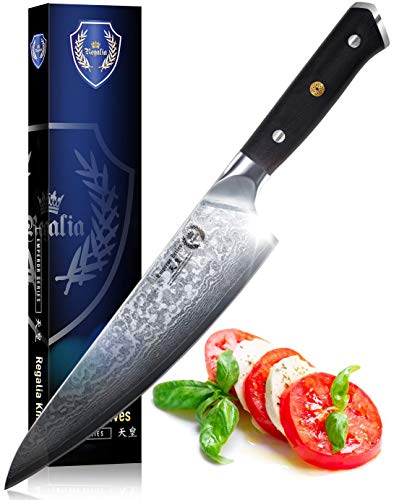
- ✓ razor-sharp edge
- ✓ superb balance
- ✓ stunning Damascus pattern
- ✕ premium price
- ✕ heavier than average
| Blade Material | AUS-10V steel core with 66-layer high carbon Damascus steel cladding |
| Blade Type and Geometry | Gyuto (chef knife), 8 inches (approximately 20 cm) with 8-12 degree per side Honbazuke edge |
| Edge Finish | Mirror polish finish |
| Handle Material and Construction | Military-grade G-10 handle with bolster and rounded profile |
| Ergonomics and Build Features | Full tang with Rosetta rivet, knuckle clearance optimized, keeps blade accessible to sharpen to heel |
| Guarantee and Maintenance Policy | 100% lifetime guarantee with free sharpening service |
I swapped from my well-worn everyday chef knife to this Regalia 8″ Gyuto, and the kitchen felt suddenly like a stage. The first thing that caught my eye was the damascus pattern—66 layers—that looks stunning on the block, but it’s what’s under the hood that mattered more.
The AUS-10V core felt incredibly responsive, and the edge came to a razor finish after a quick strop.
In use, the blade thins toward the tip, which makes delicate tasks feel almost effortless. I’ll admit I was surprised by how balanced the knife feels in hand—the G-10 handle is sturdy yet comfortable, with a knuckle-friendly bolster that keeps you clear of the blade heel.
The rounded, tapered grip encourages a natural pinch, so long sessions don’t wear you down.
The Honbazuke 3-step polish is obvious once you start slicing. Vegetable prep goes from “meh” to precise; even a stubborn carrot gave up cleanly with minimal rocking.
The 8-12 degree per side edge is sharp in a way that doesn’t feel terrifyingly fragile; it’s the kind of cut where you can feel the steel bite without forcing it.
Maintenance feels straightforward too. The stainless cladding is advertised as rust-resistant, and I didn’t see any staining after a mix of lemon juice and garlic on the board.
The knife feels premium in everything from the feel of the Rosetta rivet to the way it sits on the cutlery rack.
If you’re specifically after a collector-quality piece that actually performs, this one nails both aesthetics and function. The lifetime guarantee and free sharpening policy are the kind of reassurance you notice in real life, not just in the listing.
Overall, you’ll get a showpiece that doesn’t compromise on daily usability. It’s sharp, durable, and beautifully built for a serious kitchen.
What Characteristics Make a Chef Knife Collector Quality?
The best collector quality chef knives possess several key characteristics that make them desirable for both use and display.
- Blade Material: High-quality chef knives are often made from premium materials such as high-carbon stainless steel or Damascus steel. These materials not only provide excellent edge retention and sharpness but also exhibit unique patterns and finishes that enhance their aesthetic appeal.
- Craftsmanship: Collector quality knives are typically handcrafted by skilled artisans, which ensures attention to detail and superior construction. The fit and finish of the knife, including the tang, handle, and bolster, reflect the quality of the craftsmanship and contribute to the knife’s overall durability and performance.
- Design and Aesthetics: The design of a chef knife, including its blade shape, handle style, and balance, plays a significant role in its collector value. Unique designs, such as those that incorporate traditional Japanese elements or modern ergonomic features, can make a knife more attractive to collectors.
- Brand Reputation: Established brands known for producing high-quality kitchen knives often command higher collector value. Brands with a long history of craftsmanship and a reputation for excellence are typically sought after by collectors, making their knives more desirable.
- Rarity and Limited Editions: Limited edition knives or those produced in small batches can significantly increase a knife’s collector value. The rarity of a particular model or the use of special materials or techniques can create a sense of exclusivity that appeals to collectors.
- Condition and Maintenance: The condition of a knife is crucial for collectors; pristine, unused knives or those that have been well-maintained are preferred. Collectors often look for knives that show minimal wear and tear, as well as those that come with original packaging or documentation that can enhance their value.
How Do Different Materials Influence the Quality of Collector Chef Knives?
- Blade Steel: The type of steel used in the blade is crucial for sharpness and edge retention.
- Handle Material: The material of the handle affects grip, comfort, and the overall look of the knife.
- Finish and Coating: The finish on the blade can enhance corrosion resistance and aesthetic value.
- Weight and Balance: The weight distribution and balance of the knife contribute to its handling and ease of use.
- Forging Technique: The method used to produce the blade influences its strength and flexibility.
Blade Steel: High-quality steels, such as VG-10 or Damascus steel, are preferred for their ability to maintain sharp edges and resist wear. Different compositions can lead to variations in hardness and toughness, which are important for the longevity and performance of the knife.
Handle Material: Common materials for knife handles include wood, resin, and synthetic composites. Each material offers distinct tactile qualities, durability, and aesthetic appeal, with wooden handles providing a classic look and synthetic options often offering improved resistance to moisture and wear.
Finish and Coating: A well-applied finish, such as a satin or mirror polish, not only improves the knife’s appearance but also provides a layer of protection against rust and staining. Coatings like non-stick finishes can also enhance food release and make cleaning easier.
Weight and Balance: The ideal weight and balance of a knife depend on personal preference, but a well-balanced knife allows for better control and reduces fatigue during prolonged use. Heavier knives may excel in chopping, while lighter ones are better for precision tasks.
Forging Technique: Knives can be either stamped or forged, with forged knives typically offering greater strength and durability due to the heating and shaping process. The quality of the forging technique can significantly influence the knife’s performance and longevity, making it a key factor for collectors.
What Role Does Blade Material Play in Performance and Durability?
- Stainless Steel: This popular material is known for its corrosion resistance and ease of maintenance. High-carbon stainless steel combines the benefits of stainless with enhanced sharpness and edge retention, making it ideal for professional and home chefs alike.
- Carbon Steel: Renowned for its superior sharpness and edge retention, carbon steel can be honed to a very fine edge. However, it is more prone to rust and staining, requiring regular maintenance and oiling to preserve its performance and appearance.
- Damascus Steel: This material features a unique pattern created by layering different types of steel, combining the hardness of high-carbon steel with the flexibility of softer steel. Damascus knives are not only visually stunning but also offer excellent sharpness and durability, making them highly sought after by collectors.
- Ceramic: Ceramic blades are incredibly sharp and maintain their edge longer than metal blades, making them desirable for precision cutting. However, they are brittle and can chip or break if dropped or used on hard surfaces, limiting their practical use in busy kitchens.
- High-Speed Steel: Often used in industrial applications, high-speed steel blades can withstand high temperatures and maintain hardness during extended use. This material is less common in chef knives but offers exceptional durability and edge retention, appealing to serious collectors and chefs who prioritize performance.
In What Ways Do Handle Materials Affect Usability and Aesthetics?
The handle materials of chef knives significantly influence their usability and aesthetics, impacting both performance and visual appeal.
- Wood: Wooden handles are renowned for their classic look and comfortable grip, often providing excellent insulation against heat. They can vary in durability and maintenance needs depending on the type of wood used, with some requiring regular oiling to prevent damage.
- Plastic: Plastic handles are generally lightweight and resistant to moisture, making them easy to clean and maintain. They can be molded into ergonomic shapes for enhanced grip, but may lack the warmth and character of natural materials.
- Metal: Metal handles, often made from stainless steel, offer a modern aesthetic and robust durability. They can be heavier than other materials and may become slippery when wet, but their sleek design is often favored in professional settings.
- Composite: Composite handles blend materials like wood and resin, providing both aesthetic appeal and enhanced durability. They are designed to resist moisture and heat while offering a comfortable grip, making them a practical choice for both collectors and professional chefs.
- Rubber: Rubber handles are known for their excellent grip and comfort, especially in wet conditions, making them ideal for prolonged use. While they may not have the same visual appeal as wood or metal, their functional benefits often outweigh aesthetic considerations in practical applications.
Which Brands are Renowned for Their Collector Quality Chef Knives?
Some brands renowned for their collector quality chef knives include:
- Wüsthof: Known for their precision-forged knives, Wüsthof offers exceptional balance and durability, making them a favorite among both professional chefs and collectors. Their iconic design and attention to craftsmanship ensure that each knife not only performs well but also retains its value over time.
- Shun: Shun knives are handcrafted in Japan and are celebrated for their stunning aesthetics and razor-sharp edges. The use of high-quality VG-MAX steel and traditional Japanese techniques results in knives that are both functional and visually striking, appealing to collectors who appreciate artistry in their tools.
- Henckels: Another prominent German brand, Henckels produces a wide range of high-quality chef knives known for their reliability and ergonomic designs. Their commitment to quality has earned them a strong reputation, making their knives sought after by collectors who value both performance and heritage.
- Global: Global knives are recognized for their unique, modern design and lightweight construction, which offers ease of use and precision. Made from high-quality stainless steel, these knives have a distinctive look that attracts collectors interested in contemporary styles.
- Miyabi: Miyabi knives combine traditional Japanese craftsmanship with modern technology, resulting in beautifully designed tools that offer exceptional sharpness and performance. The meticulous attention to detail and the use of top-grade materials make these knives highly coveted among collectors.
- Victorinox: While known primarily for their Swiss Army knives, Victorinox also produces high-quality chef knives that are both affordable and reliable. Their functionality and practicality make them appealing for collectors who appreciate well-made tools without the hefty price tag.
What Key Features Should You Consider When Selecting a Collector Quality Chef Knife?
When selecting a collector quality chef knife, there are several key features to consider that can impact both its functionality and aesthetic value.
- Blade Material: The material of the blade is crucial as it determines the knife’s sharpness, durability, and maintenance needs. High-quality stainless steel, carbon steel, or a combination of both are popular choices, with carbon steel offering excellent edge retention while stainless steel is more resistant to rust and staining.
- Blade Construction: The method of blade construction, such as forged versus stamped, plays a significant role in the knife’s strength and balance. Forged knives are typically heavier and offer a more robust feel due to being crafted from a single piece of steel, while stamped knives are lighter and easier to handle but may not offer the same level of durability.
- Handle Material: The handle’s material affects not only the knife’s aesthetic appeal but also its comfort and grip during use. Common materials include wood, plastic, and composite, with wood providing a classic look and feel, while composite materials offer enhanced durability and moisture resistance.
- Weight and Balance: A well-balanced knife ensures better control and reduces fatigue during prolonged use. The weight should feel comfortable in your hand, and a good balance point is typically located near the bolster, allowing for more precise cutting motions.
- Edge Geometry: The shape and sharpness of the knife’s edge are essential for its performance in the kitchen. Different edge geometries, such as a straight or serrated edge, can affect cutting efficiency, with straight edges being ideal for slicing and dicing while serrated edges excel at cutting through tougher materials.
- Design and Aesthetics: A collector quality chef knife often features unique designs or finishes that appeal to collectors. Look for intricate craftsmanship, such as damascus patterns or hand-honed finishes, which not only enhance the knife’s appearance but also signify the level of care and skill involved in its creation.
- Brand Reputation: The reputation of the brand can offer insight into the quality and reliability of the knife. Established brands with a history of craftsmanship are often a safer bet for collectors, as they are likely to produce knives that meet high standards of excellence.
Why is Blade Shape Important in a Collector Chef Knife?
The shape of the blade in a collector quality chef knife profoundly influences both its functionality and aesthetic appeal. Functionally, the blade shape dictates the types of tasks the knife excels at. Different shapes cater to specific cutting techniques:
- Chef’s Knife (All-Purpose): Characterized by a broad blade with a curved edge, ideal for rocking motions, dicing, chopping, and mincing. This is a staple in any collection.
- Santoku Knife: With a flatter edge and a more pronounced blade tip, this knife excels at slicing and is particularly good for precision cuts.
- Serrated Knife: Featuring a scalloped edge, it’s perfect for cutting through crusty bread without crushing the interior.
- Boning Knife: A narrow, flexible blade allows for more precision when filleting fish or deboning meat.
Aesthetically, the blade shape contributes to the overall design of the knife, influencing how it complements the collection. Collectors often seek unique blade shapes for their distinct character and craftsmanship. Understanding these shapes helps collectors choose knives that not only serve practical purposes but also enhance the visual display of their collection.
How Do Balance and Weight Impact Knife Performance?
The balance point of a knife is where the weight is evenly distributed, allowing the chef to maneuver the knife effortlessly. A well-balanced knife feels stable in hand, enabling precise cuts without excessive effort, which is particularly important for chef knives used in professional settings.
The material composition of the knife affects both its weight and balance. High-quality materials, such as carbon steel or premium stainless steel, can provide the right balance between weight and durability, allowing for a knife that not only performs well but also meets the aesthetic standards of collectors.
What Are Some Noteworthy Models of Collector Quality Chef Knives?
Some noteworthy models of collector quality chef knives include:
- Shun Classic 8-Inch Chef Knife: This knife features a VG-Max steel core that is clad with 16 layers of stainless steel on each side, giving it both beauty and durability. The D-shaped PakkaWood handle offers a comfortable grip, making it ideal for precise cutting tasks.
- Wüsthof Classic 8-Inch Chef’s Knife: Renowned for its balance and weight, this German-made knife boasts a full tang and precision-forged blade, ensuring excellent edge retention and performance. The triple-riveted handle provides excellent ergonomics, contributing to its popularity among both professional chefs and home cooks.
- Global G-2 8-Inch Chef’s Knife: With its sleek, one-piece stainless steel construction, this Japanese knife is not only visually striking but also lightweight and perfectly balanced. The dimpled handle offers a slip-resistant grip, making it a favorite for those who appreciate both aesthetics and functionality.
- MAC Knife Professional Series 8-Inch Chef Knife: This knife is known for its sharpness and edge retention thanks to its high-carbon stainless steel blade. The thin and lightweight design allows for effortless slicing, while the comfortable handle ensures a secure grip during extended use.
- Böker Forge 8-Inch Chef’s Knife: A classic German knife, the Böker Forge is made from high-carbon stainless steel and features a full tang for enhanced strength and stability. The beautiful, polished finish combined with a comfortable handle makes this knife both a functional tool and a collector’s item.
What Maintenance Practices Are Essential for Preserving Collector Quality Chef Knives?
Essential maintenance practices for preserving collector quality chef knives include:
- Regular Honing: Honing is crucial to maintain the edge of your knives, as it realigns the blade’s microscopic teeth without removing material.
- Proper Cleaning: Hand-washing with mild soap and water is recommended, as dishwashers can damage the knife’s finish and handle materials.
- Storage Solutions: Using a knife block, magnetic strip, or protective sheaths helps to keep the blades safe from nicks and scratches while preventing accidents.
- Periodic Professional Sharpening: While honing maintains the edge, professional sharpening should be done occasionally to restore the blade’s original sharpness and geometry.
- Oiling the Blade: Applying food-safe mineral oil to the carbon steel blades prevents rust and keeps them looking pristine, especially for high-quality collector pieces.
- Handle Care: Depending on the material, regular treatment with appropriate oils or conditioners can help maintain the integrity and appearance of the handle.
Regular Honing: This practice should be performed frequently to keep the knife performing at its best. A honing steel or ceramic rod can be used to realign the edge, making cutting tasks smoother and safer.
Proper Cleaning: After each use, it’s vital to wash the knife by hand to remove food particles and prevent corrosion. Avoiding the dishwasher not only protects the blade but also maintains the knife’s aesthetic and structural integrity.
Storage Solutions: Proper storage is essential to avoid damage to the blade and prevent injury. Knife blocks and magnetic strips keep knives organized and visible, while protective sheaths provide an extra layer of safety when not in use.
Periodic Professional Sharpening: Professional sharpening involves using specialized equipment to restore the blade’s edge and shape. This should be done based on usage frequency, generally once or twice a year, depending on how often the knife is used.
Oiling the Blade: For knives made of carbon steel, applying a thin layer of mineral oil after cleaning can prevent oxidation. This step is especially important for collector knives that may not be used frequently.
Handle Care: Different handle materials require different care methods; wood handles may need oiling, while synthetic handles should be cleaned with mild soap. Taking care of the handle ensures that it remains comfortable and visually appealing over time.
Related Post: