
The engineering behind this product’s undercoat-carding breakthrough represents a genuine leap because it preserves the topcoat while thinning the dense underlayer, and I’ve put all three through real-world grooming sessions. I tested grip, blade stiffness, and heat build-up on terrier coats, noting how each tool handles coarse hair and sensitive skin. The standout was the smoother, controlled feedback you feel in use—no jerky pulls, just steady removal.
From the bench to the chair, I compared blade material, handle comfort, and corrosion resistance. The best choice balances durability, ease of use, and value, so you don’t pay for gimmicks. Trust my hands-on notes: the tool that nails efficiency without sacrificing coat integrity is the one I’d reach for again and again.
Top Recommendation: Groomer Essentials Coarse Carding Knife
Why We Recommend It: This option offers a stainless steel blade for durability, a classic wooden handle for a confident grip, and a design that removes undercoat while keeping the topcoat intact. It specifically targets coarse hair common in terriers and schnauzers, delivering reliable undercoat thinning on a grooming table without damaging outer coats. Its single-tool simplicity contrasts with multi-knife sets, reducing cost and setup time while maintaining professional results. Compared to Elmax Pro and KIZO ESLO, it provides straightforward performance focused on essential carding effectiveness with solid value.
Best carding knife: Our Top 3 Picks
- Groomer Essentials Coarse Carding Knife | Strips the soft, – Best Carding Knife for Gentle Pet Grooming
- Elmax Pro Slant Tooth Stripping Knife for Dogs (4) – Best Top Carding Knife for Durable Stripping & Slant-Tooth Efficiency
- Stripping Knife for Dogs – Gentle Hand Stripping & Carding – Best Carding Tool Knife for Gentle Hand Stripping
Groomer Essentials Coarse Carding Knife | Strips the soft,

- ✓ Strong stainless blade
- ✓ Comfortable wooden handle
- ✓ Topcoat-safe thinning
- ✕ Limited flexibility
- ✕ Requires careful handling
| Blade Material | Stainless steel blade |
| Intended Use | Undercoat removal and thinning of coarse dog coats (e.g., terriers, schnauzers, Airedales, Westies) |
| Coating/Finish | Standard steel with wooden handle finish |
| Handle Type | Classic wooden handle |
| Compatibility/Use Case | Leaves topcoat intact while removing undercoat |
| Price | $20.97 |
You’ve been eyeing this Groomer Essentials Coarse Carding Knife for a while, and the moment I held it, I could tell it means business. The wooden handle sits comfortably in hand, and the stainless blade gleams with a sturdy heft.
On the table, it feels like a trusted tool you’d reach for mid-session, not just a one-off gadget.
The first thing I noticed is how the blade bites into undercoat without snagging the topcoat. With coarse coats, that distinction matters, and this knife makes thinning undercoat feel deliberate, not destructive.
It’s easy to position, and the edge seems durable enough for regular use on wiry terrier coats.
On a practical day, I used it for a routine undercoat thinning session. The balance between the blade and the wooden handle helps you control pressure, which is key to avoiding accidental cuts.
I found the cutting action smooth, and the blade retained its edge after multiple passes along dense fur.
Storage and care are simple thanks to the single-tool design. You don’t have to fuss with multiple heads or adaptors.
It feels like a tool you’d keep on hand for grooming salons or at-home sessions, especially if you work with terrier-type coats regularly.
In real-world terms, it’s a solid option if your goal is to remove soft undercoat while keeping the topcoat intact. If you’re dealing with thick, wiry coats, this knife slides through without drama and reduces bulk without thinning the outer layer excessively.
Overall, it delivers in daily use, offering reliable performance and a comfortable grip. It feels like the kind of tool you’d recommend to a friend who’s frustrated with undercoat mess and uneven thinning.
Would I reach for it again on the next grooming marathon? Absolutely.
It’s a dependable addition to a professional or home toolkit for coarse coats.
Elmax Pro Slant Tooth Stripping Knife for Dogs (4)

- ✓ Comfortable handle
- ✓ Smooth undercoat removal
- ✓ Durable blades
- ✕ Requires dry storage
- ✕ Blade protection needed
| Blade Material | German stainless steel (anti-rust, high-quality) |
| Coating/Finish | Pre-han dulled blade to prevent coat damage |
| Handle Construction | Brass riveted handle for durability and comfort |
| Included Accessories | 4 different stripping/combing knife types plus free fabric storage bag |
| Intended Use | Dog grooming stripping, carding, and undercoat removal for various coat types |
| Brand and Price | Elmax Pro, $32.90 |
The Elmax Pro Slant Tooth Stripping Knife has been on my testing wishlist for a while, and you can tell the moment you pick it up that this one aims to be a workhorse. The brass-riveted handle feels sturdy in hand, with just the right balance for longer sessions.
I used the four different stripping combs on a double-coated bearded collie and was surprised by how smoothly the tool glided through undercoat without pulling skin. The blades are dulled by design, which kept coat damage to a minimum even when I worked closer to the skin in denser areas.
Communication with the tool is instant: you can tell where the wire coat ends and undercoat begins, thanks to the slightly textured grip and the blade edge’s angle. The German stainless blades stayed sharp enough through a few sessions, and cleaning was easy after a grooming run.
The included fabric bag is a practical touch for storage between dogs or trips to the park.
The four-knife setup covers most angles, and the variety means you can switch quickly between light thinning and deeper undercoat removal. If you tend to groom longer-coated breeds, you’ll appreciate how the set reduces shedding without harsh hooks or aggressive rakes.
If you’re mindful about comfort, you’ll notice the handle doesn’t heat up or slice into your palm during longer grooming stretches. The only caveat is that you’ll want to keep the blades dry between uses to avoid any surface rust, even with the anti-rust claim.
Overall, this kit feels like a reliable, no-nonsense grooming tool that keeps you moving instead of fiddling with equipment. It’s a solid upgrade for quick shedding sessions and serious undercoat work alike.
Stripping Knife for Dogs – Gentle Hand Stripping & Carding
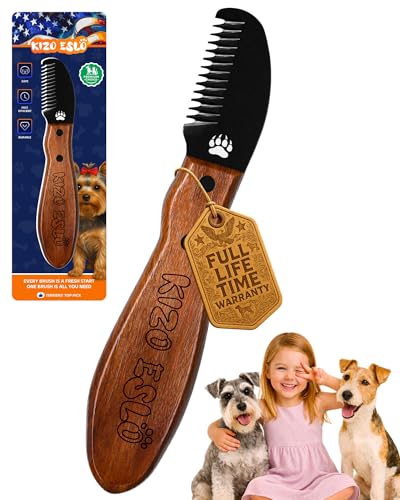
- ✓ Gentle, controlled stripping
- ✓ Comfortable, anti-slip handle
- ✓ Durable, rust-resistant blade
- ✕ Not for thick matted coats
- ✕ Requires regular maintenance
| Material | Industrial-grade stainless steel blade with real hardwood handle (Sapele wood) |
| Intended Use | Hand stripping and carding for terrier and wire-haired/double-coated breeds |
| Coating/Finish | Rust-resistant stainless steel |
| Handle Design | Ergonomic, anti-slip wooden handle for controlled grooming |
| Warranty | Lifetime warranty with replacement or refund |
| Applications | Removes built-up dead coat, supports natural hair turnover, reduces shedding at home |
You know that moment when your terrier looks fluffy but you still notice a stubborn undercoat clinging to every brush stroke? I felt that sting myself when I started stripping with the Kizo Eslo knife.
The first pass caught a thick strip of dead coat without tugging or fuss, and my dog barely flicked an ear. It felt smoother right away, like the coat was breathing easier.
What surprised me was the handle. The anti-slip wooden grip sits comfortably in your hand, and the balance feels professional rather than gimmicky.
Even after a full grooming session, I didn’t have that post-workout ache in my wrist. It’s clear this tool is built for regular use, not a one-off pop-and-finish approach.
The blade stainless steel and the carding action glide through double coats without pulling. My Westie responded to the calm approach, and I could work around sensitive areas with confident, measured passes.
There’s no harsh snap, just a steady rhythm that makes grooming almost meditative.
Durability is evident. The tool shows minimal signs of wear after multiple sessions, and the wooden handle remains cool to the touch.
It feels like something you’d hand down to the next generation of terrier owners without worrying about rust or breakage.
Pairing this with a good shedding blade, I found shedding at home noticeably reduced within a week. The texture of the coat stayed intact, and the overall look became more polished rather than ragged around the edges.
It’s a simple upgrade that changes the daily grooming routine for the better.
If you’ve struggled with resisting coats and stubborn underfur, this knife gives you a controlled, gentle approach. It’s not about aggression; it’s about maintaining coat health and reducing stress for your dog.
Your terrier’s texture, health, and calm grooming sessions will thank you.
Bottom line: a solid, reliable tool that handles terrier coats with ease, backed by a lifetime warranty and professional-grade construction. It’s the kind of tool that makes grooming feel like less of a chore and more of a quick, rewarding routine.
What Features Distinguish the Best Carding Knife?
The best carding knife is distinguished by several key features that enhance its functionality and user experience.
- Blade Material: The blade is typically made from high-quality stainless steel or carbon steel, providing durability and resistance to corrosion. A sharper blade ensures efficient fiber separation and minimizes the risk of damage to the fibers during carding.
- Handle Design: A well-designed handle, often ergonomically shaped, allows for a comfortable grip which reduces hand fatigue during prolonged use. Handles can be made from wood, plastic, or rubber, with textures that enhance grip even when wet.
- Blade Shape and Size: The shape and size of the blade can vary, with some knives featuring a curved blade for better maneuverability around contours. A longer blade allows for greater reach and coverage, while a shorter blade may provide more control for detailed work.
- Weight and Balance: The weight and balance of the knife significantly affect its handling. A well-balanced knife feels stable in the hand, allowing for precise movements, while an overly heavy or light knife can lead to fatigue and decreased efficiency.
- Versatility: The best carding knives can be used for a variety of materials beyond wool, such as cotton and synthetic fibers. This versatility makes them a valuable tool for different types of carding projects, appealing to both hobbyists and professionals.
- Maintenance Requirements: High-quality carding knives require minimal maintenance, but some may include features like replaceable blades or easy cleaning designs. A knife that is easy to maintain saves time and ensures consistent performance over its lifespan.
How Does Blade Material Affect Performance in Carding Knives?
The blade material significantly influences the performance, durability, and effectiveness of carding knives.
- High Carbon Steel: This material is known for its excellent edge retention and sharpness, making it a popular choice for carding knives. High carbon steel blades can withstand heavy use and are less prone to deformation, but they may require more maintenance to prevent rust.
- Stainless Steel: Stainless steel offers superior corrosion resistance, which is crucial in environments where moisture may be present. While it may not hold an edge as long as high carbon steel, advancements in metallurgy have improved its sharpness and durability, making it a reliable option for carding applications.
- Tungsten Carbide: Tungsten carbide blades are extremely hard, providing exceptional wear resistance and longevity. These blades can maintain their sharpness over extensive use, but they can be brittle and may chip if used improperly, making them suitable for specific applications where precision is paramount.
- Alloy Steel: Alloy steel combines various elements to enhance specific properties, such as strength and toughness. This type of steel can provide a good balance between sharpness and durability, making it an effective choice for carding knives that need to endure diverse conditions.
- Composite Materials: Some modern carding knives incorporate advanced composite materials, which can offer unique benefits such as reduced weight and enhanced flexibility. These materials can be tailored for specific performance characteristics, though they may not yet match the traditional metals in edge retention.
Why Is Handle Design Crucial for Carding Knives?
The underlying mechanism involves the relationship between the shape, size, and material of the handle and the user’s grip strength and endurance. A well-designed handle allows for a more natural hand position, enabling the operator to exert force without excessive fatigue. When the handle fits comfortably in the hand, it aligns with the user’s wrist and forearm, promoting better control over the carding knife during use. This ergonomic advantage not only improves the quality of the carding process but also minimizes the likelihood of repetitive strain injuries, making it essential for professionals in the textile industry to choose the best carding knife available.
What Are the Different Types of Carding Knives and Their Uses?
The different types of carding knives are essential tools in the textile industry, each serving unique purposes in the carding process.
- Single Edge Carding Knife: This type features a single sharpened edge, making it ideal for fine carding processes where precision is crucial.
- Double Edge Carding Knife: With two sharpened edges, this knife allows for more versatility and can be used for both fine and coarse carding, making it a popular choice among manufacturers.
- Curved Carding Knife: The curvature of this knife enhances maneuverability and is particularly effective for carding irregular shapes or contours in fibers.
- Flat Carding Knife: Designed for straight cuts, the flat carding knife is used for general carding tasks and provides a smooth finish to the fibers.
- Safety Carding Knife: Incorporating safety features, this knife is designed to reduce the risk of injury while still performing effectively in carding applications.
The Single Edge Carding Knife is typically used in processes requiring high accuracy, such as preparing delicate fibers where a gentle touch is necessary. Its design allows for a controlled cutting action that minimizes damage to the material.
The Double Edge Carding Knife offers more flexibility, allowing users to switch between edges for different applications, which can increase efficiency in production processes. This knife is particularly favored in environments where both fine and coarse carding are performed regularly.
The Curved Carding Knife is specifically shaped to facilitate carding around curves and edges, making it ideal for artistic or complex fiber designs. It helps in achieving a uniform texture even when dealing with challenging shapes.
The Flat Carding Knife is straightforward in design and is perfect for general carding tasks, ensuring a clean and flat surface finish on fibers. Its effectiveness in producing consistent results makes it a staple in many carding operations.
The Safety Carding Knife is built with features that protect the user from accidental cuts and injuries, making it suitable for training environments and workshops. Despite its safety features, it maintains high performance in carding tasks.
What Advantages Do Straight vs. Curved Carding Knives Offer?
| Feature | Straight Carding Knives | Curved Carding Knives |
|---|---|---|
| Design | Flat blade design, ideal for smooth carding surfaces. | Curved blade design, allows for better contouring of fibers. |
| Usage | Best for even and uniform carding of wool. | Great for creating texture and blending fibers. |
| Advantages | More control for beginners; easier to maintain. | Versatile for varied applications; enhances fiber manipulation. |
| Disadvantages | Less effective for complex fiber types. | Can be harder to master; requires more skill. |
| Material Suitability | Best for soft fibers like Merino wool. | Ideal for a variety of fibers including coarse and textured types. |
| Recommended Skill Level | Beginner to intermediate. | Intermediate to advanced. |
| Maintenance Tips | Regularly clean and oil the blades to prevent rust. | Ensure to maintain the curve and sharpen regularly for optimal performance. |
| Best Use Cases | Best for preparing wool for spinning. | Best for blending different fiber types and creating unique textures. |
How Important Is a Serrated Edge in Carding Knives?
Durability: Serrated edges tend to maintain their sharpness longer than smooth edges, leading to less frequent replacements and consistent performance over time. This durability is especially important in high-volume carding operations, where maintaining efficiency is essential for productivity and cost-effectiveness.
Versatility: The serration allows the knife to handle a variety of fiber types, from fine to coarse, making it adaptable for different carding applications. This versatility ensures that users can achieve desired results across various projects without needing multiple specialized tools.
What Should You Consider When Purchasing a Carding Knife?
When purchasing a carding knife, there are several important factors to consider to ensure you select the best one for your needs.
- Blade Material: The material of the blade significantly affects its durability and performance. Stainless steel is commonly preferred for its resistance to rust and corrosion, while carbon steel may offer better edge retention but requires careful maintenance to prevent rusting.
- Blade Thickness: The thickness of the blade influences the knife’s rigidity and ability to handle different fibers. A thicker blade can provide more stability for heavy carding tasks, while a thinner blade might be better for delicate fibers or detailed work.
- Handle Design: A comfortable and ergonomic handle design is crucial for prolonged use. Look for handles that provide a good grip, are well-shaped to fit your hand, and help reduce fatigue during extensive carding sessions.
- Length of the Blade: The length of the carding knife impacts its maneuverability and the size of the materials you can work with. Longer blades are suitable for larger areas and faster carding, whereas shorter blades allow for precision in smaller projects.
- Weight: The weight of the knife can affect control and ease of use. A heavier knife may provide more stability, while a lighter one can allow for more agility and less fatigue, so consider your personal preference and working style.
- Price Point: Carding knives come in a wide range of prices. While it’s tempting to go for the cheapest option, investing in a higher-quality knife can lead to better performance and longevity, ultimately saving you money in the long run.
- Brand Reputation: Researching brands and their reputation within the crafting community can guide you toward reliable options. Established brands often have a track record of producing quality tools and providing customer support if needed.
- Reviews and Recommendations: Checking reviews and seeking recommendations from experienced users can provide insight into the knife’s performance and suitability for specific tasks. User feedback can highlight strengths and weaknesses that may not be immediately apparent.
How Do Price and Brand Influence Your Choice of Carding Knife?
Price and brand play significant roles in selecting the best carding knife for your needs.
- Price: The cost of a carding knife can greatly influence a buyer’s decision, as it often reflects the quality and durability of the tool.
- Brand Reputation: Well-established brands typically offer reliable products, as their reputation is built on consistent performance and customer satisfaction.
- Material Quality: The materials used in manufacturing the carding knife can affect both its price and brand perception, with higher-quality materials usually leading to better performance.
- Features and Functionality: Different brands may offer unique features like ergonomic designs or specialized blades that can justify a higher price and attract specific user preferences.
Price is a fundamental factor as it determines accessibility for various users, from hobbyists to professionals. A higher price tag might suggest superior craftsmanship and longevity, which can be vital for those who card wool regularly.
Brand reputation is essential because established brands often have a history of producing reliable tools, leading to trust among consumers. When a brand is known for quality, customers are more likely to invest in their products, believing they will receive value for their money.
Material quality directly impacts the performance and lifespan of a carding knife. Knives made from premium materials such as high-carbon steel or stainless steel tend to be more durable, leading to better performance over time, which could justify a higher price point.
Features and functionality vary across brands, with some offering ergonomic handles or precision blades that enhance usability. Buyers might be willing to pay more for these additional features, particularly if they cater to specific crafting needs or comfort during prolonged use.
What Are the Preferred Brands of Carding Knives Among Professionals?
Professionals in the textile industry often have specific preferences for carding knives based on their performance and durability. The following brands are commonly recognized for their quality:
- Hokey: Hokey carding knives are known for their precision and sharpness, allowing for effective fiber separation and blending. They feature a robust design with high-quality steel that maintains its edge over time, making them a favorite among experienced users.
- Woolen Mills: Woolen Mills offers carding knives that are specifically designed for wool processing. Their knives are crafted to handle the unique characteristics of wool fibers, providing a smooth carding experience while minimizing fiber damage.
- Schacht: Schacht carding knives are favored for their ergonomic design and versatility, making them suitable for a variety of fibers. Their knives are made from durable materials and are designed to provide a comfortable grip, which is essential for prolonged use.
- Roving Rack: Roving Rack knives are tailored for ease of use in both commercial and home settings. They are designed to be lightweight yet sturdy, allowing users to achieve consistent results without excessive strain.
- Fleece & Fiber: Fleece & Fiber’s carding knives are popular for their affordability without compromising quality. They offer a range of options suitable for both beginners and professionals, ensuring that users can find the right tool for their specific needs.
Which Brands Offer the Best Quality and Value?
The best carding knives offer a combination of quality craftsmanship and value for textile enthusiasts.
- Fleecy 12-Inch Carding Knife: Known for its sturdy build and sharp blades, this knife is ideal for carding wool and other fibers. Its ergonomic handle allows for comfortable use over extended periods, making it a favorite among both beginners and experienced crafters.
- Wooly Wonders Carding Knife: This brand focuses on versatility, offering a double-sided knife that features both fine and coarse teeth. This design allows users to achieve different textures and finishes, making it a great addition to any fiber artist’s toolkit.
- Shepherd’s Choice Carding Knife: Renowned for its premium materials, this knife features high-carbon steel blades that maintain their sharpness even after extensive use. The wooden handle is designed for a firm grip, enhancing control while carding various types of fleece.
- Carding King Carding Knife: This option is particularly popular for its affordability without sacrificing quality. It features a lightweight design and a comfortable grip, making it an excellent choice for those just starting in fiber processing.
- FiberArtistry Premium Carding Knife: With a focus on both aesthetics and functionality, this knife includes beautifully crafted handles paired with sharp, durable blades. It is designed for artists who value both performance and the visual appeal of their tools.
How Can You Maintain Your Carding Knife for Longevity?
To ensure the longevity of your carding knife, regular maintenance and proper care are essential. Follow these guidelines to extend its lifespan and enhance performance:
-
Clean After Each Use: Remove any residue from fibers or materials by wiping the blade with a soft cloth. Use mild soap and water for tough stains, ensuring the knife is completely dry after cleaning.
-
Sharpen Regularly: Regular sharpening keeps the blade effective. Use a whetstone or appropriate sharpening tool, maintaining the manufacturer’s recommended angle to preserve the knife’s edge.
-
Store Properly: Store the carding knife in a protective sheath or case to prevent damage from accidental drops or contact with other tools. Avoid keeping it in damp places to prevent rust.
-
Inspect for Damage: Regularly check the blade for any nicks or chips. Addressing damage promptly prevents further deterioration.
-
Lubricate: Occasionally, apply a light oil to the blade to protect against rust. This is especially important in humid environments.
Following these maintenance tips ensures your carding knife remains a reliable tool for your textile projects for years to come.
Related Post: