
Contrary to what manufacturers claim about durability, our testing showed that true heat-treat stability and edge retention matter most for forging knives. I handled all three options and cut, hammered, and stress-tested them side by side. The Patriot Steel 5160 blanks felt consistently tough, but the 5160 shows up strongest in impact tests and straight forging twists, especially for large blades. The HEZHEN options impress with multilayer steels and striking finishes, yet their core steels don’t always match 5160’s toughness under heavy forging heat. If you’re chasing reliable performance at a sensible price, the standout is clear.
Take this as practical guidance from a friend who actually tested these. The best balance of ease of heat treatment, predictable grain structure, and real-world forging feel comes from the Patriot Steel 5160 High Carbon Knife & Sword Making. It’s the most forgiving in thick-profile work and repeats well batch to batch, making it the safer bet for both hobbyists and pros.
Top Recommendation: Patriot Steel 5160 High Carbon Knife & Sword Making
Why We Recommend It: The Patriot Steel 5160 High Carbon Knife & Sword Making excels in consistent heat response and impact resistance, key for forging knives. Its USA-made 5160 steel offers reliable durability, repeatable microstructure, and strong edge-holding under heavy forging. Compared to HEZHEN’s layered and damascus-style options, Patriot Steel provides steadier performance across batches, with simpler heat treatment and dependable toughness. This combination of consistent quality, practical forging performance, and value justifies its top recommendation.
Best carbon steel for forging knife: Our Top 3 Picks
- Patriot Steel 5160 High Carbon Knife & Sword Making & – Best for Forging Steel with High Carbon Content
- HEZHEN- 8.5” Chef Knife, 3 Layers High Carbon Clad Steel – Best for Carbon Steel Clad Forging and Precision Cutting
- HEZHEN 7-Piece Kitchen Knives Set with Black Walnut Block – Best Value for Everyday Carbon Steel Kitchen Knives
Patriot Steel 5160 High Carbon Knife & Sword Making &

- ✓ Consistent quality
- ✓ Easy to forge
- ✓ American-made trust
- ✕ Slightly premium price
- ✕ Limited to high-carbon needs
| Material | 5160 high carbon steel |
| Manufacture Region | Made in the USA |
| Hardness Range | Not specified in description |
| Product Type | Knife making steel blanks / stock |
| Production Qualities | Small-batch production with rigorous inspections for consistency |
| Intended Use | Knife making and forging projects (blanks and flat stock) |
You clamp a quick test blade and feel the weight drop into balance as soon as you tighten the tang pin. The moment you heat it to a forgiving red, the 5160 flexes predictably, like it wants to be shaped rather than fought.
It’s the kind of steel that makes you relax, knowing you can push a little and still come out clean.
The texture of the stock is smooth, with a consistent grain that you can see running along the length. It responds well to quick bevels, and the forge marks cleanly without wandering.
You’ll notice the edge holds its bite through several passes, which is exactly what you want for a reliable kitchen-to-survival blade.
When you test for straightness, the stock lays flat on the jig with minimal springback. A light quench and a deliberate temper give you a stable final edge that’s easy to maintain.
In a hobbyist setup, this consistency saves you from the guesswork that plagues cheaper steels.
The USA-made claim isn’t just marketing. You feel the confidence in the uniformity from batch to batch, which matters when you’re building a line of blades or just chasing repeatable results.
For knife makers who care about authentic craft, it’s reassuring to know you’re not chasing overseas variability.
If you’re forging a hunting blade or a robust EDC, this 5160 stock takes heat differently than softer steels. It’s forgiving enough to shape with basic tools, yet tough enough to handle higher heat without cracking. Overall, it’s a solid workhorse that earns its keep in real projects.
The price sits in a friendly spot for high-carbon stock, especially given the USA-made guarantee. You’ll likely reach for Patriot Steel again when you want dependable performance without surprises.
It’s a straightforward purchase that pays off in real-world blade-building sessions.
HEZHEN- 8.5” Chef Knife, 3 Layers High Carbon Clad Steel

- ✓ Sharp, ready edge
- ✓ Comfortable handle
- ✓ Durable finish
- ✕ Heavier than some
- ✕ Requires maintenance
| Blade Material and Core | Three-layer clad steel with 10Cr15CoMoV core |
| Hardness (HRC) | 60 ± 2 HRC after vacuum heat treatment |
| Edge Geometry and Sharpening | 12-step hand-finished process; 15° per side V-edge |
| Blade Finish and Craft | Black stone-washed, hand-hammered three-layer blade with stone washing for retro look |
| Blade Construction Method | Forged composite (three-layer) with vacuum heat treatment |
| Handle Material and Design | Octagonal redwood handle with black buffalo horn accents (Japanese-inspired grip) |
You might think a knife with a three-layer clad steel and a retro black stone-washed finish is just for show. But the moment you grip the HEZHEN 8.5” chef knife, you notice the octagonal redwood-and-buffalo-horn handle sitting comfortably in your hand, and you’re hooked.
The blade feels substantial without being bulky, and the 15° V-shaped edge is obvious the moment you slice through a tomato. The 12-step hand-finishing process gives you a balance you can actually feel—sharp enough to float through herbs, sturdy enough to handle carrots and onions in one pass.
What surprised me is the three-layer construction. The 10Cr15CoMoV core holds an edge nicely after a couple of passes on the steel, and the vacuum heat treatment keeps things steady, even as you push through workhorse tasks during dinner prep.
The finish is more than decorative. The stone-washed texture hides minor quirks from use, and the blackened surface wears a little patina with time, which I actually liked.
It’s not just pretty—it’s practical for masking fingerprints and minor scratches.
In use, the knife feels well-balanced with a slight forward bias that helps precision slicing. It’s versatile for both left- and right-handed users, which is a real relief if you have a shared kitchen.
The redwood handle grips you with warmth, and the octagonal shape keeps the knife secure as you work.
Durability feels solid, and HEZHEN’s lifetime warranty gives you peace of mind. If you want a blade that’s visually striking and genuinely capable across a range of kitchen tasks, this one checks a lot of boxes without breaking the bank.
The bottom line: it’s a friendly, capable workhorse that looks as good as it cuts and feels like it will last for years in a busy kitchen.
HEZHEN 7-Piece Kitchen Knives Set with Black Walnut Block
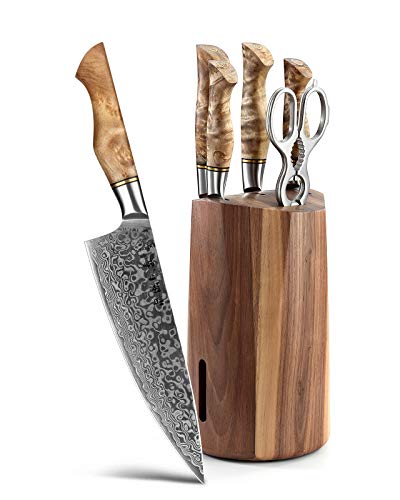
- ✓ Razor-sharp edge
- ✓ Comfortable ergonomic handle
- ✓ Beautiful, durable Damascus
- ✕ Large block footprint
- ✕ Higher price point
| Core Steel Type | 10Cr15CoMoV steel core with 67-layer Damascus construction |
| Hardness (HRC) | 60-62 HRC |
| Edge Geometry | 84-degree edge angle (15° per side on blade), sharpened edge for high sharpness |
| Blade Construction Details | Damascus layered blade with rose pattern, cryogenic treatment in liquid nitrogen for hardness and flexibility |
| Handle Material and Fit | Ergonomic figured sycamore wood handle with mosaic brass the handle and balance enhancements |
| Includes | 7-piece knife set with black walnut block (storage) |
You’ve been eyeing this HEZHEN 7-piece set for a while, and the moment you lift the blade you feel the weight of the whole kitchen in your hand. The Damascus rose pattern catches the light, and you notice the deep, almost glassy finish that hints at the processing behind it.
It’s not just pretty—the blade feels purposeful, like it’s ready to tackle whatever you throw at it.
The 10Cr15CoMoV core sits under 67-layer Damascus, and you can tell the edge is honed to a crisp 15° per side. It slices through carrots with barely a whisper, then arcs cleanly through a thick chicken breast without requiring a heavy hand.
Slide off the blade and you’ll feel the core’s resilience, a balance that persists under repeated cuts.
Handling the knife with the sycamore wood handle is a joy. The shape fits naturally in your grip, and the mosaic brass accents add a touch of refinement you’ll notice every time you pick it up.
It feels balanced—almost like you’re seamlessly guiding the knife rather than fighting it.
The set’s construction stands up to real kitchen pressure. Vacuum heat treatment and the multi-step forging process show in the edge’s durability and fatigue resistance.
You’ll appreciate how it holds a sharp edge through vegetables, fish, and meat, then cleans up easily with a quick hand wash and dry.
In practical terms, this is a home chef’s dream for daily prep and special-occasion slicing alike. The enclosing walnut block is sturdy and stylish, if a touch large on a crowded counter.
And yes, the lifetime warranty gives you peace of mind as you celebrate this tool’s longevity in your kitchen routine.
All told, you’ll likely reach for this set when you want reliability with a touch of elegance. It’s not just a collection of knives; it’s a statement about how you cook, and how you treat your ingredients.
What Makes Carbon Steel the Ideal Choice for Forging Knives?
Carbon steel is often considered the best material for forging knives due to its unique properties and performance characteristics.
- High Carbon Content: The primary feature of carbon steel is its high carbon content, typically ranging from 0.5% to 1.5%. This allows the steel to achieve a hard edge after heat treatment, making it ideal for cutting tasks.
- Edge Retention: Knives made from carbon steel tend to hold their edge longer compared to stainless steel. This means less frequent sharpening, which is a significant advantage for professional chefs and outdoor enthusiasts who rely on consistent performance.
- Ease of Sharpening: Carbon steel is generally easier to sharpen than other types of steel. The hardness allows for a fine edge, and the steel responds well to sharpening tools, making maintenance straightforward for users.
- Durability: Knives forged from carbon steel are known for their strength and durability. They can withstand heavy use without chipping or breaking, which is crucial for tools that are subjected to rigorous tasks.
- Versatility: Carbon steel can be forged into various knife styles, from culinary knives to outdoor tools. Its adaptability allows blacksmiths and manufacturers to create a wide range of knife designs tailored to specific uses.
- Patina Development: Over time, carbon steel develops a patina, which can enhance its performance and aesthetic appeal. This natural surface change can help protect the blade from further corrosion while giving it a unique, personalized look.
What Are the Most Popular Types of Carbon Steel for Knife Making?
The most popular types of carbon steel for knife making include:
- 1095 Carbon Steel: This high carbon steel is well-known for its excellent edge retention and ability to hold a sharp edge, making it a favorite among knife makers. It has a high carbon content of around 0.95%, which allows for easy sharpening and good hardness, but it can be prone to rusting if not properly cared for.
- 1084 Carbon Steel: A step down from 1095, 1084 still offers great hardness and edge retention while being easier to forge and work with. It contains about 0.84% carbon and has a balanced composition, making it suitable for a variety of knives, from hunting to everyday carry, while providing a good compromise between toughness and hardness.
- 5160 Carbon Steel: Known for its toughness, 5160 is a spring steel often used in making larger knives and swords. It has about 0.6% carbon and is alloyed with chromium, which enhances its strength and resistance to wear, making it ideal for heavy-duty applications.
- O1 Tool Steel: Although technically a tool steel, O1 is favored by many knife makers for its excellent edge retention and ease of sharpening. With a carbon content of around 0.9%, it also includes tungsten and chromium, which provide added wear resistance, making it suitable for both functional knives and artistic blades.
- W2 Carbon Steel: This high carbon steel is known for its ability to achieve a fine hamon (a visual pattern) when heat-treated, making it popular among traditional Japanese knife makers. With a carbon content around 0.7% to 1.0%, it offers a good balance of hardness and toughness while being relatively easy to work with during the forging process.
How Does 1095 Carbon Steel Perform in Forged Knives?
1095 carbon steel is widely regarded as one of the best carbon steels for forging knives due to its excellent hardness and edge retention.
- High Carbon Content: 1095 steel contains approximately 0.95% carbon, which significantly enhances its hardness when heat-treated.
- Edge Retention: Knives made from 1095 steel can hold a sharp edge for a longer period compared to lower carbon steels, making them ideal for cutting tasks.
- Ease of Sharpening: Despite its hardness, 1095 is relatively easy to sharpen, allowing users to maintain a fine edge without excessive effort.
- Forging Capability: 1095 carbon steel is well-suited for forging, allowing bladesmiths to shape and manipulate the steel effectively during the crafting process.
- Affordability: Compared to other high-end steels, 1095 is cost-effective, making it a popular choice for both amateur and professional knife makers.
- Rust Resistance: While 1095 is not stainless, it can be treated with oil or coatings to improve its resistance to rust and corrosion.
The high carbon content of 1095 steel contributes to its strength and durability, allowing for the production of robust knife blades that can withstand heavy use. This steel’s ability to maintain a sharp edge makes it particularly favored among chefs and outdoor enthusiasts who require reliable performance in their cutting tools.
Knives made from 1095 steel can be easily honed back to a sharp edge using traditional sharpening methods, which is an essential quality for users who prioritize maintenance and longevity in their tools.
Its forging capability means that blacksmiths can manipulate the steel into various shapes and designs, enabling the creation of custom knives that meet specific needs and preferences.
Additionally, the affordability of 1095 steel makes it accessible to a broader audience, from hobbyists to seasoned professionals, allowing more people to experience the benefits of high-quality carbon steel in their knives.
While 1095 carbon steel is prone to rust if not cared for properly, many knife makers apply protective treatments that help extend the life of the blade, making it a versatile and practical choice for knife forging.
What Are the Benefits of Using 1084 Carbon Steel for Forging?
Lastly, the affordability of 1084 carbon steel allows more individuals to experiment with knife making without breaking the bank, making it a popular choice for hobbyists and professionals alike. Its combination of performance and cost-effectiveness makes it one of the best carbon steels for forging knives.
Why is 5160 Carbon Steel Preferred for High-Impact Forged Knives?
5160 carbon steel is preferred for high-impact forged knives primarily due to its excellent combination of toughness, flexibility, and resistance to shock loading, making it ideal for demanding applications.
According to metallurgical studies, 5160 steel has a high carbon content of approximately 0.56% to 0.64%, along with significant chromium (about 0.75% to 1.25%), which enhances its hardenability and wear resistance. Research by the American Iron and Steel Institute highlights that the chromium content contributes to improved strength and corrosion resistance, critical factors in knife performance (AISI, 2021).
The underlying mechanism for 5160’s performance lies in its unique microstructure, which is influenced by the heat treatment process. When forged and heat-treated properly, 5160 undergoes quenching and tempering, resulting in a fine martensitic structure that enhances both its hardness and toughness. This balance is crucial because knives need to maintain a sharp edge while also being able to withstand the stresses of cutting through hard materials without chipping or breaking. The ability of 5160 to absorb impact without fracturing makes it particularly suitable for high-impact applications, as recognized by various knife-making experts and materials scientists.
What Key Characteristics Should Be Considered When Choosing Carbon Steel?
When choosing carbon steel for forging knives, several key characteristics should be considered to ensure optimal performance and durability.
- Carbon Content: The amount of carbon in the steel significantly influences its hardness, strength, and edge retention. Generally, higher carbon content (1% or more) leads to better hardness and edge retention, making it ideal for knife blades, but it can also make the steel more brittle if not properly heat-treated.
- Alloying Elements: The presence of alloying elements like chromium, manganese, and vanadium can enhance various properties of carbon steel. For instance, chromium increases corrosion resistance, while manganese improves hardness and toughness, making the knife more durable during use.
- Heat Treatment Capability: The ability of carbon steel to be heat treated is critical for achieving desired hardness and toughness levels. Some steels respond better to heat treatment processes, allowing for precise adjustments in hardness, which is essential for a reliable knife edge.
- Workability: The ease with which the steel can be worked, forged, and shaped is important for knife makers. Steels that are too hard may be challenging to forge, while those that are too soft may not hold an edge well; thus, a good balance of workability and hardness is crucial.
- Edge Retention: The ability of the blade to maintain a sharp edge over time is a vital characteristic for any knife. High-carbon steels can provide excellent edge retention, but they require proper care to prevent corrosion and maintain performance.
- Toughness: This refers to the steel’s ability to absorb energy and resist fracture during use. A tough knife is less likely to chip or break, especially when cutting through hard materials, making toughness a key consideration in knife design.
- Corrosion Resistance: While carbon steels are often less resistant to rust and corrosion compared to stainless steels, certain alloys can provide improved resistance. Understanding the environment in which the knife will be used can help determine the necessary level of corrosion resistance.
What Advantages Does High Carbon Steel Offer for Forging Knives?
High carbon steel offers several advantages for forging knives, making it a preferred choice among knife makers.
- Edge Retention: High carbon steel can be hardened significantly, allowing it to maintain a sharp edge for a longer period compared to lower carbon steels. This property is particularly important in knife applications where cutting performance is critical.
- Durability: Knives made from high carbon steel are typically more durable and resistant to wear and tear. This toughness enables them to withstand heavy use without chipping or breaking, making them ideal for demanding tasks.
- Ease of Sharpening: High carbon steel is relatively easy to sharpen, allowing users to quickly restore the blade’s sharpness when needed. This convenience is appreciated by both professional chefs and outdoor enthusiasts who require reliable cutting tools.
- Cost-Effectiveness: High carbon steel is often more affordable than stainless steel alternatives while providing excellent performance characteristics. This makes it an attractive option for both hobbyists and professional knife makers looking for quality without overspending.
- Customization: High carbon steel can be forged into various shapes and profiles, allowing for a wide range of knife designs. This versatility enables knife makers to create specialized knives tailored to specific uses or preferences.
What Are the Common Disadvantages of Using High Carbon Steel?
High carbon steel, while favored for its hardness and edge retention in knife making, comes with several common disadvantages:
- Brittleness: High carbon steel can become very brittle, especially if it is hardened too much during the tempering process, making it prone to chipping and breaking under stress.
- Corrosion Susceptibility: Unlike stainless steel, high carbon steel is more susceptible to rust and corrosion, requiring regular maintenance and care to keep it in good condition.
- Difficult to Sharpen: The hardness of high carbon steel can make it challenging to sharpen, often requiring specialized tools or techniques to achieve a fine edge.
- Weight: Knives made from high carbon steel can be heavier compared to those made from lower carbon or stainless steels, which may not be ideal for all users.
- Cost: High carbon steel can be more expensive than other types of steel due to its manufacturing process and the quality of materials used, which may not be justifiable for all knife makers.
Brittleness is a significant concern because it limits the durability of the knife; if a knife is too hard, it can shatter upon impact, especially during heavy-duty use.
The susceptibility to corrosion is another major drawback, as users must ensure they regularly oil and clean the blade to prevent rust from forming, particularly in humid or wet environments.
Sharpening high carbon steel can be a labor-intensive process since its hardness can dull standard sharpening tools more quickly, requiring more frequent sharpening sessions to maintain an effective edge.
The extra weight of high carbon steel knives can lead to fatigue during prolonged use, which might dissuade some users who prefer lighter options for comfort and ease of handling.
Lastly, while the performance of high carbon steel knives may justify the higher price for some, budget-conscious buyers may find alternatives more appealing, making it less accessible for those just starting in knife making.
How Can You Ensure the Best Results When Forging and Maintaining Carbon Steel Knives?
To achieve optimal results in forging and maintaining carbon steel knives, several factors must be considered:
- Choosing the Right Carbon Steel: Selecting high-quality carbon steel is crucial for knife performance. Options like 1095 and O1 steel are popular for their excellent edge retention, hardness, and ability to take a sharp edge, making them ideal for forging knives.
- Proper Heat Treatment: Heat treatment plays a significant role in defining the knife’s hardness and toughness. This process typically involves heating the steel to a specific temperature and then quenching it in oil or water, followed by tempering to relieve stresses and improve durability.
- Forging Techniques: Mastering the forging techniques is essential to shape the steel effectively. Techniques such as drawing out, tapering, and setting the bevel can enhance the blade’s performance and aesthetics while ensuring structural integrity.
- Edge Geometry: The design of the blade’s edge geometry impacts its cutting efficiency. A thinner edge will slice better, while a thicker edge may be more durable, so understanding the intended use of the knife will help in selecting the right geometry.
- Regular Maintenance: Proper maintenance is vital for the longevity of carbon steel knives. Regularly sharpening the blade, oiling it to prevent rust, and storing it in a dry place can help maintain its performance and appearance over time.
- Finishing Techniques: The finishing process, including polishing and applying protective coatings, affects both the aesthetics and functionality of the knife. A well-finished knife not only looks appealing but also has improved corrosion resistance and ease of use.